New Breast Cancer Trial Found Vitamin D Boosts Chemo Success 79 Percent: Do You Know Your Levels?
Your daily vitamin D dose may matter more than you think—here's what to know

Key Takeaways
- Get a 25‑OH vitamin D test and discuss if 2,000 IU daily is right with your doctor.
- If you have cancer, bring the study and ask your oncology team about vitamin D during chemo.
- Treat a deficiency with D3 as advised by your care team and monitor dosing with your doctor.
A clinical trial linking vitamin D to better breast cancer outcomes when being treated with chemotherapy is giving women something concrete to bring to their next doctor’s appointment. The study, published in Nutrition and Cancer and making headlines this week, found that women who took 2,000 IU of vitamin D daily during chemotherapy were dramatically more likely to see their tumors disappear completely.
Researchers at Botucatu School of Medicine at São Paulo State University followed 80 women 45 and older undergoing neoadjuvant chemotherapy (a type of treatment prior to surgery to remove cancerous tumors). Among those receiving vitamin D, 43 percent achieved complete remission compared with 24 percent in the placebo group—a 79 percent relative increase in full response. Researchers are calling for larger trials before the protocol becomes standard care, but the early signal is hard to ignore.
Why vitamin D and chemo may work so well together
Scientists have long suspected vitamin D does more than just bolster bone health. Researchers now believe it may act as a “chemosensitizer,” helping cancer drugs work more effectively in tumor tissue. A 2024 meta-analysis found adequate vitamin D levels were linked to a 22 percent reduction in nonresponse to chemotherapy and a 35 percent reduction in disease progression risk—broader support for what this new trial suggests.
Worth noting: While this study didn’t test whether vitamin D stops breast cancer from forming, the Sister Study found that women with the highest 25-D levels were associated with 21 percent lower breast cancer risk. The TriNetx study (another study addressing the issue) with 73,659 menopausal women found that women with 25-D less than 20 had a 45 percent greater risk of developing breast cancer.
The latest Nutrition and Cancer study also did not report whether 25-D improves outcomes once chemotherapy has already begun. However, a large study of 3,995 women showed that women with invasive breast cancer who have sufficient levels of 25-D, compared to those with low levels, consistently have better overall survival rates.

The deficiency problem most women don’t know they have
Nearly two-thirds of Americans have insufficient vitamin D levels, and women are among the highest-risk groups. Risk climbs with darker skin tones, limited sun exposure, obesity or absorption issues.
The tricky part is that symptoms—fatigue, muscle weakness, bone pain, mood changes and frequent illness—are easy to attribute to aging or a busy season of life. Beyond the cancer research, vitamin D also supports calcium regulation, brain health and immune function, which is why so many women are already supplementing daily.
“When I prescribe D3 for my patients, I recommend that 25D is combined with the hormone K2,” says Prudence Hall, MD, a pioneer in regenerative medicine. “This activates the proteins that deliver calcium to the bones rather than depositing it in the arteries.”
How much vitamin D do you need?
Per the NIH, the recommended daily allowance is 600 IU for adults through age 70 and 800 IU after that. Most Americans fall short of even that baseline. The 2,000 IU dose used in the trial sits above the standard RDA, but well within what researchers describe as safe and effective for correcting deficiency. The NIH’s safe upper limit is 4,000 IU per day for adults.
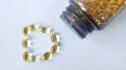
If you’re already taking a daily D3, it’s worth checking your label. Many over-the-counter softgels contain 1,000 to 5,000 IU per capsule, and a standard multivitamin may add another 400 to 800 IU on top—meaning two everyday habits can quietly stack.
Vitamin D3 vs. D2—and the test worth asking for

Two forms typically show up on supplement shelves: D2 (ergocalciferol), which is often plant-derived, and D3 (cholecalciferol), the form your skin produces from sunlight. Most clinicians prefer D3 for raising blood levels efficiently.
The most useful next step is to ask your doctor for a simple blood test for 25-hydroxyvitamin D. This tells you whether your current routine is working, insufficient or unnecessary. Levels below 20 ng/mL and up to 30 ng/mL are considered deficient levels. Functional medicine advocates for higher levels in the range of 50 to 80 ng/mL. From there, you and your doctor can decide whether supplementing with vitamin D3 daily makes sense for you. Generally, a daily dose of 2,000 to 4,000 IU is needed to maintain adequate 25D levels.
An important note: If you’re in active cancer treatment, don’t adjust your supplementation without first consulting your oncology team. Vitamin D affects calcium metabolism and can interact with certain medications, so dose decisions belong with a doctor who knows your full health picture.
Conversation
All comments are subject to our Community Guidelines. Woman's World does not endorse the opinions and views shared by our readers in our comment sections. Our comments section is a place where readers can engage in healthy, productive, lively, and respectful discussions. Offensive language, hate speech, personal attacks, and/or defamatory statements are not permitted. Advertising or spam is also prohibited.