I Spent 4 Days at Pritikin Longevity Center—The 3 Healthy Aging Mistakes I Didn’t Know I Was Making
We know the longevity basics, but there are tiny tweaks that can dramatically improve your health

Key Takeaways
- A four-day Pritikin stay revealed three healthy aging habits I needed to rethink.
- Cutting out hidden sodium may matter more than simply skipping the salt shaker.
- Strength training, cardio and regular rest all play key roles in healthy aging and longevity.
We all want to live longer, healthier lives. And the truth is, the keys to longevity are things we already know: Follow a Mediterranean-style diet, get plenty of regular exercise, stay socially active. But after more than a decade covering health and wellness, there are still things that surprise me. I spent four days at Pritikin Longevity Center in Miami—a wellness stay filled with exercise, lectures, relaxation and more—and learned that I’d been making some unexpected mistakes in my own health journey.
So I talked to the experts to find out the problem with these slip-ups, plus a better strategy to improve my health and, ultimately, my longevity.
What is Pritikin Longevity Center?
Pritikin Longevity Center is a medically-supervised wellness program founded by Nathaniel Pritikin in 1975 (originally in California, now in Miami) to help people take control of their health.
“Our fundamental belief is that many of the chronic conditions we associate with aging are not inevitable,” says Bill Donovan, president of Pritikin. “Lifestyle has an enormous influence on cardiovascular and metabolic health, physical function and quality of life. People have far more ability to shape the future of their health than they realize.”
Through evidence-based nutrition programs, exercise and medical insight from physicians, Donovan says, “People don’t just learn what they should do—they live it.” And the results are impressive. Multiple studies from a 26-day Pritikin stay showed 83 percent of guests no longer needed blood pressure medication, 60 percent reversed their metabolic syndrome and 54 percent reversed their diabetes. Many lost weight too.
“People often assume meaningful improvement takes months, but we see measurable improvements in just days,” Donovan says. “One recent guest arrived taking multiple blood pressure medications for more than a decade. Within five days, his blood pressure had improved to the point that, under the supervision of our physicians, he no longer needed them during his stay. That kind of response can be incredibly powerful.”

3 health lessons that surprised me most
Over the course of my stay at Pritikin, I met experts in their fields—nutritionists, physicians, personal trainers—to learn more about my personal health journey. These are the lessons I wasn’t expecting:
We’re eating too much salt—and it’s not from the salt shaker
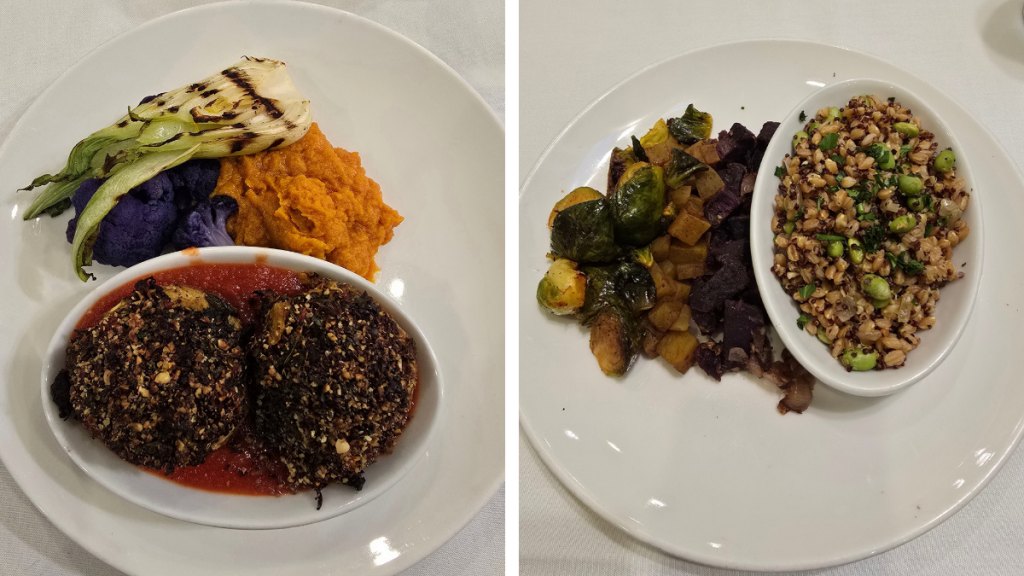
One of the first things I noticed during my Pritikin stay was the food. Candidly, it seemed bland—at first. Lon Ben-Asher, a registered dietitian at Pritikin Longevity Center, explains the center’s approach: minimally processed, nutrient-dense whole foods. Think vegetables, fruits, legumes, whole grains and lean protein without added salt.
For the most part, I try to follow a whole-food diet: a smoothie for breakfast, salad for lunch, a chicken and veggie dish for dinner. Of course I love fast food fries as much as the next person, but I thought I was doing a good job of avoiding too much added salt in my diet. I was wrong.
The American Heart Association’s recommended daily limit for sodium is 2,300 mg per day, noting that 1,500 mg is ideal for most adults, says Coco Pierrel, certified integrative nutritionist and founder of Eat Shed Glow. The hitch? The average American eats around 3,400 mg.
“The problem isn’t the salt you add to your own food, it’s the sodium someone else added before you ever saw it,” Pierrel explains. “More than 70 percent of the sodium we eat is already in the food before it reaches the table. People expect chips and pickles. They don’t expect bread, breakfast cereal, cottage cheese, deli turkey, canned soup or the ‘light’ bottled dressing that carries a few hundred milligrams in two tablespoons.”
I checked my salad dressing when I got home, a light caesar, and sure enough, one serving had 25 percent of my RDA of sodium. That’s a problem, since, “around and after menopause, blood pressure tends to climb and salt sensitivity can increase,” Pierrel says.
The fix: Season smarter
It makes sense why the no-salt-added food at Pritikin seemed so different than what I was used to. But within just a few days, I noticed a shift and flavors started to pop. When you cut out added salt, “blood pressure comes down, the water weight drops within days and your taste adapts so lower-sodium food stops tasting flat and starts tasting like itself,” Pierrel explains.
Her advice: “Don’t try to cut salt, try to be the one who adds it,” Pierrel says. That means drop the packaged foods, takeout and other sneaky sources of added salt and put yourself in the driver’s seat.
“Salt the surface [of your food], not the pot, because a pinch of flaky salt on your finished dish hits your tongue directly and most people find they need less,” Pierrel advises. She also recommends rinsing canned beans and veggies to wash off some of the sodium and using seasonings like garlic, chili, fresh herbs—all staples in the Pritikin diet—in place of added salt.
“The hack that lands with my clients: Swap the salt shaker for an acid,” she adds. “A squeeze of lemon or a splash of vinegar adds the brightness and contrast that salt was providing, so the dish tastes more alive with less of it.”
There’s such a thing as ‘too much cardio’
Another area of my wellness routine that I thought I had down pat: exercise. In addition to getting at least 10,000 steps per day, I had been doing five 20-minute HIIT workouts a week (usually a tabata spin class on Peloton) and 30 to 40 minutes of strength training four days a week.
But my DEXA body composition scan at Pritikin Longevity Center revealed that my bone density, while still in the healthy range, was on the lower end of the spectrum. Not ideal with perimenopause on the horizon.
“During perimenopause and menopause, declining estrogen shifts the balance toward increased bone resorption and loss of bone density,” says Natasha Trentacosta, MD, FAAOS, board-certified orthopedic surgeon at Cedars-Sinai. “Exercise itself isn’t the problem. It’s the mismatch between training, fueling, recovery and hormonal status. If a woman is also doing a large volume of intense cardio without eating enough and not allowing time for recovery, she can develop low energy availability. That can impair bone remodeling and increase the risk of low bone density.”
Cardio is still important. Dr. Trentacosta says it strengthens the heart, supports healthy blood pressure and cholesterol, improves insulin sensitivity and more—”all things that tend to decline with age and can shorten our lifespan”
The key is finding the right balance. “We encourage a well-rounded program that includes cardiovascular conditioning, strength training, flexibility, balance, functional movement and brain-challenge exercises,” says Jaqueline Gavino, director of fitness at Pritikin.
The fix: Mix it up
At Pritikin, I took a Pilates reformer class for the first time (the “Pilates shakes” are real!) and paired strength training with cardio classes. I took that philosophy home with me, scaling back my HIIT workouts to three days a week and adding another day of strength training to my routine instead.
“As we age, cardio keeps the heart strong and ticking, but strength training helps make sure the bones, muscles and joints can still handle the everyday activities and tasks,” Dr. Trentacosta says. “Beginning in midlife, we gradually lose muscle mass unless we actively challenge it. That can affect everything from metabolism and glucose control to balance, joint support and the ability to do everyday tasks. Resistance training places healthy stress on bone,” which is why she says she’d make strength training a priority rather than an afterthought for women in perimenopause and menopause.

Rest shouldn’t take a back seat to diet and exercise

I know that stress relief is important. But I didn’t realize just how valuable it really is. And when I’m crunched for time, I tend to put my energy toward diet and exercise rather than R&R. Turns out I’m not alone.
“Many people neglect relaxation because modern life often rewards productivity, busyness and constantly being ‘on,’” says Molly Gearin, PT, DPT, at Anchor Wellness. “People may feel guilty for resting or believe that if they aren’t actively exercising, working or accomplishing something, they aren’t making progress.”
While at Pritikin, I took advantage of a yoga class, group sound bath session and meditation lecture, all of which forced me to slow down.
“Consistently neglecting rest and recovery can contribute to chronic stress, physical tension, fatigue and burnout,” Gearin notes. “Your body needs time to regulate, repair and restore just as much as it needs movement and nourishment.”
The fix: Make relaxation a habit, not a chore
“During periods of rest, the body can allocate energy and resources toward tissue repair, collagen remodeling and restoring normal tissue function,” Gearin says, all vital for longevity.
She recommends finding ways to fit relaxation into your daily routine rather than trying to block out extra time for it. “Do your breathing techniques while waiting at a red light, turn on a sound bath while lying in bed at night or practice mindfulness first thing in the morning. That way, it doesn’t feel overwhelming to set aside separate time to make it happen.”

I’ll admit this is one lesson I’m still struggling with. But I’m taking steps in the right direction, enjoying a rainy Sunday with a paint-by-numbers kit instead of cleaning and reaching for my Kindle more often before bed instead of doomscrolling.
The bottom line
When it comes to longevity, “We’re seeing a growing number of people focused on prevention and healthy aging,” confirms Marianela Areces, MD, medical director at Pritikin Longevity Center. “They may not have a major diagnosis, but they recognize that family history, risk factors or declining activity levels are warning signs they don’t want to ignore.”
While you may know the basics—a balanced diet, exercise, restorative sleep—take it from me that there’s always more to learn. And small changes here and there, like a tweak to your diet, exercise routine or stress-relief habits, can make all the difference.
Conversation
All comments are subject to our Community Guidelines. Woman's World does not endorse the opinions and views shared by our readers in our comment sections. Our comments section is a place where readers can engage in healthy, productive, lively, and respectful discussions. Offensive language, hate speech, personal attacks, and/or defamatory statements are not permitted. Advertising or spam is also prohibited.