Why Do I Always Wake Up at 3 a.m.? Try These Proven Sleep Fixes That Actually Work
As a woman, hormones and hot flashes may be keeping you up at night—but experts say relief can start tonight

Key Takeaways
- A free 30-second eye exercise may help quiet racing thoughts at 3 a.m.
- Cooling your side of the bed may ease menopause-related night sweats.
- Frequent wake-ups can have several causes, so persistent insomnia deserves care.
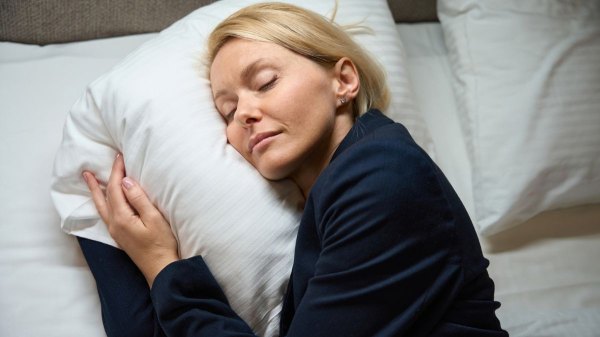
You know the drill. It’s 3:06 a.m., your eyes snap open, and suddenly your brain is running a full inventory of tomorrow’s to-do list. If this has become your nightly routine somewhere after 40, you’re in very familiar company — and the reasons behind those wee-hour wake-ups are more layered than most of us realize.
The good news? A handful of expert-backed fixes are finally moving the needle, from a free 30-second eye exercise to a newly launched high-tech mattress cover that just got a major upgrade this week.
Why 3 a.m. keeps happening—especially in midlife
Waking up briefly during the night can be normal, as long as you’re able to return to sleep within 15 to 20 minutes, says Jenie George, MD, Assistant Professor of Clinical Medicine (Sleep Medicine) and Neurology at Penn Medicine. “An inconsistent sleep schedule, however, can contribute to early morning awakenings. This confuses your body’s internal clock, making it harder to stay asleep through the night,” she explains in reporting on why sleep gets harder after 50.
Common culprits include alcohol, caffeine, missed workouts and long afternoon naps. But integrative sleep medicine physician Valerie Cacho, MD, says there are sneakier reasons too—sleep apnea (about 40 percent of women don’t have the classic gasping or snoring signs), nocturia, restless leg syndrome, blood sugar dips and, of course, hormones.
“Aging in and of itself leads to less deep and more disrupted sleep,” Dr. Cacho says. Declining estrogen and progesterone make you a lighter sleeper, and rising body temperature — hello, night sweats — is “the opposite of what the sleeping body needs.”
Sarah de la Torre, MD, a double board-certified ob-gyn and chief medical officer at Joylux, analyzed symptoms from more than 23,000 women and found nearly 40 percent of perimenopausal women reported sleep disruption before their cycles even became irregular. “Women may be losing sleep, struggling with focus and feeling emotionally off while still being told by their providers that they are ‘not there yet,’” she says.
The free fix: Andrew Huberman’s 30-second eye trick
Stanford neuroscientist Andrew Huberman, PhD, recently shared an easy sleep hack from his new book, Protocols: An Operating Manual for the Human Body, on The Diary of a CEO podcast. It takes about 30 seconds and costs nothing—and one longtime insomnia sufferer who tried it was asleep before she realized it had worked.
Here’s how to do it:
- Step 1: Close your eyes and, under your eyelids, move them slowly to one side, then other, then up, then down.
- Step 2: Without opening your eyes, make a counterclockwise circle with your eyes, then a clockwise circle.
- Step 3: With your eyes still closed, point them toward your nose and let out a long exhale. Repeat two to three times.
“To fall asleep or to fall back asleep, you need to stop thinking about your body position,” Huberman explained. The eye-movement pattern, he says, shuts down “proprioceptive circuits” in the cerebellum — the brain’s internal GPS for your limbs—which “greatly facilitates the speed at which you fall back asleep.”
Sleep experts say it’s worth a shot. “I think it’s a very reasonable thing to try. It’s free, low effort, carries essentially no risk and has solid reasons it could help,” says Shelby Harris, PsyD, a psychologist and board-certified sleep expert with BetterSleep.com. “The eye movements give your brain something simple and repetitive to focus on, and the exhale helps shift your body into a calmer state.”
Shantan Ravula, MD, head of clinical outcome for SOMOS Health, agrees the technique short-circuits the anxious “why am I awake again” loop. “It switches on the body’s calming parasympathetic system, and you get a real relaxation response. So yes, it likely works, and works well.”
If you’re a woman over 50, Harris says you’re an ideal candidate: “Sleep naturally becomes more fragmented with age, with less time in deep sleep and more time in the lighter stages where it’s easy to wake up.”
The splurge fix: a smart mattress cover that just got upgraded
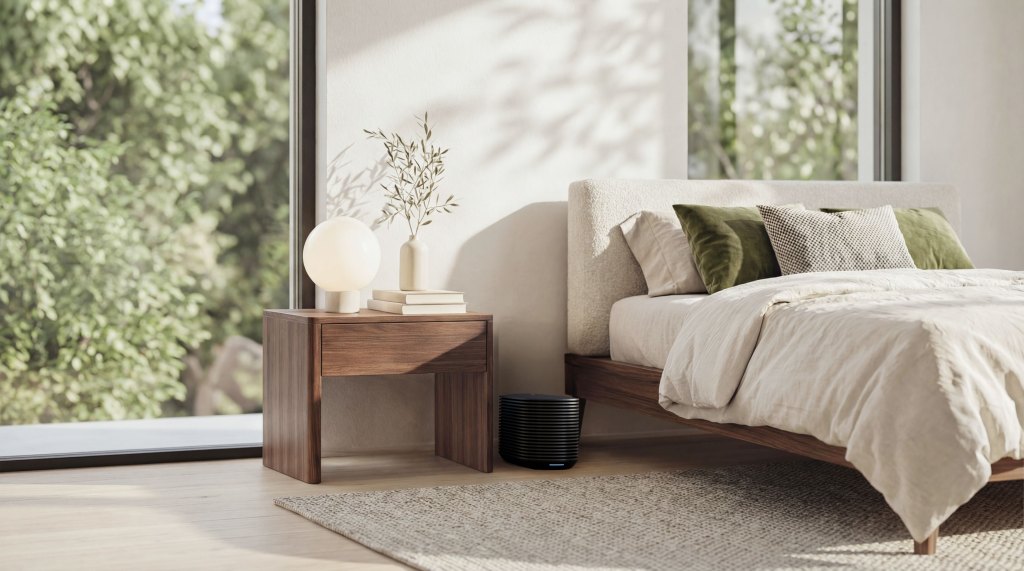
For 3 a.m. wake-ups driven by temperature—perimenopausal hot flashes, night sweats, a partner who wants the room set to Ice Hotel—the Eight Sleep Pod has developed a passionate following, with celebrity fans including Courteney Cox, Halle Berry, Mel B, Rita Ora and Molly Sims.
The device is a mattress cover with water-filled tubes that heat and cool each side of the bed independently, plus sensors that track heart rate, HRV, sleep stages and breathing. An AI feature called Autopilot learns your patterns and adjusts temperature in real time.
And the science on temperature and midlife sleep is real. Your core body temperature naturally makes a U-shape during the night, dipping in the middle and rising toward morning—but in perimenopausal women, that curve flattens. “The Pod essentially helps to restore that U—and that’s what’s necessary for good deep sleep, good REM sleep, reducing wakenings,” says Nicole Moyen, PhD, Eight Sleep’s director of science and clinical research.
In Eight Sleep’s research, nighttime hot flashes dropped 56 percent after just 14 nights, and insomnia improved by 45 percent at one month, with that improvement holding at 6 months. A double-click of the side button activates “Hot Flash Mode,” which rapidly cools the bed and then gradually rewarms you.
Those 3 a.m. wake-ups that feel like anxiety? They might actually be temperature spikes in disguise. “The hypothalamus governs both your body’s thermostat and your sleep-wake cycle, and during perimenopause, the neurons that become hyperactive from estrogen and progesterone loss sit right next to the area that controls how and when you fall asleep,” says neurologist Romie Mushtaq, MD, ABIHM, author of The Busy Brain Cure. “What feels like waking up anxious and what feels like a temperature spike are often the same hypothalamic event expressing itself in two different ways.”
What’s new: the Pod 6 just launched
Eight Sleep this week rolled out its Pod 6, a ground-up rebuild of the system. The redesigned Hub is more compact and engineered to fit under most bed frames, and the new version packs 9x more biometric sensors along with faster heating and cooling response for more personalized thermal comfort.
The lineup also introduces new Solo sizes starting at $1,999, and Eight Sleep is now available across 37 countries. The company is continuing its work toward medical-device clearance for sleep apnea—a nod to how central sleep is becoming in the broader health conversation.
The bottom line

A mattress cover, even a very smart one, can’t treat the underlying hormonal cause of midlife insomnia. “A cooling mattress may help you feel more comfortable tonight, but it is not treating the root cause,” Dr. Mushtaq says. She recommends women ask their doctors about a full hormone panel—estradiol, progesterone, testosterone—and a frank conversation about menopausal hormone therapy.
Dr. Cacho’s advice: get bloodwork done, including ferritin, iron, HbA1C and fasting glucose. “It’s important to be your own detective, because it’s typically not just one thing waking you up in the middle of the night.”
Whether your fix ends up being a 30-second eye exercise, a cooler bed, a doctor’s visit—or all three—better sleep matters. As Dr. de la Torre puts it: “When you fix the waking, you fix so much more.”
Conversation
All comments are subject to our Community Guidelines. Woman's World does not endorse the opinions and views shared by our readers in our comment sections. Our comments section is a place where readers can engage in healthy, productive, lively, and respectful discussions. Offensive language, hate speech, personal attacks, and/or defamatory statements are not permitted. Advertising or spam is also prohibited.