I Tried the Oura Ring 5 To Fix My Restless Sleep—and Finally Learned Why I Was Waking up Tired
The smart ring revealed a surprising sleep problem—and a simple change that helped me feel better

Key Takeaways
- The Oura Ring revealed that 8 hours in bed didn’t necessarily mean I was getting enough sleep.
- Tracking my bedtime, stress and sleep patterns helped me pinpoint habits that affect my rest.
- Experts say Oura’s data offers useful clues, but shouldn’t replace listening to your body.
I’ve always been a light sleeper. While my husband can zonk out as soon as his head hits the pillow and sleep soundly until his alarm goes off, I’m more restless. And though I’ve (mostly) hit the oft-recommended eight-hours-a-night goal, I’d still find myself waking up feeling less than refreshed. My Garmin smartwatch typically shows that I’ve slept long enough, but not well enough to bring my stress levels down and allow my body to fully recover. But it doesn’t give me insight into how to get that more restful sleep I need. Enter the Oura Ring 5.
Years ago, I’d tried a previous-generation Oura Ring, but ultimately didn’t stick with it because it felt too bulky on my finger. This latest model is 40 percent smaller than the Oura Ring 4—far more comfortable to wear—and tracks more than 50 health metrics, one of the biggest being sleep. But could it actually help me finally get the deep sleep my body’s been begging for?
How the Oura Ring 5 tracks sleep
The smart ring, which has tiny sensors that track biometrics like your heart rate, blood oxygen level, heart rate variability (HRV), movement and more, is designed to help you monitor your wellbeing. With a paid membership ($5.99 per month), you get insight into your data, including a detailed sleep analysis and stress monitoring—two biggies for me.
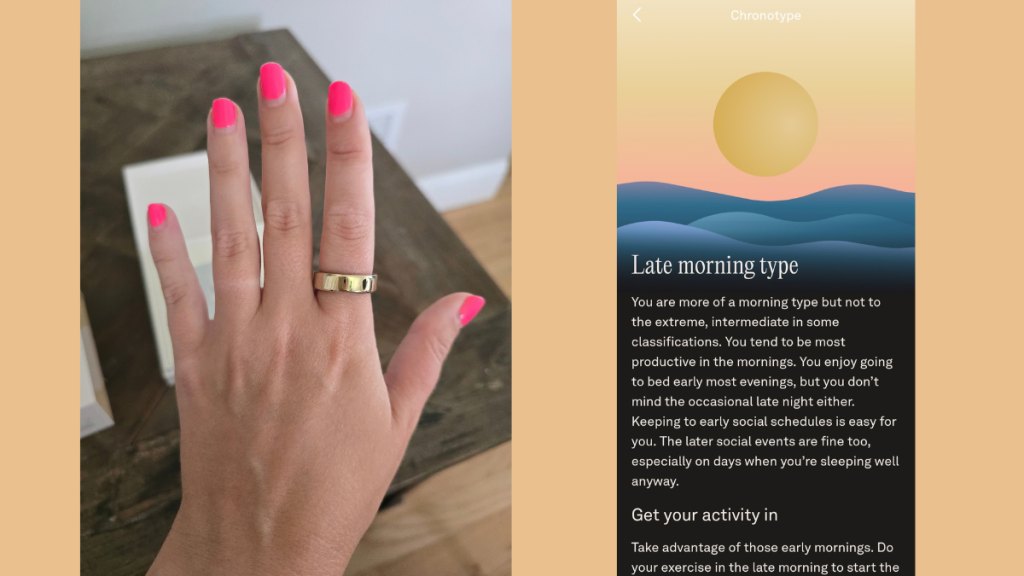
When I first slipped the ring onto my index finger, I was surprised by how lightweight and slim it is compared to previous generations. In an effort to figure out what was sabotaging my sleep, I started wearing it 24/7, save for when I shower or lift weights (personal preference—the ring is waterproof up to 100 meters). The longer and more consistently you wear the Oura Ring, the more it can learn your unique habits and start to build useful insights. For example, it begins to suggest your ideal bedtime based on your recent best nights’ sleep, and after 90 days of use, it reveals your sleep chronotype (basically your circadian rhythm—if you’re a morning person, night owl or somewhere in between, like me.)
How much sleep do you really need?
One of the first Oura insights that took me by surprise: I wasn’t sleeping enough. I’d typically go to bed around 11 pm and get up at 7 am. Sure, I was getting eight hours a night, but Oura started recommending an earlier bedtime around 10:15 pm (just shy of nine hours) based on when I’d recently been getting my best nights of sleep.
“Most adults do best on seven to nine hours a night—that’s the range where the body and brain reliably get what they need,” says M. Taruj Ali, MD, co-founder and chief medical officer of SOMOS Health. “There’s nothing magical about the ‘eight-hour rule.’ Individual variation is real, genetics play a role and a small number of people thrive on a little less or require a little more.”
“The goal is to find your own window, the amount that leaves you feeling rested and refreshed most days,” adds Shelby Harris, PsyD, DBSM, licensed clinical psychologist, board-certified behavioral sleep medicine specialist and sleep advisor board member at Chilipad by Sleepme.
My first order of business: Turning in earlier. It was hard at first–my body wasn’t used to winding down earlier. But I’d grab my Kindle and read until I started to feel groggy and turn in a little earlier each night. It’s a small shift, but I started to realize that I was waking up a little less drained each morning.
Why deep sleep is so crucial
Could it be that those extra 45 minutes were allowing my body to clock a little more deep sleep? “Deep sleep is the most physically restorative part of the night,” Harris says. “The first part of the night is packed with it. That’s when your body repairs tissue, supports your immune system and clears waste from the brain. When you get enough deep sleep, you wake up feeling restored. You have more energy, a steadier mood, better focus and your body recovers better. When you don’t, you can spend a full night in bed and still feel foggy and run down.”
But deep sleep naturally declines with age. That’s not necessarily problematic on its own—rather, it’s issues like insomnia, sleep fragmentation or sleep apnea that really disrupt your slumber, reveals Chelsie Rohrscheib, PhD, neuroscientist and head sleep expert at Wesper. Over time, “chronic sleep loss places you at risk for many chronic health conditions like cardiovascular disease, stroke, heart failure, type 2 diabetes, obesity, dementia, mental health conditions and even certain types of cancers,” Rohrscheib adds.
Pinpointing habits that help—and hurt—my sleep
My next hurdle was homing in on the specific habits that seemed to improve my sleep and those that left me restless. I tracked this by adding “tags” on my Oura app timeline. For example, tagging “reading before bed” prompted Oura to let me know that other users who add this tag tend to sleep better.
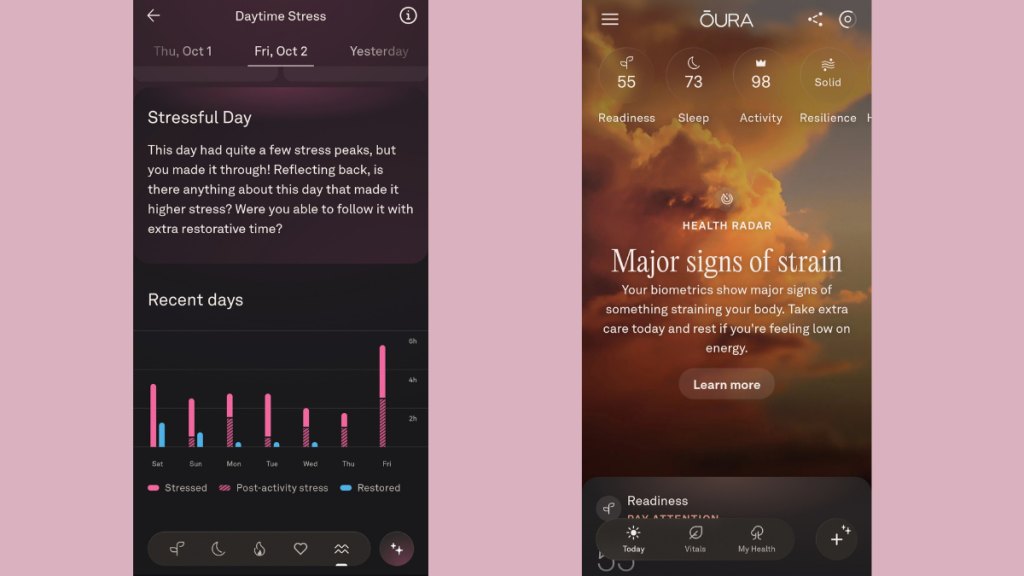
Whereas tagging that I’d had a high-stress day without much restorative time, like the one I had in the screenshot below, highlighted I was setting myself up for poor sleep. “Stress is the big one I see,” Harris confirms. “It keeps your mind on alert, and your sleep gets lighter and more broken.”
The same can be said for eating heavy meals late at night or exercising too close to bedtime. Even something like my annual flu and COVID vaccine triggered a warning that I may experience a temporary increase in my resting heart rate. And sure enough, the next morning my body was showing signs of strain, including an elevated resting heart rate, low HRV and higher respiratory rate.
How wearables like the Oura Ring 5 come into play
“Wearables can help people notice patterns, like how a late dinner or an irregular bedtime shows up in your sleep,” Harris says. “The limitation is that they only tell you how you slept—they don’t change it.” That part was up to me to start making a few shifts in my routine to see what actually pays off.
“What makes the biggest difference is keeping a consistent sleep-wake schedule seven days a week and setting up your bedroom for good sleep,” Harris says. Her advice: “If you do use a wearable, look at weekly trends, not the nightly number.”
One word of caution: Wearables can be a helpful tool in your toolkit, but only if they’re not causing added stress. A condition called “orthosomnia can happen when someone is chasing a perfect sleep score,” Harris says, which can “start making your sleep worse. Someone wakes up feeling fine, sees a low number and decides they slept badly. Then that worry follows them into the next night, which is how sleep anxiety starts. Wearables are estimates, so if your score and how you feel don’t match, trust how you feel.”

Beyond tracking sleep and stress
While Oura may perhaps be best known for its sleep insights, the smart ring is also making waves in the menopause community and is studying brain health too.
Oura’s Menopause Impact Scale
ŌURA (the maker of the Oura Ring) recently expanded its Menopause Impact Scale (MIS), a questionnaire that tracks how menopause symptoms affect women’s everyday lives. Through an ecosystem of 10 partner companies, women can give their healthcare providers more insight into their menopause symptoms—which can help providers better tailor their care.
“Women navigating menopause can find themselves explaining the same symptoms to different providers, while the true impact on their daily lives gets reduced to a snapshot in time,” said Dorothy Kilroy, chief commercial officer at Oura, in a press release on September 2. “That’s why we developed the MIS: to give women and their providers a consistent way to track menopause’s impact over time.”
“One of the most important things I’ve learned is that no two menopause experiences are alike,” said Sharon Malone, MD, chief medical advisor at Alloy Health, one of the companies utilizing Oura’s MIS, in the press release. “It’s not enough to know what symptoms a woman is having. We need to understand how these symptoms are affecting the quality of a woman’s life.
Oura’s Brain Health Study
Through Oura Labs, a way for members to try experimental features before they’re fully rolled out, users can participate in Oura’s Brain Health Study in partnership with Cambridge Cognition. It’s designed to understand how everyday factors like stress, sleep and activity affect your long-term brain health.

How does it work? Eligible members complete short tasks in the Oura app, which tracks the speed and accuracy of your responses compared to your peers. Through comparing results of these regular check-ins with your physiological data, researchers can get a look into how certain daily patterns may affect cognition over time.
The bottom line on health tracking with the Oura Ring 5
So, is the Oura Ring 5 worth it for sleep tracking? For someone who wants to understand their sleep patterns and is willing to wear the ring consistently, its personalized trends and bedtime guidance can be useful. But it shouldn’t become a source of anxiety or replace medical evaluation for true ongoing sleep problems.
While I haven’t cracked the code for the perfect night’s sleep just yet, I’m slowly fine-tuning my routine with every new piece of information I gather. And though I’m only making small changes here and there—turning in a little earlier, avoiding screen time right before bed—they’re adding up to noticeably more well-rested mornings.
Conversation
All comments are subject to our Community Guidelines. Woman's World does not endorse the opinions and views shared by our readers in our comment sections. Our comments section is a place where readers can engage in healthy, productive, lively, and respectful discussions. Offensive language, hate speech, personal attacks, and/or defamatory statements are not permitted. Advertising or spam is also prohibited.