Abeer Saqer on the Necessity of Increasing Female Leadership in Global Healthcare

Healthcare is one of the few industries where women form the backbone of the workforce. The World Health Organization reports that globally, women represent 67% of healthcare professionals and are often the primary decision-makers for their families’ medical care. Yet Abeer Saqer, CEO of Memorial International Patient Care Network (MIPCN), insists that the future of global healthcare, its strategy, innovation pathways and cross-border systems, requires more women not only delivering care but designing and leading it.
Saqer’s professional journey reflects the power of that progression. “I began my career as a clinical dietitian, working directly with patients in complex medical settings,” she says. In her view, clinical nutrition is not simply about prescribing calories or dietary adjustments. It requires understanding metabolic pathways, disease processes, treatment side effects and long-term recovery planning. More importantly, she emphasizes, it requires understanding people, their culture, their beliefs, their family structure and their daily realities.
Saqer also points to a trend she’s observed wherein healthcare executives often mistakenly delegate the responsibility of emotional connection and patient interaction entirely to physicians, losing sight of the human relations that are vital to recovery. In her view, fostering a supportive environment and understanding a patient’s cultural background is not just a courtesy but a collective responsibility in the healthcare chain, essential to the overall success of the treatment.
“Sitting with patients during chemotherapy, chronic illness management and post-operative recovery taught me that outcomes are influenced as much by trust and education as they are by medication,” she says. “A treatment plan only works if it fits the patient’s life.”
That foundation shaped Saqer’s leadership philosophy. Today, as CEO of an international patient care management and service organization, she operates a model that runs on the convergence of medicine, logistics, finance and cultural diplomacy. Furthermore, she explains that international patients often travel to the US seeking advanced treatment, cutting-edge oncology protocols, innovative surgical techniques, precision diagnostics and access to research-driven care models.
“People may arrive in the US and find the high-tech medical support they’re searching for, but innovation alone is not enough,” she emphasizes. Saqer notes that patients arriving from different regions bring the added burdens of cultural displacement, emotional isolation and varying healthcare experiences. Taking that into account, Saqer believes that managing their care requires cultural intelligence and empathy.
“There has to be a comprehensive human touch in how we approach international patients and an understanding of how families make decisions in the Middle East versus Europe or Asia,” Saqer explains. “Quality care also requires knowing when the extended family must be included in discussion, clarity in communication when navigating insurance approvals, complex oncology regimens or second-opinion consultations.”
Keeping that nuance in mind, Saqer identifies empathy and compassion as indispensable leadership skills, refuting the idea that being a compassionate leader requires a compromise in strength or efficiency. “When empathy is combined with a deep understanding of US medical advancement, it can result in evidence-based protocols, multidisciplinary tumor boards, innovative clinical trials and precision medicine. The possibilities are prolific and transformative,” she shares.
She warns that without these human elements, the medical journey can become difficult for the patient. For her, the ability to lead with heart is a sophisticated competency that can ensure healthcare remains a humane healing process.
Saqer’s background as a dietitian empowers her to speak both clinical and human languages. “I understand the physiological impact of chemotherapy and immunotherapy, I understand recovery timelines and nutritional implications of surgical procedures,” she shares. “Yet at the same time, I also understand the fear families feel when navigating care in a foreign country.”
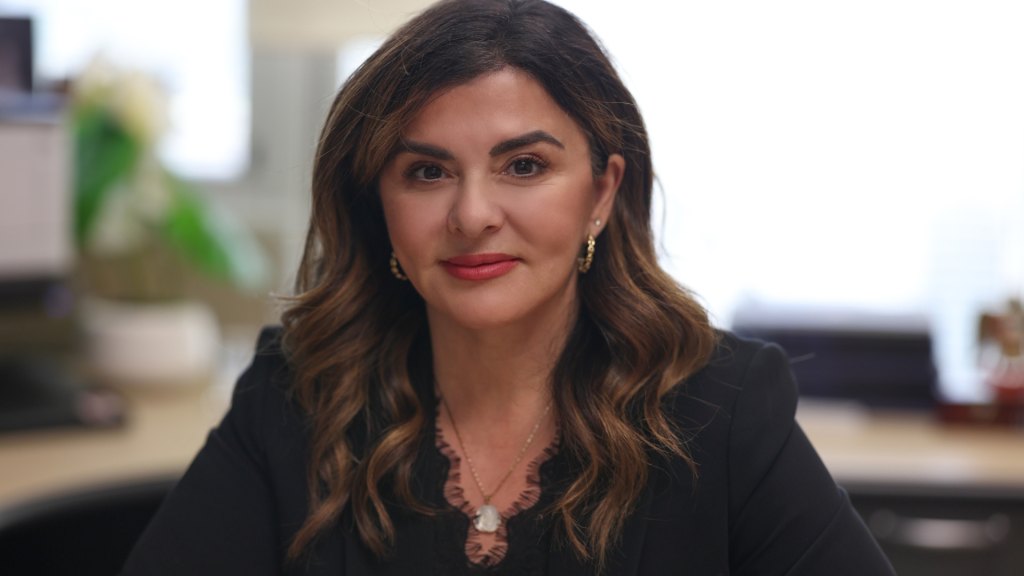
This dual perspective strengthens her international case management, allowing for informed decision-making, transparent communication and seamless integration between innovation and compassion.
Women in healthcare leadership, Saqer argues, often bring this integrative lens.
According to her, many women have built careers in direct patient care before moving into executive roles. She believes that kind of frontline exposure can develop systems awareness, how departments interact, where bottlenecks occur and how communication gaps affect outcomes. It can also foster emotional intelligence, which Saqer considers a critical leadership skill in high-stakes medical environments.
As International Women’s Day approaches, Saqer proposes a strategic message. “We need more women leading global healthcare ventures, shaping cross-border systems and aligning innovation with humanity.” From her perspective, when women with clinical foundations step into executive leadership, they can bridge the gap between science and service. That combination of empathy, cultural understanding and medical literacy, she emphasizes, can improve global outcomes.
“Global healthcare is evolving. I am proud to contribute to that evolution by building systems that are designed to be clinically sound, culturally intelligent and patient-centered at every level,” she says. The future of global healthcare, as she affirms, will be defined not only by advanced treatment but by the leaders who ensure that innovation is delivered with compassion.


