The Future of Autism Inclusion May Start With the Spaces Children Share

Autism is becoming increasingly visible in the data, yet the environments surrounding children may be slower to change. The latest figures from the U.S. Centers for Disease Control and Prevention identify autism in about one in 31 eight-year-old children across its monitoring sites, up from one in 36 in 2020. The figures point to a growing population of children whose educational and social environments must account for different ways of communicating, regulating and learning.
A child often spends the day moving through classrooms, playgrounds, childcare settings and recreational spaces with each space carrying its own expectations about how children should behave. Environments designed around a single idea of participation can become difficult for children whose sensory or developmental needs fall outside that framework. The CDC has also documented substantial variation in autism practices between communities, underscoring how access to evaluation and support can shape the experience of families.
Sensory inclusion consequently belongs in the conversation about how childhood itself is designed. A room can be technically accessible and still leave a child overwhelmed. Similarly, a classroom can include a child physically while providing little support for how that child processes sound, movement, instructions or social interaction.
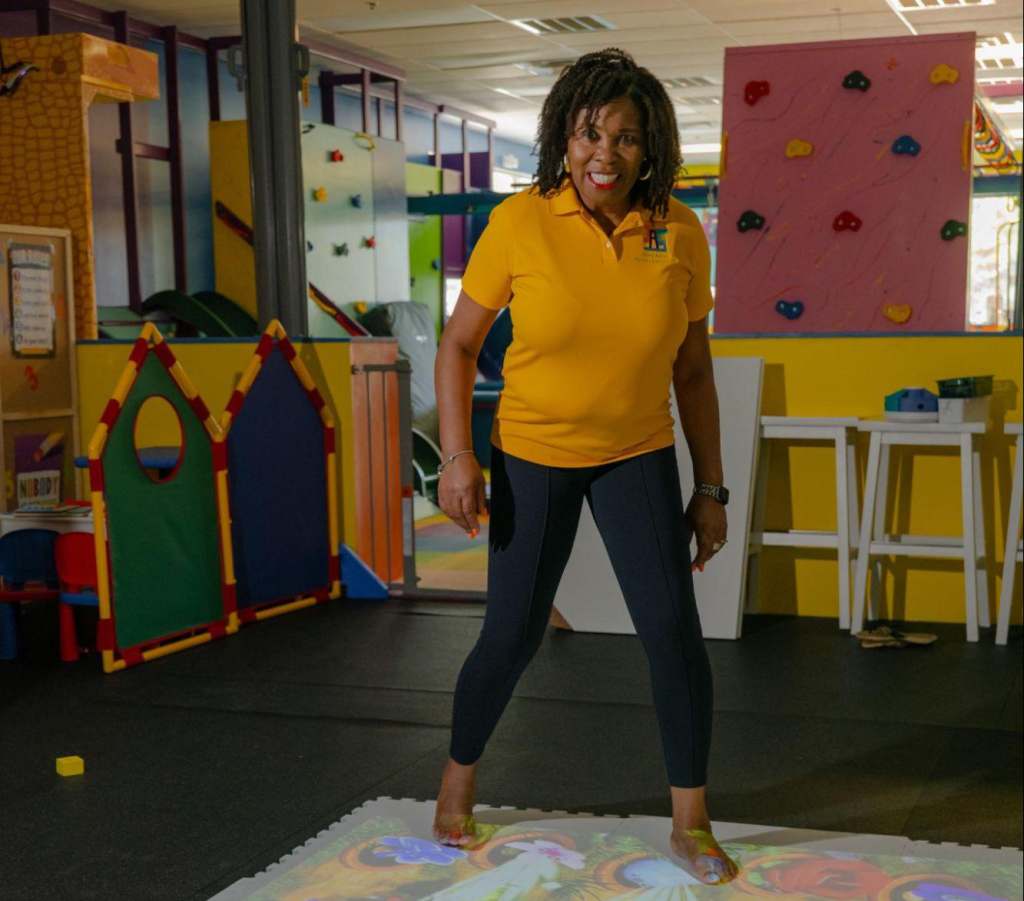
The more pertinent question, then, may be what happens when inclusion is designed into the environment from the start. Shared spaces can give children opportunities to encounter different ways of communicating and behaving early, potentially changing how difference is understood among peers.
Inclusion should be considered a design principle for children’s communities rather than an accommodation added after difficulties emerge, according to Andria Powell, founder of JASE Center (Jumpstart Academic & Social Enrichment). She has arrived at that position through her experience raising her son Jason, whose sensory needs were poorly understood at school.
Powell recalls that he was suspended when he acted out, despite needing support to regulate. She shares, “Instead of supporting him by saying, ‘You’re acting out because something is wrong; please use your words,’ or providing a sensory room to help him regulate, there was simply no support there for him.”
In her view, the deeper issue lies in how children with different needs are integrated into everyday environments. Her center is designed to bring them together so they can learn from one another, an approach she considers important to social development.
She highlights an instance where a non-verbal child in therapy began communicating after being encouraged through play with a peer, rather than being judged for her differences. Powell adds, “She just encouraged her to play, and she spoke. So, I love to see that.”
Her definition of an inclusive space is intentionally broad. “The definitive and inclusive space is a space that accommodates everyone, judgment-free. Everyone is welcome to play together, learn together,” Powell explains. “So it’s not for autism, and it’s not for neurotypical. It’s everybody, and there are things and equipment in the center for everybody.”
That approach also challenges a common assumption that children with autism share identical sensory requirements. Powell points to the difference between children who seek sensory input and those who become overstimulated and need a quieter setting. At JASE Center, Powell explains that the physical environment responds to that variation through spaces intended for calming alongside equipment and modalities that provide movement and sensory input.
The case for sensory-aware environments extends well beyond autism, according to Powell. She reports that most of the children visiting JASE Center do not have autism, with families also seeking support for developmental delays and other sensory needs. “We all have sensory needs. It’s not just them,” she states.
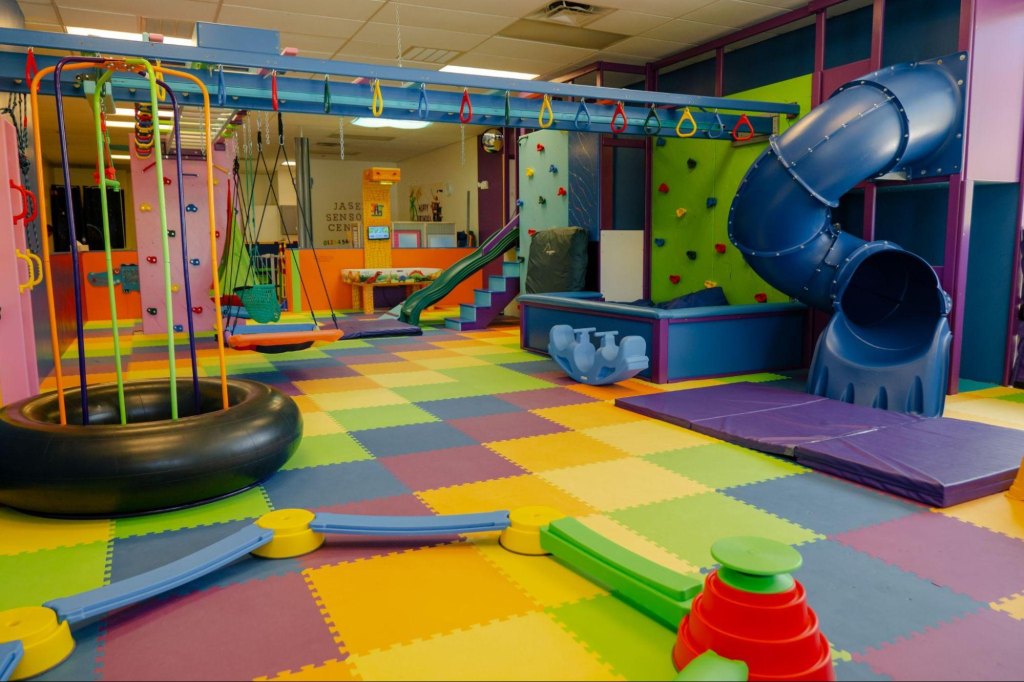
Education presents another test. Powell sees school readiness as particularly important for homeschooled children who may receive academic instruction at home but have fewer opportunities for structured peer interaction. JASE’s program is intended to complement homeschooling by creating opportunities for social and developmental learning within a shared environment.
The same initiative is moving into digital learning. Powell and her team are developing a platform built around the idea that children learn differently, using interactive missions that require children to act on what they encounter rather than passively watch content.
She shares, “It’s a learning adventure that they go on with a character, with each episode leading to a physical mission that can be completed and uploaded to the platform.”
Powell sees the physical and digital models as connected parts of a wider expansion strategy, with the longer-term ambition of reaching more families through additional centers while allowing digital learning to extend the experience beyond a single location.
The larger shift is already becoming difficult to ignore: as more children are identified with developmental differences, the environments built around them will have to become more responsive. Powell’s argument places the responsibility partly in the design of those environments themselves. Inclusion becomes most meaningful when a child does not first have to prove that they can fit into a space before the space makes room for them.
This article is for informational purposes only and does not substitute for professional medical advice. If you are seeking medical advice, diagnosis or treatment, please consult a medical professional or healthcare provider.


