My Adult Daughter Hates Me: Tania Khazaal, Former Estranged Daughter, Reveals What Your Child Is Actually Thinking

It is a situation that haunts countless parents: the sudden silence of a child who once filled their home with laughter. For many mothers, the words “my adult daughter hates me” are not just a passing thought; they are a painful reality that comes with confusion, guilt and a deep desire to understand why. Tania Khazaal, a former estranged daughter who has since reconciled with her mother, offers rare insight into what drives adult daughters to cut ties, why it happens and how healing is possible when parents approach it with empathy, perspective and intention.
When your grown daughter hates you: Understanding the real pain behind the anger
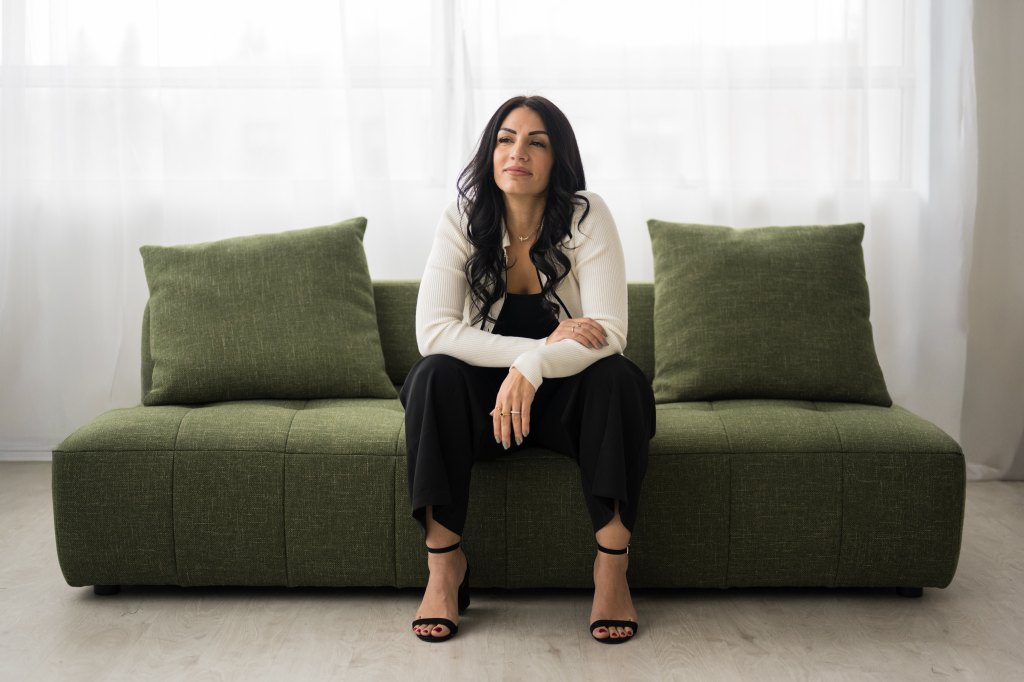
When a grown daughter pulls away from her mother, the pain can feel indistinguishable from rejection. For Tania Khazaal, Founder of The Renewal Collective, this rupture is not merely theoretical; it is a lived experience. At 24, after being forced to leave the family home, she remembers telling her father, “I don’t care to have a relationship with her,” referring to her mother. What she understands now, years later, is that what parents often interpret as hatred or bitterness is rarely hatred at all. It is, more often, a form of self-protection.
Khazaal explains that anger is frequently only the surface emotion. Beneath it lies something far more vulnerable: accumulated pain that was never acknowledged, repaired or understood. In her own life, that pain built quietly over the years through moments that seemed small in isolation but devastating in totality. Collectively, they communicated a single, painful message: you matter less.
From the outside, daughters who distance themselves can look punitive or even cruel, but Khazaal challenges that narrative. Estrangement, she explains, is rarely about punishment; it is about preserving emotional safety when pain has nowhere else to go. In these instances, the daughter isn’t trying to hurt her mother. She is trying to stop hurting herself.
Interestingly, Khazaal found that her early therapy experiences, however well-intentioned, unintentionally reinforced this divide. Sessions focused almost exclusively on her own feelings, validating her on the surface but stopping there. There was no framework for repair, no curiosity about her mother’s internal world and no guidance on how two people might hold conflicting realities at once. Over time, this created what she describes as an “emotional confirmation loop,” where each session quietly reinforced the idea that the rupture existed solely because someone else had failed her.
The deeper insight came much later: Estrangement is not necessarily proof of parental failure, nor is it evidence of a “toxic” mother. More often, it signals a daughter’s unmet need for her emotional experience to be seen as real and significant. Without that acknowledgment, distance can feel like the only form of self-preservation available.
This phenomenon is increasingly common. A new YouGov poll finds that 38% of American adults are currently estranged from a family member. Further insight from the Within-Family Differences Study at Purdue University suggests that estrangement is not always loud or dramatic. Researchers found that while 38.2% of cases involved no contact at all, the remaining 61.8% were defined by very little contact combined with profound emotional distance. Sometimes, estrangement looks like a quiet absence, an emotional withdrawal or a series of conversations that never quite touch what truly matters.
Khazaal believes this distinction is critical for any hope of reconciliation. Healing does not begin by asking who was right or wrong; it begins by understanding that anger is rarely the core wound. Beneath the friction is grief, grief for the relationship that was hoped for, for the acknowledgment that never came and for the safety that was never fully felt. Until that grief is seen, estrangement can feel less like a choice and more like a necessity.
What to do when your grown daughter hates you: The acknowledgment framework
From conversations, the most common misstep parents make is attempting acknowledgment alongside justification. Parents often say, “I know I hurt you, but this is why I did it,” which daughters hear as, “Your excuse is bigger than my pain.”
Khazaal advocates the Acknowledgment Without Justification Framework, which consists of three steps that include saying, “I hear that I hurt you,” acknowledging their pain, and allowing space without defending in the same breath.
Sample phrasing includes: “I understand my actions caused you pain. I acknowledge you experienced hurt. Your feelings are real.” This approach validates the daughter’s experience without requiring admissions of abuse or fault, an essential tactic for parents seeking guidance.
Why your adult daughter stopped talking to you: The therapy culture effect
Khazaal identifies a cultural phenomenon that has contributed to estrangement among millennials. She later felt that therapy reinforced a one-sided view of the relationship, noting that while emotions were processed, the perception of her mother remained unchanged. Carl Rogers’ humanistic approaches in the 1970s emphasized validating feelings as facts. In the 1980s and 1990s, media figures and publications reinforced the “toxic parent” narrative, normalizing cut-offs.
A pattern she observes in clients is familiar: A child may enter therapy with parental support and change in meaningful ways, though those changes don’t always translate into improved parent-child relationships. Therapy often asks, “How did that make you feel?” but rarely inquires, “What was your parents’ story?” Khazaal’s perspective offers the missing side, critical for parents struggling with their adult daughter who has stopped talking to them.
From ‘my grown daughter hates me’ to healing: The perspective shift that changes everything
Khazaal describes her breakthrough when she asked, “What’s my mom’s story?” She discovered her mother was the second youngest of 16 children and lost her father at age three, leading to neglect that was never intentional. Incidents that seemed cruel in isolation, such as missed birthdays or broken promises, were contextualized by her mother’s personal struggles, including abuse and family hardships.
The truth adult daughters won’t tell you: What estrangement really means
Khazaal exposes the language daughters often use: “I’m protecting my peace,” “I’m doing this for my healing” or “you’re not respecting my boundaries.” She explains that these phrases frequently mask a deeper truth: not protection, but pain. Many parents arrive at her work carrying an unspoken fear, “my grown daughter hates me,” without ever being given language to understand what’s really happening. According to Khazaal, true healing isn’t about distance; it’s about developing the capacity to sit with the person who triggers you without being triggered. In some cases, estrangement is presented as self-care, even when it functions more as distance than resolution.
Seven years ago, Khazaal herself believed reconciliation was impossible. She spent two years estranged, at one point living out of her car. Today, she has repaired her relationship with her mother, her sister is both her best friend and employee and she has helped her husband heal his estranged relationship with his own mother. Her experience suggests that acknowledging pain and broadening perspective can, in some cases, open the door to change.


