‘Dungeon Crawler Carl’ Fans: This Mom’s Hilarious Sci-Fi Thriller Is The Next Must-Read Craze!
Erin Ampersand reveals how ‘Apocalypse Parenting’ put a mom at the center of a LitRPG adventure

Key Takeaways
- Erin Ampersand created 'Apocalypse Parenting' to put a mom at the center of the action.
- The five-book series grew from a Royal Road serial into a traditionally published LitRPG.
- Finishing Megan’s story fulfilled a writing dream Ampersand had carried since age seven.
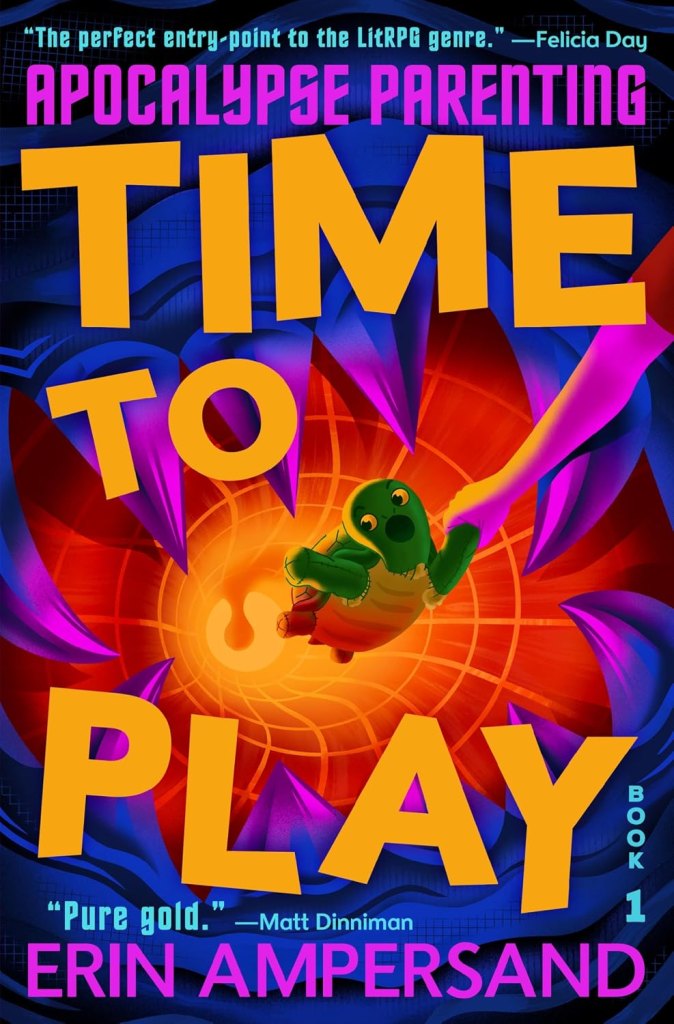
For Erin Ampersand, the end of the world begins in suburbia—and with one mom who still has kids to raise. That’s the irresistible premise behind Apocalypse Parenting, Ampersand’s LitRPG series about Megan Moretti, a mother whose already complicated life gets considerably more difficult when an alien invasion transforms Earth into something resembling a deadly game. Suddenly there are monsters to fight, supernatural abilities to master and rules to figure out, all while Megan attempts to do what parents do every day: protect her children, teach them how to survive and somehow keep the family together.
If you’re unfamiliar with LitRPG, the increasingly popular genre combines traditional science fiction or fantasy storytelling with elements familiar from role-playing games—characters may acquire abilities, gain levels or otherwise progress according to rules built into the fictional world. Ampersand describes it even more simply as stories containing “game-like elements” and strong themes of growth.
It’s the same broad literary territory that has helped turn Matt Dinniman‘s Dungeon Crawler Carl into a publishing phenomenon, but Ampersand approaches it from a distinctly different direction. Instead of sending a single hero into an increasingly insane dungeon, Apocalypse Parenting keeps much of its action grounded in a suburban neighborhood, where household objects may become weapons and a mother has to figure out how to guide children who are rapidly developing dangerous powers of their own.

It’s been quite a journey for a series Ampersand began posting on Royal Road in 2021 with virtually no expectations. Reader response helped convince her she’d found the story she had been trying to write for years. After self-publishing the first book, she landed an audiobook deal with Podium, received an unexpected boost from actress and author Felicia Day and eventually found her way to traditional publisher Tor.
Is ‘Apocalypse Parenting’ like ‘Dungeon Crawler Carl’?
Now, with Megan’s five-book story completed and companion novel Engineer’s Odyssey expanding the world from another perspective, Ampersand sat down with Woman’s World to talk about LitRPG, motherhood during the apocalypse, her unconventional road to publication, the influence of Dungeon Crawler Carl and what it feels like to finally finish the story she’d spent years dreaming of writing.
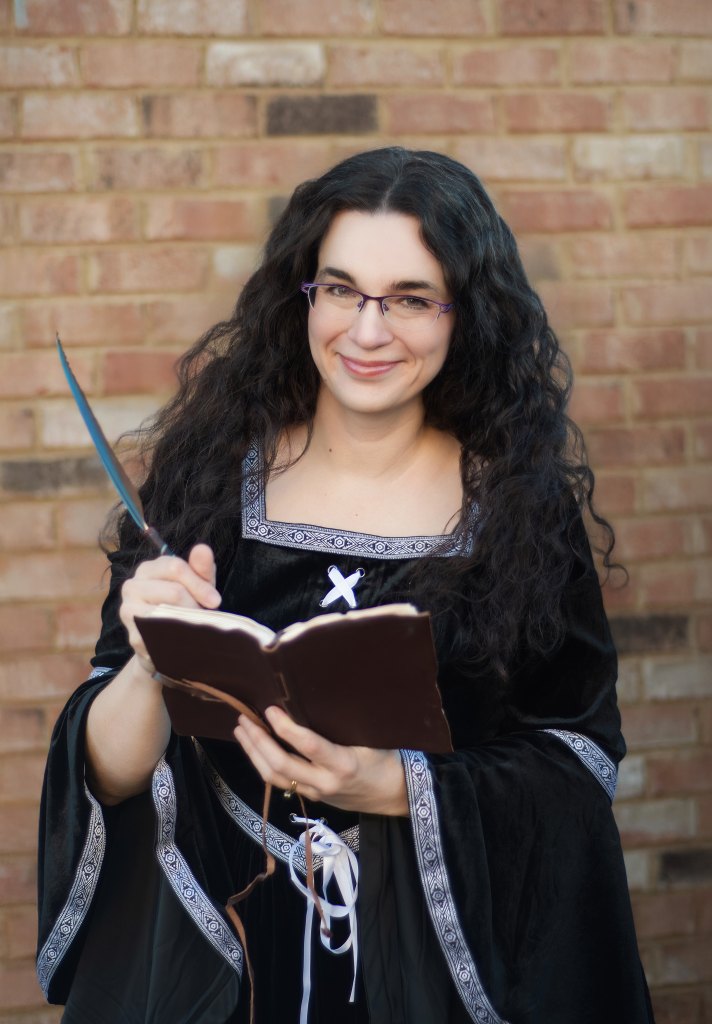
WOMAN’S WORLD: Would you say your approach in terms of a mom and her kids is pretty unique?
ERIN AMPERSAND: I know some other people who’ve done similar things, some of them inspired by Apocalypse Parenting. K.T. Hanna, I think, wrote a series about a mom simultaneously, but it’s not very common at all. That was kind of what prompted me to start writing. I love science fiction, I love fantasy and I love LitRPG, but I was reading a lot of it and even if I was enjoying myself, I couldn’t relate to the characters. It’s gotten a lot better in the past five years, but when I started writing, a lot of series were very scarce on having female characters at all. Fiction in general, not just LitRPG, really doesn’t do very well by parents or moms.
If you think about parents actually being parents in any kind of adventure story, you’ve got The Incredibles, and then you probably have to go back to Swiss Family Robinson, which I think was 1812. I feel like there should be more than that. It’s as if we’re, like, “Oh, okay, you have kids now. Maybe we’ll come back to you and you can be the topic of a story again after they’re grown up.”
Disasters happen to everybody, and I absolutely think parents would rise to the occasion and that there are interesting stories to tell there. And moms especially often feel incredibly invisible. I wanted to see myself; I wanted to see somebody that I could relate to, and so I wrote it.
WW: That concern is valid, because when you think of the sprawling action adventures of Dungeon Crawler Carl or something similar, you would think of a male protagonist, so it feels like there was a void that was filled, basically.
ERIN AMPERSAND: That’s what I was trying for. Almost everybody likes adventure stories. We like the excitement. We like to see heroism. We like the drama and the cinema of it all. When I was young, I liked a lot of the “chosen-one” type stories. I liked the idea that maybe someday someone would come and tell me that I was the lost fairy princess or secretly born with wizard blood or what have you. I’ve gotten to the point where if it hasn’t happened to me yet, it’s probably not going to, but that doesn’t mean that I’ve stopped wanting to be a part of these fantastic worlds.

WW: So you create them and basically make yourself part of the adventure.
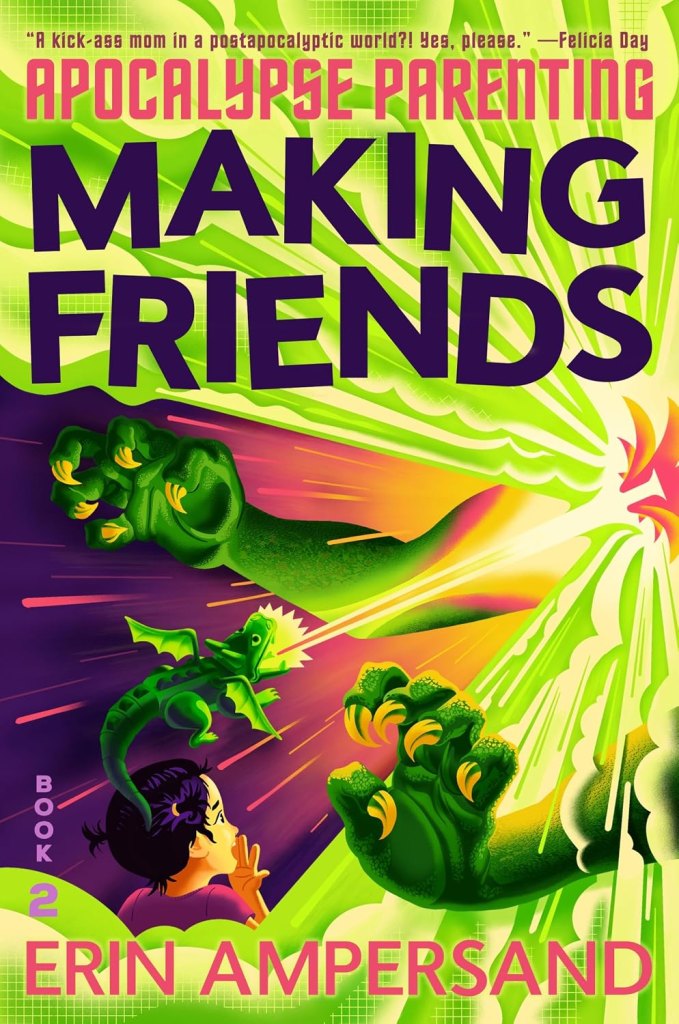
ERIN AMPERSAND: More or less. Megan isn’t me exactly, but she has a lot of me in her. And not just Megan, my protagonist, but in the books I tried to put in a lot of the people that I don’t see. Minor spoilers for book two: One of the groups that Megan encounters is this group of people from the nearby nursing home and hospital who maybe had a bunch of debilitating conditions. And then, when this apocalypse happened for everyone else, their osteoporosis was cured, their dementia was cured. So it’s been horrible for everyone else, but they’ve gotten their lives back again and they want to pay that forward.
I just thought that was super fun, because a lot of these people who are sidelined can still be very, very cool and have interesting stories. They’re also the people we see every day. That’s kind of what I wanted to tell: a story where the heroism of everyday people was highlighted.
WW: But when you take this approach and you say, “Okay, it’s a mom and her kids,” how does that change the adventure from something like Dungeon Crawler Carl?
ERIN AMPERSAND: One thing—which might not be exactly the question you’re asking, but that I do want to say— that I really like about science fiction and fantasy is that you can change the premise. Because in real life, if I were to send my kids to fight monsters, I would be a terrible mother—there’s really just no justification for that. But I can set up a world where someone else is going to force the kids to fight monsters, so you have to teach them how to fight. That’s the rules of the setting. You get to do this and you’re still a good mom. But as far as how it changes everything, it changes it a lot.
Compared to Dungeon Crawler Carl, things are a lot more grounded. We’re not in some insane dungeon; we’re in a suburban neighborhood. People have these supernatural abilities, but they’re also creating armor out of things around their house. They’re trying to fashion kitchen knives and broom handles into spears and stuff to fight with, because the supernatural abilities don’t start out incredibly strong.
It’s also kind of fun because, as a parent, I know that there are lots of times where my kid will very confidently say something that is just not right in any way, and I will feel this alarm and intensity of emotion as I try to talk them out of their insane conclusion. But the drama that I feel internally at that moment isn’t something that necessarily would be apparent to a stranger. When we take the kid’s misunderstanding and we involve monsters and supernatural abilities, Megan can have those same feelings that a parent will recognize, and the reader will also be able to see and feel the drama because it really does matter how she parents her kids. They are as strong as she is in short order. They have abilities she doesn’t, so she can’t just box them up. She has to guide them. She has to lead them. When I called the series Apocalypse Parenting, I did that very intentionally. Things change as we go through, but I really tried hard not to lose that part of it.
Is the ‘Apocalypse Parenting’ series finished?
WW: Is the fifth book your final Apocalypse Parenting adventure?
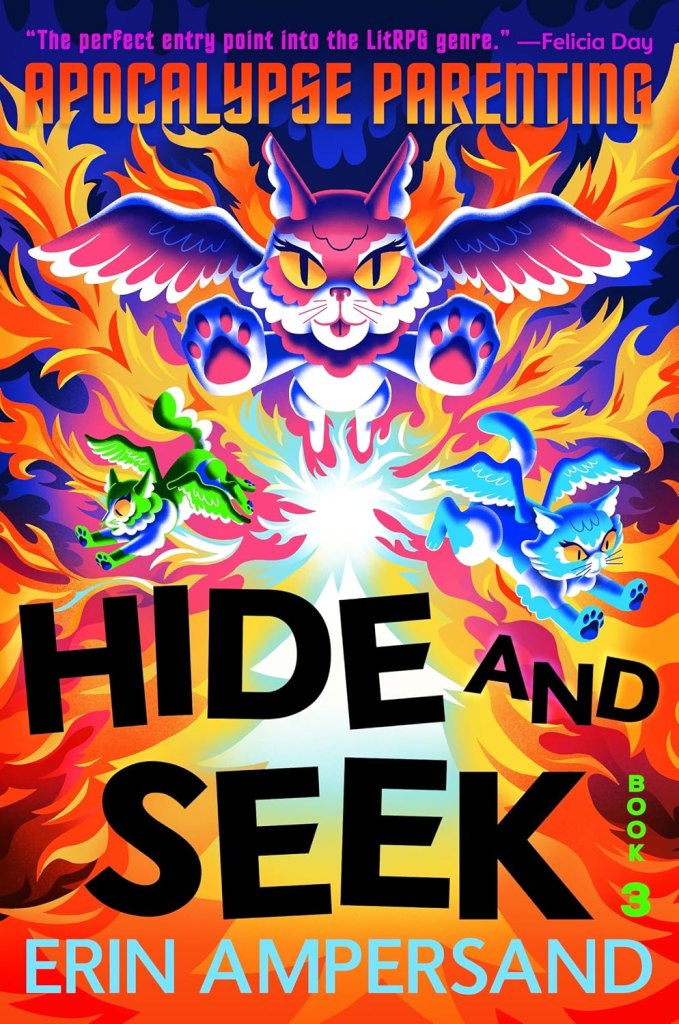
ERIN AMPERSAND: I’m not going to say that I will never, ever revisit this universe, but that is Megan’s story from start to finish. I believe strongly that you can have a good story and do just about anything, but you cannot have a great story without a great ending. Time will tell if I did that, but I wanted to take my shot. I’ve got the five books, and then I have a companion novel following Megan’s husband, who is on a business trip at the start of the apocalypse.
WW: What is that called?
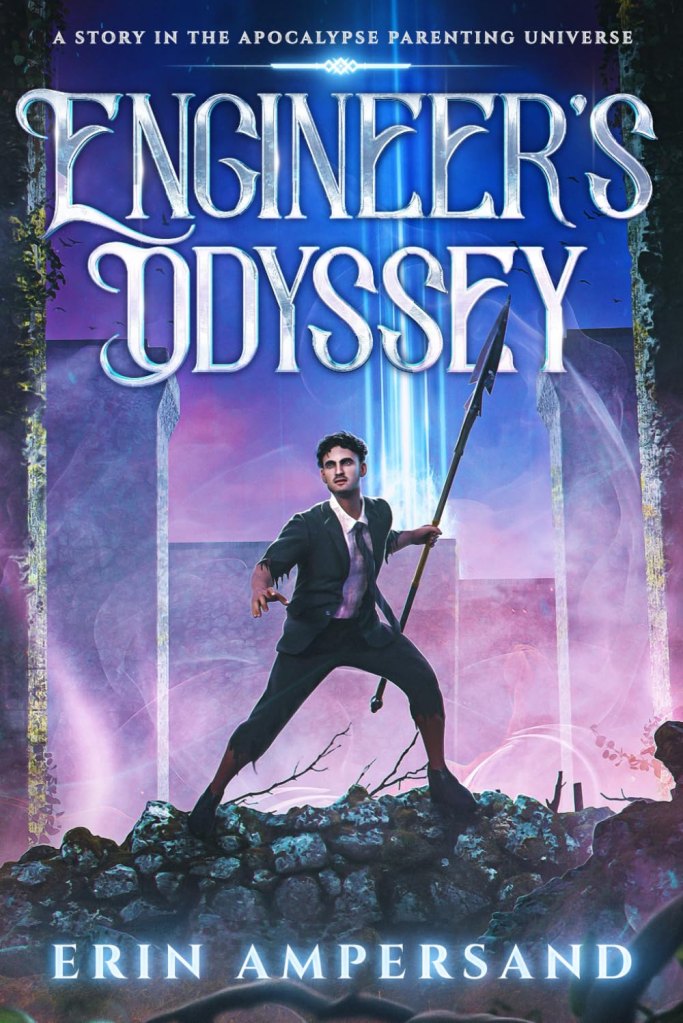
ERIN AMPERSAND: That’s called Engineer’s Odyssey, and it’s meant to be an alternative jumping-on point, or you could read it between books three and four. Vince and his four coworkers are in Colorado, and they are trying to fight and MacGyver their way back across the country to Alabama. So it’s a very different tone that covers the same time span as the first three-and-a-bit books. I was a little inspired by Orson Scott Card and how he did Ender’s Game and Ender’s Shadow. He used the same time span, but from very different perspectives and told very different stories. I tried to do the same thing. From what people have told me, I’ve succeeded, but it was a scary thing to attempt.
WW: Understood. Just because you have success telling the story one way doesn’t mean you’re going to have that success telling it from another point of view, from a different vantage point, in terms of the readers and the connection they make.
ERIN AMPERSAND: Yeah, and you don’t want to be repetitive, but you’re covering a lot of similar events.
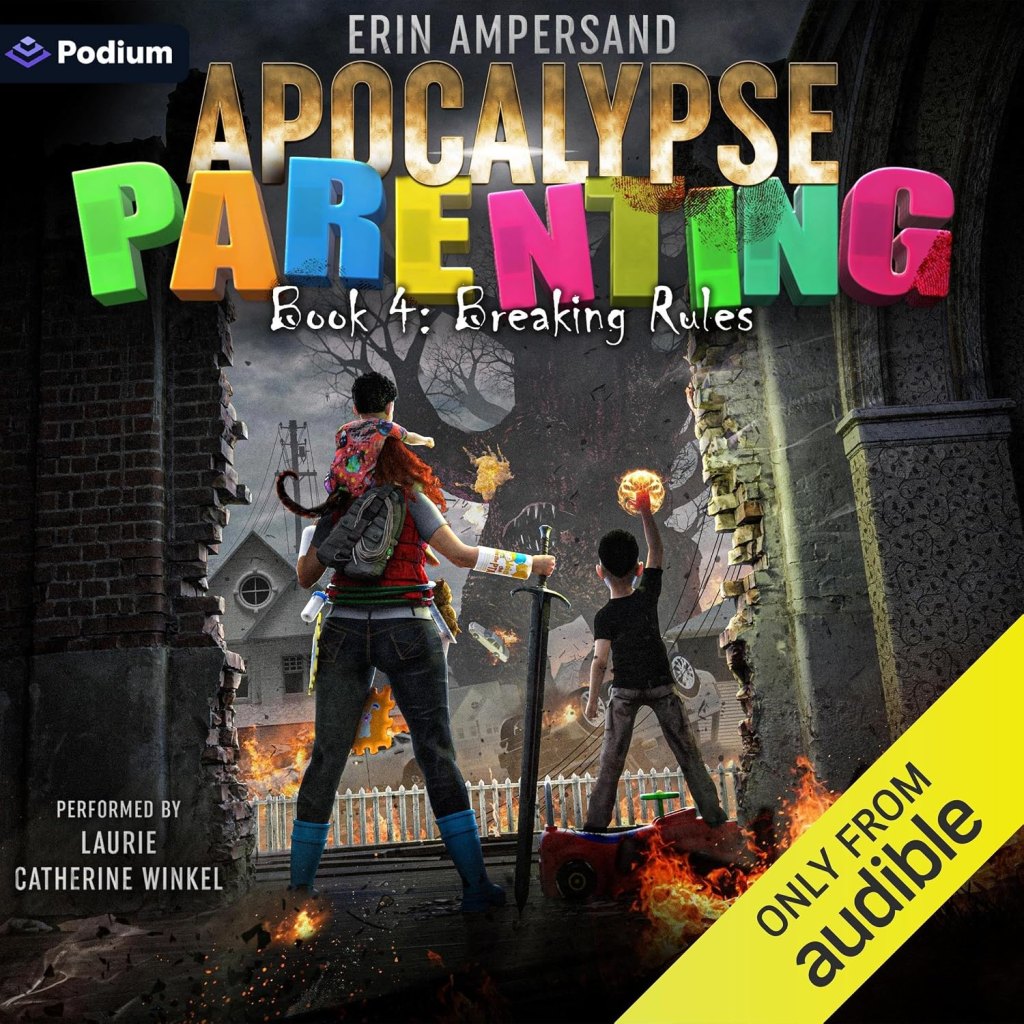
WW: How would you describe Megan and the kids’ journey from book one to book five?
ERIN AMPERSAND: Oh, gosh, that’s a big question. A lot of it is learning to trust her kids, learning to work with them, learning to find that balance between protecting them enough but not too much, because that’s something she struggles with at the beginning. And she comes to accept herself a lot more, too. For me, certainly, I feel a lot of self-doubt, and I know when I talk with other people, almost everybody does. Obviously, that’s something Megan struggles with as well.
By the end of the series, monsters or no monsters, destruction or no destruction, she is a lot more at peace with herself—and not because her flaws have disappeared, but because she’s accepted that she can still be worthwhile even with them.
WW: Earlier you noted that Megan in some ways is reflective of you, but have you learned anything from her?
ERIN AMPERSAND: I’ve definitely been inspired by her in different ways. There’s one particular moment later in the series where Megan realizes there’s this person that she has always kind of disliked, and she assumed that it was mutual. Eventually, she realizes she was intimidated by this person. Yeah, this other person can be kind of abrasive, but a lot of the judgment was in her own mind. It wasn’t actually coming at her from this person like she assumed it was.
That’s something I definitely try to remember: Most of us are much kinder to those around us than we believe people are. Most of the time, you think people are judging you negatively when they’re not.
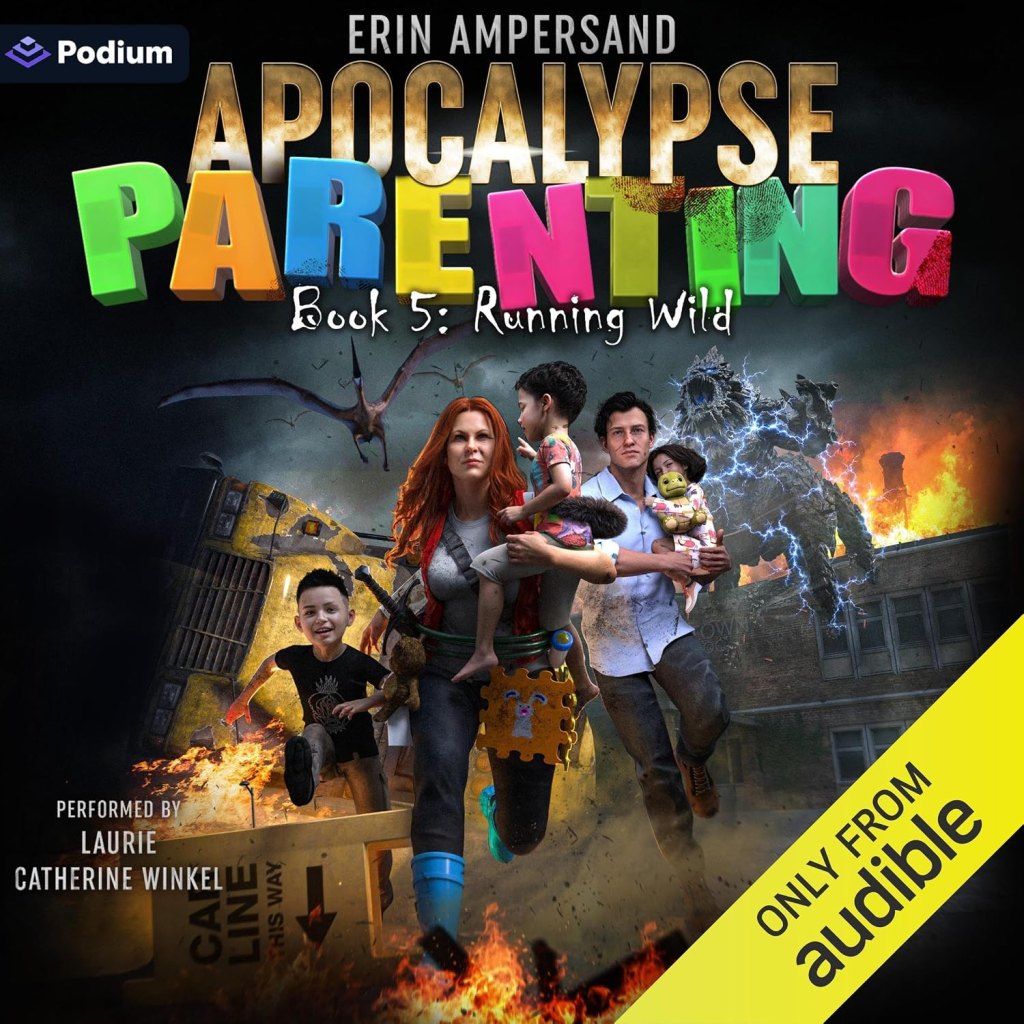
WW: What impact has the success of the books had on your life? Not in terms of money, but emotionally. Of being in the spotlight with people suddenly judging everything you write and what you have to say.
ERIN AMPERSAND: Honestly, this might not be what you intended with this question, but I have been incredibly grateful for Apocalypse Parenting because I spent decades trying to write books and misunderstanding my own process. There’s a lot written out there about how to plot your books, how to plan your books, and so I always just thought I needed to plan them harder. Well, it turns out that what I need personally is to let my stories have room to breathe and change as I write them. Otherwise, I just end up feeling like my characters are made out of cardboard.
I failed to write so many novels in the past, and I started writing this after I’d done some world-building—a significant amount of world-building, honestly—and thinking, but I hadn’t sat down and written out the entire plot when I started. I just started writing it serially on a site called Royal Road, and I had zero expectations when I started posting this. Then I started getting comments from people like, “Whoa, a mom! This is wild. Oh my gosh.” I’d just started posting my first few chapters, I’m getting three comments on them or whatever, I’ve got 12 people following my story, and it was so encouraging that this was the story that I wanted to tell and people wanted to read it.
You always get some negative people, but I feel like, to me, any negative voices are drowned out by the people who are saying, “This book really meant something to me.” I know multiple people who saw my book and decided that there was room for the story that they wanted to tell and decided to start writing, and that is humbling.
Occasionally you’ll see something really negative and it’ll get under your skin for an hour or two, but by the next day, I’m definitely thinking a lot more about the positives than the negatives. That’s very important if you’re going to put any kind of creative work out there: Try to focus on the people who like you and not the people who don’t, because nothing is for everyone. My favorite two-star review I’ve ever gotten was from this one person who was, like, “The story was pretty good, but there were too many kids in this book.” I’m, like, “Did you read the title? What did you expect her to parent, spiders?” But I try to appreciate those kinds of things because they miss the point, and better to laugh, right?
WW: Oh, absolutely. You mentioned the Royal Road thing—what was the journey, and how did that journey happen from Royal Road to where you are now with five published books?
ERIN AMPERSAND: I started writing on Royal Road in 2021, and I did pretty well there. As soon as I finished a book, I was so excited that I had finished a book after failing for decades that I did something that was probably not great from a financial perspective, which is I took that book down off Royal Road and self-published it on Amazon. Because you see, with Dungeon Crawler Carl and these other series in my genre, if you keep your series up there, you can build a huge following. You can get thousands of people paying you every month on Patreon. From a financial perspective, it wasn’t a great idea, but I don’t really regret it because it was just incredibly motivating for me. And I did still have followers following my story as I was going through.
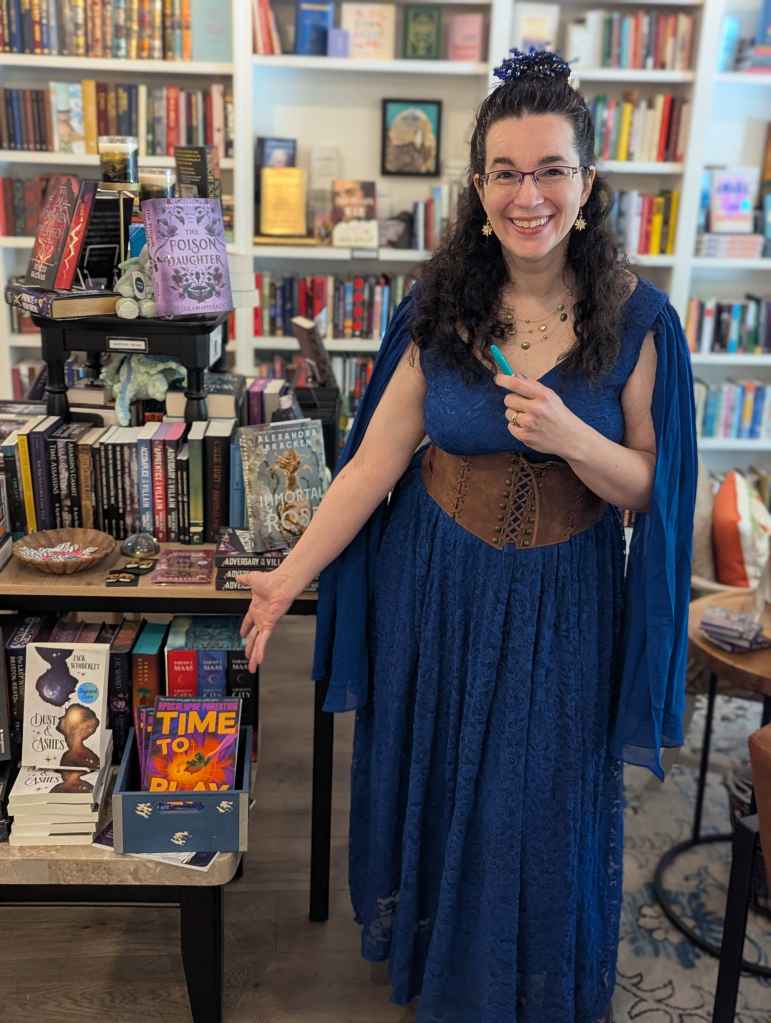
Podium picked me up very shortly after I put the first book up on Amazon. So I’ve been published in audio since—I’d have to actually go check—probably 2022 or 2023. At some point, the actress Felicia Day left a positive review on book one of my series, and my husband points it out to me because I don’t look at my own reviews. He looks at them for me, and says, “Oh, you should read this one. It’s nice.” At first, I couldn’t believe it was real. I messaged her publicist to be like, “Is this real?” And then when I was told it was, I was over the moon.
Then last spring, Felicia came to a small convention in my area, and my husband said, “You should go meet her.” I’m like, “No, that’s weird. What if she doesn’t remember that review she wrote?” And he basically did the cartoon thing of shoving me forward. I’m really grateful for that because she was actually excited to meet me, and I gave her a copy of my book. Then a few months later, she messaged me on social media and she’s like, “Hey, I recommended your book to my agent, and she loved it. Do you have any interest in being traditionally published?” “I’m sorry, what? Yes. Yes, also yes, and yes!”
People ask, “Ooh, how did you get an agent?” I reply, “I can tell you, but I’m just going to let you know my process will not help you.” I feel very, very blessed, and very, very grateful to Felicia as well. Since then, it’s been kind of a roller coaster, getting hooked up with Tor, which has been moving very quickly for a traditional publisher, so that’s been kind of a fun process for all of us. Jump on the train kind of thing.
I spent a lot of this year doing copy edits on book five, and then I’d be jumping back to do copy edits on book two before Tor published it. They’d had a light developmental pass on book one, and then I’m getting messages about cover art. Love my cover artist, by the way. Cannot say enough nice things about Spencer Flock. I hope he becomes incredibly popular because I just think they’re so fun.


WW: What was the feeling when you got to the conclusion of book five and either literally or figuratively said, “The End?”
ERIN AMPERSAND: I mean, gosh, it’s hard to put it into words. I definitely cried. I’m serious. This has been my dream since I was very small, and I spent a long time putting a lot of work into that dream, but not getting a lot of success, not getting anything that I was proud of or that I was happy with. Finishing a book was pretty amazing, but it was book one of a series. So finishing the story, finishing a story that I am proud of, that I want to share with people, that I know has touched people’s lives already—you can see I’m getting a little emotional.
I mean, honestly, I have three series in my head right now I want to write. Don’t take this as me being like, “Oh, yeah, I’m done.” But if, God forbid, something terrible were to happen to me tomorrow, I have a legacy that I’ve left in the world. And no matter what successes or failures I have in the future, I’ve done it. Seven-year-old me would be so proud of me.
Conversation
All comments are subject to our Community Guidelines. Woman's World does not endorse the opinions and views shared by our readers in our comment sections. Our comments section is a place where readers can engage in healthy, productive, lively, and respectful discussions. Offensive language, hate speech, personal attacks, and/or defamatory statements are not permitted. Advertising or spam is also prohibited.