5 Books That Read Like Lost ‘Star Trek’ Adventures—Gene Roddenberry’s ‘Star Trek: The Motion Picture’ and More
These 'Star Trek' books explore missing years, lost concepts and adventures that never reached the screen—from ‘The Original Series’ to the ‘Phase II’ Era

Key Takeaways
- These Star Trek books feel like lost episodes of Kirk's Enterprise.
- Explore the missing years between 'TOS,' 'Phase II' and the movies.
- Discover unfilmed adventures that expanded the hidden history of 'Trek.'
If you’ve been following our ongoing exploration of Star Trek‘s lost history—the abandoned movies, the near-launch of Phase II, the scripts that never reached production and the adventures that almost happened—you already know that some of Trek‘s most intriguing stories never made it to the screen. But not all of them disappeared. During the years when Star Trek existed in a strange limbo between cancellation and rebirth, authors stepped in to fill the gaps. Some expanded unexplored eras, while others adapted ideas that had roots in unrealized productions and a few simply delivered the kind of adventures fans imagined they might have seen had the original five-year mission continued.
The resulting Star Trek books are a fascinating collection of stories that, rather than feeling like episodes, are more like missing pieces of Trek history. Whether they’re exploring the lost years between the television series and the movies, preserving concepts from the Phase II era, or capturing the spirit of a hypothetical fourth season of the original series, these books offer something many Trek fans secretly crave: a chance to experience adventures that never reached television screens or movie theaters.
‘The IDIC Epidemic’ by Jean Lorrah
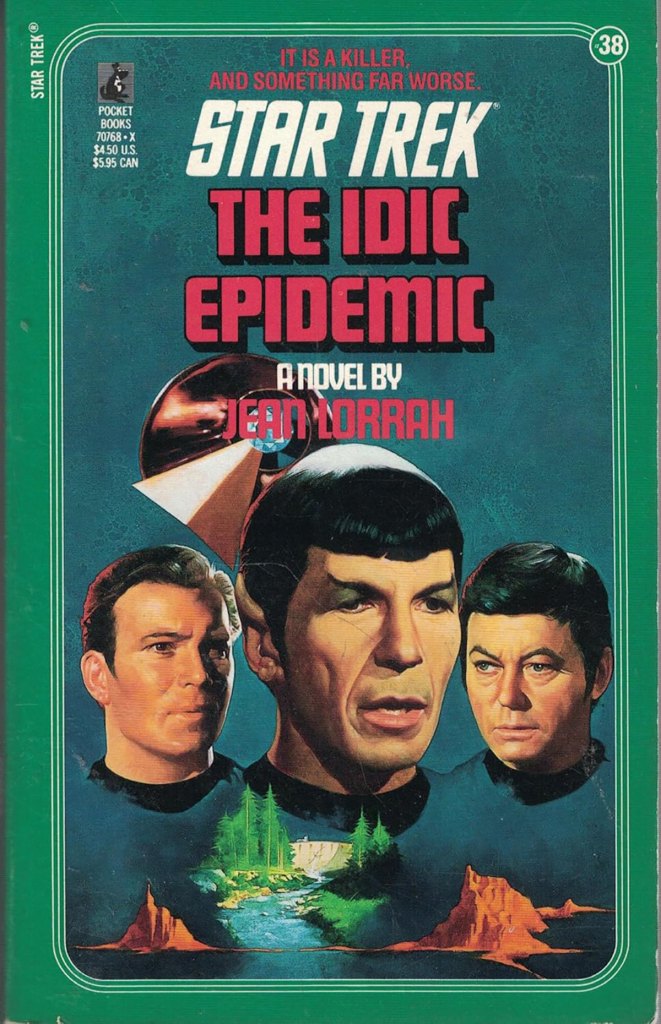
SUMMARY: The IDIC Epidemic is a classic-era Star Trek tie-in in which the Enterprise crew faces a fast-spreading crisis tied to Vulcan biology and identity—an “epidemic” that threatens to overwhelm shipboard operations and puts Spock (and the Vulcan philosophy symbolized by IDIC, “Infinite Diversity in Infinite Combinations”) at the center of both the medical mystery and the emotional stakes. As the situation escalates, McCoy and the medical team scramble for answers while Kirk tries to keep the ship functioning, and the story plays out like a tightly paced, problem-solving television episode with character tension baked directly into the science-fiction premise.
NOTES: Of all the books on this list, this may be the one most closely tied to the spirit of the abandoned Phase II era. If your favorite “lost Trek” stories are the ones connected to what Paramount was actually trying to build in the late 1970s, The IDIC Epidemic feels remarkably close to that creative mindset. It occupies the same transitional period when the franchise was evolving from a canceled television series into something larger, with new expectations and new possibilities. What makes the novel feel like a genuine lost episode is its structure. The setup is immediate, the central crisis is clear and the story unfolds with the kind of pacing that feels designed for a film or TV set rather than the printed page. It’s easy to imagine Kirk, Spock and McCoy working through this problem under studio lights.
AUTHOR COMMENTARY: As was the case with her novel Vulcan Academy Murders, the story for The IDIC Epidemic sprung from Jean Lorrah’s “fannish stories” in the anthology Night of the Twin Moons, “but,” as she tells authro Jeff Ayers, “this time with the common Trek idea of making something good and noble appear to be dangerous and possibly even evil, only to turn the tables again in the end and have good and noble save the day.” (Voyages of the Imagination: The Star trek Fiction Companion)
‘The Lost Years’ by J.M. Dillard
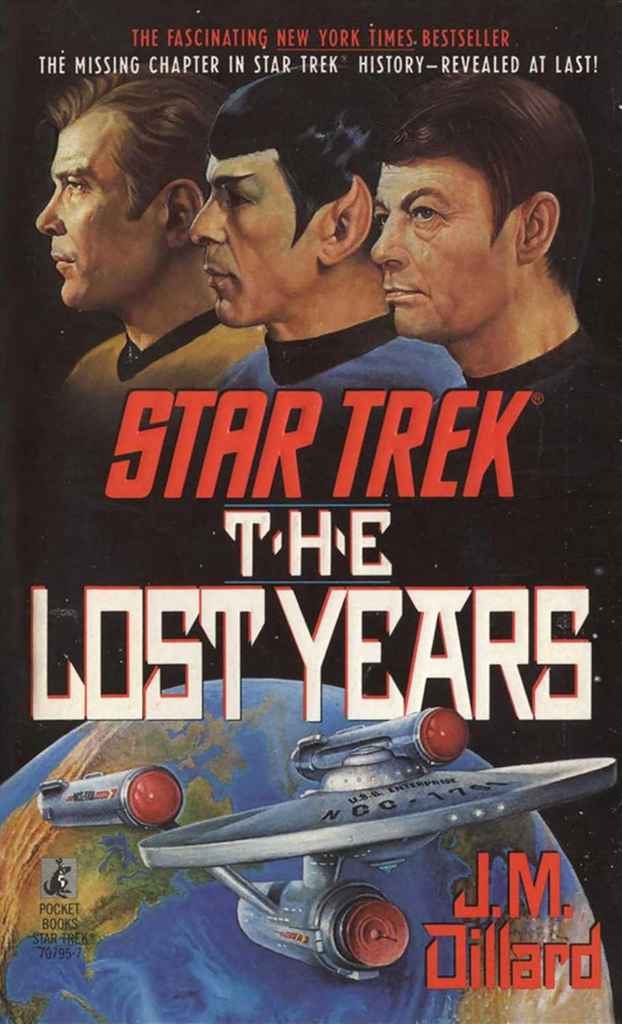
SUMMARY: The Lost Years follows Captain Kirk and the original Enterprise crew during the stretch of time after the five-year mission—territory the films largely skip past—when Starfleet, the ship and the characters are all in transition. The novel plays like a collection of missing episodes: Kirk grapples with what comes next for him and the Enterprise while the crew faces new challenges that test both their friendships and their purpose outside the familiar rhythm of the television series. Threaded through the adventure is the idea that the end of the five-year mission was never really an ending at all, but rather the beginning of the path that would eventually lead to Star Trek: The Motion Picture.
NOTES: For decades, fans wondered what happened between the final episode of the original series and Kirk’s return to the bridge in the first movie. That gap is exactly what makes The Lost Years so compelling, as the book reads like the chapter that always should have existed, providing connective tissue between two very different eras of Star Trek. The character voices are familiar, the pacing is energetic and the story unfolds with the urgency of an episode that somehow slipped through the cracks. If you’ve ever looked at the jump from 1969’s Star Trek to 1979’s The Motion Picture and wondered what adventures happened in between, this novel provides one of the franchise’s most satisfying answers.
AUTHOR COMMENTARY: J.M. Dillard says, “The Pocket editor at the time, Dave Stern, gave me a call and said, ‘I’d like to do a series of novels covering the period of time between the end of the series and the first movie. Come to New York and let’s talk about it.’ I said, ‘Great.’ It was decided I’d do the first one—I believe I’d already sent a proposal for the idea before we met. The other writers who were going to do books in the series came as well, and the basic timeline for the novels was decided upon. Because it launched the series, The Lost Years was published as a hardcover. The other novels had different problems; one had to be rewritten, another was canceled, so the series as a whole never materialized.” (Voyages of the Imagination)
‘Star Trek: The Motion Picture’ novelization by Gene Roddenberry
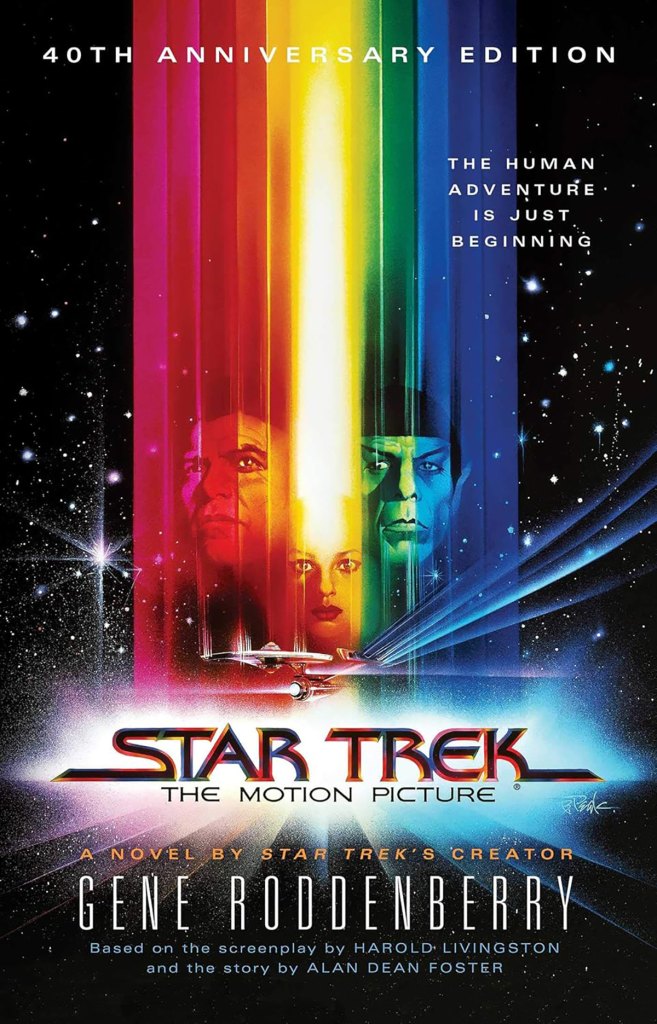
SUMMARY: Gene Roddenberry’s novelization of Star Trek: The Motion Picture retells the story of Kirk’s return to a refitted Enterprise and the crew’s encounter with V’Ger while providing far more access to what the characters are thinking and feeling throughout the adventure. The result is a version of the story that feels both familiar and surprisingly different.
NOTES: Unlike most novelizations, this one functions almost like a companion piece to the movie itself. Roddenberry expands ideas the film often leaves abstract, provides additional background material, and offers greater insight into the motivations of characters such as Kirk and Spock. The book also contains connective tissue that helps bridge moments which the film presents primarily through visuals.
For fans interested in Star Trek‘s creative evolution, that’s what makes this novel so fascinating. It doesn’t simply retell The Motion Picture—it provides a glimpse into the developmental thinking behind it. Reading it feels less like revisiting the finished film and more like studying an alternate blueprint of Star Trek‘s cinematic rebirth. It’s the closest thing fans have to peeking behind the curtain at how the franchise’s first movie was envisioned before every creative compromise, editorial decision and production reality shaped what ultimately appeared on screen.
‘Spock Must Die by James Blish
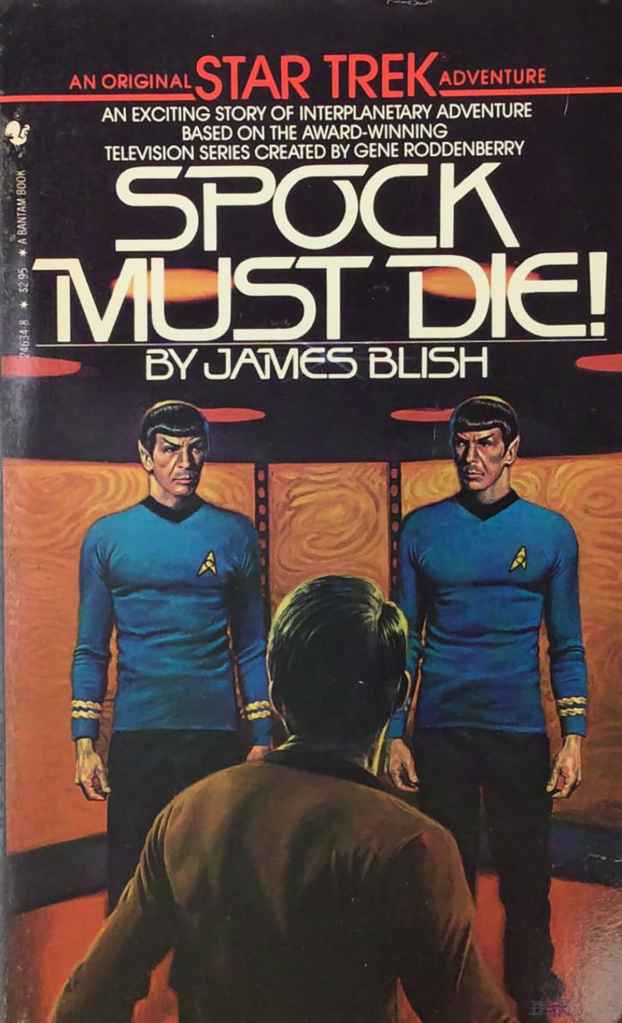
SUMMARY: Spock Must Die! throws the Enterprise into crisis when a transporter malfunction creates a duplicate of Mr. Spock—one version who is fundamentally wrong in ways that quickly become dangerous. As Kirk struggles to maintain control, the crew is confronted with a tense and increasingly urgent question: Which Spock is the original, and how can the situation be resolved before someone dies? The result is a high-concept dilemma that places the Kirk-Spock-McCoy dynamic squarely under pressure.
NOTES: When Star Trek left television in 1969, fans still wanted new adventures and Spock Must Die! arrived during that period, making it one of the earliest attempts to continue the voyages of the Enterprise after cancellation. In many ways, it feels exactly like what a fourth season of the original series might have looked like. The hook is simple, the stakes escalate naturally and the ethical questions are pure Star Trek. Perhaps most importantly, it serves as a fascinating time capsule from an era before the movie franchise, before Phase II entered development and before decades of canon reshaped the universe.
AUTHOR COMMENTARY: Judy Blish, the widow of frequent Original Series novelizer James Blish, tells Ayers, “The novel came about because they asked for a novel and [Jim] tried to think of something surprising, even shocking, At that time, Spock had not picked up the habit of dying and he had been completely taken by surprise at the fan response to Spock. He, like the studio, had expected the hero figure of Kirk to be the idol, and when Spock gathered a huge following, and a lot of female admirers, Jim was thunderstruck. I too thought Spock was more interesting, and after some discussion, Jim began to work it out in his mind and began to think more about who he was and so he became the pivotal character.” (Voyages of the Imagination)
‘The Galactic Whirlpool’ by David Gerrold
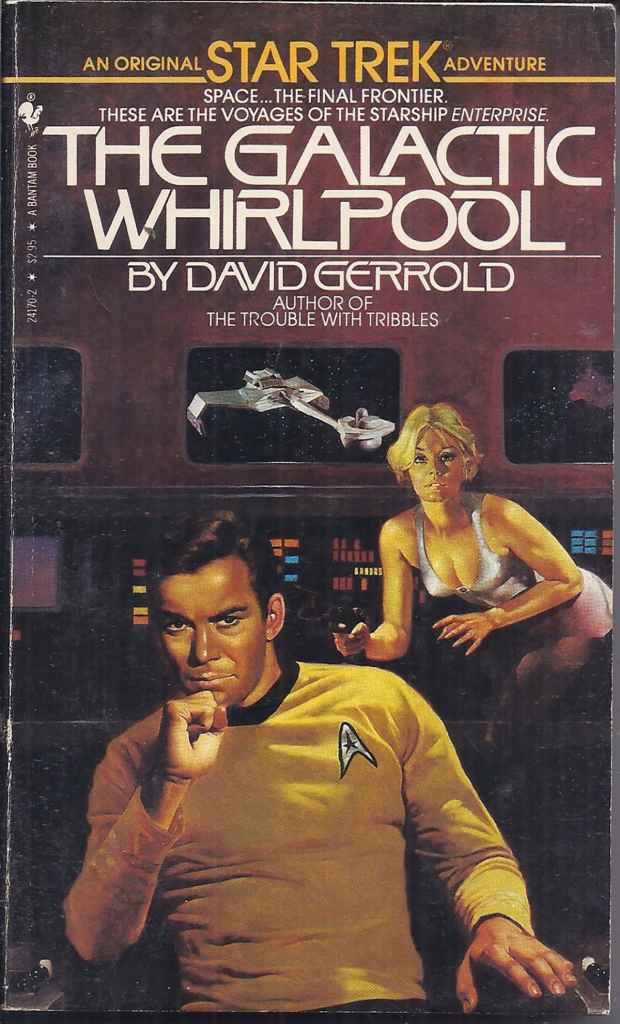
SUMMARY: The Galactic Whirlpool focuses on colonists who have spent generations existing in a huge spaceship they believe is their world and are convinced that the crew of the Enterprise are demons. They won’t listen to warnings that their vessel is in danger of destruction unless they change course.
NOTES: This is the book on the list that most closely resembles the kind of Star Trek story that television budgets simply couldn’t support. The scale is enormous, the ideas are strange and the sense of wonder is constant. Reading it feels like discovering the expensive episode that never could have been filmed—or perhaps the kind of cosmic movie Star Trek might have attempted had the franchise been willing to take even bigger risks during its earliest years.

For fans who enjoyed exploring projects like Planet of the Titans, this novel scratches a similar itch. Both embrace the notion that Star Trek can be more than adventure. It can be philosophical, existential and wonderfully weird.
AUTHOR COMMENTARY: “‘The Galactic Whirlpool’ was adapted from the very first outline I ever submitted to Star Trek,” recalled writer David Gerrold, whose first produced credit would be “The Trouble With Tribbles” in Season 2 of The Original Series. “It was intended as a two-part episode, so there was more than enough story for a novel. When I did the novel, I expanded it so as to give much more to all the characters involved.” (Voyages of the Imagination)
Not every lost Star Trek adventure exists as an abandoned script, an unproduced pilot or a movie proposal buried in a studio archive. Sometimes the stories survived in another form entirely and for fans fascinated by what might have been, these five books offer something rare: the chance to experience alternate roads through Star Trek history, from the unrealized ambitions of Phase II to the unseen years between the television series and the movies.
Conversation
All comments are subject to our Community Guidelines. Woman's World does not endorse the opinions and views shared by our readers in our comment sections. Our comments section is a place where readers can engage in healthy, productive, lively, and respectful discussions. Offensive language, hate speech, personal attacks, and/or defamatory statements are not permitted. Advertising or spam is also prohibited.