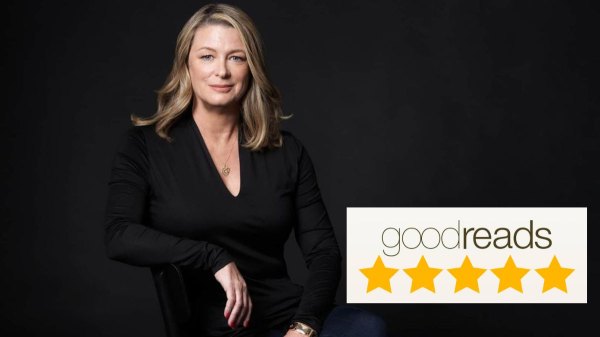
Lysa TerKeurst Says This Simple Shift Can Help You Find Peace When You Can’t Control Life (Exclusive)
After heartbreak, divorce, and disappointment, Lysa TerKeurst learned why surrendering control can open the door to peace
Key Takeaways
- Control offers only temporary behavior modification, never lasting peaceful results.
- Suffering and unanswered prayers often serve as the greatest catalysts for growth.
- Focus solely on today's doable responsibilities to avoid creating future chaos.
The author of more than a dozen bestselling books, president of Proverbs 31 Ministries and host of Therapy & Theology, Lysa TerKeurst knows heartbreak — and she knows how to find hope when life gets hard. With the wisdom of a good friend who has been through difficult seasons herself, she helps other women navigate theirs too.
In her new book, Making Peace with What I Can’t Control: Find Relief from the Exhaustion of Overthinking, Trying to Fix Others, and Wanting to Figure It All Out, Lysa explores why our attempts to control life can leave us feeling exhausted and anxious, and just how learning to surrender what we can’t change can lead to a deeper sense of peace.
Here, Lysa shares with Woman’s World about what she’s learned about control, finding peace and trusting God when we don’t understand what’s happening.
Control Won’t Give Us Lasting Peace
When life feels uncertain, it’s tempting to believe that taking control will finally make everything feel better. But this strategy only works temporarily.
“Control never leads us to a permanent place of peace because we can’t ultimately make someone else do what their heart’s motivation is not,” she explains. “It works for a little bit. You can control, and you can get temporary behavior modification, but not lasting peaceful results.”
Instead of trying to control everything, she encourages us to focus on what we can actually manage and surrender the rest.
“If I’m in responsibility mode, my mantra is this: I’m going to do everything that I can do to properly manage what is within my ability to control. But the rest of it, I’ve got to learn to just turn it over and trust the Lord.
And that doesn’t mean it will always be easy or that we will want to let go. “I don’t have to like it. I don’t have to understand it. I don’t have to agree with it,” she says. “But I cannot control the outcome.”

Knowing “Why” Won’t Always Bring Peace
If you’re like most women, though, letting go of control feels nearly impossible — especially when you don’t understand why something painful happened in the first place.
When something painful happens, many of us immediately want to know why. We may believe that if we can just figure it out, we can make sure it never happens again.
“Because we think if we know why, then we won’t make that mistake again, and we’ll prevent other bad things from happening,” Lysa says. “Our brains are wired for the confidence of knowing.”
But here’s a truth that might surprise you, and it’s one that’s brought Lysa tremendous peace: Maybe we aren’t meant to understand every painful thing that happens to us.
“We are very averse to emotional suffering, and understandably so. Right? Nobody wants to suffer,” she says. “But the real irony for us as Christians is suffering is often the greatest catalyst to maturity. Suffering is often the greatest catalyst to growth and helping us become more obedient to the Lord and helping us trust Him more.”
That doesn’t mean ignoring the hurt or pretending everything is fine.
“Give yourself lots of grace, but also recognize that maybe that was some kind of preparation,” Lysa says. “Never do the spiritual bypass of not acknowledging the hardship and heartbreak of what was real about the suffering too.”
God Doesn’t Waste Our Hurts
This perspective is important when we’re dealing with unanswered prayers. Disappointment can be difficult when we’ve prayed for something for a long time and God doesn’t answer in the way we hoped.
When you’re in that painful place, Lysa says it helps to remember that God’s motivation is different from ours.
“Human motivation can have selfishness as a part of it. God is not selfish. God is gracious. God is good. God is kind, and God does have a plan, and it’s pointed in the direction of good, even if it doesn’t feel good, seem good, or look good right now.”
Rather than hiding our disappointment, she encourages us to bring it honestly to God and ask Him to use it. Ask Him: Will you at least let me grow and learn from it? Will you help me to see that there’s some purpose in this pain?
Lysa has experienced that transformation herself after her unwanted divorce that was her greatest disappointment.
“It was excruciatingly painful and awful, and it was the very thing that pointed me to an eventual purpose that is so fulfilling to me now,” she says.
“I’m so grateful that the pain was not pointless and that God really does not waste the hurts that we walk through.”


Try This When You Feel Overwhelmed
Lysa recommends asking one simple question: “Is there anything that could be done today that I have not done?”
“If there is, then do that because that’s you being responsible,” she says. “But in terms of fixing the big problem, let that go for today because you can only do what you can do today.”
Once you’ve done what you can, she says, it’s time to stop trying to solve tomorrow’s problems today.
“Our control only leads to eventual chaos,” Lysa says. “We think that we control to get to peace, but our control only leads to eventual chaos.”
Instead, “The only pathway to peace really is learning to accept reality, do what we can do, and then recognize what is beyond our ability to do.”
Find Peace in What You Can’t Change
For Lysa, she recognizes that the turning point for her was learning to accept what she couldn’t change was an important part of healing after her divorce.
“I think the most important step was acceptance. And I think learning to accept what I cannot change. It’s kind of like the Serenity Prayer.”
And when we’ve done everything we can, we can remember that we aren’t ultimately the ones holding everything together.

“Jesus said, ‘In this world, you will have trouble, but take heart. I have overcome the world,’” Lysa says. “So the only pathway to peace is stay connected to the Prince of Peace.”
That’s the heart of Lysa’s message: We don’t have to stop caring. We just have to stop believing everything is ours to fix.
Read more of her wisdom and words in her new book, Making Peace with What I Can’t Control: Find Relief from the Exhaustion of Overthinking, Trying to Fix Others, and Wanting to Figure It All Out is on sale now!
Conversation
All comments are subject to our Community Guidelines. Woman's World does not endorse the opinions and views shared by our readers in our comment sections. Our comments section is a place where readers can engage in healthy, productive, lively, and respectful discussions. Offensive language, hate speech, personal attacks, and/or defamatory statements are not permitted. Advertising or spam is also prohibited.