The ‘Wizard of Oz’ Nearly Killed Him: The Truth About the Buddy Ebsen Tin Man ‘Curse’
The actor wasn't a victim of a 'cursed' set—he was the casualty of a dangerous 1930s makeup mistake

For decades, the story of Buddy Ebsen, the original choice to play the Tin Man in the 1939 film The Wizard of Oz, has lived in a strange space between fact and folklore. Online retellings often frame his experience as evidence of a “cursed set,” a shorthand that suggests recklessness or indifference on MGM’s part. According to Wizard of Oz historian John Fricke, that framing misunderstands both the man and the moment.
“The internet wants to make such a scandal of this,” Fricke says. “‘They tried to kill the Tin Man. They tried to kill the Witch. They tried to kill all of them. Nobody cared. This was a cursed set.’ And no—they were doing everything they could as right as they possibly could.”
To understand what actually happened, he emphasizes, you have to start with who Buddy Ebsen was before Oz. Like Ray Bolger, Bert Lahr and Margaret Hamilton, Ebsen came out of the Broadway world at a time when MGM scouts routinely combed New York for musical talent. By the early 1930s, Ebsen and his sister Vilma were already established Broadway performers, introducing standards like “When There’s a Shine on Your Shoes” and “I Like the Likes of You.”
By the time Ebsen reached MGM, he was a proven dancer, singer and screen presence. He worked opposite Eleanor Powell, Jimmy Stewart, Shirley Temple and Judy Garland, and the studio saw him as one of its most versatile young performers. When MGM’s Arthur Freed began planning The Wizard of Oz in 1937, Ebsen seemed an ideal fit.
If he only had a break
The role he was initially promised was not the Tin Man but the Scarecrow. “Buddy was a loose-limbed dancer,” Fricke explains, which made the part a natural extension of his strengths. But Ray Bolger, who had been cast as the Tin Woodman, campaigned to switch roles. He believed the Scarecrow would better suit his fluid style than a character meant to move stiffly. As Ebsen remembered it, the decision came abruptly. He was reassigned the Tin Man, a change that left him conflicted but pragmatic. “It’s a major picture,” Fricke says, echoing Ebsen’s thinking. “It’s Technicolor. I’m playing one of the three major male roles. Fine—I’ll be the Tin Man.”
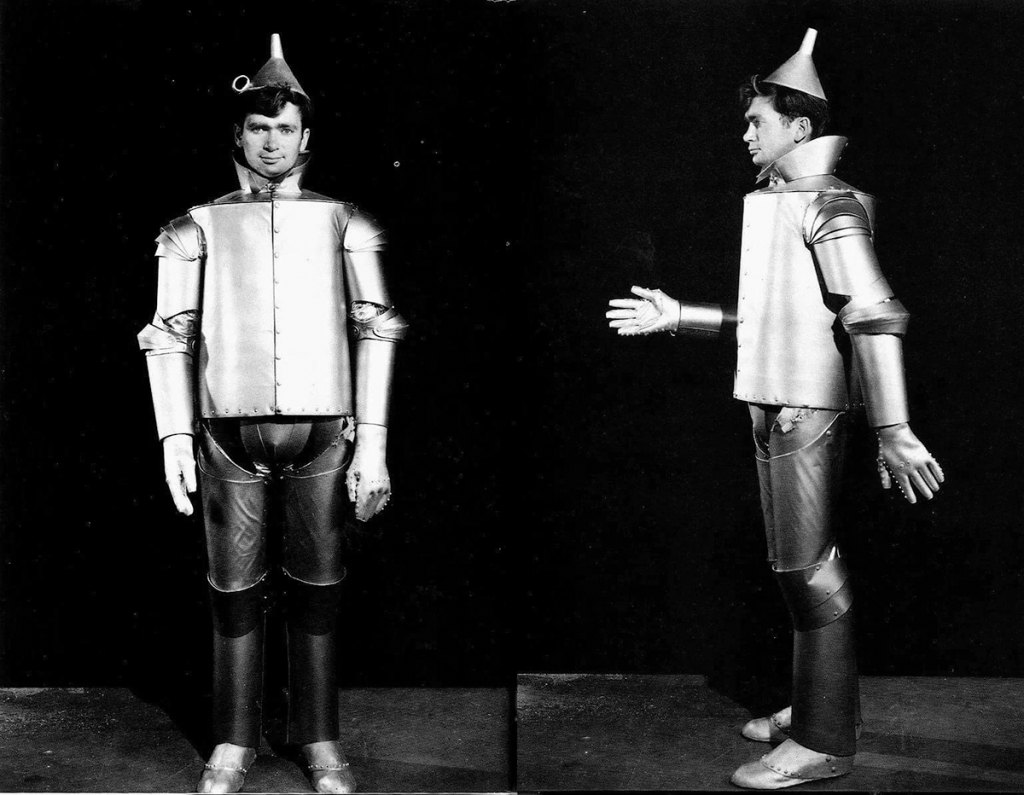
But that’s when the challenges began. Early costume tests involved actual metal. “The first costume they put him in was made of tin. Hinged pieces and all the rest of it.” Ebsen later joked that when they told him to move, “there’s not a whole lot of give in tin.” The material was loud, dangerous and impractical. “He said he almost had an inadvertent sex change,” Fricke adds dryly, recalling Ebsen’s own humor about the sharp edges.
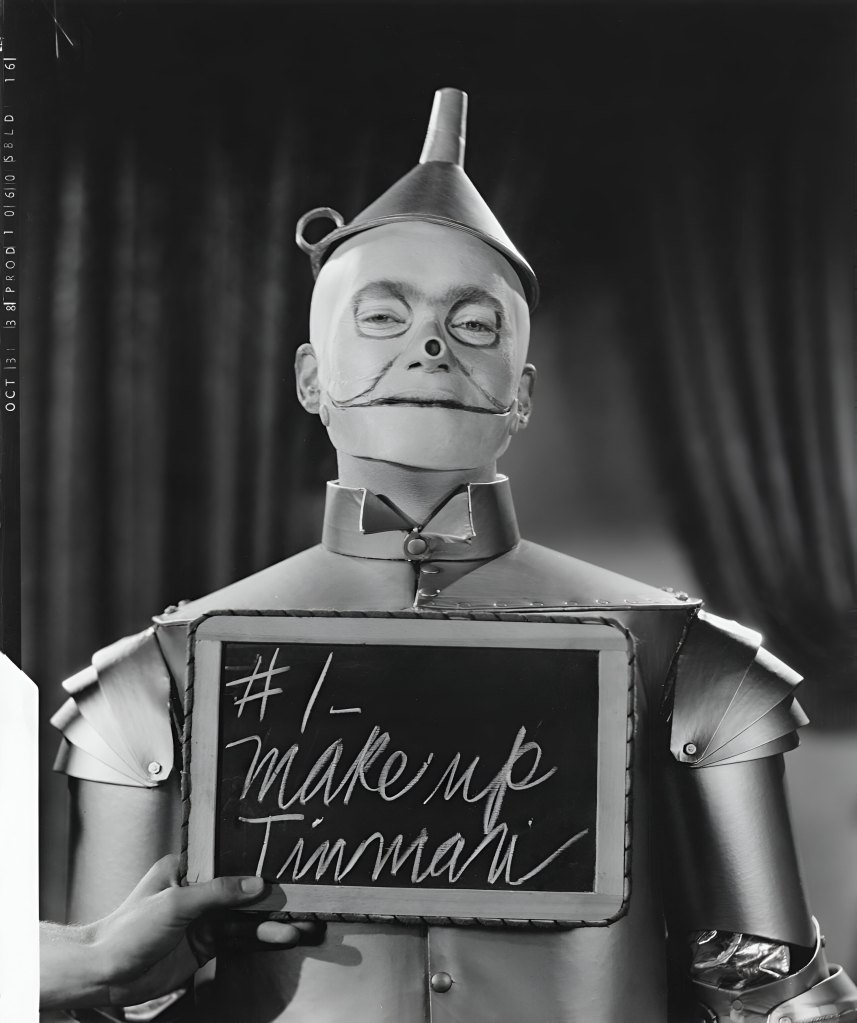
The metal was quickly abandoned in favor of a buckram costume—flexible but still restrictive—covered in silver paper. The more serious problem came from the makeup. To create the Tin Man’s reflective finish, Ebsen’s face was coated in clown white, then dusted with finely ground aluminum powder. “It was pure aluminum dust,” explains Fricke. “They dusted Buddy’s face and neck and forehead. It adhered to the makeup.”
Under ordinary circumstances, it might not have been an issue, but The Wizard of Oz was being shot in three-strip Technicolor, a process that required enormous amounts of light. “There were two huge generators outside the soundstages,” Fricke recalls, citing memories from Meinhardt Raabe, who played the Munchkin coroner. “They had to power all those lights. There was no air conditioning.”
The heat was relentless. Actors could work only for limited periods before the lights had to be shut off and the soundstage doors opened to let in cooler air. “It was murder on Buddy,” Fricke says. “It was murder on Bert Lahr. It was uncomfortable for everybody.”
Over roughly 11 or 12 days of filming, Ebsen began to experience symptoms. “His fingers were starting to cramp,” Fricke says. “He’d have to push them back to uncurl them.” His toes and feet followed. Breathing became increasingly difficult. At night, his wife massaged his hands and legs, trying to relieve the tension. One night, his body seized completely. “He couldn’t breathe, his arms curled up and his legs bent double.”
Ebsen was rushed to Good Samaritan Hospital and placed in an oxygen tent, where he remained for two weeks, followed by additional weeks of recovery at home. The diagnosis was clear: a severe allergic reaction triggered by inhalation of aluminum particles. “They had coated his lungs like glue,” Fricke explains.

By the time Ebsen recovered enough to consider returning to work, The Wizard of Oz had already been recast. Jack Haley took over the role of the Tin Man and production continued. The decision has often been reframed as callous, but Fricke is blunt about the reality. “They couldn’t wait for him. They were moving on.”
What did change was the makeup process. Haley’s silver finish was reformulated into a paste mixed directly into the base, eliminating airborne particles. Even so, the role remained hazardous. “The silver paint got into one of Jack Haley’s eyes,” Fricke notes, “and caused an infection. He was laid up in a darkened room for a week while they tried to save his eye.”
In later years, Haley would refer to Ebsen as “the guinea pig,” a phrase that stuck. Fricke doesn’t dispute it, but places it firmly in historical context. “They didn’t want to scare him off,” he says, explaining why Haley was shielded from details of Ebsen’s experience at the time.
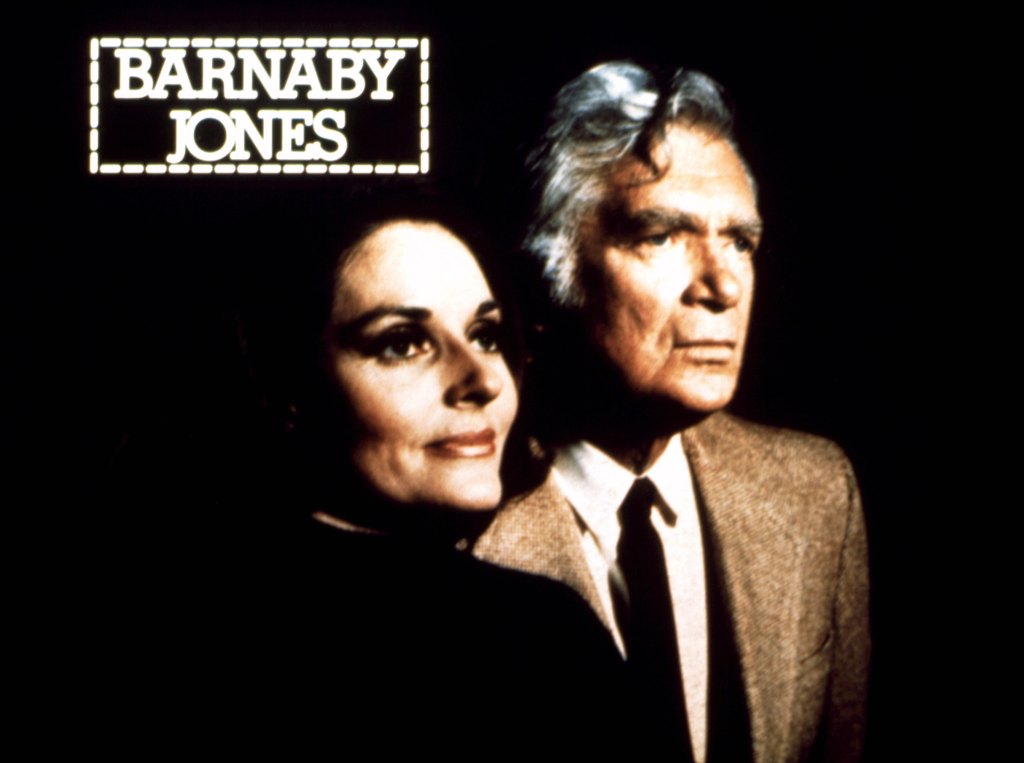
As to the idea that Oz derailed Buddy Ebsen’s career? “No, it didn’t,” he says. The rough patch came later, after World War II. Ebsen served in the Navy in a special entertainment unit, returned to Broadway, worked for Disney and eventually found lasting success on television with Davy Crockett, The Beverly Hillbillies and Barnaby Jones. “He didn’t do badly at all.”

Ebsen would later frame his relationship to the film in characteristically wry terms, titling his autobiography The Other Side of Oz. And in one of Hollywood’s quietest ironies, he was never entirely removed from the movie that nearly killed him. “When the Tin Man joins the Scarecrow and Dorothy on the Yellow Brick Road and they sing ‘We’re Off to See the Wizard,’” Fricke notes, “that’s Buddy Ebsen’s voice.”
Jack Haley re-recorded “If I Only Had a Heart,” but the early group numbers remained untouched. “They didn’t re-record those,” Fricke says. “If you listen closely—especially the first one—you can hear Buddy. So, there’s a touch of Buddy in the film,” Fricke says.
Conversation
All comments are subject to our Community Guidelines. Woman's World does not endorse the opinions and views shared by our readers in our comment sections. Our comments section is a place where readers can engage in healthy, productive, lively, and respectful discussions. Offensive language, hate speech, personal attacks, and/or defamatory statements are not permitted. Advertising or spam is also prohibited.