Original ‘A League of Their Own’ Teammates Reveal the True Story Behind the Movie—and Set the Record Straight on Tom Hanks’ Character: ‘He Was Like Our Dad’
At the 2026 Home Run Derby, we spoke to 3 women from the All-American Girls Professional Baseball League to find out if there really was 'no crying in baseball'
Key Takeaways
- Three players say manager Jimmy Foxx was nothing like Tom Hanks' character.
- The real players say no one cried, despite broken bones and injuries.
- The women call the 1992 film about 75 to 80 percent historically accurate.
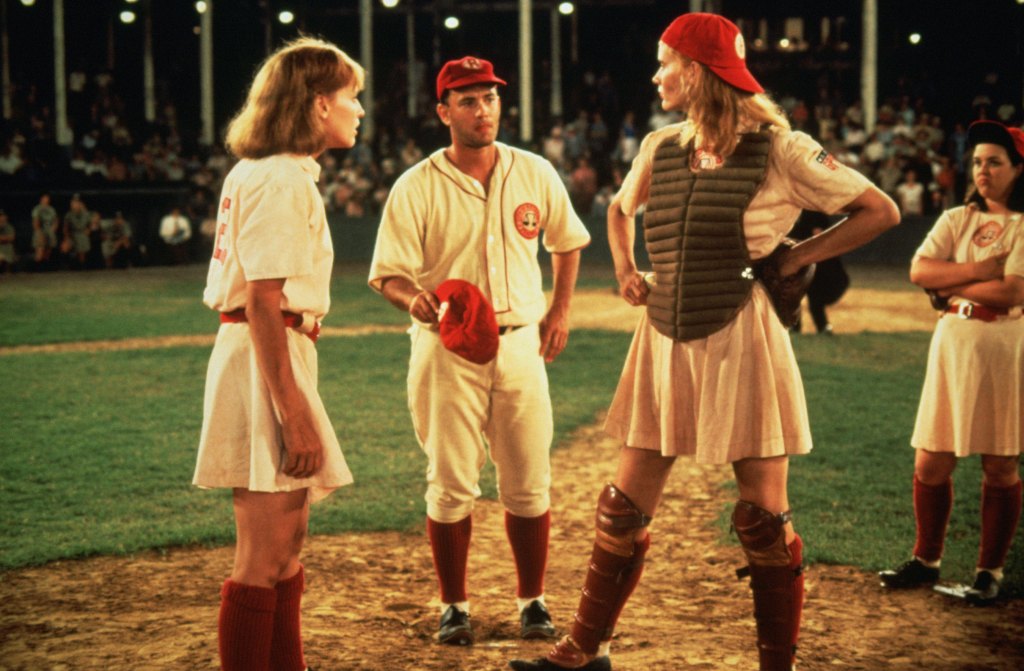
For millions of fans, A League of Their Own defined the All-American Girls Professional Baseball League (AAGPBL). We recall so many of the film’s iconic scenes, but none more than Tom Hanks‘ gruff manager Jimmy Dugan barking, “There’s no crying in baseball!” as he became one of cinema’s most legendary coaches.
But according to three of the league’s remaining players—Dolly (Vanderlip) Ozburn, Virginia “Jeanie” (Ventura) Manina and Jeneane (DesCombes) Lesko—the real Jimmy Foxx couldn’t have been more different. He wasn’t loud, cruel or dismissive. He was a protector, a mentor and more like a father than a baseball manager. And while none of them remembers him ever saying “There’s no crying in baseball,” they all agree on one thing… nobody was crying to begin with.
At 89 and 91 years old, Vanderlip, Ventura and Descombes are among just 22 surviving members of the pioneering AAGPBL. We caught up with the players at the MLB All-Star Weekend, hours before the 2026 Home Run Derby, to hear about their experiences.
‘We just wanted to play’—the women behind ‘A League of Their Own’
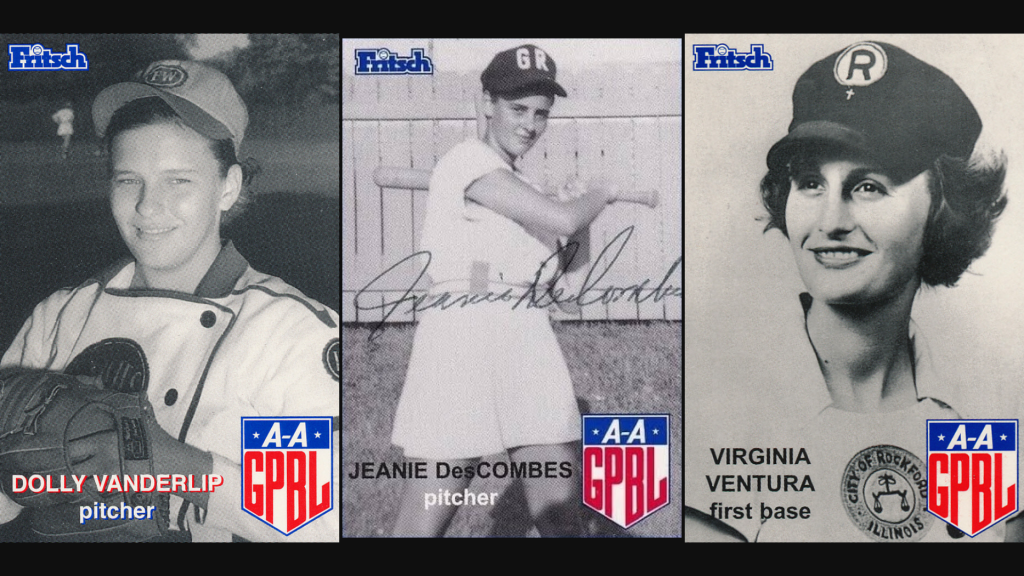
Long before women’s professional leagues were celebrated, these players simply wanted one thing. “We just wanted to play,” Vanderlip says. “We didn’t know we were setting a base for girls later. We just wanted to play.”
The women laughed, remembering how often they were told girls shouldn’t play baseball. “When somebody said girls shouldn’t do something,” Vanderlip says with a grin, “we did it.” That determination carried onto the field and explains why Hollywood’s famous line never really applied.
When asked whether anyone actually cried during games, the answer came immediately.
“No.”
“I never saw anybody cry.”
“Even when you got hurt.”
They recalled broken fingers, gruesome ankle injuries and bruises that would sideline many athletes today. “You just played through it,” they said.
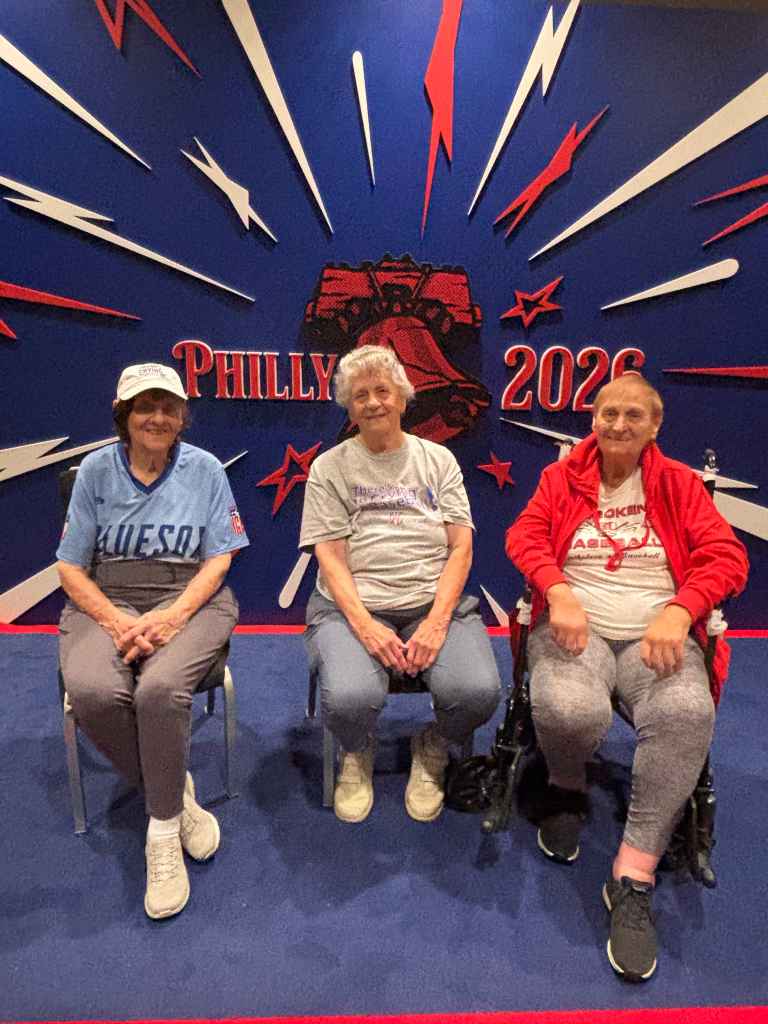

Jimmy Foxx was NOT Jimmy Dugan in real life
If there was one thing the women wanted to correct about A League of Their Own, it was its portrayal of manager Jimmy Foxx.
While Hanks’ Jimmy Dugan staggered around drunk and reluctantly coached the team, the real Hall of Famer was, in Vanderlip’s words: “A sweetheart. He was like a big teddy bear. He was like our dad.”
Foxx invited the players to his lakeside cabin after games to swim with his family. His wife fed the team. If fans criticized one of his players, he immediately stepped in.
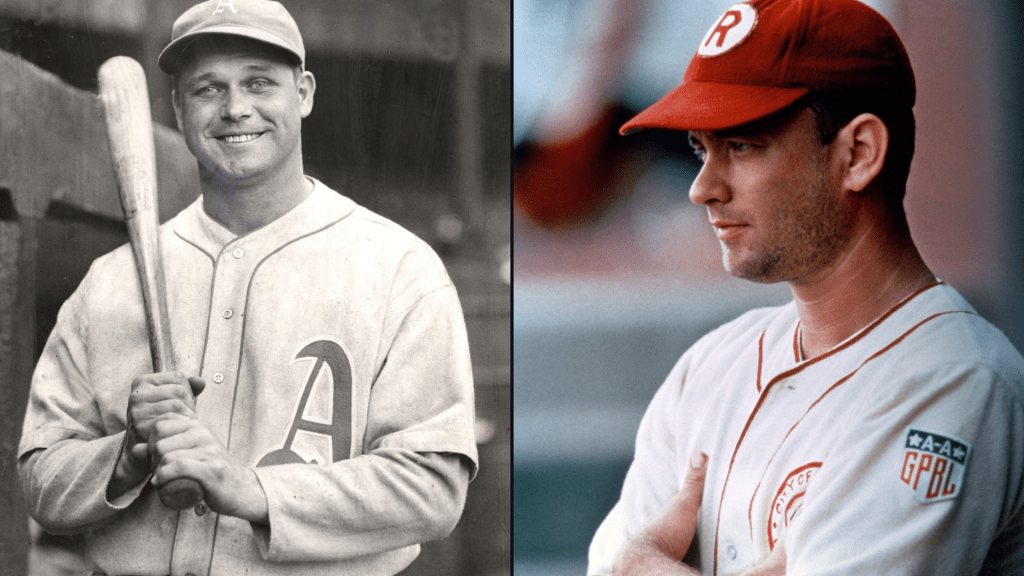
“He did not pick on his players,” Vanderlip says. “He protected us.”
She still marvels at his strength decades later, remembering watching Foxx, in his 50s, casually launch baseballs over a four-lane highway with one hand during batting practice. “He could still hit the ball harder than anybody.”

Hollywood got the spirit right
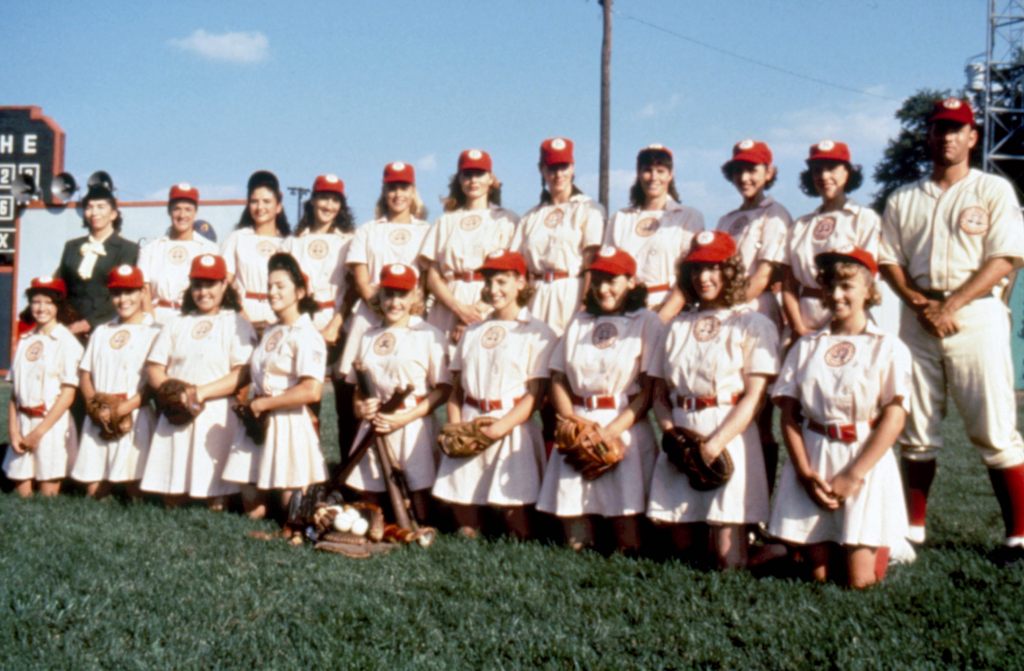
The women estimate A League of Their Own was about “75 to 80 percent” accurate.
The friendships. The bus rides. The love of baseball. Those all felt real.
Some scenes, however, were pure Hollywood, including the famous locker room bathroom scene and coaches wandering freely into players’ spaces. “The managers never came into our dressing area like that,” they said.
But they aren’t bothered by those embellishments. “The intent of the movie,” Lesko explains, “was to capture the essence of the league, not individual people.”
More than three decades after the film’s release, that’s exactly what it did. Today, Vanderlip, Ventura and Descombes hope people remember something even more important than a famous movie quote.
Not that there was no crying in baseball. But that generations of determined women simply refused to let anyone tell them they couldn’t play.
Fame was never the point—just the love of the game
For Vanderlip, Descombes and Ventura, correcting the record about Jimmy Foxx matters. But they say A League of Their Own ultimately accomplished something far more important than historical perfection. It made sure the AAGPBL would never be forgotten.
Before the 1992 film, most Americans had never even heard of the league. “My kids didn’t even know,” Vanderlip admitted. “We never talked about it. We just went back to our lives.”
“It was just something you did,” Ventura added. “You enjoyed it. It was a lot of fun, that’s it.”
Today, the women are greeted by fans who thank them for opening doors for generations of female athletes. It’s still something Lesko struggles to fully accept.
“I’m usually in awe of what’s happened after the movie,” she said. “I’m in awe of the number of people who say thank you. Sometimes I feel very humbled by it all because I didn’t really know I was doing that. I didn’t know it was that important.”
The three insist they never set out to change history. “We were just doing what we loved to do, play ball!” Ventura said.
“You never felt like you were doing anything so fantastic that the whole world was going to look at you,” Lesko added. “You were just exercising the athletic ability you felt you had to use. And you got paid for it.”
Playing during World War II made it feel even more meaningful. “The war was still on,” Lesko recalled. “The Army was out there fighting for the country. It felt special to be on that diamond.”
Looking back more than 70 years later, all three women agree on one thing.
“It was a great life,” Ventura said.
“Yes,” agreed Vanderlip.
“A fantastic life,” Lesko echoed.
Because without the All-American Girls Professional Baseball League, they know their opportunity might never have existed.

“We had the chance to do what we loved,” Ventura said. “Otherwise, who knows? It might have taken another 40 years before something like that happened.”
For women who never expected to become symbols of anything, that’s perhaps their greatest legacy, not that they became legends, but that they simply refused to stop playing the game they loved.
Ready for more? Subscribe to our YouTube channel for video podcasts, health tips and uplifting stories designed for women 40, 50, 60 and beyond.
Conversation
All comments are subject to our Community Guidelines. Woman's World does not endorse the opinions and views shared by our readers in our comment sections. Our comments section is a place where readers can engage in healthy, productive, lively, and respectful discussions. Offensive language, hate speech, personal attacks, and/or defamatory statements are not permitted. Advertising or spam is also prohibited.