Before Taylor Sheridan and ‘Landman,’ 50 Years Ago Sam Elliott Felt ‘Lifeguard’ Would Make Him a Star
The actor believed 'Lifeguard' would launch his career, but the story took a very different turn

Key Takeaways
- Sam Elliott turned down jobs because he believed 'Lifeguard' would make him a star.
- The future '1883' and 'Landman' star saw himself in Rick Carlson and bet on the movie.
- 'Lifeguard' didn't create instant fame—but it helped define Sam Elliott's career.
Fifty years ago, Sam Elliott was tired of waiting for his time to come. Flash forward to today, and it’s easy to forget there was ever a time when he wasn’t a star, his distinctive voice, rugged looks and easy authenticity having made him one of the most recognizable actors of the last half century. That’s true whether audiences know him from Tombstone, The Big Lebowski, A Star Is Born or Taylor Sheridan‘s 1883 and Landman. But in 1976, none of that was guaranteed.
At the time, he was in his early 30s, had spent years bouncing between television guest shots and supporting film roles and was still looking for the project that might finally push him into the spotlight. What made the situation particularly frustrating was that he knew he could do more than television was allowing him to do.
Reflecting on his stint as a semi-regular on the fifth season of the original Mission: Impossible, Elliott was blunt: “That was certainly not the kind of series which allowed you to act. Nothing I did ever had any impact whatsoever, even though I did 18 of the 22 episodes that year. But at least I learned something while doing it.”
He had spent years learning his craft, but wanted something bigger. More specifically, he wanted to appear in movies And then came Lifeguard, currently celebrating its 60th anniversary, which told the story of Rick Carlson, a 32-year-old California lifeguard being pressured from all sides to grow up. His parents want him to find a “real job,” friends encourage him to pursue money and security and former girlfriends wonder when he’s finally going to settle down. Reading Elliott’s interviews from the period, it’s obvious it’s a character that he genuinely connected with.
“Lifeguard is the closest thing to me personally I’ve ever done,” he said. “Everyone stresses money, money, money in the film—they pressure him like crazy. I agree with the choice he finally makes and, frankly, it’s easy for the character to make. I suppose it is a cop-out in a way. His life is happy and content, but he’s not a beach bum, either. In California, it’s a realistic way of making a living.”
The perfect connection between actor and character
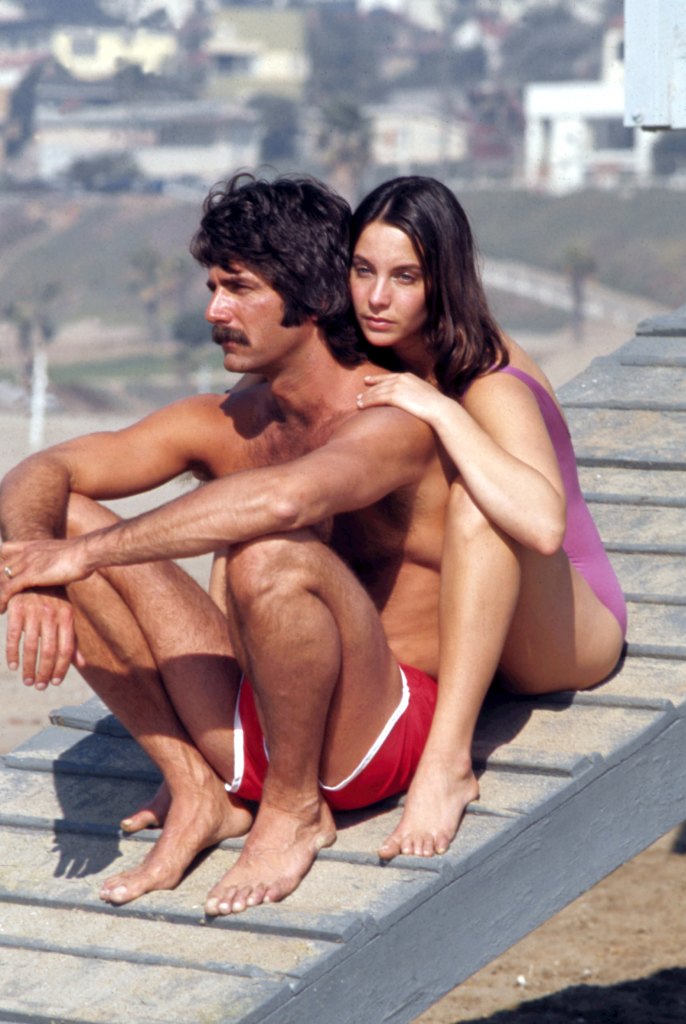
Before becoming an actor, Elliott had worked as a lifeguard himself, and while the production wasn’t looking for someone with actual lifeguarding experience, fate intervened in a particularly Hollywood fashion. “They looked at 200 guys before I even came up for it,” he recalled. His agency repeatedly told him the filmmakers wanted “a big blond guy who looked right,” leaving Elliott convinced he wouldn’t even get a chance. Then, director Daniel Petrie’s wife happened to spot him during a late-night television screening of Frogs.
“She called to Daniel and told him to come and see Adam Rourk, another actor in the film. Petrie came in to look and it was me she was talking about. She’d got her actors mixed up. Well, they called my agent the next day. I had been on the beach all summer and was almost black. I just knew I’d won the role.”
Once filming wrapped, Elliott became convinced he had finally found the movie he’d been waiting for. “I knew right from the beginning that we had a winner on our hands,” he said. “So I’ve turned down all the junk that’s been offered to me since it was finished—which is about a half dozen projects—just waiting for Lifeguard to be released. I think it will change things around for me. At least I hope it will.”
Selling Elliott as something he wasn’t
It wasn’t an idle prediction. As Lifeguard approached release, newspapers around the country began profiling Elliott as an actor on the rise. Some writers compared him to Clark Gable, while others saw shades of Burt Reynolds and James Caan. One article suggested the film could transform him from a struggling actor into a movie star. While Elliott appreciated the attention, he wasn’t interested in becoming another version of someone else.
“I’m not putting them down,” he said of Reynolds and Caan. “They’re big film stars. But there’s such a concentration on the macho image and all that junk. I don’t want to do movies with a lot of lovemaking and a lot of killing or a lot of action just to support my image.”
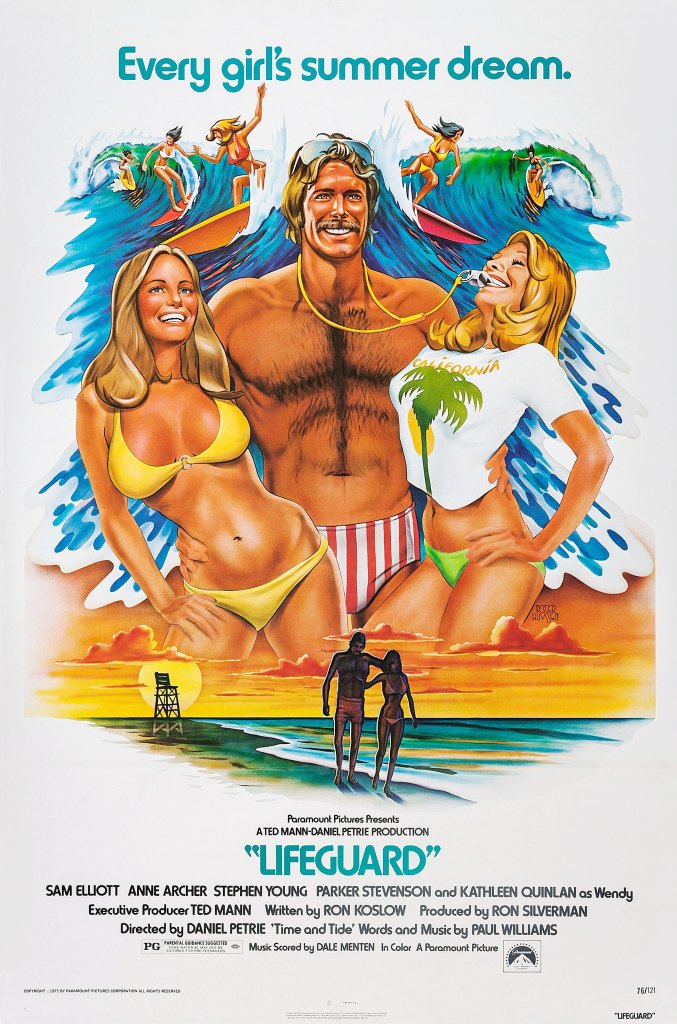
The irony was that Elliott and Paramount weren’t always selling the same movie. While he talked about Lifeguard as a thoughtful drama about a man deciding how he wanted to live his life, the studio seemed more interested in promoting Sam Elliott. Advertising campaigns emphasized his looks and romantic appeal, something the actor found more frustrating than flattering.

“That ad campaign is really terrible,” he complained. “Of course, they figure they’ll get more people into the theater that way, but it absolutely misrepresents what the picture is about.”
The critics, however, largely saw the movie Elliott thought he had made. Reviewers praised its maturity and emotional honesty and singled out his performance. The attention validated the gamble he had made by sitting on the sidelines waiting for the film’s release. “If this picture makes $5 to $10 million, it will mean a whole new career for me,” he said.
Things didn’t exactly go as planned
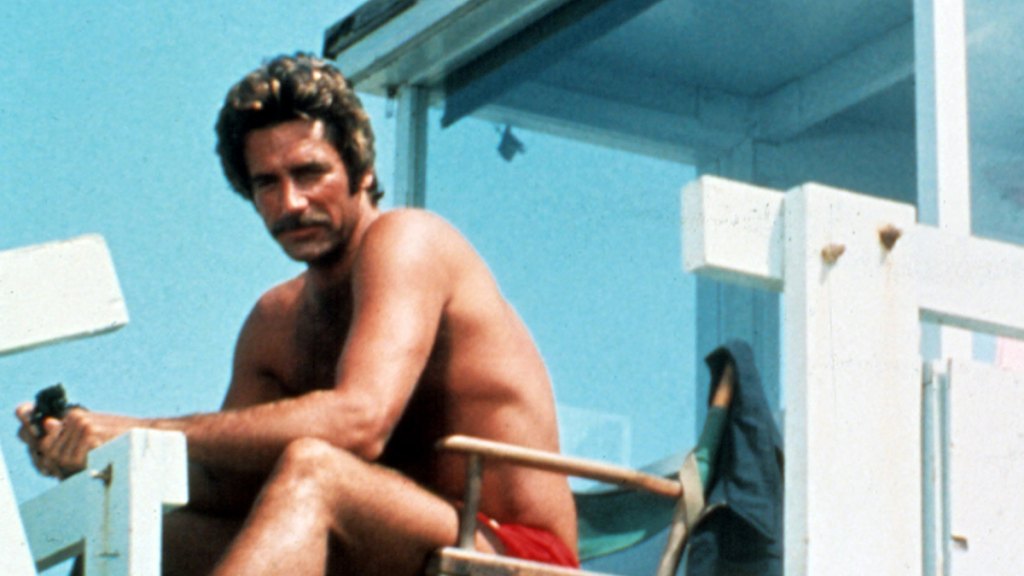
Yet he also understood exactly how much was riding on the outcome. “This is it for me! Rick shows up in just about every frame, so if it isn’t successful, I know who to blame.”
What happened next is what makes Lifeguard such an interesting chapter in Sam Elliott’s career. The movie worked with the critics responding to it positively and Elliott receiving some of the strongest reviews of his career. The attention arrived exactly as he had hoped it would, but what never quite materialized was the overnight leap into movie stardom that so many people, including the actor himself, seemed to be expecting.
That doesn’t mean he disappeared. Far from it, as prestigious projects followed, including Once an Eagle and Aspen, and newspaper profiles continued treating him as an actor with enormous potential. But the transformation from respected actor to major movie star proved slower and more complicated than anyone anticipated.
What stands out in reading Elliott’s interviews from the period is how little bitterness there is. If anything, there is a sense that he had already made up his mind about how he was going to approach his career. “I know where I’m going. The opportunity will come,” he said in 1977. “So I’m going to wait for it to happen like I did before. I made Lifeguard in the fall of 1974. It wasn’t released for a year and a half. I’m not looking forward to sitting around that long again, but I’m not going to take any parts just to be working.”
Future Western star
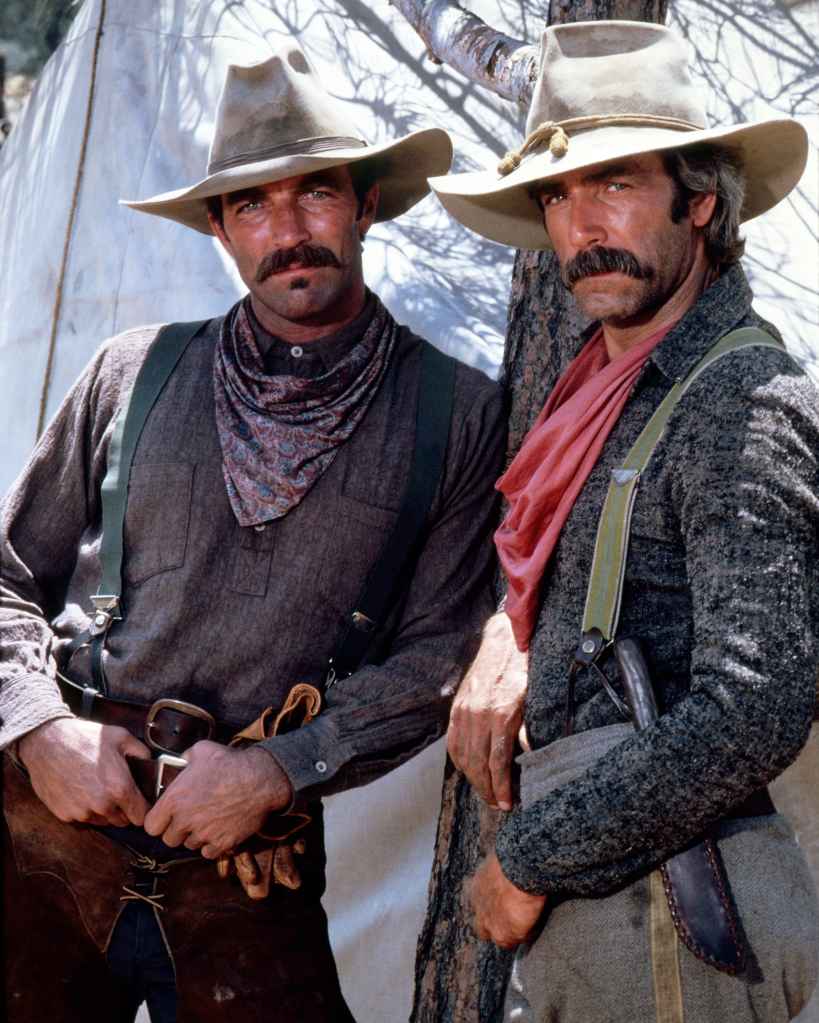
It’s a surprising statement because so many actors in the same position would have done exactly the opposite. “They offered me a dozen TV pilots. Half of them got on the air, some good, some bad. But I want movies. Hopefully Westerns.”
That last sentence is especially interesting in hindsight, given that long before audiences associated him with the Western, he was already thinking about it. In one profile from the period, a reporter observed that if Elliott couldn’t be an actor, he’d rather be a cowboy. There was something about Westerns, largely the landscapes, characters and mythology that clearly appealed to him. Even as he waited for the next opportunity, he wasn’t simply looking for the right one. That attitude surfaces repeatedly in his comments from the period. While journalists were comparing him to other stars and publicists were trying to turn him into a heartthrob, Elliott kept returning to the craft itself.
“The public makes you a star or turns off your career if you shortchange them,” he said. “I want to maintain a relationship between me and the people who see my work. So I’m going to make films I believe in and that please the audience.”

Looking back now, it’s hard not to see that quote as a mission statement. Maybe the success didn’t come all at once; Elliott, instead, spent the next several decades building one of the most respected careers in the business. Audiences saw him in films like Mask and Road House. Western fans embraced him in The Sacketts, The Shadow Riders and eventually Tombstone, where his portrayal of Virgil Earp felt like a man who had somehow stepped out of the 19th century and onto a movie set.

The funny thing is that the career Elliott eventually built looked very different from the one people were predicting in 1976. He never became the next Burt Reynolds or James Caan, and he certainly didn’t become the beach-movie heartthrob some of the Lifeguard advertising tried to sell. Instead, he carved out something uniquely his own and whether he was playing a cowboy, a rancher, a lawman or an ordinary guy trying to do the right thing, audiences responded to the same quality they had seen in Rick Carlson: that he wasn’t playing characters so much as inhabiting them.

That’s one reason the long arc from Lifeguard to Taylor Sheridan’s 1883 and Landman feels so satisfying. When Elliott appeared as Shea Brennan, he wasn’t playing a larger-than-life hero, but instead a weary, complicated man with years of pain, regret and experience. The performance earned some of the finest reviews of his career, but what’s so striking about watching it today is how familiar many of those qualities feel.
When Elliott sat down with reporters in 1976, he thought Lifeguard would open the door to a whole new career. In a way, it did, though it wasn’t exactly the one he imagined. Back then, reporters were comparing him to Burt Reynolds, James Caan and Clark Gable, while publicists were trying to market him as a sex symbol, but Elliott had a much simpler ambition: “I don’t want to be known as a sex symbol. There’s a great stigma that goes with that tag. I want to be a Sam Elliott.”
Conversation
All comments are subject to our Community Guidelines. Woman's World does not endorse the opinions and views shared by our readers in our comment sections. Our comments section is a place where readers can engage in healthy, productive, lively, and respectful discussions. Offensive language, hate speech, personal attacks, and/or defamatory statements are not permitted. Advertising or spam is also prohibited.