How ‘The Magnificent Seven’ Became a Western Classic—and Spawned a Franchise (Exclusive)
Western historian Rob Word goes inside the original film, sequels, TV series and remake

Key Takeaways
- Western historian Rob Word explains why the original film became a lasting Western classic.
- Steve McQueen reportedly drove Yul Brynner crazy during filming of 'The Magnificent Seven.'
- The sequels, TV series and remake all tried expanding the franchise.
The upcoming MGM+ television version of The Magnificent Seven is only the latest reminder that this particular Western simply refuses to ride off into the sunset. More than 60 years after the original film debuted in theaters, the franchise continues to reinvent itself through sequels, television and remakes, while somehow always circling back to the same core idea: a group of outsiders coming together to defend people who can’t defend themselves.
What’s especially interesting is that the original 1960 film wasn’t viewed as an instant classic at the time. “When United Artists first looked at it, they said, ‘Nothing happens—it just sits there,’” notes Western historian Rob Word, host of the YouTube channel A Word on Westerns. “And then they heard it with the Elmer Bernstein score, which drove it forward with a propulsion that it needed.”
That score became one of the defining sounds not only of the film, but eventually of the genre itself. Word points out that its reach extended far beyond movie theaters thanks to years of use in Marlboro cigarette commercials. “The music was propulsive and it made it macho,” he says. “That’s an important part of its legacy.”
Directed by John Sturges and inspired by Akira Kurosawa’s Seven Samurai, the film assembled a remarkable cast led by Yul Brynner, Steve McQueen, Charles Bronson, James Coburn, Robert Vaughn and Eli Wallach. But at the time, many of those actors were better known from television than from movies. “I was 12 years old when I saw it in the theaters,” Word recalls. “And I knew all these guys from TV shows. Steve McQueen was probably the biggest of the TV stars. Bronson had had Man With a Camera and was guest starring on everything.”
The move from television to a major theatrical feature was a significant step for many of the actors involved. “At that time, nobody wanted to do TV,” Word explains. “Once you did movies, you didn’t go back to television. So for all these guys, this was prestige. It was a better payday, more time to work and the prestige of being in a film with major talent.”
McQueen vs. Brynner
The production also gave birth to one of the movie’s most famous behind-the-scenes rivalries. According to Word, McQueen initially resisted playing Vin Tanner because he felt the role lacked enough dialogue and wanted a more traditionally heroic part instead. “He told Sturges, ‘I have no lines. I want to be the guy who gets the girl. I’m the romantic lead.’ And Sturges told him, ‘No, this is the role for you. Trust me—you’ll be in every scene standing right beside Yul Brynner.’”
What Brynner and Sturges didn’t fully anticipate was how aggressively McQueen would begin stealing scenes once filming started. “Every time Yul’s up front, Steve’s behind him taking his hat off, fiddling with things, doing business,” Word says with a laugh. “And Brynner hated it.”
One example became legendary among fans of the film.“When they’re riding with the coffin wagon going up Boot Hill, Brynner’s close to camera and McQueen’s down camera with the shotgun. While they’re riding, Steve breaks open the shotgun, takes out a shell, shakes it and slides it back in. You can’t hear any of it, but your eye goes right to him.” In the end, Word believes Sturges understood exactly what he had. “When you think about that movie, it’s basically Yul Brynner and Steve McQueen. And McQueen really didn’t have that many lines.”
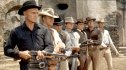
What also helped separate The Magnificent Seven from many Westerns of its era was its character work. The gunfighters weren’t straightforward heroes and each carried emotional baggage that gradually surfaced over the course of the story. “Looking back at it, it was an earlier take on heroes not being such clean-cut good guys,” Word says. “You had Charles Bronson, this tough guy, but then he’s with the kids and you see another side of him. And Robert Vaughn shaking because he’s scared—it worked because the movie built up to that.”
Word also points to Wallach’s memorable performance as Calvera as a key ingredient. “You have to have a great villain,” he points out. “And certainly Eli Wallach, with the gold tooth he had made in Mexico for the role, it all worked.”
The sequels
The success of the original eventually led to a series of sequels, though Word believes diminishing budgets and changing audience tastes made it increasingly difficult to recapture the original magic. “So they made another one,” he says. “The budget was lower, but Yul Brynner came back. Robert Fuller replaced Steve McQueen and they lined up another group of actors.”
That film, Return of the Seven, performed well enough to keep the series going, leading to Guns of the Magnificent Seven and eventually The Magnificent Seven Ride! starring Lee Van Cleef.
“Now you’ve got a balding George Kennedy who had just won an Oscar for Cool Hand Luke, so suddenly he’s marquee,” Word says of Guns of the Magnificent Seven. “Monty Markham told me George Kennedy had a toupee made in Spain because he didn’t want the bald image like Yul Brynner had.”
As for The Magnificent Seven Ride!, he notes that timing worked against it. “That was 1972 and Westerns were already considered a dying genre by then. Lee Van Cleef was a huge star because of the Spaghetti Westerns, but it was really the end of that cycle.”
‘Magnificent’ TV and remake
The property eventually made the jump to television in 1998 with The Magnificent Seven starring Michael Biehn, Eric Close and Ron Perlman. While the series only lasted two seasons, Word appreciated the respect it showed toward the original film. “I liked it,” he says. “They approached it with love because they brought Robert Vaughn back for a couple of episodes from the original cast. I thought that was great.”
And then there was the music. “You can’t do that show without licensing that theme,” insists Word. “It’s like the Mission: Impossible movies. When that theme kicks in, everything catches fire.”
In 2016, the franchise returned to theaters yet again with director Antoine Fuqua’s remake starring Denzel Washington, Chris Pratt and Vincent D’Onofrio. “I didn’t like it as much as the original,” he admits. “I didn’t think the characters were as developed and it was kind of silly. Explosions and comic-book stuff.

“That being said,” he continues, “I’m happy it made money because people didn’t condemn Westerns again. And I had a good time watching it. Denzel is one of the finest actors around and I love Vincent D’Onofrio. But where was the character depth?”
That question may ultimately explain why audiences continue returning to the 1960 original. Beneath the gunfights and Bernstein score was a group of flawed men trying to figure out whether they still mattered in a changing world. And according to Word, Westerns themselves continue to serve a similar purpose for audiences today.
“Just like during the Depression when people watched musicals to escape,” he says, “now people watch Westerns because they want to believe the good guys are still going to win.”
Conversation
All comments are subject to our Community Guidelines. Woman's World does not endorse the opinions and views shared by our readers in our comment sections. Our comments section is a place where readers can engage in healthy, productive, lively, and respectful discussions. Offensive language, hate speech, personal attacks, and/or defamatory statements are not permitted. Advertising or spam is also prohibited.