Holy 60th, Batman! Adam West and the TV Series’ Cast Gets Real About Fame’s Dark Side
'Batman' the TV show is 60! From 'piranha fish' panic to 'damn hippies,' the 1960s stars spill the secrets of Batmania

Key Takeaways
- Adam West recalls how the 'Batman' TV Show turned him into an overnight star.
- Burt Ward and Yvonne Craig reflect on the rise and lasting legacy of the 'Batman' TV Show.
- The 'Batman' TV Show became a pop culture phenomenon whose influence continues 60 years later.
It’s difficult to imagine that it’s already been a dozen years since the 1960s Batman TV show made its Blu-ray debut, but back then, as is the case today as the show celebrates its 60th anniversary, the love for it hasn’t wavered. And the only reason we’re even bringing up that 2014 release is that it was then we had the opportunity to reflect on the show with series stars Adam West (Batman), Burt Ward (Robin) and Yvonne Craig (Batgirl) and given the anniversary, it seems like the perfect Bat-time to look back at what they had to say.
The road to Batman actually began a year before the Dynamic Duo ever reached television screens. In 1965, ABC approached producer William Dozier about developing a live-action series based on the comic book hero. The network initially envisioned a straightforward adventure series, but Dozier had something very different in mind. From here, we’ll let the Dynamic Duo, Batgirl and the people who know Gotham City best take it away—in their own words.
AMERICAN COMIC BOOK CHRONICLES: “The producer concluded that the ABC execs ‘were crazy. I really thought they were crazy if they were going to put this on television.’ The only way it could be pulled off, he decided, was to make it ‘so square and so serious’ that it would work on two levels: as an adventure for kids and as a comedy for their parents. A New York Times article explained, ‘ABC could not afford to put the show in an expensive time slot if it only appealed to children; they don’t have the buying power. ‘This is a merchandising medium,’ said Dozier dryly, ‘not an entertainment medium.’ He decided to apply the pop art technique of the exaggerated cliché, laying it on to the point where it becomes something amusing to adults.’”
Dozier’s instincts proved exactly right. When Batman premiered in January 1966, it exploded into one of television’s biggest sensations. “Batmania” swept across America, captivating children and adults alike. The series turned comic-book sound effects like “Pow!,” “Zap!” and “Bam!” into pop culture staples, while phrases like “To the Batmobile!” and Robin’s frequent “Holy…” exclamations became part of everyday conversation. Just as quickly, Adam West and Burt Ward found themselves transformed from working actors into two of television’s most recognizable stars.
ADAM WEST (actor, “Batman”/”Bruce Wayne”): “The success wasn’t always easy to deal with. There were nights when I’d wake up at three or four in the morning with something biting at me like piranha fish. I’d be thinking that I don’t deserve this and I can’t deal with it. Look, I grew up on a farm in Walla Walla, Washington. I worked in the fields for years, among other things, and when things break that big for you and you become like a rock star, it’s tough to deal with. But I know how fortunate I was.”
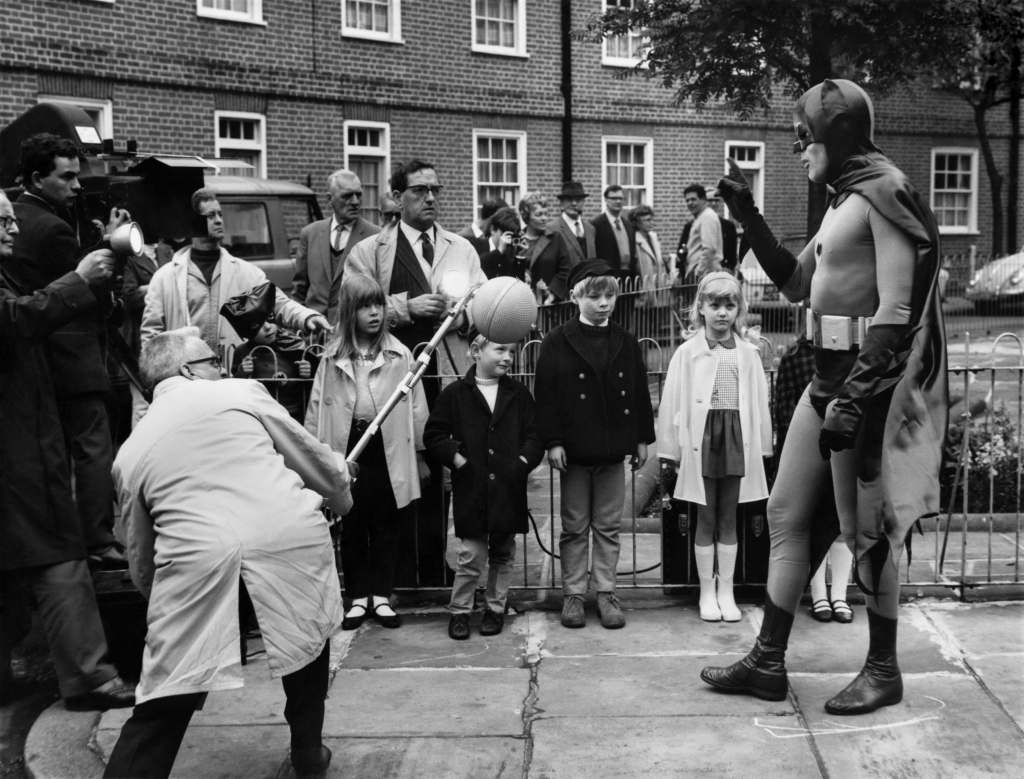
BURT WARD (actor, “Robin”/”Dick Grayson”): “The success didn’t mean that much to me beyond the work itself and the fact that people were enjoying the show. On top of that, for the first three months the show was on the air, I was so busy filming it that I was unaware of the growing response on the part of the public. That changed when I made a personal appearance, in costume, in Tacoma, Washington, over the same weekend that Adam was appearing as Batman at Shea Stadium in New York.”
“From what I understand when I got there, people were sleeping on the streets and you couldn’t get within six blocks of this shopping center the Wednesday before the Saturday and Sunday appearance. The shopping center had arranged for the University of Washington football team to be my bodyguards. I’ll never forget that appearance: I had all these people around me and we’re a big mob walking in the same direction, and I was dressed as Robin. There were these two elderly ladies coming the other way — they were quite a distance away — and both of them looked at me, and one lady said to the other, ‘Damn hippie!’ I mean, I thought that was pretty funny and it made my day. People were just going nuts, but it really didn’t affect me and I’ll tell you why. When I’m sitting there meeting people and I have the mask on, it’s almost like you’re watching TV. In other words, I’m watching people come up and they’re saying, ‘I love this, I love that,’ but I’m watching them as opposed to being part of them. It’s like watching a show through the mask. For them it wasn’t me, Burt Ward, it was Robin.”
“Here’s what’s really amazing: These people would come and be beyond anything you could imagine. They’d fight for your paper drinking cup and they’d swoon. When the appearance was over, I’d go back to my dressing room and would get dressed in my regular clothes. I’d come out among the same people, and not one of them recognized me. Nobody knew — nobody — so therefore it didn’t really affect me, because it was the character the people were in love with; I just happened to be there as a witness when they were doing all the fawning and everything else.”
Making of a phenomenon
Sharing the spotlight with the Dynamic Duo was one of television’s greatest collections of villains. Cesar Romero’s gleefully unhinged Joker, Frank Gorshin’s manic Riddler, Burgess Meredith’s delightfully pompous Penguin and Julie Newmar’s irresistibly playful Catwoman quickly became pop culture icons in their own right. In the show’s third and final season, they were joined by Yvonne Craig as Batgirl, whose arrival added another colorful hero to Gotham City and made her an instant fan favorite.
What made it all work was that everyone involved played the material with absolute sincerity. West never winked at the audience, Ward delivered Robin’s endless “Holy…” exclamations with complete conviction, and the villains treated their outrageous schemes as matters of life and death. The result was a style that drifted effortlessly into camp while remaining utterly committed to its own reality.
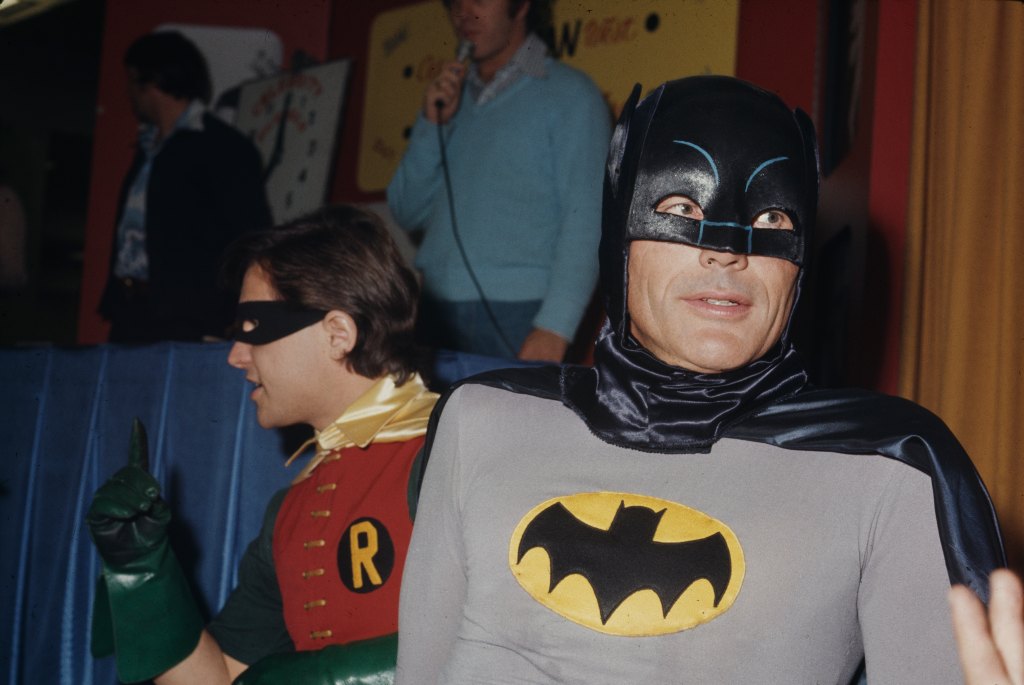
It was also a version of Batman unlike any audiences had seen before or have seen since. Far removed from the brooding vigilante driven by the childhood murder of his parents, this Caped Crusader battled crime with a square jaw, a ready smile and an endless supply of colorful gadgets—all while delivering one gloriously outrageous adventure after another.
ADAM WEST: “In the comics, Bruce baby was crazy. I mean, Batman’s nutty, so I kind of played it that way and super serious and always moving, musing, trying to put clues together, and very physical and solemn. We didn’t need all those explosions and flames and people blowing up. We didn’t need that, because we planned to be funny and yet be wonderfully exciting for the kids. This wasn’t the Dark Knight. I decided to be the Bright Knight, and to bring the laughs.”
As noted above, Craig joined the series in its third and final season in the dual role of Barbara Gordon and her crime-fighting alter ego, Batgirl. Looking back, she believed the show’s broad appeal made perfect sense. At a time when the country was grappling with the Vietnam War and social unrest, Batman offered viewers something increasingly rare: pure escapist fun.
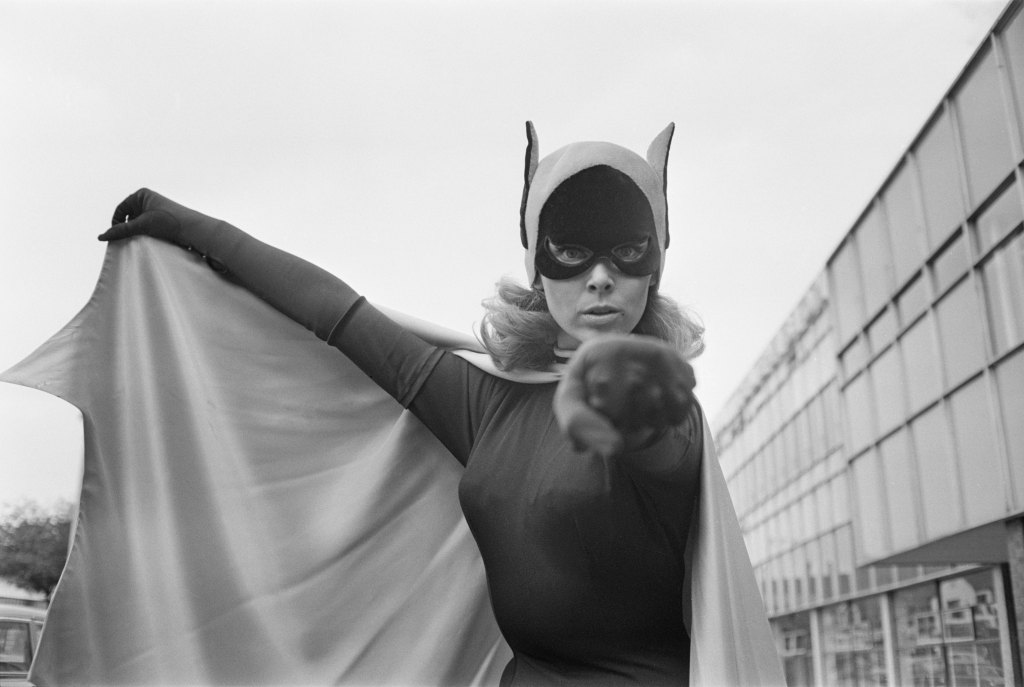
YVONNE CRAIG (actress, “Batgirl”/”Barbara Gordon”): “It’s a sign of of our times. Everyone would like to go back to Flower Power rather than blowing people up in these different places, so I think people are looking for an escape. And this is not only an escape, but it’s silly and fun and pretty. And all of those bright colors, which really helped to interest little kids, because they liked all that bright color. And all of that camera work. Yet there was something in it for their parents, so they weren’t just sitting there saying, ‘Oh my God, another Sesame Street.’ When the Michael Keaton Batman movie came out in ’89, it was very dark,” Craig elaborated, “Then I remembered the fact that Batman started out dark in the ’30s and ’40s, and then, when we had Flower Power in the ’60s, the show came out. There were people who were very upset that we would be making fun of this. Then, in 1989, when the Michael Keaton one came out, it was so dark and dismal. I saw it as a sign of the times, and that was the time for it to be dark. It will get lighter as life gets lighter and ultimately it did. It’s the natural cycle.”
It all comes to an end
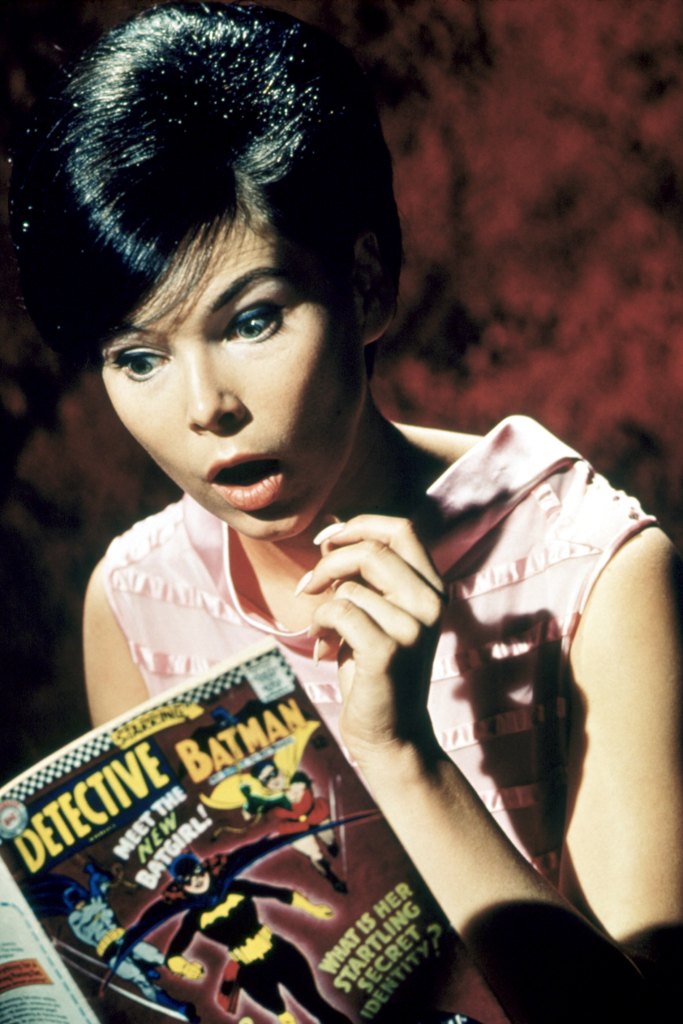
Of course, television phenomena rarely last forever. As the old saying goes, the candle that burns twice as bright burns half as long. Batman may have exploded into a pop culture sensation whose stars experienced a level of attention approaching Beatlemania, but by its third season the excitement had begun to fade. The novelty that had fueled “Batmania” was wearing off, ratings were slipping and the addition of Batgirl was intended to inject fresh energy into the series. Unfortunately, it wasn’t enough to reverse the trend and by March of 1968, the phenomenon had passed.
ADAM WEST: “In the last year, the studio was close to getting enough episodes to keep the show in reruns forever, so they weren’t spending as much money on set designs, writers and everything else. I sensed that maybe this thing was wearing a little thin. The first two seasons were wonderful, but in the third the audience got the sense that something was amiss.”
BURT WARD: “The end wasn’t a problem at all. I mean, I loved doing the show, so in that respect I missed it, but in terms of suffering from a loss of stardom or something, no, not at all. I feel this way: you win some, you lose some. That’s the way I look at it. When I was doing Batman, it was the greatest show and it became one of the biggest hits ever on TV. And it was worldwide. But I knew it couldn’t go on forever.”
YVONNE CRAIG: “The ending was very matter-of-fact for me. I had been on it for one season and it was terrific, but if all of us told the truth, the truth was we did not know that 45, 50 years later people would still be talking about it. It was a wonderful job, but nobody looked ahead and said, ‘Oh, this is going to be iconic.’ I had done a lot of work before Batman, and so went on to do other things. I would have thought it would be a problem for Burt, because he had not been an actor prior to the show. You get in this hit series and then you get dumped out of it. Where do you go?”
ADAM WEST: “Oh, there was a time when I was typecast so terribly,” he admitted, “and up for a number of big features I couldn’t do because the producers casting would say, ‘What would happen if he went to bed with the leading lady? The audience would forget the whole story and say, ‘Look, it’s Batman in bed.’ So I just decided years ago to love the character, because people love it and recognized that I should be grateful to have that; to be one of the few icons around.”

YVONNE CRAIG: “I think Adam had such a hard time because of his speech cadence. It is so unique that they hired him as Batman partly because of that. You know, ‘Hello, Citizens’ and that kind of thing. When he started reading for other things, they thought he was playing Batman. But that’s who he is and that’s how he talks, so it hung him up for a while, because they couldn’t erase the sound of Batman, which was not done as part of the character; it was just that he was using his own voice and speech cadence. Then that finally wore off, and he started getting hired for exactly that.”
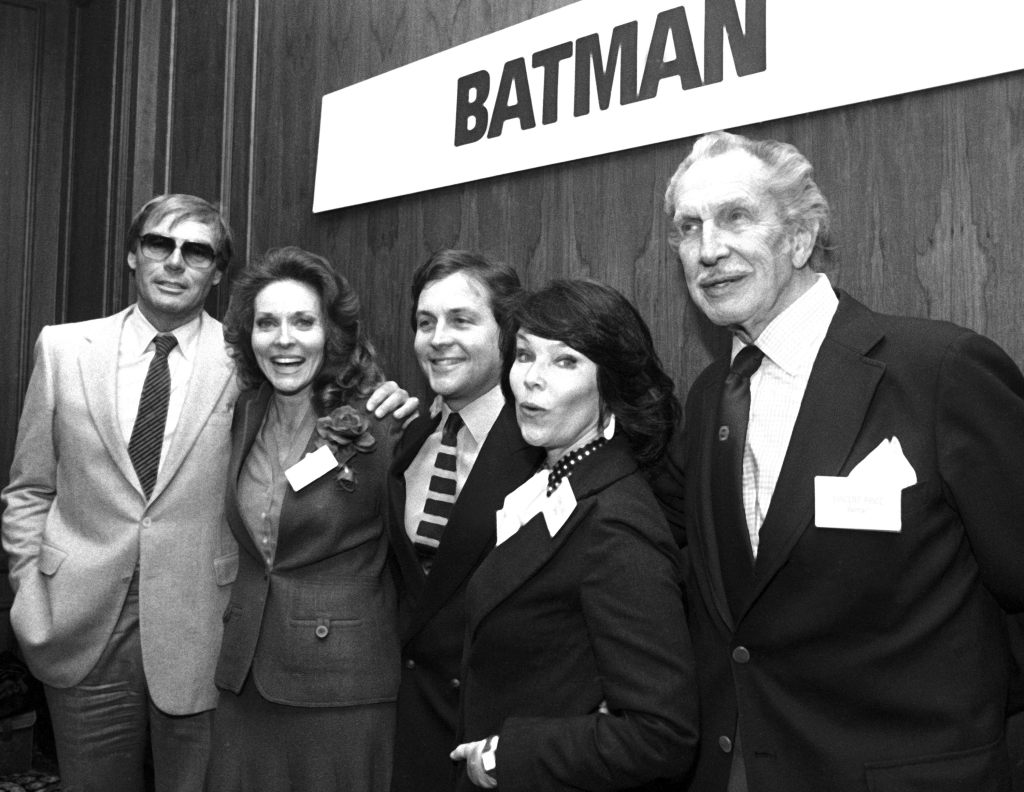
Before Adam West donned Batman’s cape, the only television superhero to achieve comparable fame was George Reeves in The Adventures of Superman. Reeves, however, never lived to see the lasting impact of his performance. West did. Although there were years when he struggled with typecasting and the shadow cast by Batman’s success, he also had the rare opportunity to watch new generations discover the series, embrace it and celebrate his portrayal in ways neither he nor anyone else could have imagined during the show’s original run.
ADAM WEST: “I actually feel quite humbled by that observation. Again I say I’m probably the luckiest actor alive in that I’ve become kind of an icon and people have an affection for me, which is wonderful. What does an actor want? I guess to be loved every time he goes out onstage or before the camera. It’s like, ‘Love me. Appreciate my work. I’m really doing my best here.’ If I made people happy, and I know I have, and I’ve given them a lot of laughs, then I’m a happy guy. But I do wake up sometimes late at night and think, ‘Why me? What happened?’ Like I said, I was a farm boy from Walla Walla, Washington. I don’t know what the hell happened to me. It just did.”
Conversation
All comments are subject to our Community Guidelines. Woman's World does not endorse the opinions and views shared by our readers in our comment sections. Our comments section is a place where readers can engage in healthy, productive, lively, and respectful discussions. Offensive language, hate speech, personal attacks, and/or defamatory statements are not permitted. Advertising or spam is also prohibited.