‘The Riddler Changed My Life’: How Frank Gorshin Became Batman’s Most Iconic Villain
How the legendary impressionist fought to be seen as a serious actor despite his superhero fame
Key Takeaways
- Frank Gorshin’s Riddler may have made him a star—but trapped his career/
- Behind Batman’s Riddler was an actor fighting to be taken seriously.
- Gorshin found late-career redemption in his career after years of frustration.
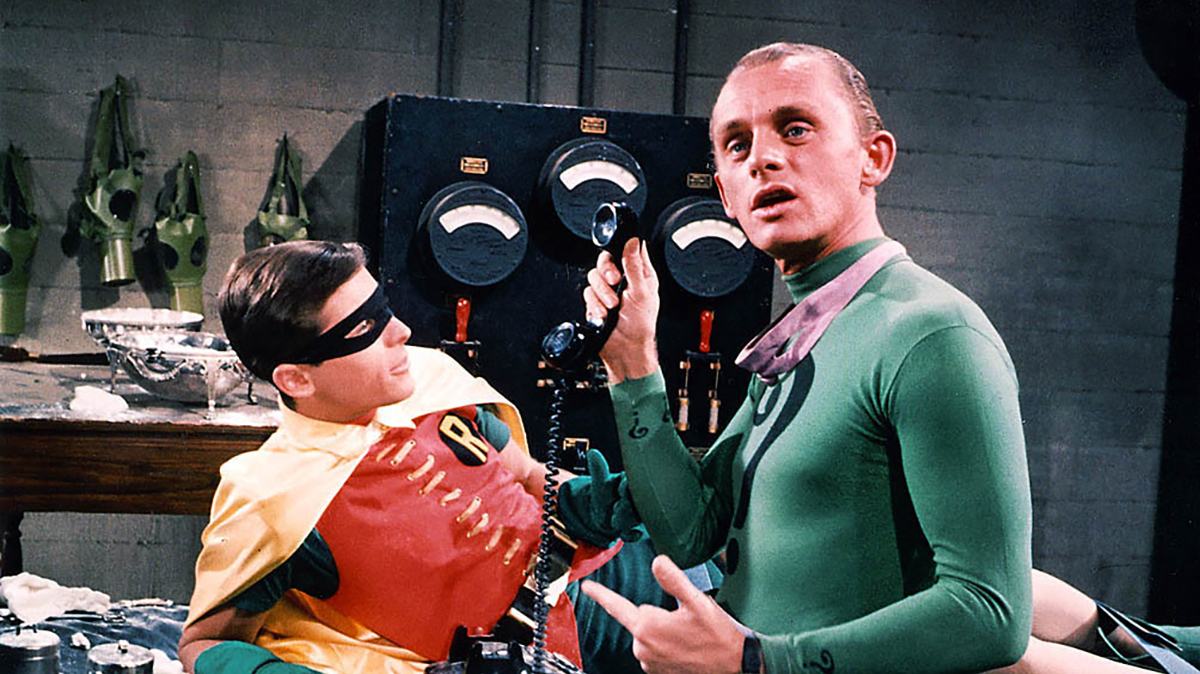
When director Robert Butler and producer William Dozier began casting the first major villain for the 1966 debut of Batman (which premiered 60 years ago in 1966 along with Family Affair, Star Trek and Dark Shadows), they understood immediately what was at stake. The two-part premiere—“Hi Diddle Riddle” and “Smack in the Middle”—would introduce audiences not just to the show, but to its tone: colorful, exaggerated and unapologetically campy. If the villain didn’t land, the entire concept could collapse before it even had a chance to find its footing.
They needed someone who could walk that razor-thin line between menace and mischief. They found him in Frank Gorshin. The moment he walked into the audition, the search was effectively over.
For Butler—who would go on to help launch series like Star Trek (he directed the first pilot, “The Cage”), Hogan’s Heroes, Moonlighting, Hill Street Blues and Remington Steele—there was never any doubt about how to approach Batman.
ROBERT BUTLER (director): “I was just very harmonious with the material and Frank just fit right into that scheme with no pain whatsoever. He came into the audition with what you saw; he somehow decided that to be that giddy and have a great time was the way to go. I think we were probably all stunned in his audition and realized that this was the guy who was the guy, so let’s hire him and proceed. And working with him was kind of unusual and ideal. By that I mean in the abstract it’s ideal. If you never have to say anything to an actor in terms of his performance, that is ideal. It was different from, say, live television, which I began in, where there was very much a collaboration of a director and actor working together so that the actor in question would fit into the model of the show unit, which had to go on the air a week from Friday, if you know what I mean.”
FRANK GORSHIN (actor, “The Riddler”): “The Riddler changed my life completely. The reaction was immediate and I was afraid the Riddler would overshadow me as a personality. Before people used to say, ‘You know, that marvelous guy, I’ve seen him a thousand times. What’s his name?’ Suddenly, they knew my name.” (Rocky Mountain Review, 1966)
From Pittsburgh to the spotlight
Long before Gotham City entered the picture, Gorshin’s path to performing began in far more modest surroundings. Born Frank John Gorshin, Jr. on April 5, 1933, in Pittsburgh, Pennsylvania, he got his first real taste of show business at the age of 15 while working as an usher at the Sheridan Square Theatre.
Watching films night after night, he began studying the actors on screen, absorbing their voices, gestures and rhythms. What started as observation soon turned into imitation, and imitation into something more refined: a developing talent for impressions that would eventually become one of his trademarks.
By 18, he was already testing those skills in front of an audience, entering a Pittsburgh talent contest and winning first prize—a one-week engagement at the Carousel nightclub in New York, owned by Jackie Heller. From there, the path became clearer. After graduating from Peabody High School, he enrolled at the Carnegie Tech School of Drama (later Carnegie Mellon University), continuing to act in local productions while performing in nightclubs. It was a balancing act between training, performing and refining, and in essence it layed the groundwork for the moment when everything would finally come together.
And it was laying the groundwork for the moment when everything would finally come together.
Finding his voice and a shortcut
FRANK GORSHIN: “Ever since I was a kid, I wanted to be an actor. That’s why I picked the Drama School at Tech. But in 1953, at the end of my sophomore year, the Army tapped me and it was in the service, for camp revues and I began to do imitations of James Cagney and Humphrey Bogart and so many other Hollywood greats of that day. The GIs seemed to like them, so I kept working on a repertoire. At the end of my hitch, I figured maybe this would be a shortcut to acting, so I headed for the West Coast and forgot about Tech.” (Pittsburgh Post-Gazette, 1965)
It was a practical decision—one born out of opportunity rather than design. And, at least initially, it worked. Once he arrived in Hollywood, Gorshin didn’t struggle to find work—he struggled to limit it. Between 1956 and 1965, he appeared in 22 films, beginning with The Proud and the Profane and continuing through That Darn Cat!. At the same time, he was making steady appearances on television, from Alfred Hitchcock Presents to Combat!. And running parallel to both was a thriving nightclub career that kept him traveling constantly.
PITTSBURGH POST-GAZETTE: “His services are in constant demand. In fact, there aren’t enough weeks in the year for him to meet them. The supper clubs, the movies and television recognize talent when they see it. These three mediums will pay the Pittsburgh boy roughly around $100,000 in 1965.”
It was the kind of success most performers would welcome without hesitation. Gorshin, however, saw it differently.
Multi-faceted performer
Even as his career gained momentum, there were voices around him urging focus—suggesting that he choose a single direction and commit to it, but it was a notion that he was resistant to.
FRANK GORSHIN: “People close to me say I should concentrate on one thing and not spread myself in so many different directions. But I don’t want to. I like them all, the night clubs, television and the movies. Each medium gives me a chance to explore something different, and I think I can manage to keep going this way until I’m sure, very sure, I’d be able to stick with one and not miss the two others. That time hasn’t come yet.”
While it felt like freedom, as things would unfold it would turn out to be something a little more complicated than that. Because while Gorshin continued to pursue acting, it was his impressions that began defining him in the public eye. Appearances on The Steve Allen Show and The Ed Sullivan Show—including the historic February 9, 1964 broadcast featuring the American debut of The Beatles—cemented his reputation as one of the most dynamic impressionists of his time. But that recognition came with a cost.
FRANK GORSHIN: “It was the impressions that kind of caught everybody’s fancy. In those days, I didn’t care which direction it was going, I just wanted to work. Before I knew it, a lot of years had gone by and everybody knew me as a nightclub performer. When you’re doing that, when people know you as one thing, it’s hard for them to accept you as something else.” (The Star Press, 1987)
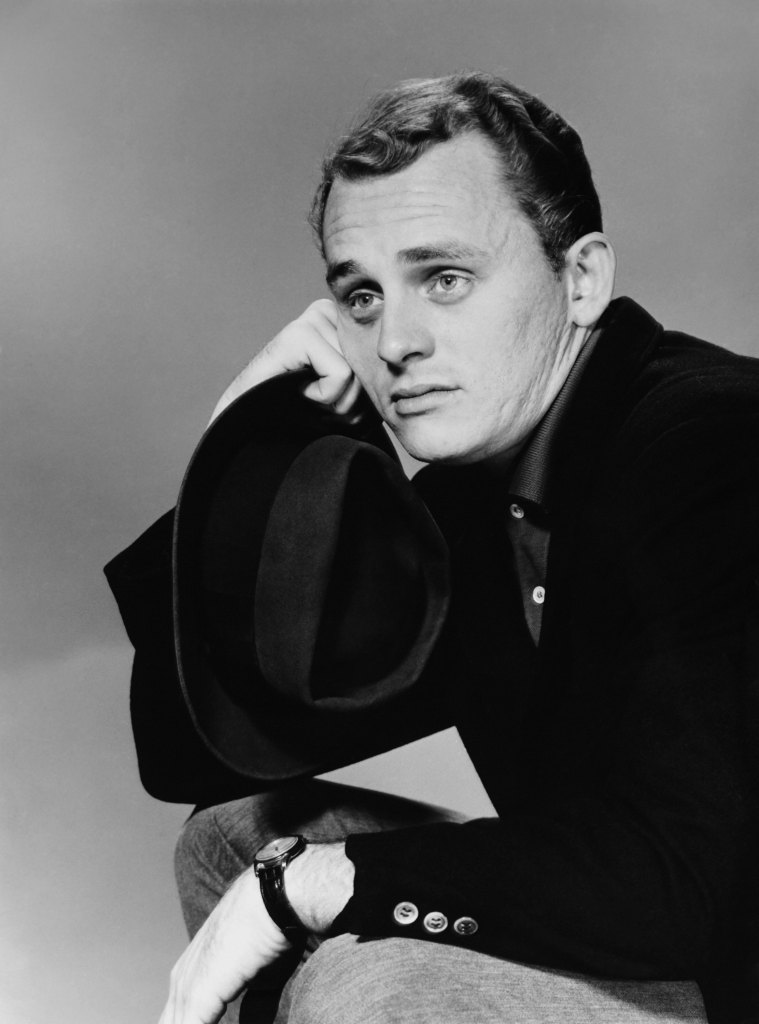
Still, Gorshin did manage to leave a lasting mark in both film and television. Among his most memorable performances outside of Batman was his role as Bele in the Star Trek episode “Let That Be Your Last Battlefield,” a story built around two characters divided visually—half black and half white—in a pointed metaphor about race and division.
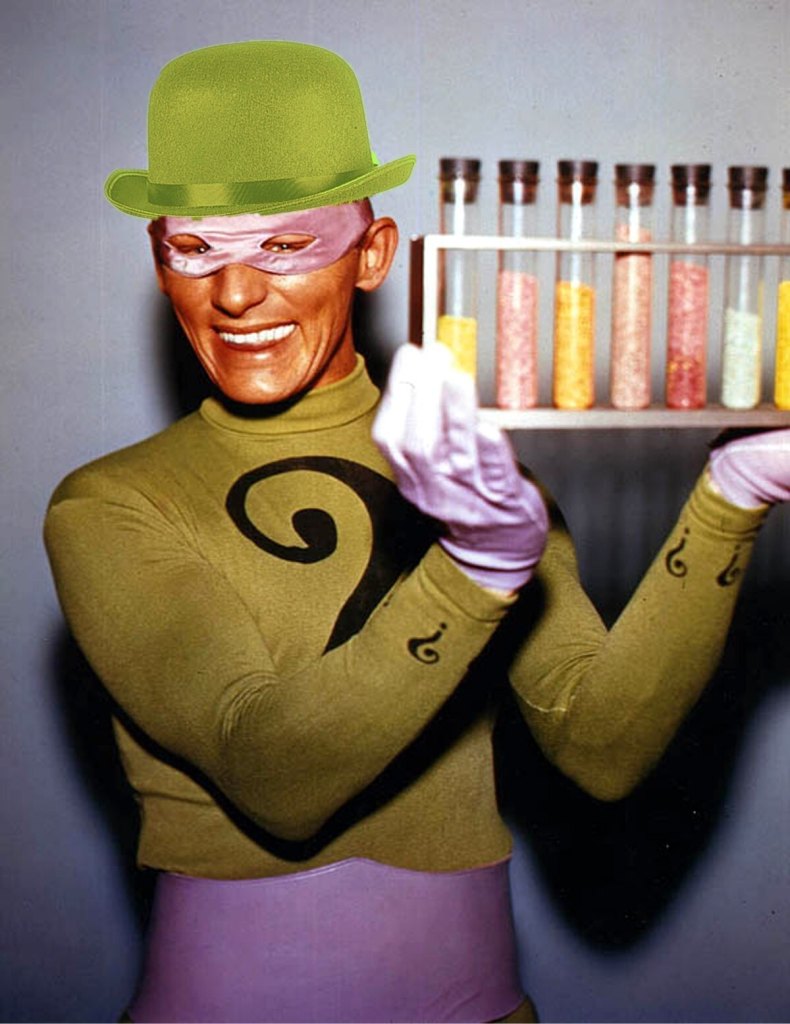
And then, of course, there was the Riddler. Across 10 appearances, Gorshin transformed what had been a relatively minor comic book villain into one of Batman’s most iconic adversaries—an achievement that would echo through decades of pop culture. And yet, for all of that success, there remained a disconnect between how Gorshin saw himself and how he was perceived.
GEOFFREY MARK (pop culture historian): “Unlike other impressionists, Frank Gorshin was basically an actor who used his ability to do impressions of people. He was not, however, at heart a stand-up comedian or comic. The impressions made him famous enough to be cast on Batman, but it was Batman that propelled his career. Interestingly, the Riddler had been a minor character in the Batman mythos, and yet Frank’s brilliant interpretation of the character made people think that the Riddler was one of Batman’s big three or four villains. He wasn’t until the TV series. He wasn’t until Frank Gorshin, and I’m sure that Frank must have grown to resent that a little bit, because he wanted to do everything. Other impressionists like Rich Little and Marilyn Michaels are brilliant comedians and singers who could just as easily entertain audiences without the impressions, but Frank needed the script. He was an actor playing a character.”
It’s a telling observation, because in many ways, it captures the central tension of Gorshin’s career: He wanted to be seen as an actor, but the world kept seeing something else first.
Respect, frustration—and the limits of success
For all the recognition Frank Gorshin achieved, there remained an undercurrent of frustration that never fully disappeared.
GEOFFREY MARK: “It’s why he was so frustrated that his work on Star Trek and other sixties vehicles didn’t float him into the big time of acting. And he spent most of his career doing the impressions, even right towards the end with a one-man show about George Burns. Yes, he was acting in a play with lines, but he wasn’t being a comedian. He was still doing an impression. And he was frustrated. There are people in show business who are beloved by other entertainers. Frank was respected by other entertainers, but I don’t think he was beloved. He could be difficult. He could be self-serving and not necessarily a good acting partner for somebody else.”
IYet when it came to Batman, all of that intensity found the perfect outlet. While Cesar Romero’s Joker may have been the character’s most famous nemesis in the broader mythology, there’s a strong argument that on the television series, Gorshin’s Riddler was the true threat. At least, that’s how writer Jim Beard sees it.
JIM BEARD (author): “His performance is just so intense. That’s really the go-to word right there: it’s so intense and then there’s what he does with it. I’ve often said that I wouldn’t necessarily mind being in the same room as Cesar Romero’s Joker, but I would not want to be anywhere near Frank Gorshin’s Riddler, because maybe I’m not walking out of there. He just had that manic energy and intensity. A fire in him.”

ROBERT BUTLER: “That’s a very good point, because that danger and suspense is very much what keeps the storytelling alive. There was an awful lot of energy in that performance and that decision he made to convey tremendous force and power and strength brought with it the concern that things could get violent, leaving a lot of dead people laying around. He really was phenomenal. I tweaked the edges of his performance at the very most, because, again, it was his notion to be so giddy and goofy and hilariously self-involved. It was just wonderful.”
ADAM WEST (actor, “Batman”): “He was marvelous to work with. I love working with actors who are on the edge, as Frank was. He was dangerous.”
Part of what made Gorshin’s performance so effective was that he never treated it like a joke—even when everything around him leaned heavily into comedy. Years later, he explained his approach in simple terms.
FRANK GORSHIN: “He wasn’t a funny character. Now, when you see him with his green tights and black question marks and pulling some of the stunts he does, it’s funny. But I didn’t play it to be funny. I played it with serious intent, this guy with these convictions that he was smarter than the whole world and was going to outwit the whole world. The funny thing was, the Riddler was seen as a sex symbol by both sexes, and suddenly I became this great pin-up on teenagers’ walls and in locker rooms.”
Looking Back—and Looking Forward
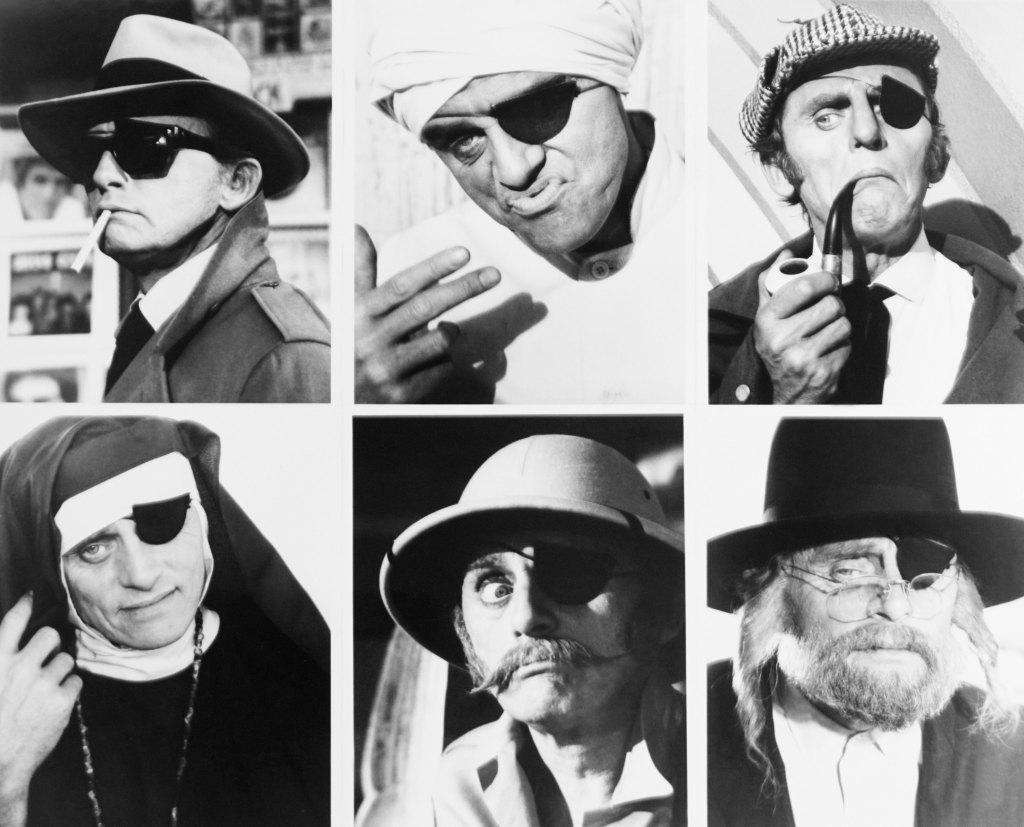
By the time a new generation encountered the Riddler in Batman Forever, with Jim Carrey taking on the role, Gorshin had already made peace—at least in part—with what the character had given him.
FRANK GORSHIN: “I enjoyed playing the Riddler, mostly because it did so much for me and my career. But the reality is that they let me do what I wanted. And all I kept thinking was, when I was a kid, I remember reading the Riddler in the comic books. He was a fun guy, even though his fun was derived from evil doings. But he had a great zest for life, and so much so that he constantly giggled and laughed and loved the whole game, and fancied himself as being able to do everything and anything. With this, I thought, ‘Gee, that’d be fun to play.’ And it was.”
And perhaps most telling of all was his understanding of the show’s impact.
FRANK GORSHIN: “I knew this was a hot show, though it only lasted three seasons. I knew because it was different; it was a pioneer in a lot of ways. It got a lot of publicity and acquired a strong following, and in the reruns it took on a whole new life and became even more successful. Once that Batman episode aired, I was elevated to headliner and I was on my way.”
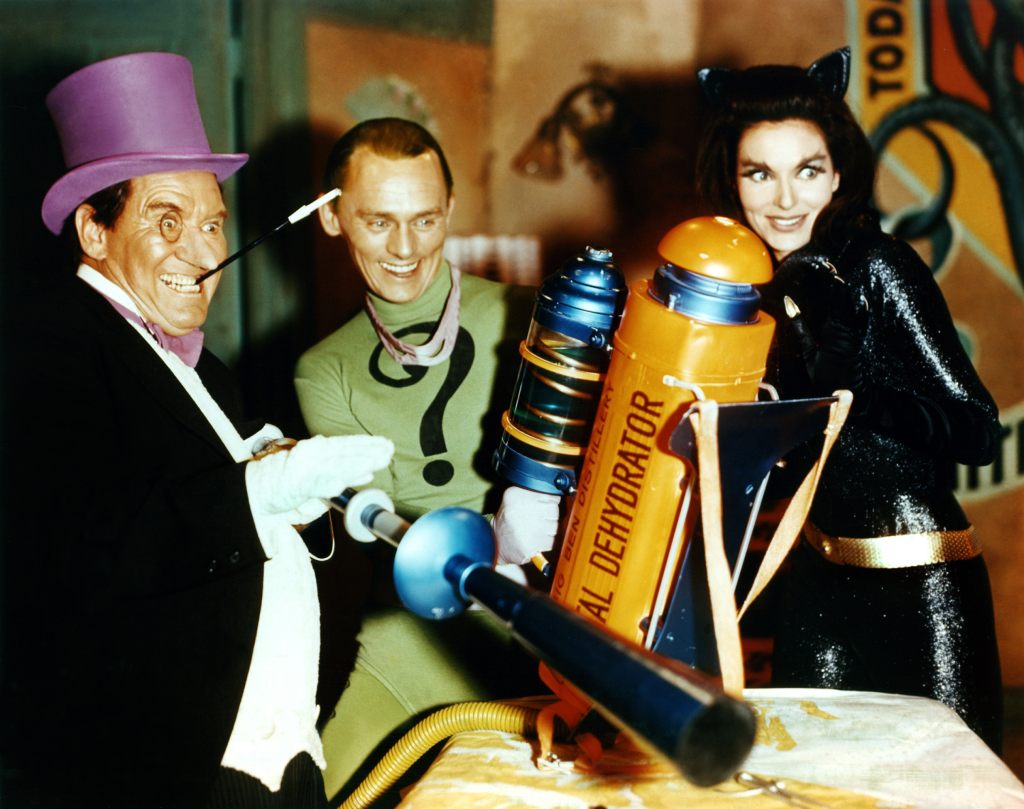
For all the success that Frank Gorshin achieved as the Riddler on Batman, there came a point where he simply wanted more, so after 10 appearances, he walked away from the role. The reasons depend on who you ask. Gorshin maintained that the scripts had declined in quality—which, by most accounts, they had. Others pointed to his request for a significant salary increase that ultimately wasn’t met. And then there was the deeper issue—the one that had followed him for years: the growing sense that the role was defining him in ways he couldn’t escape.
That tension became even more apparent in the years that followed. In 1972, ABC launched The ABC Comedy Hour, a variety series that, for part of its run, featured a troupe of impressionists known as The Kopykats. Among them were Rich Little, Gorshin, Marilyn Michaels, George Kirby and Fred Travalena. It may have been steady work, but it wasn’t what he was chasing.
GEOFFREY MARK: “It is difficult for some performers to accept that there can be limitations on their careers. We would probably not know about Frank if not for The Ed Sullivan Show. It was those appearances that led to Batman and Batman led to Star Trek, and it is true that after the first season of Batman, there were diminishing returns from the writing. And if you want to notice how good Frank was in the role of the Riddler, watch John Astin play it. John was a fine actor, but he could not begin to do what Frank did with the role. But when your entire career is based on Ed Sullivan and Batman, as much money as you may make and as many game shows and talk shows you can be on, if your aspiration is to be a fine actor, one could see why Frank would be frustrated and angry.”
And yet, late in his career, something remarkable happened. With the one-man show Say Goodnight, Gracie, Gorshin stepped into the role of George Burns—and, for perhaps the first time, disappeared completely into a character in a way that transcended imitation.
RUPERT HOLMES (playwright): “Five minutes into each performance, everyone in the audience would forget they were seeing Frank Gorshin. He got a standing ovation at every performance and on the third bow he’d let George drop away from him; he just gave up George and the audience would hesitate for a moment, because they’d suddenly remember they had been watching Frank Gorshin, not George Burns.” (The Los Angeles Times)
It was, in many ways, the breakthrough he had been seeking all along. Not as an impressionist, but as an actor. Tragically, however, that sense of artistic fulfillment came near the end.
After completing a performance of Say Goodnight, Gracie in Memphis, Gorshin boarded a flight to Los Angeles. Mid-flight, he went into medical distress. Upon landing, he was rushed to the hospital, but doctors were unable to save him. On May 17, 2005, at the age of 72, he died of lung cancer, complicated by emphysema and pneumonia. He was survived by his wife, Christina Randazzo—whom he had married in 1957—and their son.
The actor he always believed he was
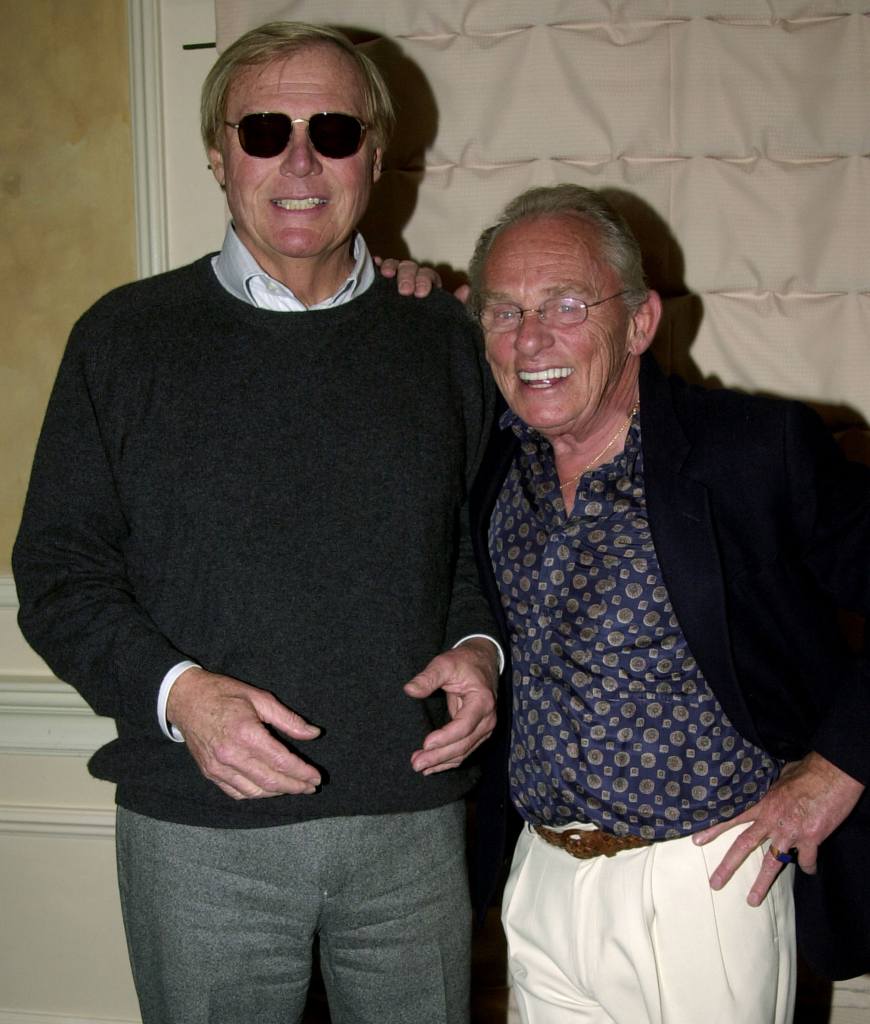

Looking back, perhaps the clearest insight into Gorshin’s mindset came years earlier, when he was touring in the musical On the Twentieth Century.
FRANK GORSHIN: “I’ve finally come to the realization, ‘What am I going to do? Am I going to do Kirk Douglas and Burt Lancaster for the rest of my life? When this thing came along, I thought, ‘Wow, this might be an opportunity for me to really show a commitment to this area of the business.’ It’s not the most comfortable situation in the world. As much as you’re traveling all the time, you’re doing a lot of one-nighters. But I wanted people in the theater community to be aware that I’m really serious about this.”
“Ultimately, I just want to do Broadway. I want to do a play and I want to do a play that no one else has done. I want to do a character that no one else has done. I’ll tell you this, though. Even though I’ve played a lot of nightclubs and so forth, and I have a reputation of being a comedian, I sure don’t feel and have never felt like I was a funny person. I think I’m more intense than anything and more inclined to want to do dramatics, to do things that are sensitive in nature.” (The Star Press)
Conversation
All comments are subject to our Community Guidelines. Woman's World does not endorse the opinions and views shared by our readers in our comment sections. Our comments section is a place where readers can engage in healthy, productive, lively, and respectful discussions. Offensive language, hate speech, personal attacks, and/or defamatory statements are not permitted. Advertising or spam is also prohibited.