A Behind-the-Scenes Guide to the ‘Stargate’ Franchise: ‘SG-1’ to ‘Atlantis’ and More
Relive the magic with heartwarming secrets and rare onset memories from those who were there

‘Stargate’ (1994)
Created by: Roland Emmerich and Dean Devlin.
Stargate Cast: Kurt Russell (Col. Jack O’Neil), James Spader (Dr. Daniel Jackson), Jaye Davidson (Ra), Alexis Cruz (Skaara), Mili Avital (Sha’uri), Erick Avari (Kasuf).
Premise: After an ancient ring-like device is unearthed in Egypt, linguist Daniel Jackson deciphers its star-based symbols, revealing a portal capable of transporting travelers to distant worlds. Joined by a skeptical military team led by the grieving Col. O’Neil, Jackson discovers a civilization enslaved by a powerful alien masquerading as the Egyptian sun god Ra. The mission becomes a struggle for liberation as well as a confrontation with humanity’s own past.
Behind-the-scenes: Stargate was envisioned by Emmerich and Devlin as a bridge between ancient mythology and science fiction. The film’s success surprised MGM, especially overseas, prompting the studio to explore serialized potential. Russell and Spader did not reprise their roles in subsequent TV adaptations, leaving room for reinterpretation of the characters. The seeds planted by the movie—aliens posing as gods, ancient human origins and galaxy-spanning mythology—would become the foundation for one of the longest-running sci-fi franchises in TV history.
Roland Emerich (co-writer/director, Stargate): “When I was in film school, there was a wave of theories about aliens visiting Earth thousands of years ago and being responsible for the pyramids and such. It wasn’t so much that I believed in the theories, but I always thought the idea could be the basis for a fantastic adventure movie.”
Dean Devlin (co-writer/producer, Stargate): “Roland told me about a concept he had for a film set inside the Great Pyramids of Egypt. I told him about an idea I had for a kind of desert epic in outer space. We decided to combine the two and Stargate was born.”
Kurt Russell (actor, “Jack O’Neil”): “Stargate is a great journey, but in the end, it is a very human story. That is to say, simply, that you can travel to the other end of the universe, but whatever life form you encounter, you are still having to deal with your own humanity.”
James Spader (actor, “Daniel Jackson”): “My character spent his life studying entire civilizations spanning centuries. The breadth of one lifetime is meaningless to him. I think what he discovers in the course of the story is the value of that one life and that every culture is made up of millions of single lifetimes.”
‘Stargate SG-1’ (1997–2007)
Created by: Brad Wright and Jonathan Glassner.
Stargate SG-1 Cast: Richard Dean Anderson (Col./Gen. Jack O’Neill), Michael Shanks (Dr. Daniel Jackson), Amanda Tapping (Maj./Col. Samantha Carter), Christopher Judge (Teal’c), Don S. Davis (Gen. George Hammond), Ben Browder (Lt. Col. Cameron Mitchell), Claudia Black (Vala Mal Doran).
Premise: One year after the events of the film, the U.S. military activates the Stargate program and assembles SG-1, a frontline exploration and defense team tasked with traveling to other planets to forge alliances and battle alien threats. Their primary adversaries are the Goa’uld, parasitic beings posing as gods, whose dominion over human civilizations threatens both Earth and the galaxy. The team’s missions expand into politics, diplomacy, warfare, ethics and the escalating battle between advancing alien cultures.
Behind-the-scenes: Debuting on Showtime before later moving to SYFY, SG-1 became a landmark of genre storytelling, running for 10 seasons—longer than The X-Files at the time. Production was based in Vancouver, where cost-efficient shooting, reuse of military sets and Canadian collaboration helped stretch the series’ budget. Anderson gradually reduced his screen time in later seasons, allowing Ben Browder to join as a new lead and Claudia Black to expand her recurring role into regular status. The show continuously reinvented itself through new factions (Replicators, Tok’ra, Ori), each reshaping the mythology. Its longevity made it the anchor that launched the broader Stargate television universe.
Brad Wright (co-creator/executive producer): “I remember walking out of the move thinking, ‘That wasn’t great, but that Stargate is one of the best storytelling devices I’ve seen since the Enterprise on Star Trek.’ I mean, it’s a story-making machine. And the other thing is that I think one of the reasons Stargate was successful was that it featured people from the here and now. And the only reason we had access to space was due to this magical device that allows you to do it.”
Jonathan Glassner (co-creator/executive producer): “What fascinated me about the movie was really quite simple. It was in a day when television was still very episodic and not very serialized. Each episode had to stand alone and this giant gate that could take you to another planet lent itself really well to being episodic. It was a great way to do a new story with new characters every week on new adventures every week while keeping ongoing arcs for the continuing characters. That’s what struck me when I saw the film. It was just a perfect venue to do a show.”
‘Stargate Infinity’ (2002–2003)
Created by: Eric Lewald and Michael Maliani (based on MGM’s Stargate property).
Stargate Infinity Cast: Dale Wilson (Maj. Gus Bonner), Tifanie Christun (Stacey Bonner), Mark Hildreth (R.J. Harrison), Kathleen Barr (Draga), Mackenzie Gray (Horus), Blu Mankuma (Da’Kaar).
Premise: Set decades in the future, the series follows a disgraced SG team leader who is framed for treason and flees through the Stargate with a group of young recruits. Pursued by alien enemies and cut off from Earth, they encounter new civilizations while trying to clear their names. Targeted to younger audiences, the show blended action with educational moral lessons tied to each episode.
Behind-the-scenes: Although licensed by MGM, Infinity was produced without consultation from the live-action creative team, leading to continuity conflicts and a tone far removed from the established franchise. The show’s Saturday-morning positioning required simplified plots and moral taglines, a sharp contrast to the complexity of SG-1. Fans and franchise leadership largely rejected the series, and MGM eventually declared it non-canon. Despite its short run, its existence demonstrated early plans to diversify Stargate beyond live-action, foreshadowing later multimedia experimentation.
Mark Edward Edens (story editor): “Instead of exploring alien worlds and fighting for survival, our heroes were shoe-horned into situations in which they learned valuable life lessons and educational content suitable for pre-adolescents. The result was an anemic action show that alienated Stargate fans.” (thecompanion)
Michael Edens (story editor): “I didn’t think it was as bad as hardcore Stargate fans say. It was different, but it was a different medium—animation—aimed at a different audience, the eight-year-old and older crowd. Since we were set in the Stargate future, we thought the original fans would cut us some slack, but apparently they didn’t. We did the best we could do, especially since we were out there operating on our own with very little input from MGM, so the fan reaction came as something of a surprise. It’s maybe not my best work, like X-Men or Exosquad, but I don’t think it’s anything to be ashamed of. If you just watch it for what it is, it’s a pretty entertaining show.” (thecompanion)
‘Stargate Atlantis’ (2004–2009)
Created by: Brad Wright and Robert C. Cooper.
Stargate Atlantis Cast: Joe Flanigan (Lt. Col. John Sheppard), Torri Higginson (Dr. Elizabeth Weir), David Hewlett (Dr. Rodney McKay), Rachel Luttrell (Teyla Emmagan), Rainbow Sun Francks (Aiden Ford), Jason Momoa (Ronon Dex), Paul McGillion (Dr. Carson Beckett), Jewel Staite (Dr. Jennifer Keller), Robert Picardo (Richard Woolsey).
Premise: A multinational expedition travels through the Stargate to the Pegasus Galaxy and discovers the lost city of Atlantis. Cut off from Earth and low on resources, the team must form alliances, survive hostile environments and face the Wraith—an ancient race that feeds on human life. As they explore the ruins of the Ancients, they fight to preserve the fragile foothold of humanity in an unfamiliar galaxy while guarding the very technology that could destroy it.
Behind-the-scenes: Built as a companion show to SG-1, Atlantis shared production resources in Vancouver but quickly earned its own identity through character interplay, notably David Hewlett’s comedic edge as McKay and the gritty physical presence of Jason Momoa’s Ronon Dex. Cast changes, including the departure of Higginson and Francks and the later additions of Staite and Picardo, stemmed from both creative choices and attempts to refresh dynamics. The elaborate Atlantis set, large-scale prosthetics for the Wraith and extensive digital environments were technical milestones for SYFY. Plans for a follow-up movie were canceled following the franchise slowdown in 2009.
Brad Wright (co-creator/executive producer): “The thing about Atlantis is that as far back as Seasons 5 and 6 of Stargate SG-1, MGM started saying to me—or we started having conversations between shooting seasons—that it was time to start thinking about what the next iteration of Stargate would be. I started imagining the idea of Atlantis being one of the Ancients’ first places on Earth and making that the basis of a new show. I thought it was intended to be a handoff. ‘Lost City’ was intended to be an introduction to a series that handed off from SG-1 to a new series called Atlantis. But when Syfy said, ‘We want both,’ it completely changed everything we were going to do with Atlantis. By then I’d already asked Robert Cooper if he wanted to co-create the series, because A, he deserved it, and B, he’s a really smart guy.”
“We threw ideas we’d had out the window—or at least combined them with the notion of an entirely new series that would run parallel, as opposed to being the next version of Stargate. What we didn’t want was that feeling you get when two shows run parallel where you’re constantly asking, ‘Why isn’t SG-1 dealing with this problem?’ or ‘Why isn’t Jack O’Neill in charge of this operation?’ That’s why Atlantis ended up being set in the Pegasus Galaxy. There could still be crossover and a connection between the two shows, but the day-to-day would be very different. The enemy would be very different. Doing it within our own galaxy would have been complicated because on SG-1 you could go anywhere through a gate and potentially trip over each other.”
“What made Atlantis unique was that it was created to be its own thing and to have a different dynamic. It still had the same sense of fun, the same sense of humor, the same sense of adventure—but it wasn’t led by the military. It was introduced through the military, but we wanted the leader to be Dr. Weir. That came from one of the original concepts: that the expedition would ultimately be civilian-led. That dynamic—of a colonel reporting to a civilian woman—was something people accused us of stealing from Battlestar Galactica, even though we were actually a year earlier. Be that as it may, that’s how Atlantis was born.”
‘Stargate: The Ark of Truth’ (2008)
Created by: Written and directed by Robert C. Cooper.
Stargate: The Ark of Truth Cast: Ben Browder (Mitchell), Michael Shanks (Jackson), Amanda Tapping (Carter), Christopher Judge (Teal’c), Claudia Black (Vala Mal Doran), Beau Bridges (Hank Landry), Julian Sands (Doci).
Premise: Acting as a feature-length conclusion to the Ori arc from SG-1, the film follows SG-1 on a mission to find the Ark of Truth, an Ancient device capable of compelling honesty that could defeat the fanatical Priors once and for all. As tensions escalate between the Ori forces and Earth, the team faces both ethical dilemmas and hidden threats within the Ancients’ own ranks.
Behind-the-scenes: With SG-1 canceled before its mythology could fully resolve, MGM authorized two direct-to-video films, starting with Ark of Truth to give fans closure. Budget constraints prompted extensive reuse of standing sets and costumes, but the production leveraged its stunt team and existing CGI libraries to deliver large-scale battles and spacecraft sequences. The film was marketed heavily toward the show’s established fanbase rather than new audiences and became a financial success in the home media market.
Amanda Tapping (actor, “Samantha Carter”): “Ark of Truth is pretty much a continuation of the Ori story arc. Mitchell and Carter are on the Odyssey dealing with the Replicators, while Daniel, Teal’c and Vala are handling the Ori. So it felt a lot like Season 10.”
‘Stargate: Continuum’ (2008)
Created by: Written by Brad Wright; directed by Martin Wood.
Stargate: Continuum Cast: Ben Browder (Mitchell), Michael Shanks (Jackson), Amanda Tapping (Carter), Christopher Judge (Teal’c), Richard Dean Anderson (O’Neill), Claudia Black (Vala), Cliff Simon (Ba’al), Beau Bridges (Landry).
Premise: When the last surviving Goa’uld System Lord, Ba’al, travels back in time to alter Earth’s history, SG-1 becomes trapped in a fractured timeline where the Stargate program never existed. Forced to adapt to a world that doesn’t know them, the team must restore the timeline before the Goa’uld regain dominance and erase the future entirely.
Behind-the-scenes: Produced alongside Ark of Truth, Continuum paid homage to SG-1’s long history with the Goa’uld and marked one of Richard Dean Anderson’s last major appearances in the franchise. The film includes location shooting in the Arctic Circle, supported by the U.S. Navy submarine USS Alexandria—an unprecedented logistical feat for a TV spinoff. The time-travel format let producers bring back fan-favorite actors and characters who had been written out years earlier.
Robert C. Cooper: “The second movie definitely plays on a lot of the characters and brings back maybe favorites for the fans who have been watching the show. But it’s also, as a story, what we call a one-off that hopefully will get people used to the idea of SG-1 movies and hopefully whet people’s appetite and make them think, ‘Yeah, I want more of these, I want more SG-1 movies’ … that can be about new adventures of the SG-1 crew [and not necessarily tied to the series’ long-term story arcs].” (Gateworld.net)
‘Stargate Universe’ (2009–2011)
Created by: Brad Wright and Robert C. Cooper.
Stargate Universe Cast: Robert Carlyle (Dr. Nicholas Rush), Louis Ferreira (Col. Everett Young), Brian J. Smith (Lt. Matthew Scott), Elyse Levesque (Chloe Armstrong), Ming-Na Wen (Camile Wray), David Blue (Eli Wallace), Jamil Walker Smith (MSgt. Ronald Greer), Alaina Huffman (Lt. Tamara Johansen).
Premise: When a group of soldiers, scientists and civilians become stranded aboard Destiny, an ancient starship on a preset course across distant galaxies, they must survive with limited resources and no way home. The crew navigates internal conflict, alien threats and questions surrounding Destiny’s mysterious mission, which predates known human and Ancient history.
Behind-the-scenes: Designed to evolve the franchise, SGU adopted a darker, serialized tone preceding prestige dramas of the era, such as Battlestar Galactica. The shift divided the fandom but earned critical praise for its character depth and thematic ambition. High-definition cinematography, cinema-style lighting and a heavily character-driven arc distinguished it visually and narratively from its predecessors. Although intended to span multiple years and spawn follow-up films, the series was cut short amid SYFY’s changing priorities, leaving fans with a cliffhanger ending that continues to fuel calls for continuation.
Brad Wright (co-creator/executive producer): “Universe came up when Atlantis was going into Season 5. They were asking for another show, but I wasn’t really privy to this at the time because it was on the financial side of MGM. MGM wasn’t doing well financially—they were up for sale—and they needed a new show for the announcement to look like a viable, fresh studio. We talked about doing both again—Atlantis and Stargate Universe—but the network wanted something totally different. And frankly, we wanted to do something tonally different because we’d just done 15 seasons of a very particular kind of show. That made it interesting to us. The reason there wasn’t another season of Atlantis had more to do with the fact that MGM wasn’t going to make any money doing it. We were told, ‘We won’t make more money unless you cut it to the bone.’ And it didn’t feel appropriate to have Atlantis partner with SGU as a cheaper version of itself.”
“It was before its time, certainly in the Stargate world. It was more serialized. I believe in a hybrid—you owe the audience a story when they tune in—but Universe was still a slower burn. The pace was much closer to how television is done now. We were pushing the envelope visually. It was grittier, more realistic, less overt humor—but there was humor. In SG-1 and Atlantis, expert teams with significant military and scientific skills go out and explore the galaxy. In Stargate Universe, the people aboard Destiny were not sent there intentionally. They were fleeing a disaster.”
“As Young says in an episode I wrote, ‘These are the wrong people.’ They’re not the people who belong there. Our goal was to turn them from the wrong people into exactly the right people—to let them coalesce. We thought we’d earned the capital for the audience to stay with us through that transformation. We probably did—but we did it too slowly. There are people who love SGU and think it’s a terrific show because they stuck with it. The quality of acting and some of the scenes are as good as anything we ever did. These were people never intended to be aboard that ship, trying to survive and hoping one day to get home. Over two years, they became a genuine crew—a genuine team—capable of overcoming obstacles together.”
‘Stargate Origins’ (2018)
Created by: Mark Ilvedson and Justin Michael Terry (based on the MGM Stargate franchise).
Stargate Origins Cast: Ellie Gall (Catherine Langford), Connor Trinneer (Professor Paul Langford), Aylam Orian (Brücke), Shvan Aladdin (Wasif), Salome Azizi (Serqet), Michelle Jubilee Gonzalez (Captain Vasura).
Premise: Set prior to the events of the 1994 film, the series follows a young Catherine Langford—daughter of the archaeologist who discovered the Stargate in 1928—as she attempts to rescue her father from Nazi agents who seek to harness the device. The adventure leads to a confrontation with an alien posing as an Egyptian goddess, solidifying Catherine’s lifelong connection to the Stargate.
Behind-the-scenes: Produced for MGM’s short-lived digital platform Stargate Command, Origins was created as a low-budget experiment to sustain fan engagement and test interest in smaller-scale web releases. The series was shot rapidly, with streamlined sets and limited effects work, then later edited into a single “feature” titled Stargate Origins: Catherine. Marketing emphasized nostalgia and Catherine’s place in franchise history, though the show’s budget constraints were widely noted. With the shutdown of Stargate Command in 2019, Origins remains the last completed live-action entry in the franchise to date.
Mark Ilvedson (writer): “I’d seen bits and pieces of the TV shows and I had really liked the movie a lot. And then I knew that the timeframe of this thing was taking place within the movie. It’s an era in the movie that gets cut out is how I always thought about it, because it opens with Catherine and then we jump way ahead. So, we were very much in trying to keep in continuity with the film in that way. And I love that period of time. I love the idea of it being so close to the Indiana Jones era, which is historically accurate. The Nazis were gathering relics and I just thought that was a real neat window to explore and that really did get me excited. I just had a real clear idea of how I would want the pieces to come together.” (Gateworld.net)
Roland Emmerich/Dean Devlin ‘Stargate’ Reboot Trilogy (announced 2014)
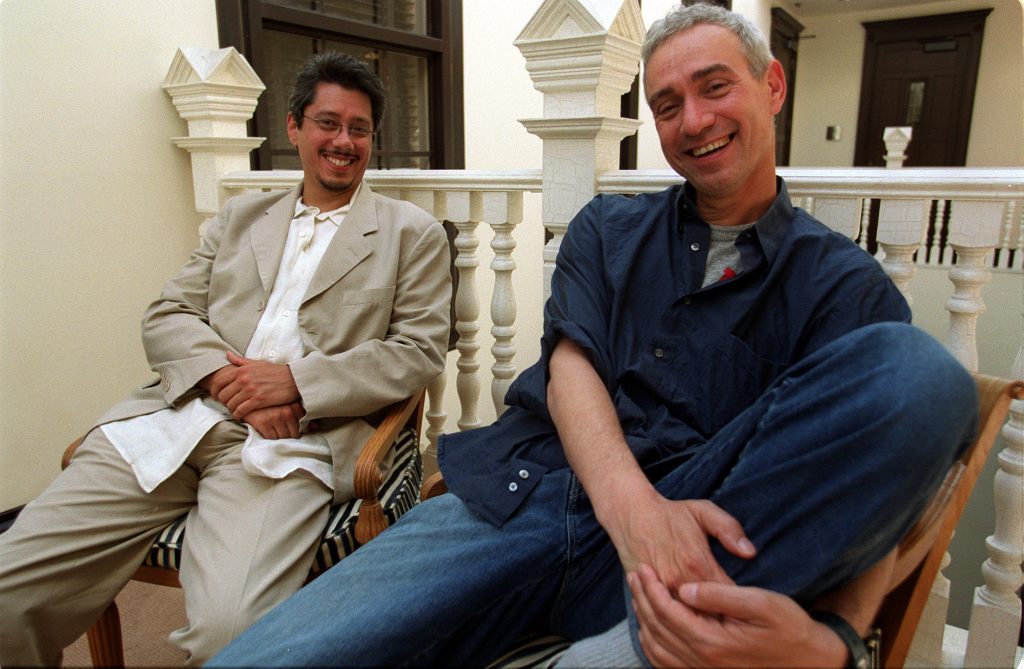

Planned format: Film trilogy rebooting the 1994 continuity.
Announced by: MGM and Warner Bros. in 2014.
Confirmed creatives: Roland Emmerich (director), Dean Devlin (producer).
Casting: None announced.
Status: Cancelled; Devlin confirmed MGM changed direction before scripts were finalized. No concept art or plot details were officially released.
Dean Devlin (writer/producer): “It looked good for a couple of months, but then not so good. There are just a lot of things that have to fire at the same time, and there was a moment where I thought it was all firing at the same time, and then it all kind of fell apart. Listen, I think if we did Stargate right, the fans would like it and we could do something really good. But if we screw it up, they’ll reject it. As they should. But I kind of don’t want to do it if I think that we’ll screw it up, and that’s one of the things that’s holding us back. You’d have several studios involved and a lot of voices and, you know, you may make something great, but you also may have something that doesn’t resemble what you wanted to do. That kind of ‘collaboration’ is a terrifying aspect of the whole thing.”
Amazon ‘Stargate’ Series (2027)
To read everything we know about the new Stargate series that will be debuting on Amazon Prime in 2027 and set in the same universe as SG-1, Atlantis and Universe, just click below:

Conversation
All comments are subject to our Community Guidelines. Woman's World does not endorse the opinions and views shared by our readers in our comment sections. Our comments section is a place where readers can engage in healthy, productive, lively, and respectful discussions. Offensive language, hate speech, personal attacks, and/or defamatory statements are not permitted. Advertising or spam is also prohibited.