The Infamous 1978 ‘Star Wars Holiday Special’: How It Accidentally Changed ‘Star Wars’ Forever (Exclusive)
A bizarre TV special embarrassed George Lucas, introduced Boba Fett and became bootleg legend

The original Star Wars ends with the Rebel Alliance risking everything to blow up the Death Star, officially to save the galaxy from the Empire. But here’s another theory: maybe—just maybe—Luke and company weren’t just fighting tyranny; maybe they’d discovered what was really hidden inside that battle station. Not secret schematics or super-weapons, but something far more sinister: The plans for The Star Wars Holiday Special. If so, their mission wasn’t just heroism; it was mercy. A desperate attempt to keep that gloriously flawed creation from ever escaping into the universe.
By the time 1978 arrived, Star Wars had already gone from an unexpected sci-fi hit into a phenomenon, its success startling even the people making it. While George Lucas and Lawrence Kasdan were revising the screenplay for The Empire Strikes Back and Ralph McQuarrie continued filling sketchbooks with concepts for worlds no one had imagined before, Lucasfilm faced an unexpected dilemma: how to keep the public’s attention during a planned three-year gap between movies.
In the late seventies, that schedule felt dangerous. As the introduction of The Star Wars Holiday Special made plain, Lucas knew the tension existed. Mark Hamill later recalled Lucas telling him that by fall 1978, “Do you realize when that came out we’d been in the movie theater for almost a year and a half?” Hamill said Lucas described the special simply as “a way to keep the merchandising fresh in people’s minds,” adding, “it’s really a favor to me for those merchandisers.”
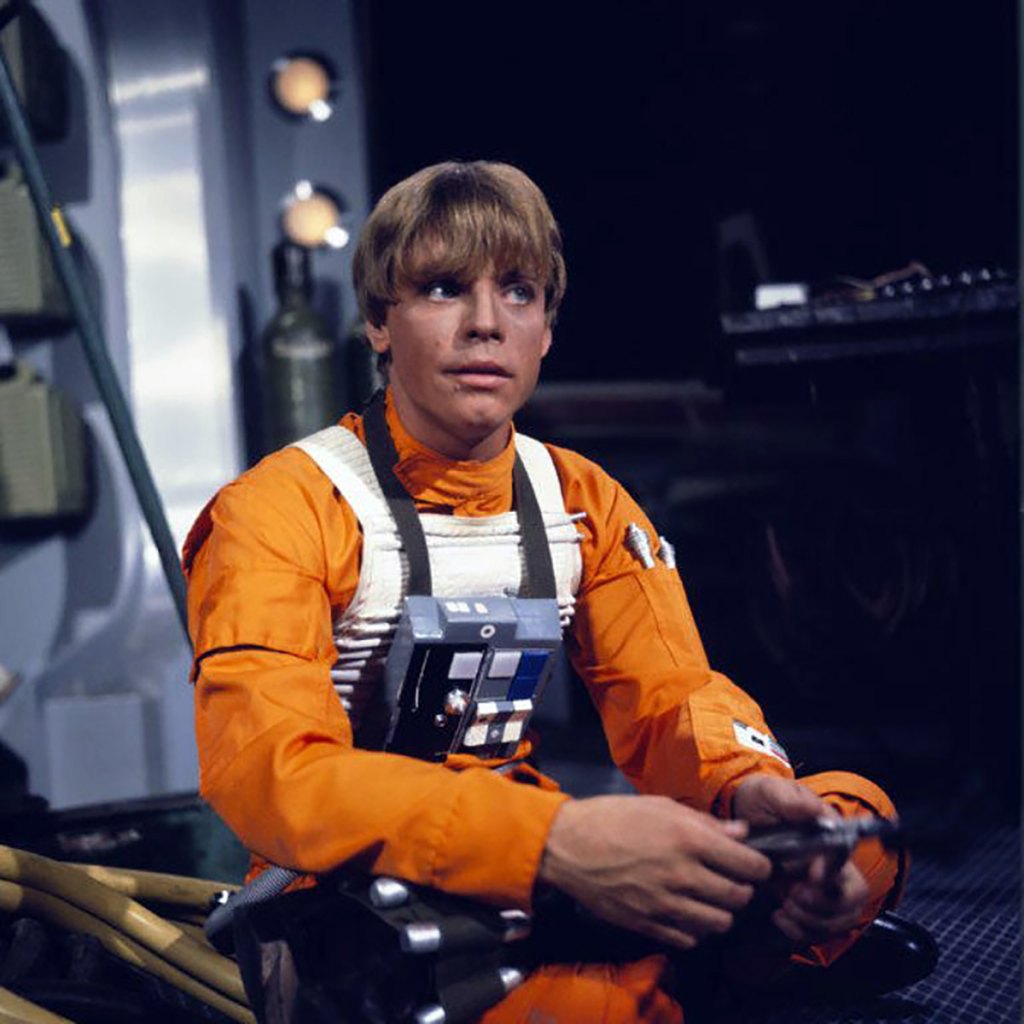
Hamill admitted that when he first read the script, “I thought it was awful. You know, ‘Why are we doing this?’ Then I said, ‘I’m not doing this.’” It was Lucas’ phone call that convinced him otherwise—with one condition: “All right, but I’m not singing.”
Behind the scenes, the concept came from a genuine concern about the franchise’s momentum. Screenwriter Bruce Vilanch (writer of The Paul Lynde Halloween Special and Donny & Marie) recalled that Lucas “was concerned that the franchise had a lot of public interest and needed something to stir the pot in the two years between Star Wars and Empire.” Lucas had mentioned having “10 stories” he kept in reserve and that “he had one story left that he sold to CBS as a variety special.” To Vilanch, the real oddity wasn’t the idea of a Star Wars network special—that was normal for the time—but that “they talked him into taking a fully-formed George Lucas Star Wars story and turning it into a variety special.”
That clash of instincts defined the production. CBS wanted a prime-time event full of musical numbers and recognizable faces, while Lucas wanted to maintain control of the universe he’d built—except this time, unusually, he didn’t. As author Brian Jay Jones (George Lucas: A Life) put it, “He is up to his eyeballs in The Empire Strikes Back at that point, so he turns control over to everybody else.” Jones emphasized that this was something Lucas had “never done with anything associated with Star Wars up to that point,” and that without Lucas’ supervision, “the car goes into a ditch immediately.” By the time footage began coming in, Lucas “was already washing his hands of it,” and Jones believes the experience “taught him a valuable lesson: it was a mistake he was not going to make again.”
Wookiee Life Day
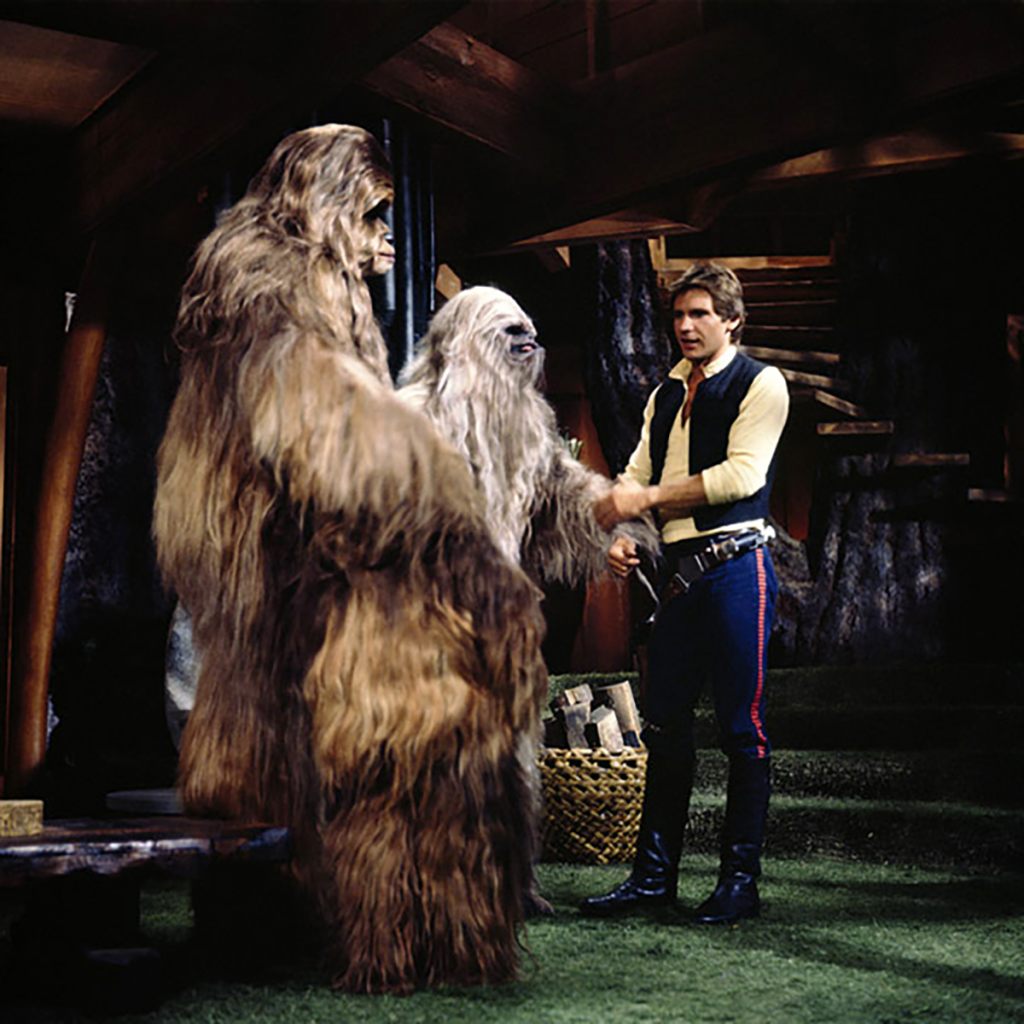
What CBS produced was a special centered on Chewbacca’s family, consisting of his wife Malla, his son Lumpy and his father Itchy, who are gathering to celebrate the Wookiee holiday Life Day on the planet Kashyyyk. Lucas attended early production meetings and insisted on one contribution: the animated Boba Fett segment, the only part of the special that most fans consider worthy of rediscovery, as it served as an introduction to the then-enigmatic character. Everything else was handled by veteran variety-show producers and a young director Lucas chose, David Acomba, whose inexperience with the format slowed production to a crawl.
Director Steve Binder, who had helmed the Elvis ’68 Comeback Special, remembered the fallout. He said that CBS TV Specials and Live Events Producer Gary Smith called him to say the special “was shut down, because they were running out of money” and that Lucas’ chosen director “wasn’t familiar with multiple camera directing.” Binder, who had built his career directing major television specials, agreed to step in. His first impression was a warning sign in itself: “I definitely felt somebody should know this is not Star Wars II, the movie.” He walked into a situation where CBS had already built “this enormous, beautiful Chewbacca set,” but designed it without a removable wall, making camera placement impossible. He immediately said, “We’ve got to open up this set.”
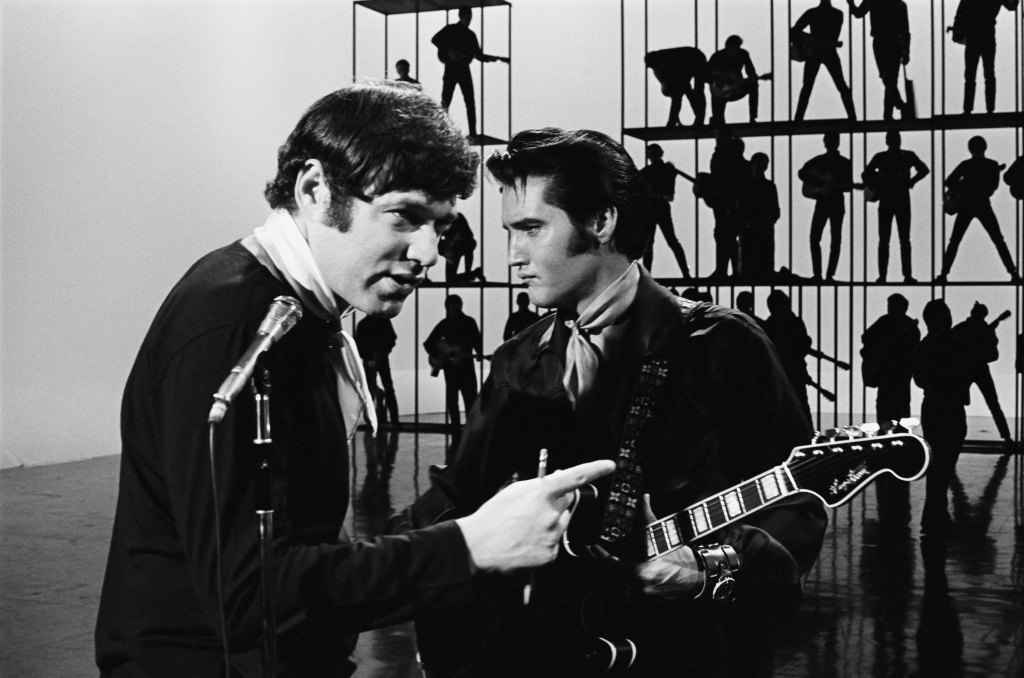
His role, as he described it, was purely triage: “My job was to just go in, act as the fireman and just get it shot.” He wasn’t allowed to rewrite the script, even when faced with a long, dialogue-free opening performed entirely in Wookiee growls. “And it goes on and on and on and on,” he recalled—one of many decisions he questioned but could not change.
Pop-culture commentator Glen Oliver saw the problem from the perspective of a viewer. To him, the concept was “far too disconnected from the ‘universe’ that had already been established,” and the tone was “bold and dramatic and defined.” Suddenly dropping songs, holographic circus acts, comedy sketches, and a Julia Child parody into that world made the entire enterprise feel, in his words, “tone-deaf and ill-conceived.” He believed that “some ingredients simply aren’t meant to be mixed together. Ever.”
Writer Ric Meyers remembered watching the original broadcast and thinking that “whoever made this probably hadn’t seen the movie it was based on,” and called the result “an abomination.” To him, it was “standard operating ignorance on the part of the television network.”
Binder actually enjoyed working with the cast, though he emphasized the physical difficulty for actors inside the Wookiee costumes. They could only perform for “40 minutes out of the hour,” he said, and required oxygen breaks between takes. Despite the chaos, he recalls no on-set negativity. “I was thrilled that I got the opportunity to do it,” he said, and he never heard any complaints from the principal actors at the time—though in later years he watched Harrison Ford tell talk-show hosts what a disaster the special had been.
What makes the ‘Star Wars Holiday Special’ so bad?
If the finished product seemed disjointed and strange, it was because it sprang from competing visions, rushed production, divided leadership and a format that didn’t fit the material. Lucas may not have shaped the final result, but to Binder’s understanding, “he was involved evidently, and approving everything from day one.”
When the special aired on CBS on November 17, 1978, it became immediately infamous. It was never rebroadcast, never released officially and survived only through bootlegs that circulated at conventions. Yet despite the ridicule, there is an enduring fascination with the special, perhaps because, as so many involved have implied, it reflects a moment when Star Wars could still stumble, experiment, miscalculate and exist within the messy, unpredictable world of 1970s prime-time television.
If the opening Wookiee sequence set the tone for The Star Wars Holiday Special, the rest of the production only pushed the project deeper into the realm of surrealism. Much of what unfolded onscreen and behind the scenes stemmed from the fundamental misalignment between what Star Wars represented to audiences and what CBS expected from a primetime variety event.
That disconnect was visible everywhere. Oliver noted the moment “we see a Wookiee in an apron, we know we’re in trouble,” describing the Wookiees’ home as “bizarrely, unimaginatively anthropomorphic”—filled with recognizable, human-style appliances and fixtures that made no sense in the universe Lucas had created. Even as he gave the writers credit for not having the Wookiees speak English, Oliver felt the adherence to untranslated growls only emphasized how mismatched the project’s ambitions were. It struck him as “a ramshackle affair.”
Did the original ‘Star Wars’ cast appear in the ‘Holiday Special’?
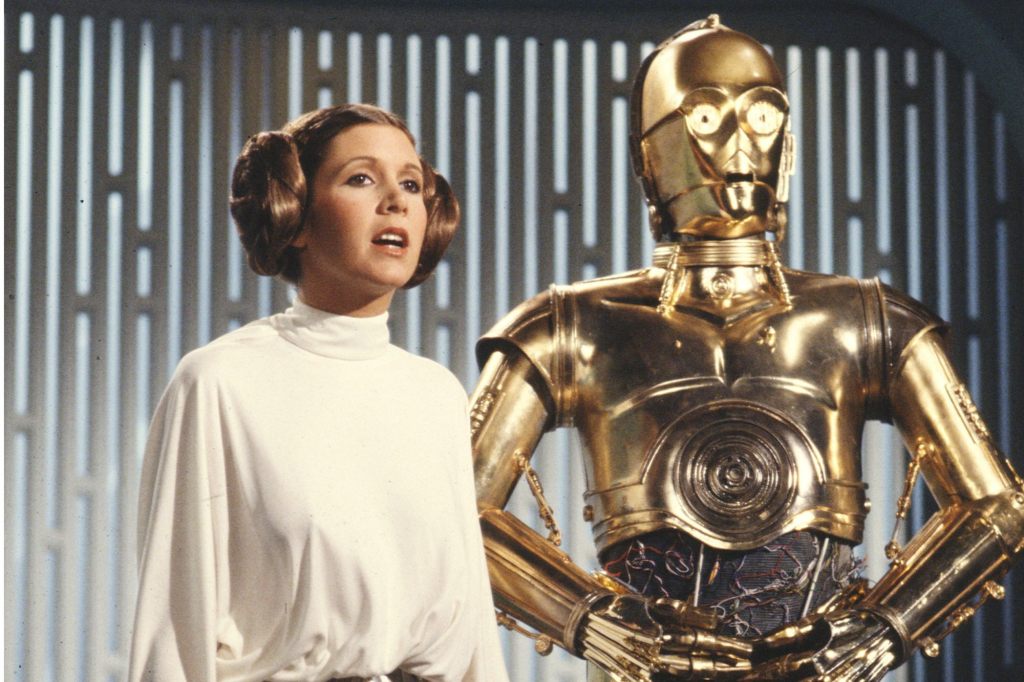
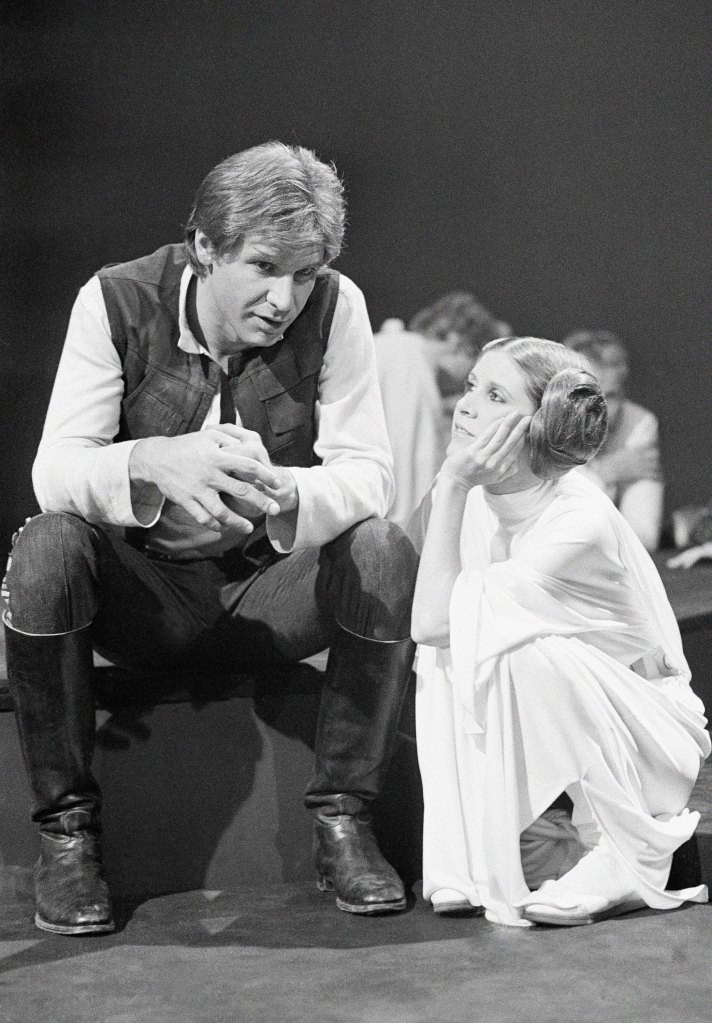
The actors, meanwhile, approached the special with varying degrees of enthusiasm. Brian Jay Jones believed the leads were cornered by contractual obligations and exhausted by the nonstop demands of Star Wars. “Poor Harrison Ford looks absolutely miserable in every frame,” he said, noting that Hamill’s makeup, designed to conceal the effects of his recent car accident, “looked absurdly silly.” Carrie Fisher, he suggested, was “baked” during filming, though “having a great time because she gets to sing.” Ford, in contrast, appeared “embarrassed and/or annoyed in every scene.” Star Wars fiction writer Rich Handley echoed that point, describing the performances as so stiff and uncomfortable that “even the leads” scored some of the production’s lowest marks.
Bruce Vilanch remembered the cast’s motivations clearly, explaining that “everybody was on there for a reason, but it seems like nobody was on there for a reason.” Harrison Ford was simply “dragged into it,” while Fisher, who wanted to perform a musical number, asked to sing Joni Mitchell’s “I Wish I Had a River.” He found that idea hilarious—“Why Princess Leia would sing that song anyway we weren’t exactly sure”—but CBS was eager to showcase its guest stars. Vilanch described the experience as very much of the 1970s: “there were… chemical additives,” he joked, and the studio was in a “mad dash to appeal to youth,” believing that “the crazier, the better.”
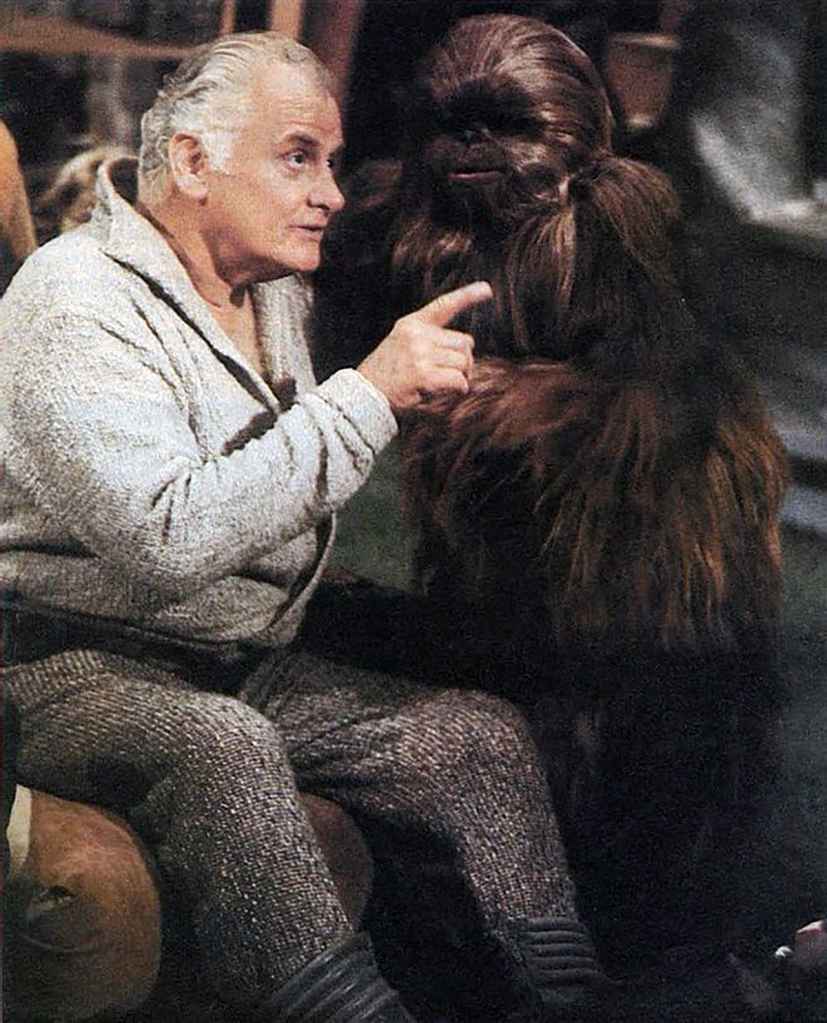
Adding to the strangeness was an entire subplot in which Wookiees interacted with virtual reality fantasies. Vilanch remembered that Lucas’ “other gigantic idea was virtual reality,” long before the concept existed in mainstream culture. The special incorporated these fantasies as a way to insert comedy, dance and music routines into the story — including Diahann Carroll’s now-infamous holographic performance for Itchy, which Oliver described as “vaguely interactive,” unsettling, and reminiscent of “a 007 title sequence.”
Other production choices bewildered viewers on a structural level. Oliver noted a moment in which Stormtroopers stood outside the Wookiee home waiting for someone to open a wooden door, a choice he felt exemplified the show’s “sloppy, lazy madness.” He argued that, over and over, the special demonstrated that “there simply wasn’t much heart or thought put into it,” and that even modest additional effort “would’ve at least helped the project feel less whorish.”
What was the first appearance of Boba Fett?
Yet amid the misfires, one segment did resonate. The animated Boba Fett sequence —supervised directly by Lucas—has become the special’s one widely admired component. Vilanch described it as “pure George Lucas from beginning to end,” and Handley reinforced this point with details from his interview with Nelvana executive Clive Smith. According to Smith, Lucas wrote the cartoon’s story himself, handing the animation team a nine-page outline and a scene-by-scene breakdown. Smith even received a homemade black-and-white video of someone wearing the prototype Fett costume—footage used to guide the character’s animated design.
Animator John Celestri remembered Lucas’ other major instruction: that the cartoon be animated in the style of Jean “Moebius” Giraud, the legendary French artist whose designs defined Heavy Metal. Celestri embraced the challenge, approaching Boba Fett “as a Clint Eastwood-style character in a spaghetti western,” using body movement and subtle gestures to convey personality through the expressionless helmet. He infused the performance with confidence and attitude— gesturing with the rifle, adjusting gloves, tilting Fett’s head to reflect tonal shifts in the dialogue. It was the first time the character appeared on screen and for many fans, it would remain the most interesting version until decades later.
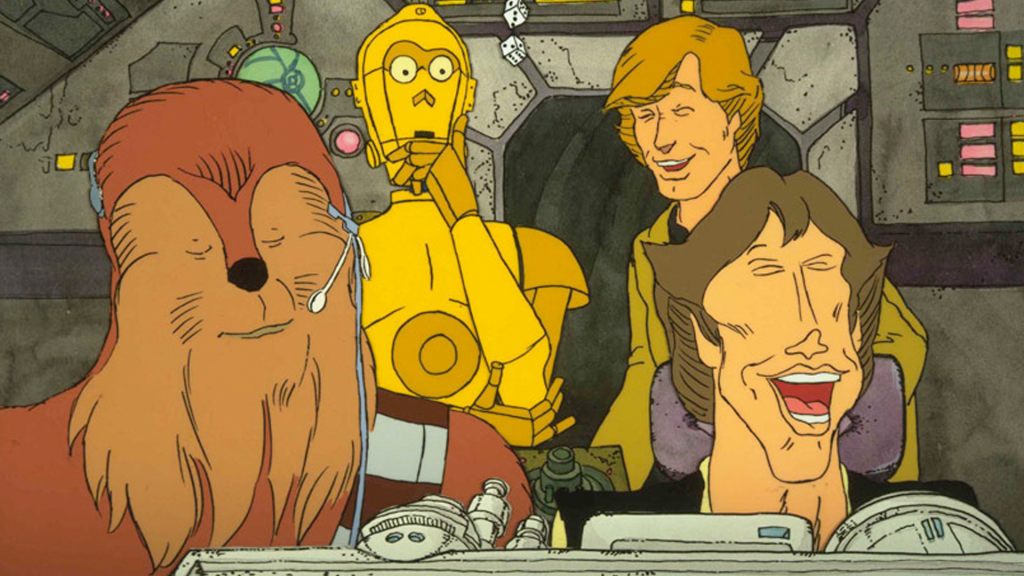
Oliver recalled being “incredibly amped” by Fett’s appearance and described the cartoon as the “chief positive takeaway” from the special. Jones agreed that its value lay in its status as a first appearance: even flawed comics are treasured if they introduce an iconic character. Handley called the cartoon “hands down, the best thing about the special,” praising its writing, design and atmosphere, and arguing that it played a major role in shaping Fett’s mystique.
Despite the chaos surrounding it, the Fett animation planted a seed. As Celestri put it, “it was the seed that helped grow the character of Boba Fett,” and he wished the sequence would someday be acknowledged as part of official Star Wars canon.
For fans like writer/publisher Dan Madsen, the special’s oddness only added to its cult appeal. Running the Official Lucasfilm Fan Club years later, he remembered the thrill of obtaining a bootleg VHS copy at a time when watching the special was nearly impossible. “It was kind of like, ‘Wow, this is kind of special to be able to see it,’” he said, comparing the experience to rediscovering a buried artifact from one’s childhood.
In its production values, however, the special carried none of the cinematic magic of the first film, A New Hope. Madsen noted that while the cantina costumes “look fake and phony,” they worked in the movie “because of the right lighting and cinematography.” On television, brightly lit and shot like a stage show, “it made a whole different effect on you.”
Binder took pride in simply surviving the production. “It was truly a miracle that we pulled it off,” he said. Even years later, when, as noted, he saw actors publicly mocking the special, he found it humorous that he never heard complaints during filming.
Why was the ‘Star Wars Holiday Special’ not shown again?
As the years passed, The Star Wars Holiday Special took on a life entirely separate from the franchise that spawned it. For many viewers, the special was baffling, inexplicable or unintentionally hilarious—often all three at once. Yet in the middle of the chaos, fans could still detect the odd glimmer of ambition: the experimental Moebius-inspired animation, the early exploration of virtual reality fantasies, even the attempt to build out the domestic life of Chewbacca and his family. It was a strange, ungainly step in the evolution of Star Wars, but a step nonetheless.
Animator John Celestri remembered watching the original broadcast with excitement and anxiety. “After watching the first 15 minutes of the live-action,” he admitted, “I was worried that all the viewers would switch channels before our animated segment had a chance to be seen.” The Nelvana team was young and inexperienced, himself included—Celestri had only been a professional animator for a year and a half—yet he believed their contribution had heart and energy. It was, after all, “the only performance associated with Boba until The Empire Strikes Back.” The idea that their work had introduced a now-iconic character mattered to him deeply.
Glen Oliver’s view of the animated Fett echoed that sentiment. He found the character “more interesting, fully developed and compelling” in the Holiday Special than in any of the live-action films, calling it “regrettable that this iteration of Boba Fett was never canonized or cannibalized.” The thrill of seeing Fett in animated form shaped many fans’ early perceptions, fueling anticipation for his long-delayed big-screen debut. But Oliver also remembered the “five-year arc towards disappointment” that followed, arriving at the humbling realization that the Fett of the films “was never going to do a great deal more than stand around, and be swallowed by a Sand Rectum.”
Even beyond the cartoon, the special’s influence extended in unexpected ways. Jim Swearingen, a conceptual designer at Kenner, recalled that the three-year stretch between A New Hope and The Empire Strikes Back had made Kenner “really nervous.” They needed something to promote, so Lucasfilm offered Boba Fett. Swearingen flew to California to see the first prototype costume, taking turnaround photographs that would inform early toy designs. The idea of introducing a new character before his cinematic debut was novel, and the Holiday Special provided a platform, however odd. He remembered that “for us, we needed something to drum up business for ’79 before the new movie came out.” Fett became that something.
Yet the special struggled under the weight of contradictory impulses. Script ideas veered between earnest world-building and eccentric comedic sketches. Bruce Vilanch explained that the Wookiee family was meant to represent “Chewbacca’s tender domestic life,” complete with a wife “watching Julia Child on TV,” portrayed —in a twist only the 1970s could produce—by Harvey Korman “with eight arms.” Lucas also wanted to explore those virtual-reality fantasies through a brain-linked helmet, an idea far ahead of its time but bizarrely executed.

This has nothing to do with the Holiday Special, but it goes with the holiday feeling and—to be fair—isn’t any more bizarre than what we got
At times, the special even introduced strange meta-textual layers, intentionally or not. In one scene, Lumpy watches a cartoon about the Rebel Alliance—the very one in which Boba Fett appears. Oliver pointed out that this meant, within the fictional universe of Star Wars, its heroes were apparently the subjects of in-universe cartoons performing the same actions they did in “real life.” He called this “bizarrely meta,” the kind of idea that might be impressive in another context but here likely happened “without anyone realizing the implications.”
The special’s peculiar combination of stars like Bea Arthur, Diahann Carroll, Art Carney, Jefferson Starship, Wookiees and off-brand domestic sitcom drama felt wild even then. “What were they smoking when they came up with this?!” Madsen laughed.
Conversation
All comments are subject to our Community Guidelines. Woman's World does not endorse the opinions and views shared by our readers in our comment sections. Our comments section is a place where readers can engage in healthy, productive, lively, and respectful discussions. Offensive language, hate speech, personal attacks, and/or defamatory statements are not permitted. Advertising or spam is also prohibited.