‘He Felt Like Family’: Inside the New Film Honoring Beatles Manager Brian Epstein’s Legacy (EXCLUSIVE)
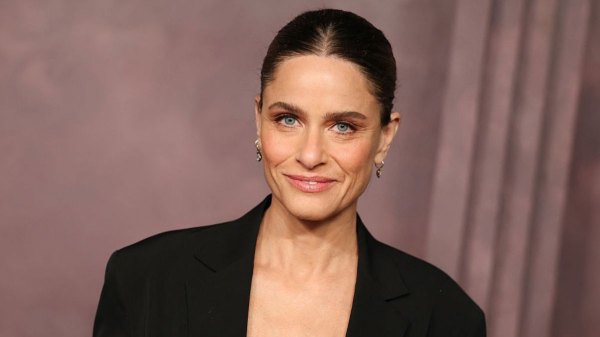
Screenwriter Brigit Grant brings Brian Epstein’s untold story to life in the new Beatles biopic

While The Beatles revolutionized … well, everything… in the 1960s, the man who orchestrated their rise—the visionary, enigmatic Brian Epstein—has more often than not been a shadow within rock history. He was there before the chart-topping music, the screaming fans or the famed rooftop concert. As John, Paul, George and Ringo ascended and their legacy has continued to live on, memories or discussions of their manager have largely faded.
In the biopic Midas Man, screenwriter Brigit Grant finally places Epstein center stage, portraying him (through actor Jacob Fortune-Lloyd) not only as The Beatles’ first true believer, but as a complex, private, deeply human figure in his own right.
“So many of these biopics tend to be governed by the people they’re about,” Grant explains. “But Brian wasn’t around to have any say in this at all. I always got the sense that he was a deeply private person without the freedoms to be true to himself in public.”

That tension—between public legend and private man—is at the core of Midas Man. The film traces the remarkable, whirlwind arc of Epstein’s career: how he discovered The Beatles playing lunchtime sets at Liverpool’s Cavern Club, transformed their look and sound, secured them a record deal when others said no and managed their climb to global superstardom. All within a span of just under seven years.
Grant says the richness of Epstein’s life left no room for dramatic license. “What I found is that younger audiences, who knew nothing about Brian’s story, assumed we had to make things up. But his life was so full that there was no need for invention.”
The result is a film steeped in both reverence and revelation. For Grant, the goal wasn’t just to recount milestones—it was to paint an honest, emotionally resonant portrait of the man often dubbed “The Fifth Beatle,” whose legacy has been simultaneously monumental and misunderstood.
A story bigger than the music

Grant’s background as a journalist served her well in tackling Epstein’s story. “I was used to deep research and interviewing people,” she says. But her connection to the material went beyond reporting. “I’m Jewish, and I had edited Gay Pride. I’d been involved with the Music of Black Origin Awards—so all of these aspects of Brian’s world were things I understood personally.”
It was this intersection—of identity, isolation, artistry, and show business—that Grant was uniquely positioned to explore. Epstein, a closeted gay man in 1960s Britain, navigated his personal struggles behind a carefully composed public façade. That inner world is subtly threaded through the film, most poignantly in a fictionalized exchange with singer Cilla Black, whom Epstein managed and cherished.

“He cried when Cilla found out he was gay,” Grant shares. “He would always ask, ‘Does she know?’ Once he realized she did, it was a matter of honor and pride.” That real-life moment inspired one of the most affecting lines Grant wrote: “You’ve got a big heart—give it to someone.” She adds, “That scene on the stairwell between them felt like a reflection of who he truly was.”

Although the dialogue was invented, Grant ensured the emotional truth was grounded in research. She spoke with key figures who knew Epstein personally—including his cousin Basil Hyman, who offered vivid stories of Epstein’s early life, from bringing Beatles singles to family parties to teaching his cousin how to hold an umbrella “properly” when entering a room to make an impression. “That kind of detail was invaluable,” she says. “It helped me write the man, not the myth.”
Liverpool roots, global reach

For the film’s premiere in Liverpool—the very city where Epstein discovered The Beatles—Grant knew she was walking into a room full of memory keepers. “Many of the people in attendance had known John or had been part of that history,” she recalls. “And in Liverpool, everybody will tell you that they discovered The Beatles or that they turned them down! Everyone has their own version of history.”
It was, she admits, intimidating. But the local reception turned out to be warm, enthusiastic and affirming. “They loved it,” Grant says.

One line in particular hit home with Liverpudlian audiences. In a scene depicting drummer Pete Best’s firing from the band to make room for Ringo Starr, Epstein’s assistant Alistair Taylor remarks, “They’ll get over it.” Brian’s response: “You don’t realize—not forgetting is how Liverpool survives.”
“That moment,” Grant says, “was about more than Pete Best. It was about how Liverpool holds on to its wounds and its pride. It felt honest.”
Also authentic was Midas Man‘s portrayal of Epstein’s relationships—not only with The Beatles, but with those in his orbit, from Cilla Black to his assistant Taylor to longtime Beatles secretary Freda Kelly, whom Grant interviewed extensively.
“She’s barely in the film,” Grant says of Kelly, “but I spent a lot of time with her. Everyone around Brian was young, and they saw things differently. But they knew him. They understood the pressure he was under.”
The Beatles, reborn

One of Grant’s biggest challenges was capturing the essence of The Beatles, not just their appearance, but their voices, energy and camaraderie. “That Liverpool rhythm had to be just right,” she says. “At our first read-through, I was doing some of the voices. But once the boys were together, they became The Beatles.”

And they didn’t just look the part. They played the music live. “They were actually playing the songs on their instruments,” she emphasizes. Blake Richardson, who played Paul, even re-trained himself to strum guitar left-handed, mirroring McCartney’s technique. Jonah Lees, cast as John Lennon, had long heard that he bore a resemblance to the Beatle. “And then one day,” Grant recalls, “his agent called and said, ‘It’s happened. You got the part.’”
The chemistry between the actors was essential—because the chemistry between The Beatles and Epstein, particularly John Lennon, was both rich and complicated.
The bond between John and Brian

There has long been speculation—fueled in part by their 1963 trip to Spain—about whether Lennon and Epstein’s relationship crossed personal boundaries. Grant addresses the topic with nuance and respect.
“John was alarmingly clever,” she says. “There were seven years between them, but he had this mental sophistication. He read so much. He wrote so much. He was the most competitive with Brian.”

And yet, she doesn’t buy into the long-whispered rumors. “I believe that of all the things Brian did in his private life, being involved with John in that way wouldn’t have been one of them. He was Julian’s godfather. He gave Cynthia and John his flat in Liverpool when they had nowhere to live. He was there for them. He was a protector.”
To Epstein, loyalty mattered. Boundaries mattered. And those qualities come through in Grant’s portrayal of him—not as a tragic figure, but as a man of quiet strength and deep emotion, navigating a world that wasn’t built to accept him.
The journalist becomes the dramatist

Before turning to screenwriting, Brigit Grant made her name in journalism. It’s not surprising, then, that Midas Man is layered with the kind of detail and empathy that can only come from someone used to sitting across from sources, listening deeply.
She also brought in a secret weapon: her husband, Neil, who saw The Beatles perform live at age 11 and, to this day, remains passionately devoted to the band—especially Paul. “He set up a whiteboard with dates and details,” she laughs. “He’d suddenly shout out something like, ‘Do you know about…?’ He was like my research assistant.”
Their shared passion helped anchor the script in accuracy and feeling. But for Grant, one of the most moving aspects of the process was how her perspective on Epstein changed over time.
“I had one vision of him at the start. I knew about him, of course, but not in any deep detail,” she reflects. “But the more I read—the more I learned about his family and the dynamic between them all—the more I understood him. I think I liked him. At the beginning, he was a stranger. But by the end, he felt like family.”
A goodbye that still hurts

Grant admits she still cries during the final scenes of the film. “I always start crying because I know he’s going to die,” she says of what would be Epstein’s accidental overdose. “It was only two months after that major recording at Abbey Road—the ‘Our World’ satellite broadcast, the first satellite broadcast in the world. And at that point, you just know—it’s over. He’s going to be gone in a minute. And he had so much left to do.”
What remains, though, is legacy. Not just the band he believed in, but the artists he managed, the lives he touched, the culture he helped shape. And now, thanks to Midas Man, that legacy finally has a voice of its own.
“If we had a 10-part Netflix series,” Grant jokes, “we could’ve explored everything. And if anyone’s interested, I’m ready.”
If you’d like to purchase a copy of Midas Man, you can do so with this link.
Conversation
All comments are subject to our Community Guidelines. Woman's World does not endorse the opinions and views shared by our readers in our comment sections. Our comments section is a place where readers can engage in healthy, productive, lively, and respectful discussions. Offensive language, hate speech, personal attacks, and/or defamatory statements are not permitted. Advertising or spam is also prohibited.