‘Manhunter’ at 40: Brian Cox, 79, on Playing Hannibal Lecter Before Hopkins: ‘It Became a Cult’ (Exclusive)
Before Anthony Hopkins in 'Silence of the Lambs,' the 'Succession' star created a chilling and unique take on the iconic villain

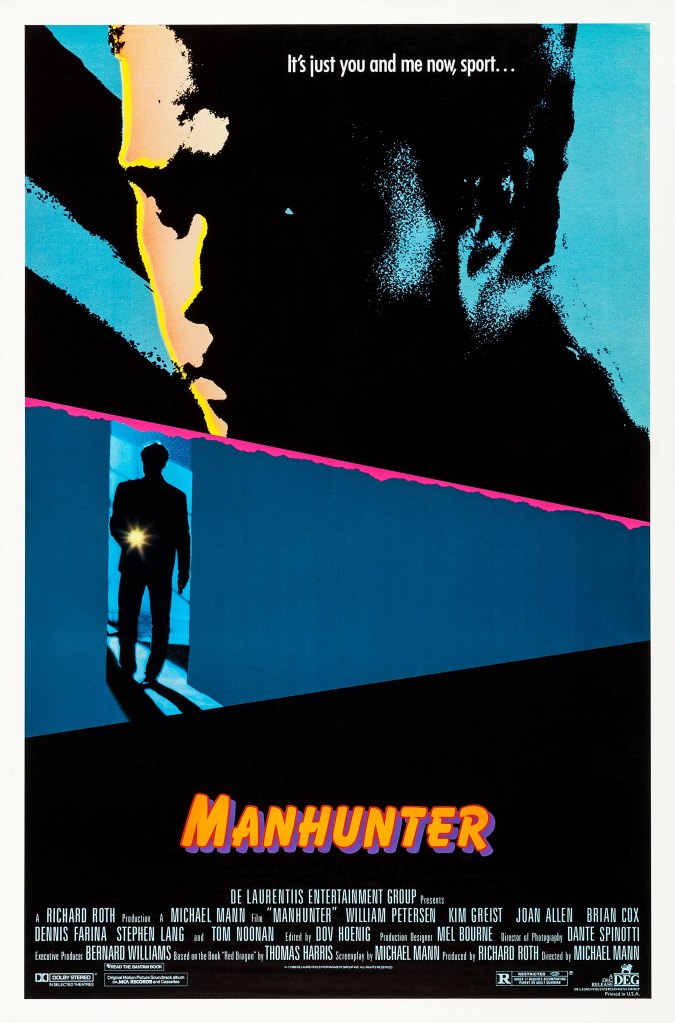
When Manhunter arrived in theaters in 1986, it introduced audiences to a character who would go on to become one of the most iconic villains in modern fiction: Dr. Hannibal Lecter. Adapted from the 1981 novel by Thomas Harris, Red Dragon, the film marked the first screen appearance of the brilliant and terrifying psychiatrist-turned-serial killer—years before Anthony Hopkins would turn him into a cultural phenomenon in 1991’s The Silence of the Lambs.
Directed by Michael Mann and starring William Petersen as FBI profiler Will Graham, Manhunter follows Graham as he comes out of retirement to track a brutal killer known as the Tooth Fairy. To do so, he turns to the one man who might understand such a mind: the imprisoned Dr. Hannibal Lecter, played here by Succession star Brian Cox.
At the time, neither the film nor Cox’s performance hinted at the legacy they would eventually build. Manhunter was not a commercial success on its initial release, and Lecter was still a relatively new literary creation. For Cox, it was simply another role—albeit one that would quietly grow in stature over the decades.
“It was just a job I took on,” Cox reflects, “and it sort of became a cult. I never expected it to have a life, but it has and it seems to be quite ongoing, which is a bit of a surprise for me.”
Brian Cox vs. Anthony Hopkins: Two very different Lecters
Cox’s version of Hannibal Lecter is notably restrained compared to later interpretations. Where Anthony Hopkins would later lean into theatrical menace in The Silence of the Lambs, Cox approached the character from a more grounded, psychological perspective. For him, the key was not overt horror, but something far more unsettling.
“He was very much a kind of mystery man,” Cox explains, “and his power lay in his mystery, because he had no other side to him. And he had no real history to him, except for the history that we imagined had gone on between him and Will Graham. It also had a lot to do with the nature of good and evil. There was a fascinating interview on 60 Minutes with the guy who led the jailbreak of the ‘Texas Seven.’ Very affable, very understandable young man, but you suddenly realize that he was a killer. And he was prepared to accept responsibility for everything he did. It was actually kind of curiously touching.
“You know,” he continues, “it’s so easy to play people as bogeymen–‘scary guys’–but the thing that’s scary about someone is how acceptable they are. That’s what’s really scary, because we can act with that and that makes a character frightening. My view of Hannibal was that when he does attack someone, it happens very fast. Like what he was supposed to have done to Will Graham, which was to have made an incision and whipped out his intestine while he was on the phone. It’s done quickly, and that’s very fascinating to me. So in those moments he’s very dangerous, but on the whole he has to be acceptable in terms of society at large.”
The idea of “acceptability” became central to Cox’s interpretation. Rather than portraying Lecter as a monster lurking in the shadows, he emphasized the character’s intelligence, charm and ability to blend seamlessly into the world around him—traits that make him all the more disturbing.
“I saw a lot of those Bundy trials,” Cox explains. “I tried to tap into Bundy’s kind of almost acceptability. Also, when I was a kid in Scotland, there had been a couple of killers of some repute. There was a guy called Peter Manhill, and he killed a whole slew of people. This was before the notion of serial killer ever came around. Serial killer was sort of an ‘80s invention, really. But this guy was fascinating because he also conducted his own defense, like Bundy did. Therefore, the sort of ego of those characters is so tremendous, because they’re so tremendously intelligent. The other thing was something that came out of the Nuremberg Trials. They said that the whole definition of evil was an almost chronic lack of empathy. I think that is, ultimately, what Hannibal Lecter has.”


Over time, comparisons between Cox’s performance and Hopkins’ Oscar-winning turn became inevitable. Cox, however, has always viewed the two portrayals as entirely separate interpretations shaped by very different films.
“When I did it, it was a small movie,” he says, “and a great movie to do with a wonderful director. That’s what was cool about the project. Tony did it and it’s really a different character; a different take. It’s a whole different feel with the kind of gothic horror that Jonathan Demme created. I just felt that what Tony did and what I did were two totally different kinds of performances. It’s become a franchise now, and I don’t know if I’ve ever wanted to be part of a franchise. I’m an actor. I like playing different roles and I don’t think I’d like to be stuck playing Hannibal Lecter forever. That being said, the film has gained a life of its own, which is okay by me.”
Brian Cox, before and after Hannibal Lecter

Long before he became widely recognized for roles like media titan Logan Roy on HBO’s Succession, Cox had already built a formidable reputation as a classically trained stage actor with the Royal Shakespeare Company and the National Theatre. On screen, he had appeared in projects ranging from The Long Good Friday to Rob Roy, often bringing a commanding presence to authority figures and complex antagonists. In the years since Manhunter, his career has only expanded, with memorable turns in films like X2: X-Men United and Troy, as well as a steady stream of television and voice work. That breadth of experience—and his grounding in classical performance—helped shape the controlled, intellectual menace he brought to Hannibal Lecter.
Conversation
All comments are subject to our Community Guidelines. Woman's World does not endorse the opinions and views shared by our readers in our comment sections. Our comments section is a place where readers can engage in healthy, productive, lively, and respectful discussions. Offensive language, hate speech, personal attacks, and/or defamatory statements are not permitted. Advertising or spam is also prohibited.