Jennifer Morrison Teases Her ‘Devious’ First Lady in ‘The Night Agent’ Season 3 (Exclusive)
The actress reveals how she built her complex First Lady—'gazelle energy' and all

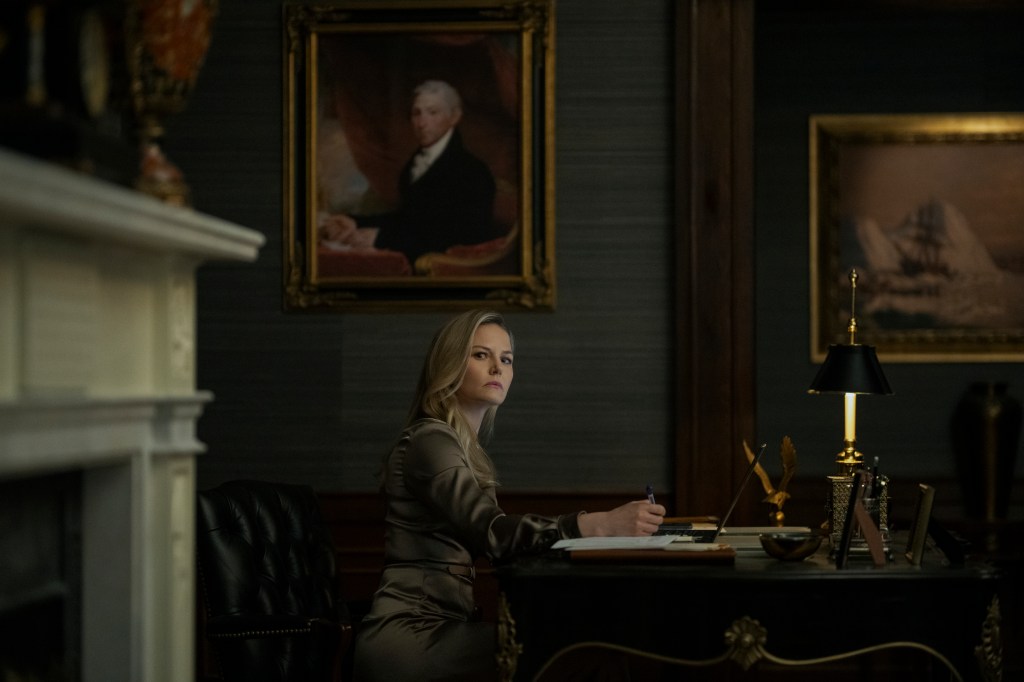
Jennifer Morrison was thrilled to join the cast of the Netflix action series, The Night Agent, as First Lady Jenny Hagan. Publicly seen as the doting wife to the President, behind-the-scenes Jenny Hagan is an entirely different person who will do anything to protect her family—no matter what.
The Night Agent follows a low-level FBI agent, Peter Sutherland (Gabriel Basso), who is tasked with monitoring an emergency line but ends up in the middle of a deadly conspiracy after answering a call. Morrison is joining the series in its third season as First Lady Jenny Hagan, who is right in the middle of yet another dangerous plot that leads right to the White House.
You may recognize Morrison as the dedicated Dr. Allison Cameron in House (2004-2012) or the fierce Emma Swan in Once Upon a Time (2011-2018), but the actress hasn’t portrayed many roles like the one in The Night Agent.
“I’ve been so lucky to play so many different characters over the years, but I’ve never played someone inside the political infrastructure,” Morrison shared.
Woman’s World had the opportunity to chat with Jennifer Morrison about her character in The Night Agent, how she brought Jenny to life and how she applies her skills as a director to her acting.
Woman’s World: You are starring as the First Lady in The Night Agent—can you tell our readers a little bit about who your character is?
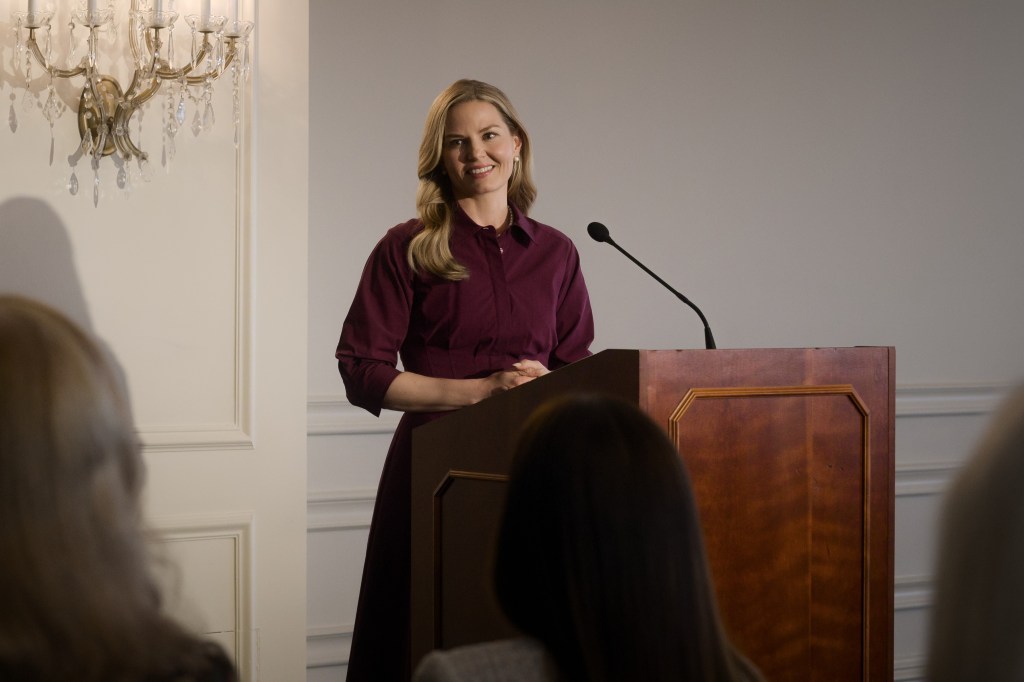
Jennifer Morrison: Jenny Hagan is married to the President. She’s done a lot of charity work and raised a lot of money for causes that she believes in and is also very devoted to her family. They have kids and are very family-forward and she is ultimately someone that will do anything to protect them.
What’s interesting about a character like this is that they don’t think of themselves as two-sided. They see themselves as doing what they need to do to protect their family, in her case. The things that, to an outsider, appear devious or lacking in morality, for her, she will do whatever it takes and that includes helping her husband get the presidency. She truly believes that he’s going to implement plans that are going to change the world and that it’s good for everyone. So, in her mind, it’s all just a part of what she needs to do in that position, both as a wife and as the First Lady. It doesn’t really occur to her that what she’s doing is lacking in morality in the way that it is. Deep down, she knows it, and with distance, she would know it.
WW: Did you enjoy getting to explore that sort of role?
JM: I definitely enjoyed building out a character with a public persona versus a private persona. I worked with a movement coach for the first time, which I had never done before. It wasn’t anything major; they were very subtle changes. Anyone who’s in the public eye in the political world has movement coaching and gives speeches with particular mannerisms and is coached to present themselves in a certain way. I was looking to have a slightly different posture when she was in public versus private. It was really exciting to get into the nuances of all that.

WW: How did it feel joining an already successful series in its third season?
JM: I was so excited to join the show because I enjoyed watching the first two seasons. Sometimes when you get swept up as an audience member, you just care about the storytelling and that’s how I felt about Night Agent. So, when this role came up, not only was I so excited at the possibility of joining a cast that I really admired and working with these writers who are writing this incredibly compelling show, but I was also super interested in playing the First Lady. I’ve been so lucky to play so many different characters over the years, but I’ve never played someone inside the political infrastructure, so I was really interested in that challenge.
WW: What were you most excited about going into this role?
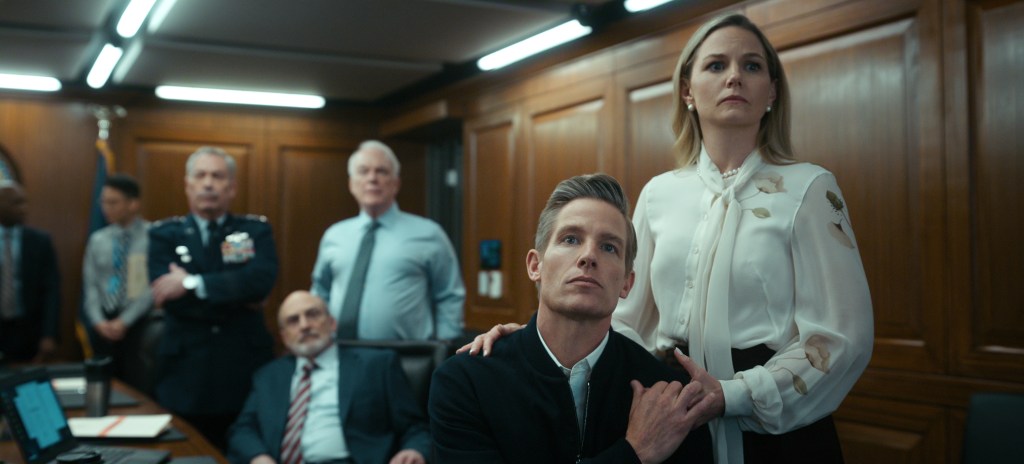
JM: On a superficial level, the clothes. But on a more intellectual level, finding those justifications for someone who, from the outside, would be judged for doing terrible things, but from the inside is completely blinded by her own needs. I was really excited about finding a way to do that in a way that felt honest to me instead of judging her decisions.
WW: What became your favorite part about playing this character as filming went on?
JM: One of the things that the costume designer and I talked about when we were finding a look for the character was that she felt like a gazelle. There was a gazelle energy to her. I did all this research about gazelles, like they only turn their heads quickly if they sense danger. There were certain things like that that affected her. When we were talking about her clothing, we kept thinking of a gazelle in a field.
When she was safe, she could wear bright colors and be on display, but when she was doing things that were more off-color or she needed to hide parts of herself, she was blending in with the furniture a little bit more. So, she was either camouflaging herself in the field as the gazelle or she was purposefully standing out because she was so safe that she could shine. It became this cool metaphor that really worked physically, but also worked as we were selecting her clothes.
WW: Was it different preparing for this role as opposed to your others?
JM: I think it might have been more different had I been playing the president or if I had been playing the Secretary of State or a Secret Service agent—there are certain roles that would have felt drastically different. As the First Lady, so much of how she’s pulled into that world is through her husband’s politics and policies.
It ended up being a very high-stakes marriage. She was someone who was deeply impacting his decision-making and was deeply ingrained in the way that he became elected, even though he didn’t know it. She was doing all these things to help him, but she did it in a way that made their marriage complicated as the truth came out, because, as much as she was trying to protect him, she was also withholding information and pulling strings that he was unaware of. There’s certainly politics to that, but my experience of it was just that it was an incredibly high-stakes marriage, as opposed to playing a political character.

WW: You’ve been doing a lot of work and killing it as a director on shows like Dr. Death and Tracker—would you ever want to direct an action/thriller like Night Agent?
JM: Oh my gosh, yeah, of course. I got a little taste of it [with Dr. Death]. Tracker and Joe Pickett had moments of that action and I’m about to direct a pilot for NBC that has moments of that kind of action. I haven’t done a show like Night Agent that’s all action all the time. But yeah, I would love to. There’s such an opportunity to be so visually creative when you’re working on a project like that.

As a director, you find the really effective angles to be shooting from and all the different cutaways that bring that. A thriller like that always presents really awesome visual opportunities.
WW: Since you have experience with both acting and directing, did you ever find yourself thinking like a director while acting in The Night Agent?
JM: I am actually very good at staying in my lane. The reality is, because I’ve been mostly directing for the last eight or nine years, I’m so used to everything being my problem, because when you’re the director, everything’s your problem and when you’re acting, nothing’s your problem. I was happy to take the vacation.
The way I can be helpful is that I understand how it all comes together and I have a lot of faith in the process because of that. I try to be incredibly malleable as an actor for other directors. The way that I bring my directing to the set is that I try to be as contributive to the director as I can possibly be.
Conversation
All comments are subject to our Community Guidelines. Woman's World does not endorse the opinions and views shared by our readers in our comment sections. Our comments section is a place where readers can engage in healthy, productive, lively, and respectful discussions. Offensive language, hate speech, personal attacks, and/or defamatory statements are not permitted. Advertising or spam is also prohibited.