‘Stargate Universe’ Creator on Its Lost Ending and the Bold Shift That Divided Fans: ‘We Were Repeating Ourselves’ (Exclusive)
The co-creator of 'Stargate Universe' finally explains the show's darker vision—and no regrets

When Robert C. Cooper looks back on Stargate Universe, which he co-created with Brad Wright, there’s both distance and clarity in his perspective. Distance, because he gave so much time to the larger Stargate franchise that when he walked away, he was ready to do something else. Clarity, because with the passage of time, the intentions behind Universe—and what made it different—feel easier to articulate than they may have at the time.
“I felt like I had given 14 years of my life to that show and that franchise,” Cooper says. “And when I left, I wanted to do other things—and I still do. It was obviously a huge part of my life and certainly a big success that has allowed me to go on and pursue a track that I’m on, which is doing things I want to do, not necessarily that I have to do. So I can’t complain about it.”
That attitude extends to the continuing life of Stargate itself. Though no longer directly involved, Cooper remains supportive of the franchise’s future. “I think it’s great for the fans. It’s great for the franchise,” he says about the new version that’s being produced for Amazon. “And I certainly benefit from anything that’s great for the franchise. So yeah… I wish the guys luck with doing it.”
Still, of all the Stargate series, Universe remains perhaps the most fascinating—and the most divisive. It was darker, more serialized and far more invested in character psychology than either SG-1 or Atlantis. For some fans, that made it an exciting evolution. For others, it felt like a betrayal of what Stargate was supposed to be.
Why ‘Universe’ came into existence
For Cooper, the reason for the shift was straightforward: after years of making Stargate, repetition had become impossible to ignore. “We had made a lot of episodes of a thing called Stargate,” he explains. “We recognized that we were repeating ourselves plot-wise and I think the answer to that is to always lean more on character.”
That impulse was shaped by the kind of television airing then. “I was watching The Sopranos and The Shield and The Wire—great shows from that time—and they were not about the case of the week, which is what we were doing.”
That’s one of the reasons he bristles a bit at the longstanding assumption that Universe was simply Stargate’s attempt to imitate another show. “Honestly, people compared us and thought we were trying to emulate Battlestar Galactica. And I understand that comparison. But for me, the inspiration for the show was The Shield, both visually and narratively. When you look at the style, there’s a particular… you can say it was shaky cam or handheld verité, but I feel there’s a big difference between the verité we tried to achieve with Universe and putting you on a ride-along—I always called it—on a spaceship.
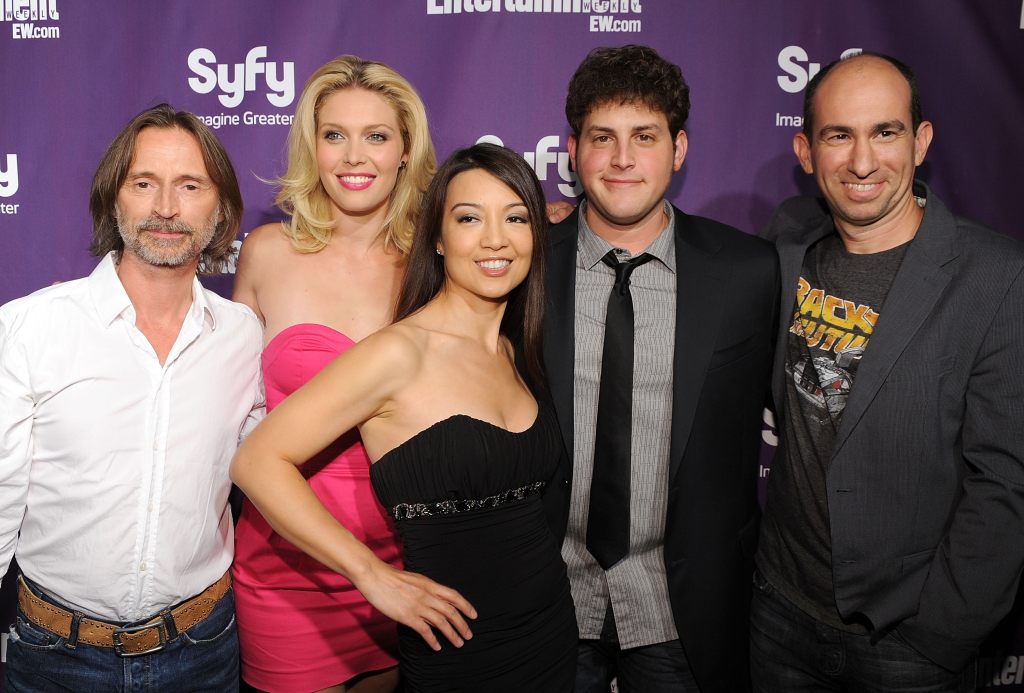
“One of the first things I did was reach out to Ron Schmidt, who was the DP for The Shield. He helped create the look for that show. He shot the pilot and the first three episodes of SGU and then came back to direct.”
The result was a Stargate series that looked and felt unlike any that had come before. But the visual changes were really just the surface expression of a deeper storytelling shift. At its heart, Universe was designed to be about stress, conflict and what happens when very different people are trapped together and stripped of control.
The setup itself immediately reflected that shift. Instead of a handpicked team of heroes stepping through the Stargate on carefully planned missions, Stargate Universe begins with a desperate evacuation. A group of soldiers, scientists and civilians are forced to flee through an off-world gate and find themselves stranded aboard the ancient starship Destiny—billions of light-years from Earth, with no clear way home.
The ‘Stargate Universe’ cast bringing the characters to life

Unlike the sleek, mission-ready vessels seen in earlier Stargate series, Destiny is a relic: partially functional, unpredictable and, in many ways, operating on its own agenda. The crew doesn’t control where it goes or why—it drops out of faster-than-light travel only long enough for them to gather essential supplies through the Stargate before moving on again. Survival, not exploration, becomes the driving force. That sense of instability carries directly into the show’s characters. Leading the military contingent is Colonel Everett Young (Louis Ferreira), a capable but emotionally strained officer trying to maintain order under impossible circumstances. In direct opposition—sometimes openly, sometimes subtly—is Dr. Nicholas Rush (Robert Carlyle), the brilliant and deeply driven scientist whose obsession with Destiny’s mission often overrides any concern for the people around him.
Around them in the Stargate Universe cast of characters is a deliberately varied ensemble: Eli Wallace (David Blue), a civilian recruited for his intellect but unprepared for the reality of life aboard Destiny; Chloe Armstrong (Elyse Levesque), a political aide caught far outside her comfort zone; Lt. Matthew Scott (Brian J. Smith), a young officer still defining his sense of leadership; and Camile Wray (Ming-Na Wen), a civilian representative whose priorities don’t always align with the military chain of command. Together, they form not a unified team, but a fragile, often fractious community—one where alliances shift, tensions simmer and survival depends as much on emotional resilience as it does on technology.
Embracing serialized storytelling
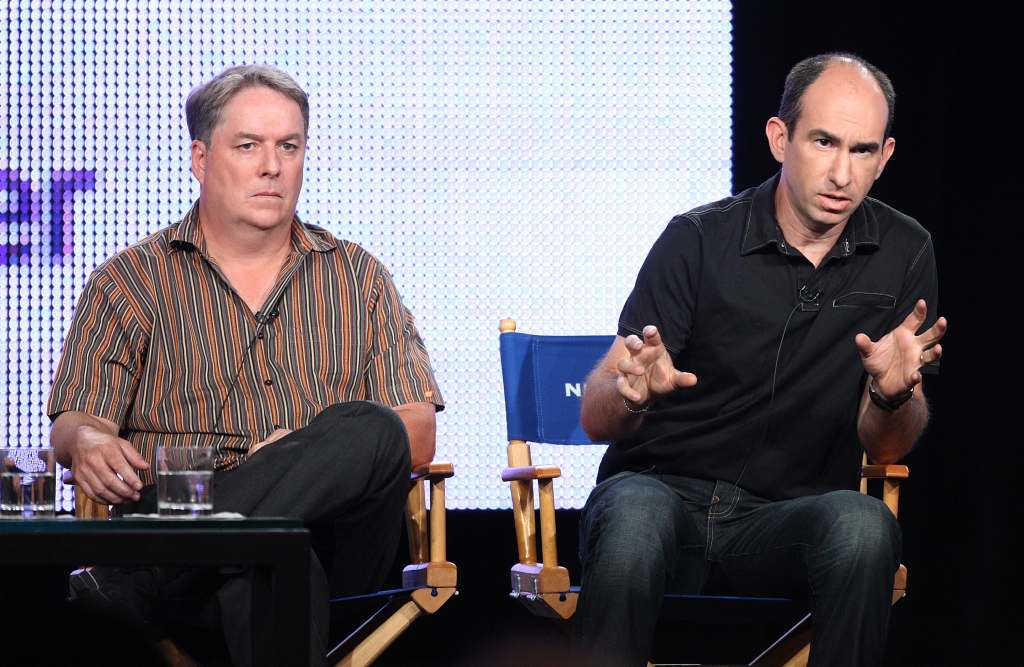
“From a storytelling point of view, we wanted to focus more on the characters and dig into relationships and what made people good and evil in a given stressful situation,” Cooper says. “Universe was an opportunity to have a group of people in a sort of desert island, Lord of the Flies type of scenario.”
That naturally led to a more serialized form of storytelling—something not every viewer, or network executive, was necessarily looking for at the time. “The network was still encouraging us to think in terms of story of the week, which we did. We had episodes about this or that. But it was much more of an ongoing soap—which some fans didn’t like. At the same time, I think it brought new audiences in. My kids—who are now in their late teens and 20s—had never really watched much of the show. But during COVID lockdown, we watched SGU, and they really liked it. They weren’t necessarily hardcore sci-fi fans, but they enjoyed that show.”
That may be one reason Universe continues to attract renewed attention years after its cancellation. Cooper believes it may actually be the Stargate series best positioned to find new viewers now. “I always found it to be the unsung, the sort of redheaded stepchild,” he says. “And yeah, I do think that if there was one show of the three, it’s the one that would or could have a new audience find it and like it in ways that maybe the others won’t.”
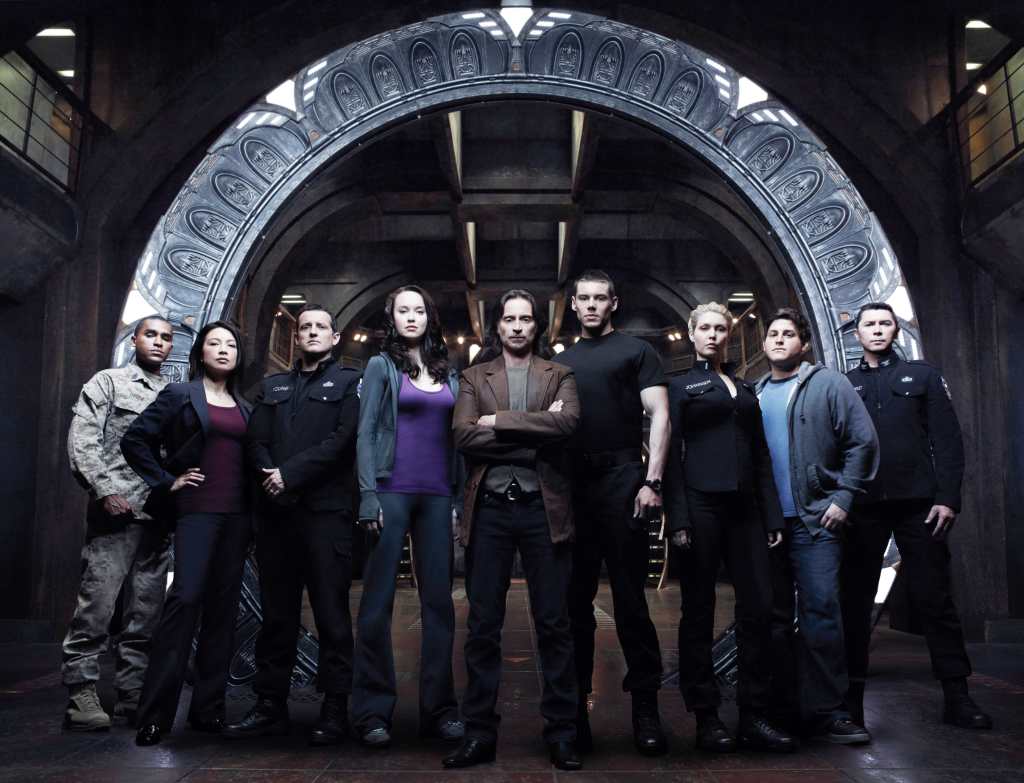
Part of what made Universe so distinct was the kind of ensemble it built. Earlier Stargate shows centered on heroes—competent, mission-driven people who generally wanted to be exactly where they were. Universe instead threw together military personnel, civilians, scientists and young outsiders, then let the tension between them drive the drama.
“There was a certain component you start with, which is the military—you know you’re going to have military characters,” Cooper explains. “But from there, you can pull in components that make it not that. You want to contrast that.”
One of those contrasts came through science. Earlier in the franchise, a character like Samantha Carter could bridge the worlds of science and military structure. In Universe, by contrast, that balance was intentionally disrupted. “You have your scientist who comes in with his ideas, and putting that character outside the military created more conflict than you might’ve had with someone like Carter, who understood both sides. In this case, the scientist is at odds with the military.”
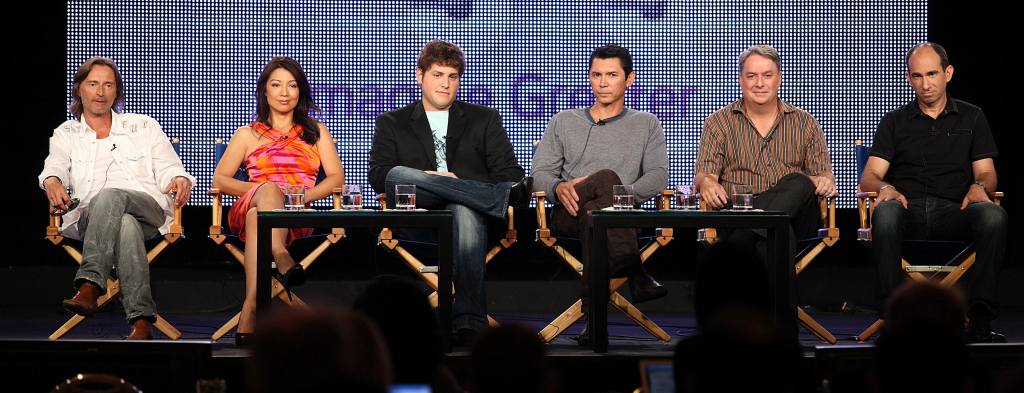
The same was true of generational differences. “We wanted to bring younger ideas into the show and have a little bit of fun with that. So you end up with the Eli and Chloe-type characters who are coming at it from a younger perspective.”
Yet one of Universe’s strengths was that its cast depth extended well beyond the leads. That was partly creative design and partly production necessity. Cooper and the team knew they couldn’t afford to make everyone a series regular, so they devised a system that let them build a richer bench of recurring players.
“We had an amazing pool of actors in Vancouver,” he says. “And we set up deals with their agents because we knew we couldn’t afford to hire 40 regular actors. We would go to actors like Patrick Gilmore and say, ‘We’ll guarantee him a certain number of days over the course of the season, and we’ll work him into the schedule around other projects.’ In return, they’d commit to being available. As a result, we were able to have not just our lead stars, but a really robust and interesting group of surrounding characters that often became more prevalent because they popped and we liked them. Someone like Julia Benson—we didn’t know she was going to turn into the character she became. That just came from her being good.”
The starship ‘Destiny’
If the ensemble gave the show emotional texture, the Destiny gave it narrative purpose. The ancient ship at the center of the series wasn’t just a setting; it was a storytelling engine, a mystery and a trap all at once.
“We wanted there to be somewhere for things to go in terms of mystery,” Cooper says. “We wanted our characters to feel like victims—to have some sort of challenge ahead of them. It was about trying to disarm them from as much agency as we could in order to give them a fight.”
At the same time, the ship reconnected the franchise to one of its oldest pleasures: the unknown. “Being on a spaceship going somewhere where we don’t know where it’s going—that’s the wet dream of all sci-fi fans,” he laughs. “You’re asking, ‘What’s going to happen? Where are they going to go?’ The original appeal of Stargate was, ‘Where’s the gate going to go this week?’ It’s the same as the Enterprise—where are they going and what are they going to discover?”
But by the time Universe arrived, the franchise had accumulated years of mythology, and that mythology came with weight. “The more robust the mythology got, the more burdened you were to continue to service it,” he opines. “It became not a show about going through the gate, meeting new people and coming home. It became about servicing this massive, 10-year mythology.”
Universe was, in large part, an effort to break free from that burden without discarding the franchise’s identity. “We wanted to find a way to get out of that pattern and start fresh. We don’t know where we’re going, we don’t know how to get out of this situation, and we have no way to call for help. We didn’t want to be burdened by everything that had come before.”
That freedom, however, came at a price. There were fans who objected immediately to the change in tone. “The two criticisms were, one—like I said—we were just trying to copy Battlestar Galactica to be darker, edgier, more trendy. And two, that it wasn’t Stargate—that it didn’t have that bubblegum, poppy flavor that the original show did. But I have to say, I never understood why the idea was that everybody associated with the SGC had to be a good guy. That wasn’t something we did in the other shows either. There were always people who were problematic.”
In Universe, though, those flaws were placed front and center. Dr. Nicholas Rush, played by Robert Carlyle, became the clearest expression of that philosophy: brilliant, manipulative, often unsympathetic and yet impossible to reduce to villainy.
“The idea that everybody had to be a clean-cut hero… I don’t know where that came from,” reflects Cooper. “It’s much more interesting to have characters who are flawed and have to overcome those flaws in order to achieve what they want. They’re basically good, but in difficult situations, they may make decisions that people find unsympathetic.”

For him, that wasn’t a rejection of the older Stargate formula so much as an attempt to go deeper. “The character stuff in SG-1 was just not as real,” he points out. “It was more about relationships—who likes who, who’s romantically involved with who. They deeply loved each other and would die for each other, but SGU approached it in a more sophisticated way. When I wanted to do an episode that was entirely about Rush and his wife dying of cancer, nobody said, ‘Don’t do that.’ It’s basically a man going crazy because his wife is dying—and he’s being forced to relive it through a piece of sci-fi technology. We never would have done that on the other shows.”
That willingness to slow down and live inside pain was a major part of what made Universe distinctive. Earlier series might establish a trauma as part of a character’s backstory, but they rarely stayed with it in such raw terms. “In SG-1, we had things like Jack and his son, which gave the character depth. But we never really saw him emotionally suffering because of it. With Rush, we saw him devastated—almost paralyzed by it. That’s very different. And darker sometimes.”
The ‘lost’ ending
That tonal ambition is one reason the show’s early ending still stings for many fans. Though the Season 2 finale functioned as an ending of sorts, it was never intended to be the end of the story. “Had we done five seasons, we had an idea of where it was going to go—and that’s not where it ended up. We would have had a more meaningful and robust interaction with the Ancients,” he explains. “They were obviously a big part of a lot of what we did—creators of the Stargate, creators of Destiny. They were out there searching for answers.
“What was the point?” he continues. “Destiny was out there trying to figure out the mystery of the universe. Whether they found that or not before they abandoned the ship—that’s something we would have come to a more meaningful resolution on.”

The characters, too, were heading toward a more profound resolution—especially the long-running clash between Young and Rush. “I always felt that Young and Rush were going to have to come to some kind of reckoning over the choices they made and the sides they were on,” Cooper says. “Ultimately, I would have wanted to see them realize they were both trying to achieve the same thing, just with different approaches—both of which had flaws. But I don’t think the ending would have been one stays and one goes. I think they both would’ve gone—to wherever the Ancients were going to take them.”
One significant truth is that Stargate Universe arrived during a period when television itself was changing, both creatively and economically. It embraced serialized storytelling just as audiences were beginning to demand more of it, and it ended before the streaming era could fully reward that kind of approach.
Yet the show’s legacy has quietly persisted. “I hear from a lot of people who have watched the show and loved it,” he says. “And from what I’ve been told, when Amazon started looking at the franchise, they have algorithms that measure how much something is part of the conversation—how often people are talking about it. They were surprised at how prevalent and popular Stargate still was. They didn’t think it had remained as popular as it has.”
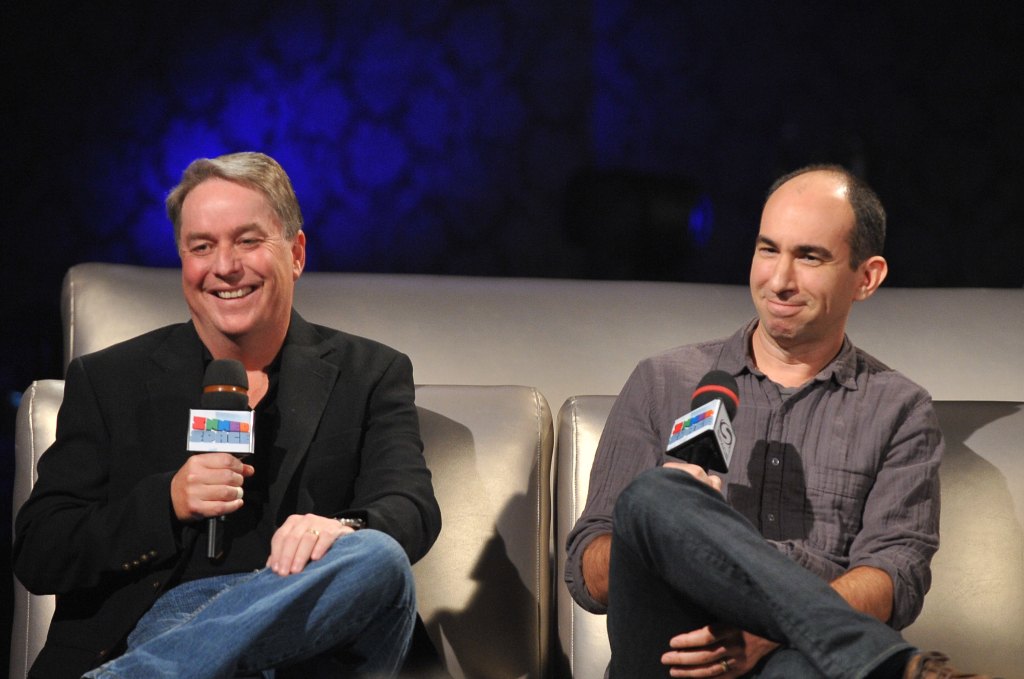
For Cooper personally, however, the meaning of Universe goes beyond ratings, metrics or even unrealized plans. It was a show that arrived at a particular moment in his own career, when he felt he had learned from his earlier mistakes and become more confident in what he wanted to do. “It was me, I think, at my best too, in terms of the work I was doing at that point,” he says. “I had figured out all the mistakes I had made previously. Not that I didn’t continue to make mistakes, but I feel like I had figured out a little more clearly what I wanted to do and what I wanted the show to be, and was able to articulate that more forcefully than I had in the past.”

That doesn’t mean he forgets how collaborative the process remained. He’s quick to note the contributions of Brad Wright, Joseph Mallozzi and Paul Mullie, particularly since he left midway through the second season and the others carried it forward. “It wasn’t like Brad and Joe and Paul didn’t have significant—sometimes more significant—input,” he says. “I actually left after the first half of Season 2. They finished the season without me on board. I consulted and wrote an episode toward the end, but I had it in my contract that I was done after the first half of the season.”
By then, though, he’d done more than enough Stargate for one career. “I did do a lot of Stargate,” he says. “No one ever gets into this business to do one show for their whole career. You want to tell a variety of stories. You want to do a bunch of different things. So I’m good with what I did.”
And he has no reason to regret the experience. Quite the opposite, in fact. For all the frustrations and unfinished threads, Cooper still remembers what it felt like when the franchise was firing on all cylinders—especially in front of fans. “Going to Comic-Con and doing Hall H for Atlantis, I think it was the closest I would ever feel in my life to being a rock star,” he says. “I would not trade that for any experience in the world. It was so much fun. And having those fans appreciate and cheer for us and hang on every word we were saying—it was phenomenal.”
Conversation
All comments are subject to our Community Guidelines. Woman's World does not endorse the opinions and views shared by our readers in our comment sections. Our comments section is a place where readers can engage in healthy, productive, lively, and respectful discussions. Offensive language, hate speech, personal attacks, and/or defamatory statements are not permitted. Advertising or spam is also prohibited.