Cybersecurity Expert Reveals the 6 Worst Scams Ever—And How You Can Outsmart Them All
These scams are more sophisticated than ever—but you have the power to outsmart every one

Now more than ever, it seems like we’re being targeted in a scam on a regular basis. While it can be overwhelming to keep track of what’s real and what isn’t, a great starting place is having the knowledge of the scams that are particularly common and dangerous. We asked Abhishek Karnik, head of threat research for online protection company McAfee, to reveal the most concerning schemes to date. Keep reading to learn his take on the worst scams ever and what you can do to protect yourself from becoming a victim.
1: AI voice cloning scams impersonating public figures
“AI voice cloning scams are a growing threat because they make it easier than ever for criminals to impersonate trusted voices—and that can chip away at trust, even at the highest levels of government,” says Karnik. “These scams happen in a much shorter time frame, making them uniquely dangerous. And the barrier to entry is lower than most people realize: with just a few seconds of audio and a few minutes using AI tools, scammers can create a shockingly realistic fake voice.”
These imposter scams typically start when a fraudster calls you pretending to be a police officer, bank employee or even a beloved family member in distress. The playbook is almost always the same: The criminal will play on your emotions–whether that’s fear or concern—and let you know there’s an urgent matter at hand.
Their end goal? Get you to “verify” your personal information or send them money immediately with no questions asked.
Your action plan:
First, watch for pressure tactics. “‘Don’t tell anyone,’ ‘stay on the line’ or ‘act right now’ are major red flags,” he shares. Also important to know? Demands that you pay with crypto, gift cards or cash deposits at an ATM can indicate you’re being scammed.
To protect yourself from “Hey Mom/Dad” calls or similar AI voice cloning scams, Karnik recommends having a family password that’s kept secret. This means that the person asking for help should be able to provide this previously agreed upon word or answer before you follow through with their request.

2. Romance scams
“Romance scams are some of the hardest to see coming—because they don’t just steal money, they exploit trust,” says Karnik. “We’ve seen cases where someone believes they were building a real relationship, only to be manipulated into sending thousands of dollars.”
He recalls one case where a woman lost $26,000 in cryptocurrency to an online stranger that she believed was “the one.” Despite warnings from her financial advisor, she proceeded to send the scammer money—and the person disappeared right after.
These often share similarities to pig butchering scams, which focus on building long-term relationships, as well. The end goal for criminals here is to trick victims into investing, then immediately disappearing with all of the victim’s money.
Your action plan:
Be wary of individuals online who seem to be a dream come true—and are also very eager to dive into deep conversations.
“If someone pushes intense emotions quickly, avoids video calls or tries to move you off the app right away, that’s a red flag,” explains Karnik. “That said, many romance scams play out over months before the scammer claims they’re sick, stranded abroad or facing an ‘emergency.’”
One of the best ways to protect yourself is to verify who you’re talking to by doing research online. Use reverse image search on their photos and confirm there’s a consistent and real posting history on social media.
If you have any concerns or believe you may have been victimized in a romance scam, tell someone right away.
“A lot of victims don’t bring these situations up to family or friends, which means no one else gets the chance to spot the red flags,” he adds.
While romance scams target your heart, the next type of fraud goes after something equally precious: your livelihood and sense of security.
3. Job scams
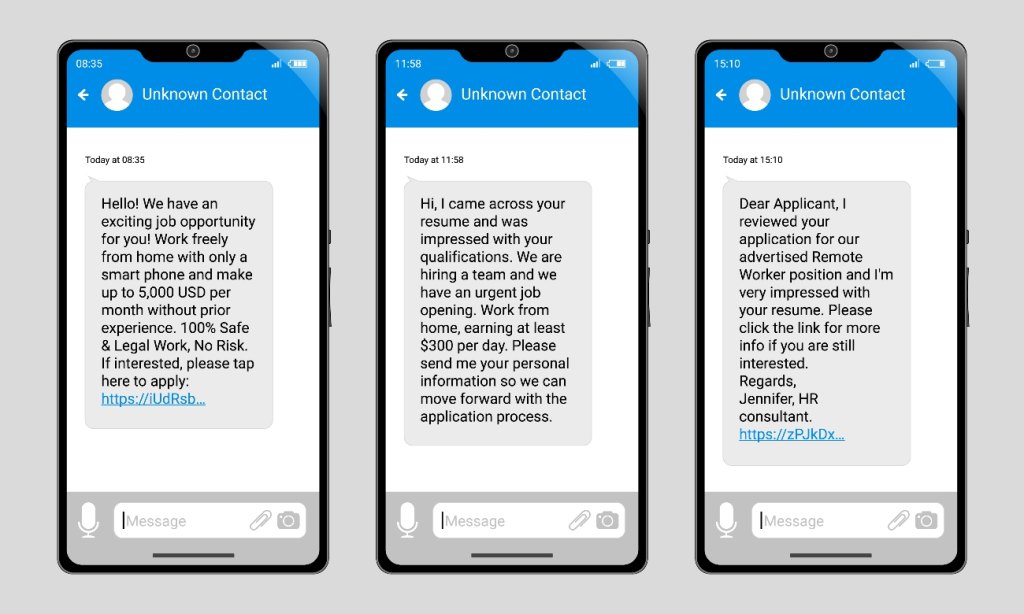
“Job scams are getting more convincing because scammers are copying the same hiring workflows people already trust: a recruiter message, a quick screening, onboarding steps, even what looks like official paperwork,” reveals Karnik. “And with AI, it’s easier than ever for criminals to make these scams look professional and tailored.”
Fraudsters will go after job seekers of all levels—from full-time to internships—to dupe as many people as possible. Some may even focus specifically on “micro-jobs,” which can attract those looking to make quick money for menial tasks.
Your action plan:
One of the most effective ways to stay safe is to watch for the most common warning signs of a job scam. Here are the red flags Karnik says you should know about:
- Upfront payments: Legitimate employers don’t ask you to pay to get hired.
- Vague job descriptions: Real roles have clear responsibilities and requirements.
- Pressure tactics: Scammers try to rush you so you don’t verify details.
- Too-good-to-be-true pay: Compare the salary to similar roles in your area.
- Unprofessional communication: Watch for personal email accounts, unclear contact info or inconsistent details.
- Off-platform messaging: Scammers often start over SMS or email, then try to move the conversation to WhatsApp or Telegram—sometimes keeping the “interview” entirely over text.
4. Extortion scams
“Kids are being targeted online more than most parents realize,” he shares. “McAfee research found that 22 percent of families say their child has already been targeted by some form of online threat.”
It’s important to know that this can be instigated by someone a child knows—not just strangers. The use of AI has only added to the concern and makes it easy for situations to escalate quickly.
Your action plan if you’re a parent:
Lock down accounts and privacy settings early using strong passwords and two-factor authentication. Reminds your kids how important privacy is, as well, emphasizing not to video call, chat or download anything from online strangers.
You also want your child to know that it’s important to speak up if something feels wrong online. Behavior changes like anxiety, secrecy or withdrawal can be a sign that there may be a situation they need help with, but it’s good for kids to bring an issue to your attention before things escalate to that level.
5. Health and wellness scams
“Health scams are some of the most dangerous scams out there because the risk isn’t just financial—it can be physical,” says Karnik. “Right now, scammers are taking advantage of demand for GLP-1 weight-loss medications like Ozempic and Wegovy. This was especially true during shortages, but there are still a number of fake ones out there.”
In many cases, this is happening through phishing messages and fake websites tied to GLP-1 medications where fraudsters are trying to get eager customers to buy products that don’t exist or aren’t as advertised.
There are several variations of health scams out there, but GLP-1 schemes are particularly prevalent right now. Karnik says these can look like:
- AI-generated celebrity/doctor endorsements that direct you to click and buy.
- Fake prescription texts or emails saying you’re “approved” or “eligible.”
- Fake online pharmacies offering steep discounts or selling without a prescription.
- Subscription traps that lock you into recurring billing.
- Non-delivered or fake shipments with bogus tracking and no support.
Your action plan:
To protect yourself, verify that the product is coming from a licensed pharmacy with a real U.S. address and phone number.
The most important tip? “If there’s no prescription required, treat it as a scam,” he says. “Legitimate GLP-1 meds require a doctor.”

6. Shopping Scams

These scams may not be talked about as often, but they’re certainly happening all around you.
“A lot of these scams start with something simple: a sponsored ad, a link in a social post or a text that looks like it’s from a company you recognize—Amazon, Apple, USPS, UPS—saying there’s a problem with your order or delivery,” explains Karnik. “The goal is to get you to click before you stop and think.”
Most of these end in one of two ways: you end up with a product that’s cheap or not as advertised, or you don’t receive an order at all.
Your action plan:
Be leery of ads that look legitimate with deals that are an absolute steal. “If the price looks unreal, assume there’s a catch,” he advises. “Scammers love ‘90 percent’ energy because it makes people move fast.”

For an added layer of protection, use payment methods that can help protect you if a business proves to be fraudulent. Stick with credit cards when possible and avoid gift cards and payment apps.
Though each of these concerning scams plays out differently, know you have the power to outsmart any fraudster.
“At the end of the day, most scams are trying to do the same thing: rush you, scare you or pull you in emotionally so you don’t stop to think,” says Karnik. “The best protection is slowing down for a moment and verifying before you click, reply or send money.”
Conversation
All comments are subject to our Community Guidelines. Woman's World does not endorse the opinions and views shared by our readers in our comment sections. Our comments section is a place where readers can engage in healthy, productive, lively, and respectful discussions. Offensive language, hate speech, personal attacks, and/or defamatory statements are not permitted. Advertising or spam is also prohibited.