Sid and Marty Krofft: Inside the Wild TV Legacy of the Late Brothers Behind ‘Pufnstuf’ and More
Sid Krofft dies at 96, leaving behind the surreal TV legacy he built with brother Marty Krofft

Key Takeaways
- Sid & Marty Krofft shaped a surreal era of TV kids still remember.
- From 'Pufnstuf' to 'Donny & Marie,' their influence crossed generations.
- Sid Krofft’s passing marks the end of a wildly imaginative TV legacy.
If you were a kid growing up in the 1960s or 1970s, then you probably remember the ritual of getting up early on Saturday mornings, setting up a bowl of cereal and watching what felt like an endless stream of cartoons and live action kid shows like H.R. Pufnstuf. Or maybe it was Friday nights when you’d laugh, sing and dance along with Donny and Marie or the short-lived The Brady Bunch Hour. Whichever it might be, one thing that those and a lot of other shows have in common is the fact that they were created by Sid & Marty Krofft Productions. Sadly, Sid Krofft has passed away—peacefully in his sleep—at age 96, his brother Marty having died on November 25, 2023 at the age of 86.
Sid Krofft, the older of the two brothers and in many ways the driving showman behind their shared success, was born Cydus Yolas on July 30, 1929 in Montreal, Quebec, Canada. Long before their names became synonymous with psychedelic children’s television, Sid had already carved out a path in live entertainment, working in puppetry and staging elaborate performances that blended music, comedy and visual spectacle. When younger brother Marty joined him, the two formed a creative partnership that would endure for decades, built on a shared instinct for the whimsical and the outrageous.
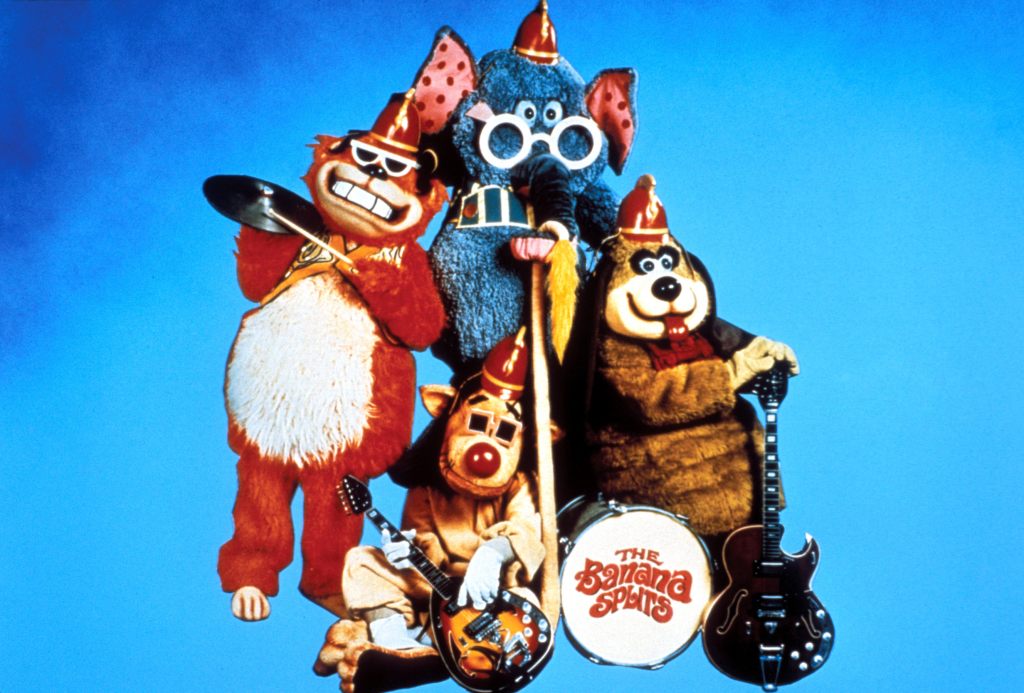
Together, they transformed what could have been a modest puppetry act into something far more ambitious with Les Poupées de Paris in 1957—a decidedly adult-oriented puppet revue that played nightclubs and theaters, showcasing their ability to merge European-style cabaret with intricate marionette work. That production not only developed and evolved their storytelling skills but also introduced them to the mechanics of large-scale show production, from set design to choreography. Their growing reputation eventually led to American television, including an appearance on The Dean Martin Show in 1965, which helped position them for the next phase of their careers. It was only after years of refining their craft on stage and in variety television that they made the leap into producing, bringing their unique sensibility to projects like The Banana Splits, where their flair for colorful characters and costumed performers began to take shape in a way that would soon define an entire era of children’s programming.

“Joseph Barbara—of Hanna-Barbera—came to see me, because he didn’t know how to do this idea yet,” Marty said in an exclusive interview back in 2019. “This was live-action and he’d only done animation. Oddly enough, this was our dress rehearsal for Pufnstuf, which we had introduced at the 1968 World’s Fair. But with The Banana Splits, it started with us creating and building the characters, refining them and making them all workable. Joe would come to our studio probably every week and he’d run everything by me.”
The Banana Splits proved to be the turning point that brought Sid and Marty Krofft widespread attention, opening the door to a wave of Saturday morning productions (see the list below) that would come to define their legacy for a generation of young viewers. Many of those shows proved remarkably durable, continuing to resonate through reruns and revivals. But the Kroffts weren’t content to remain confined to children’s programming. By the mid-1970s, they successfully made the leap into prime time with Donny and Marie, which aired from 1976 to 1979. The variety series, built around the charm and musical talents of siblings Donny and Marie Osmond, became a weekly fixture for audiences and played a significant role in cementing the duo’s long-lasting appeal, helping to sustain their careers together well beyond the show’s original run.
Not as successful, but certainly a bizarre experiment, was the 1976 to 1977 The Brady Bunch Hour, a variety show that took the characters from the classic TV sitcom The Brady Bunch and has them serve as hosts – in character — of their own TV show.
In tribute to both Sid and Marty Krofft, and as a thank you for all those hours of entertainment they gave us, what follows is a look at 10 of their most cherished television creations.
‘H.R. Pufnstuf’ (1969 to 1971)
‘The Bugaloos’ (1970 to 1972)
The title characters are a musical group made up of four British teens—three boys and one girl—who sport brightly colored, insect-inspired costumes and possess the ability to both sing and fly. At the center of the conflict is Martha Raye’s delightfully over-the-top villain, Benita Bizarre, whose constant scheming provides the show with much of its comic energy. Like so many Krofft productions, The Bugaloos defied easy categorization, blending music, fantasy and broad comedy into something that felt unlike anything else on Saturday mornings at the time.
‘Lidsville’ (1971 to 1973)
Butch Patrick—best known as little Eddie Munster on The Munsters—stars as Mark, a young boy who tumbles into the hat of Merlo the Magician (played with scene-stealing flair by Charles Nelson Reilly) and suddenly finds himself in Lidsville, a bizarre world inhabited by living hats. Each of these characters reflects the personality of the kind of person who would wear them, from dignified toppers to mischievous caps, giving the series a playful, offbeat edge that perfectly fits the Krofft sensibility.
‘Sigmund and the Sea Monsters’ (1973 to 1975)
Sigmund and the Sea Monsters (1973 to 1975): Johnny Whitaker (Family Affair) and Scott Kolden star as brothers Johnny and Scott Stuart, who discover a gentle young sea monster named Sigmund—abandoned by his own kind because he refuses to frighten humans. Taking him in, the boys bring Sigmund home and do their best to keep his existence a secret, leading to a series of close calls and comic complications. Beneath its simple premise, the show carries a familiar Krofft theme about acceptance and being true to oneself, wrapped in a mix of slapstick humor and fantasy.
‘Land of the Lost’ (1974 to 1977)
‘Far Out Space Nuts’ (1975)
Far Out Space Nuts: The premise is pure Krofft-style chaos—a pair of bumbling NASA maintenance workers accidentally blast themselves into outer space and wind up drifting from one strange encounter to another with a variety of alien beings. Bob Denver (Gilligan’s Island) stars as the childlike and easily confused Junior, while Chuck McCann plays his slightly more grounded—but no less hapless—partner, Barney. Along the way, they’re joined by Honk, a friendly alien portrayed by Patty Maloney, whose presence adds to the show’s offbeat charm and unpredictable sense of humor.
‘The Lost Saucer’ (1975 to 1976)
‘The Krofft Supershow’ (1976 to 1978)

The Krofft Supershow: Essentially a Saturday morning variety showcase, this series served as an umbrella for a rotating lineup of short, scripted adventure segments, each with its own premise and cast of characters. Over the course of its run, it featured a wide range of concepts that reflected the Kroffts’ anything-goes creativity. Among them was Dr. Shrinker, in which a trio of teenagers are miniaturized by a mad scientist and must struggle to survive on a remote island; Electra Woman and Dyna Girl, a superhero spoof starring Deidre Hall and Judy Strangis that arrived at a time when prime time was embracing costumed heroes like The Bionic Woman and Wonder Woman; Wonderbug, centered on a group of teens who discover that adding a magical horn brings their battered dune buggy to life; Magic Mongo, which follows three kids who release a mischievous genie; and Bigfoot and Wildboy, featuring a boy raised in the wilderness by Bigfoot—yes, exactly as wild as it sounds.
‘Donny & Marie’ (1976 to 1979)
‘The Brady Bunch Hour’ (1976 to 1977)
Conversation
All comments are subject to our Community Guidelines. Woman's World does not endorse the opinions and views shared by our readers in our comment sections. Our comments section is a place where readers can engage in healthy, productive, lively, and respectful discussions. Offensive language, hate speech, personal attacks, and/or defamatory statements are not permitted. Advertising or spam is also prohibited.