Does Social Security Count as Income for SNAP? How Seniors Can Get Help with Grocery Costs
With grocery prices soaring, here's how seniors on Social Security can qualify for food assistance

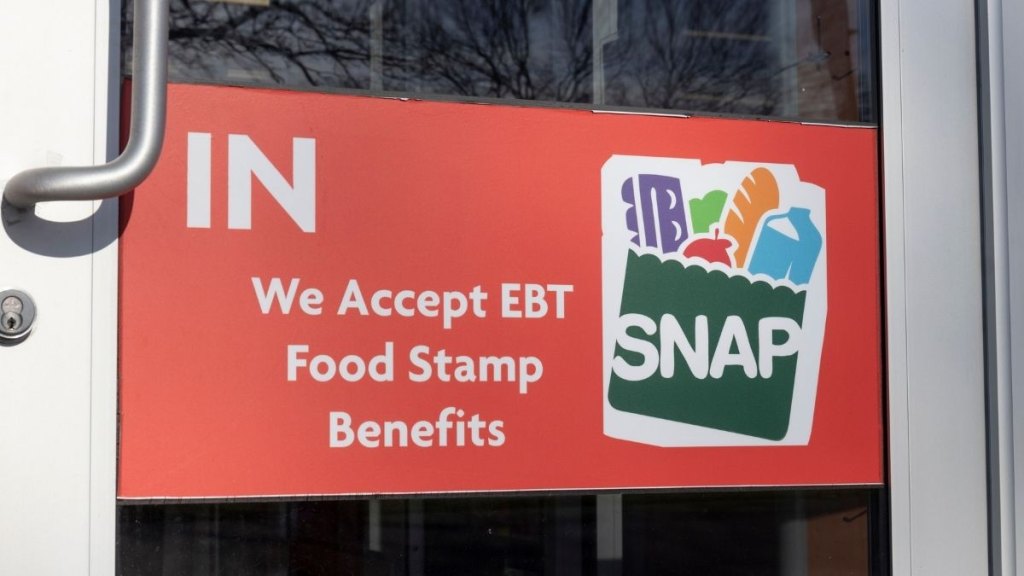
As inflation and tariffs raise the price of so many items, many Americans are turning toward the Supplemental Nutrition Assistance Program (SNAP) to help cover the cost of their groceries. This includes seniors, who often rely on Social Security to fund their daily needs. But does Social Security count as income for SNAP? And if it doesn’t, how can seniors qualify for the government-funded nutrition program? We look into all of that and more below.

Does Social Security count as income for SNAP?
To qualify for SNAP, Americans must have a gross monthly income at or below 130 percent of the federal poverty line, meaning they must make $1,729 or less a month, and have under $3,000 in assets.
Chris Wu, a finance expert who specializes in helping families navigate government-assistance programs, explains, “SNAP is a means-tested program, which means eligibility depends on gross and net household income. Social Security retirement benefits, Social Security Disability Insurance (SSDI) and survivor benefits are usually included in income.”
Wu also notes that because of a program called the Supplemental Security Income (SSI) Combined Application Projects—a partnership between the Social Security Administration, state agencies and the Food and Nutrition Service—some people might be able to get SNAP benefits without a lengthy application process. Most of the time, this happens by eliminating the face-to-face SNAP interview and uses the SSI application process instead.
Currently, residents of Florida, Massachusetts, Mississippi, New York, South Carolina and Washington all prequalify for this program.
Arizona, Kentucky, Louisiana, Maryland, Michigan, New Jersey, North Carolina, South Dakota, Texas and Virginia also offer a version of the Combined Application Project, but the rules for qualifying in these states vary so it’s important to check in with your local SNAP office to see if you can benefit from the program.

Other ways seniors can qualify for SNAP
If a senior isn’t on Social Security, Wu says they can use other sources of income to qualify for SNAP.
“These sources can include pensions, retirement-account withdrawals, part-time earnings, SSDI, veterans’ benefits and certain types of annuities,” he explains. “SNAP also takes allowable deductions into account, which can make a significant difference in whether you’re eligible. Seniors can deduct out-of-pocket medical costs above a certain threshold, housing expenses and utility bills. Making these deductions can decrease net income figures and increase the chances of qualifying.”
Do the new work requirements impact seniors’ eligibility for SNAP?
Many states are either working to or have already introduced new SNAP work requirements. For example, in New York, adults ages 18 to 64 without disabilities or dependents under the age of 14 must work, volunteer or train for at least 80 hours a month to keep their SNAP benefits. This means seniors who take Social Security at 62 will have to volunteer, work or train to keep their SNAP benefits, unless they are exempt.

The good news? “Most individuals aged 60 or over are expected to be exempt,” Wu assures. “As always, seniors should check the latest guidelines in their state, because how these are implemented can vary.”
How to apply for SNAP benefits
If you’re interested in applying for SNAP, follow these steps to get started:
- Visit the United States Department of Agriculture’s (USDA) SNAP State Directory or call 1-800-221-5689 to find your state’s SNAP office.
- Gather your documents: You’ll need proof of identity, Social Security number, proof of income (including Social Security statements) and information about your housing costs and medical expenses.
- Submit your application online, by mail or in person.
- Attend your phone or in-person interview with a SNAP caseworker. Most states process applications within 30 days and if you’re approved, you’ll receive an EBT card, which works like a grocery store debit card.
Other food resources for seniors who don’t qualify for SNAP

If a senior doesn’t qualify for SNAP, Wu recommends looking into the Commodity Supplemental Food Program (CSFP), which is administered by the USDA and provides monthly food boxes to low-income seniors. For more information on this program, click here.
“Local food banks and community pantries continue to be critical resources. Many communities also have senior-specific meal programs through organizations like Meals on Wheels, which provides prepared meals to homebound older adults,” he continues. “Some states and municipalities also administer senior farmers market nutrition programs, which issue vouchers for fresh fruits and vegetables.” Finally, he adds that many faith-based organizations and community centers provide meal services or support to supplement these programs.
Ready for more? Subscribe to our YouTube channel for video podcasts, health tips and uplifting stories designed for women 40, 50, 60 and beyond.
Conversation
All comments are subject to our Community Guidelines. Woman's World does not endorse the opinions and views shared by our readers in our comment sections. Our comments section is a place where readers can engage in healthy, productive, lively, and respectful discussions. Offensive language, hate speech, personal attacks, and/or defamatory statements are not permitted. Advertising or spam is also prohibited.