The Inspiring Untold Story of ‘Mannix’ Star Mike Connors, Born Krekor Ohanian (Exclusive)
Inside the life of Mike Connors: From his Desilu breakthrough to his tireless family advocacy

Key Takeaways
- Mike Connors became a TV icon through 'Mannix' after years of steady work.
- 'Mannix' redefined TV detectives with grit, realism and human storytelling.
- Offscreen, Connors turned personal hardship into advocacy and purpose.
It’s hard to imagine Mannix catching on quite the same way if its star had been billed as Krekor Ohanian—or even “Touch” Connors, one of his early professional names. Fortunately for audiences, those identities eventually gave way to Mike Connors, the name that would become synonymous with one of television’s most enduring private eyes: Joe Mannix.
“Krekor Ohanian found his ability to play basketball helped him land one of the leading roles in a new Hollywood motion picture,” observed The Fresno Bee in 1952 in a profile of Connors. “The former Fresno High School student, who made a name for himself as a court star in the institution, went to the University of California in Los Angeles to study law and also to engage in his favorite sport. It was while doing so that he was discovered by agent Harry Willson, who suggested the name change, commenting, ‘It will be good for publicity. Like, ‘He’ll Touch the Top.’”
“Touch” Connors never quite caught on — but Mannix certainly did. The series went on to run for eight seasons, from 1967 to 1975, after receiving the green light from Lucille Ball and Desilu Productions — around the same time she also approved both Star Trek and Mission: Impossible. Just a few more reasons to appreciate Lucy’s instincts.
MIKE CONNORS: “I had read a million detective teleplays, but Mannix was more than just another super-sleuth story. Joe Mannix was real. He bled. He perspired. He should have been born 50 years earlier. He was not pretty. Sometimes he was vicious. He was governed by his own rules.” (Independent Star-News)
What especially appealed to him was the world Mannix created—a fiercely independent investigator operating within Intertect, a sleek, ultra-modern detective agency where everyone dressed alike and computers handled much of the investigative work.
MIKE CONNORS: “He stood out like a sore thumb, but he was accepted only because he happened to be a darned good investigator. I respected this man. And I think the audience will, too. I respected the premise of the series. And I respected its creator, Bruce Geller, for what he had done with Mission: Impossible. Geller is a behind-the-scenes Mannix. He did not give an inch, aesthetically, on Mission and he attacked Mannix with the same imaginative flair for realism and drama. That’s why I’m in the homicide business.”
His pre-detective days
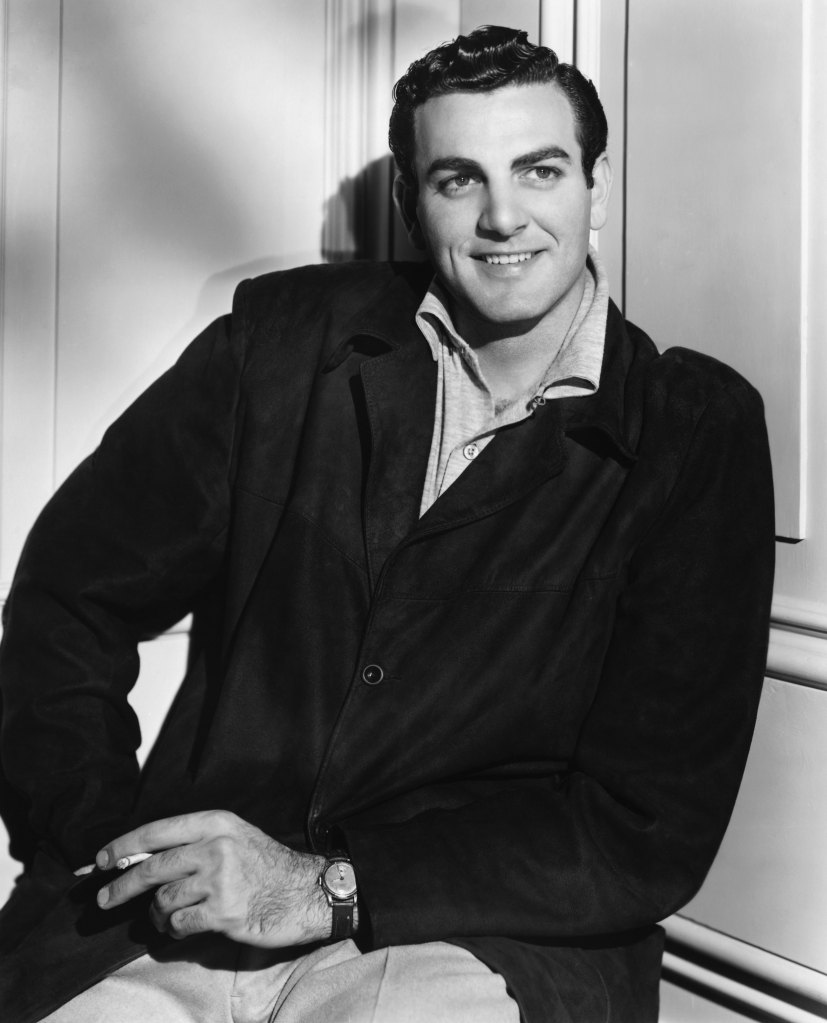
Born Krekor Ohanian on August 15, 1925, in Fresno, California, Connors—of Armenian descent—first made a name for himself as a standout basketball player in high school, earning the nickname “Touch” for his shooting ability. After graduating, he enlisted in the United States Air Force. Following World War II, he attended the University of California, Los Angeles on a combination of the G.I. Bill and a basketball scholarship. Initially studying law with plans to follow in his father’s footsteps, his direction changed when his coach introduced him to director William A. Wellman.
THE FRESNO BEE: “He began working with the Laguna Beach Players and the Hollywood Circle Theater Group. He was tested for the role of Tarzan, but he was two inches too short and slightly underweight for the role. Casting had begun for Sudden Fear, a picture starring Joan Crawford, when Ohanian or Connors applied. After Miss Crawford and David Miller, the director, had heard him read some lines, he was signed for one of the six leading roles without any further test.”
After Sudden Fear, Connors remained a busy presence on the big screen throughout the 1950s and into the 1960s, even if true stardom continued to be just out of reach. Over the course of roughly two dozen films between 1953 and 1966, he appeared in projects ranging from Island in the Sky with John Wayne to The Day the World Ended, The Ten Commandments, Suicide Battalion, The Dalton That Got Away, Harlow, Stagecoach and the spy adventure Kiss the Girls and Make Them Die, which tried to ride the wave of James Bond’s popularity.
Starting in 1954, Connors worked steadily in television, appearing in everything from anthology dramas like The Ford Television Theatre and Schlitz Playhouse of Stars to a wide array of episodic series, including Gunsmoke, Maverick, Wagon Train, Lawman, and Mickey Spillane’s Mike Hammer. After years of guest roles—including two appearances on Whirlybirds — he finally secured a starring vehicle with Tightrope!, which ran from 1959 to 1960.
MIKE CONNORS: “I was fighting for a crack at a show and the battle I was fighting seemed to be a losing one. I wanted a part that had guts and action and sophistication. I’d played villains, but never hero and that’s one thing about this business: if you have never done a thing, people say you can’t do it. And once you’ve done it, then they offer you nothing else but. Luckily for me, they decided in my favor. I feel the decision opened up a whole new career for me.” (New York Daily News)
Tightrope! cast Connors as undercover agent Nick Stone across its 37-episode run. Borrowing from the language of film noir, the series used narration from Nick himself, giving viewers insight into his increasingly dangerous assignments. Because only his immediate superior knew his true identity, Nick often found himself caught between both sides of the law — distrusted by the police while risking exposure from the criminals he was trying to bring down. In that sense, the show feels like an early forerunner to Wiseguy.
Following the cancellation of Tightrope!, there was talk of a new series that would cast Connors as a sophisticated “smooth operator” with a range of hidden skills, living on the French Riviera and filmed on location.
MIKE CONNORS: “Sounds like it will be a lot of fun. The idea is nebulous at this moment. At first I was supposed to be a guy who will recover stolen jewels or locate a missing wife or relative. Now we’re not sure what the plot will be. It probably will have ‘Riviera’ in the title. The character may be the same type, generally speaking, that Cary Grant was in the movie To Catch a Thief.” (The Times Record) The show would never happen.
Even after production had ended, Connors pointed out that Tightrope! wasn’t finished. The series found new life in syndication, though he was caught off guard by just how popular it became — particularly throughout Central and South America.
MIKE CONNORS: “For some reason I don’t understand myself, Tightrope! has completely captured the public fancy down there. To capitalize on the situation, I agreed to appear in a Mexican nightclub for six weeks. I was such a hit they kept me for eight weeks. I played to 5,000 people a night, doing four shows. After that, I flew to Caracas for four weeks and found the same wonderful reception.” (Independent Press-Telegram)
Explaining how that came about, Connors spoke with The San Bernardino County Sun in 1964, following a period of roughly three years during which he had kept a relatively low profile.
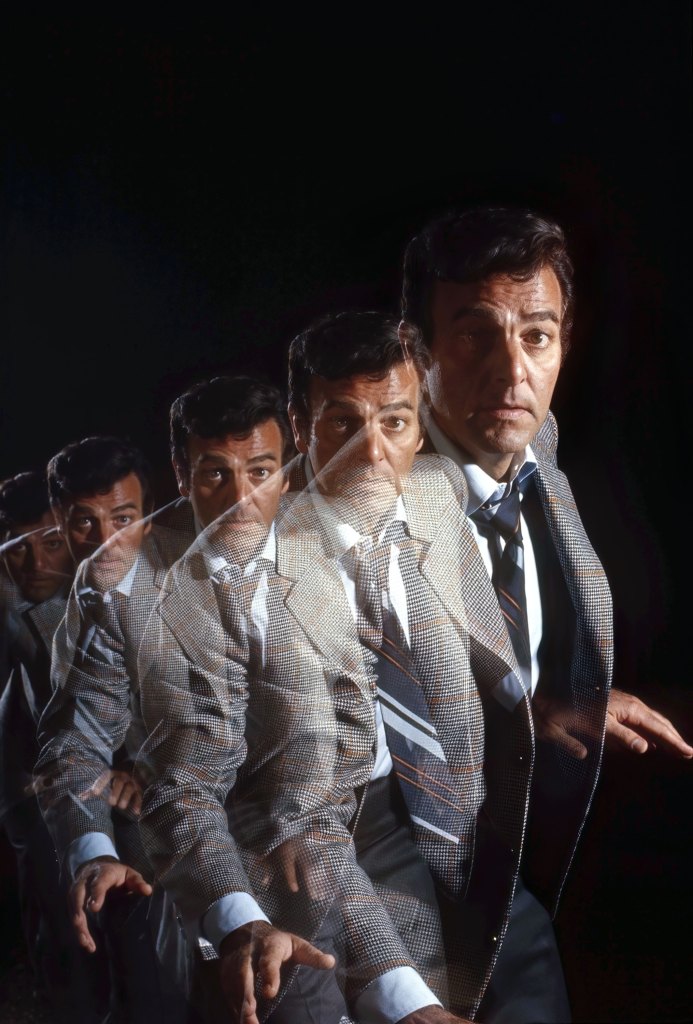
MIKE CONNORS: “I evaporated on purpose. It was well planned and it looks like it will pay off. When Tightrope! went off the air, my agent asked me how long I could hold out without working. I told him I might make it for two years, but that’s a long time without income. He convinced me it would take that long for the overexposure on television to wear off. To keep the wolf from the door, I appeared in South American nightclubs, capitalizing on the popularity of Tightrope! down there. It was a gamble. They might have forgotten about me altogether and that would have been the end of my career. Hollywood has a short memory.”
By 1963, Connors decided it was time to get back to work, turning down television offers in favor of focusing on feature films. A role in Panic Button helped open the door to additional opportunities.
MIKE CONNORS: “Someday I may do another series, but movies give an actor more to do. There is more prestige in pictures, more money and a longer career. TV burns you out too quickly. It looks good for me at the moment, but in this business, it could change overnight. No matter how it turns out, I won’t pull my invisible act again. It’s a frustrating way to prove your point.”
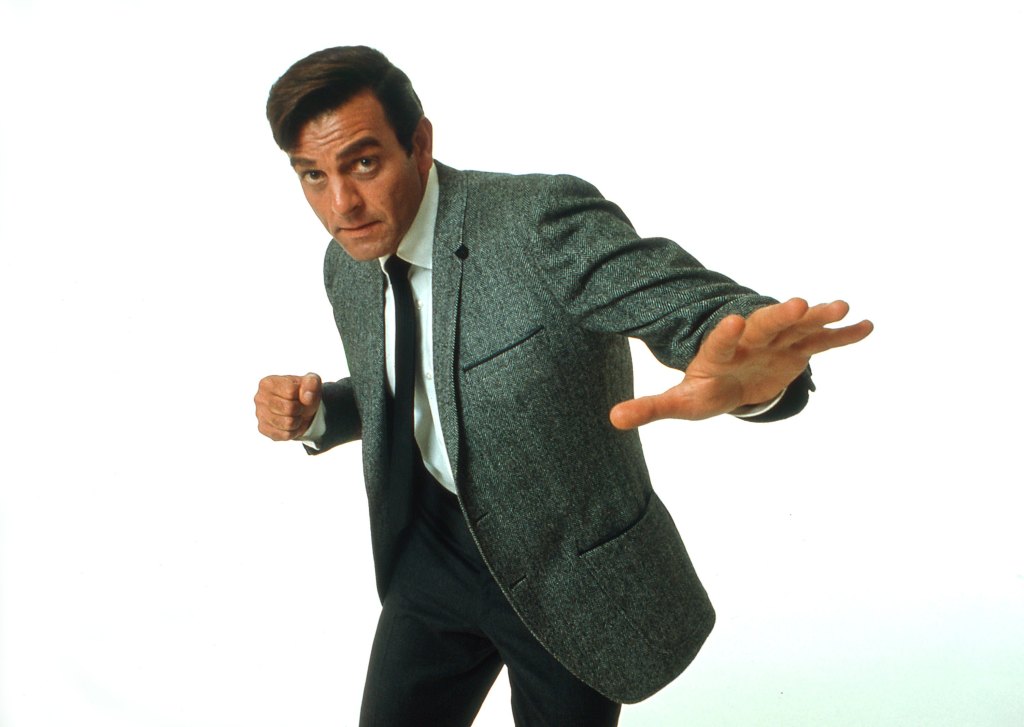
Columbia Pictures briefly considered Connors for the role of Matt Helm in the 1966 film The Silencers, but the part ultimately went to Dean Martin, who turned the character into a series of light, tongue-in-cheek, Bond-style adventures across four films. Connors’ audition didn’t go unnoticed, however, leading to his casting in Kiss the Girls and Make Them Die. Not long after, he made his return to television with Mannix.
JOANN M. PAUL (author, And Now, Back to Mannix): “As a society, and as individuals, we are only as good as our foundational stories. Joe Mannix personified the heroic, highly individualistic, tough everyman who put himself completely on the line to do the right thing. He was not a superhero—he was not out to save the world. He was more of the ilk of modern-day knight in shining armor, someone who stands beside civilization, the type of individual that is required in order for societies to remain good, the kind of person you hope against hope is there for you when you need him, when you venture out into the world.”
“Joe Mannix helped one person at a time. He considered one case at a time. He stood up to one injustice at a time – when that injustice presented itself to him. Without being able to count on that type of person being there, often behind the scenes, even on a very personal level that few ever realize, the thin veneer of civilization is threatened. When that type of person is more prevalent in societies, those societies become better.”
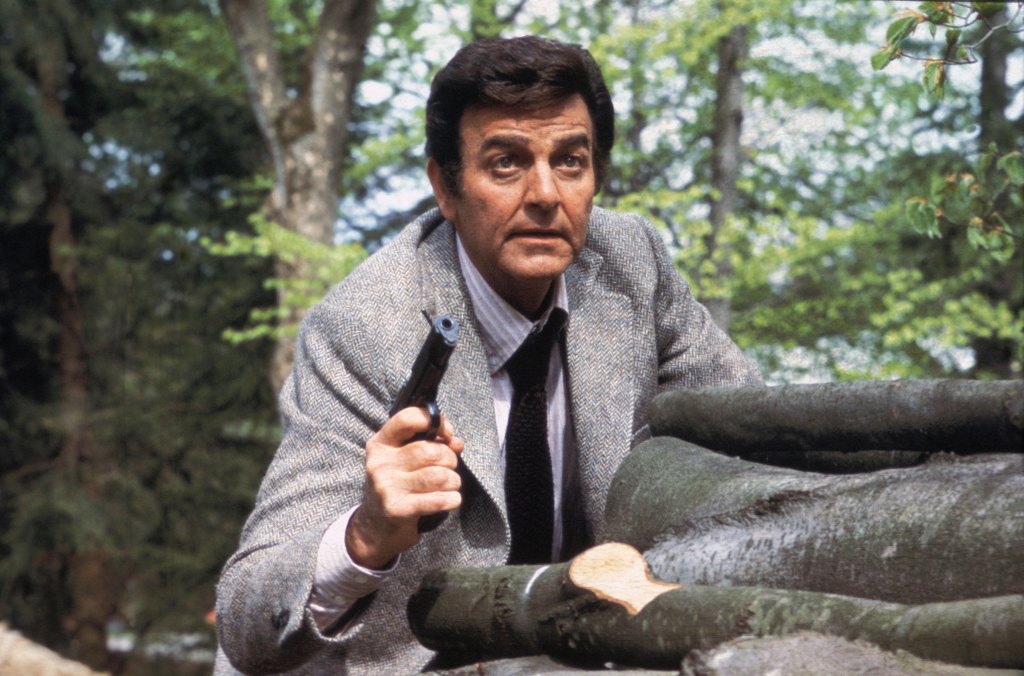
MIKE CONNORS: “Mannix is different, because we deal with what is fast becoming a problem today. That is a problem of mechanization. A process that is dehumanizing our society. We’ve become a people of zip codes and bank numbers who often fail to communicate as human beings. And this is the cause for all the current peace, love and anti-war movements. Now Joe Mannix works for Intertect, a highly computerized detective agency. IBM machines do most of the legwork, but Joe is a rebel who doesn’t like machines. He believes you have to know people and deal with them on a human basis. Joe Mannix is a man who believes in looking a man squarely in the eyes.” (The San Francisco Examiner)
“The basic premise of the show was that I would fight the establishment and the computerized procedures. That’s what intrigued me originally, but you can’t do that every week. Somebody’s going to say, ‘Why doesn’t he quit?’ Which was the next step and in the second year, Mannix was on his own.” (Star-Gazette)
JOANN M. PAUL: “When Lucille Ball said she didn’t understand the computers, the series was completely retooled to have a premise so basic it would have never sold as a series. But Lucille Ball, a tough individual in her own right, liked Mike Connors’ presence on the screen. In addition to the computers, Joe Mannix was originally presumed to br built around Mike Connors’ alter ego — its opening credits from the very first season said, ‘Mike Connors is Mannix,’ as if telling the viewer this portrayal was more personal than your typical series. So they stripped away all of the gimmicks and put Joe Mannix in an office with a secretary out front (Peggy, played by Gail Fisher, the first black actress to win an Emmy). Some thought, ‘Who would tune in to watch such a series?’ But the series not only survived, it lasted seven additional seasons.”
“Mannix was vulnerable, both emotionally and physically and he got hurt a lot. He put himself out there for a high cause, but the higher cause was simply—or perhaps not so simply—doing the right thing in whatever situation he encountered. Joe Mannix gave us a model of what it meant to want to be a part of something bigger than oneself, something noble, but on his own terms, as a tough individual, dealing with one situation at a time. He was the embodiment of a spiritual figure, even by the admission of the writers of the series (see below). Joe Mannix emerged as a classical, heroic figure by serendipity.”
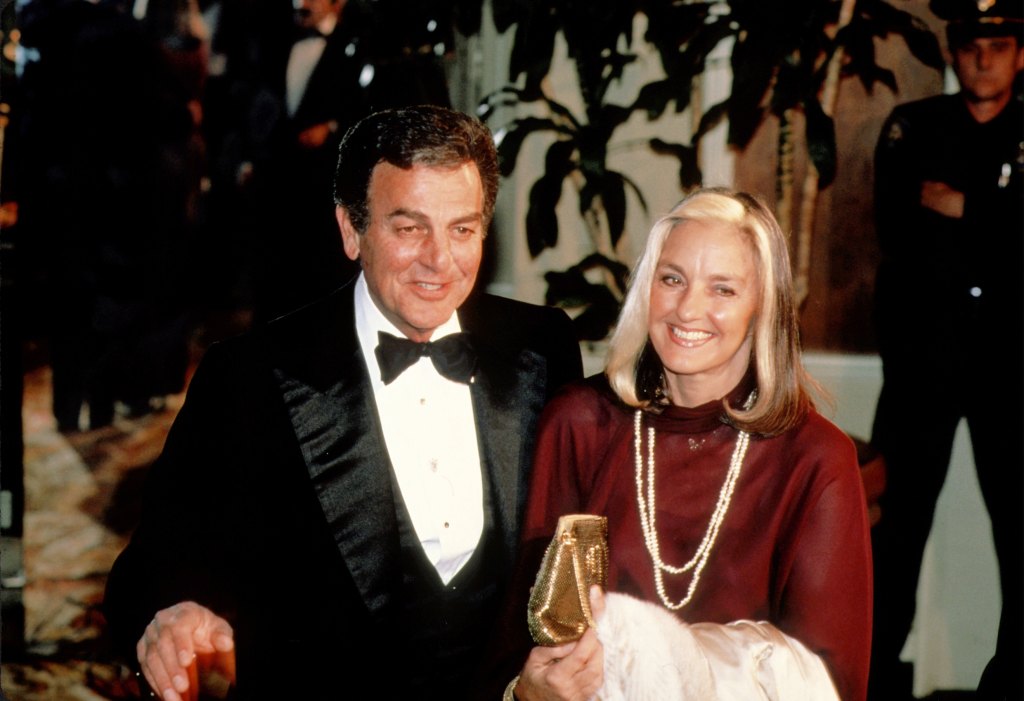
Mannix came to an end in 1975, and a number of factors have been cited over the years. Some pointed to concerns about the show’s level of violence — even though other series at the time pushed things further. Others suggested behind-the-scenes politics played a role, particularly when ABC began airing late-night reruns while new episodes were still debuting on CBS, a move that reportedly didn’t sit well. And, of course, there was the argument that the series had simply run its course — despite the fact that its ratings remained strong.
MIKE CONNORS: “I’d say absolutely we’re going to see a thinning of the ranks of cop shows. It’s like everything else. The airwaves are saturated with cops until people are fed up. All the shows are hurt when you have too many. I don’t care what the framework of the show is — black detective, old, young, wheelchair … it’s all basically law and order. I’m sure what’s going to happen is that we’ll have The Waltons and Apple’s Way and seven more of that kind of low-key, life-happening show. Then people will get fed up with that and an action show will come along and be a smash hit.” (Star-Gazette)
“Mannix was a two-fisted private eye, a return to the old tradition. And it caught on. It came, too, at a time when the Western was fading and the public was looking for a more contemporary hero. When we started, we were the only private eye show on television. Now look at them; they’re all over the dial. Imitation is a sincere form of flattery, but this is too much.” (San Francisco Examiner)
JOANN M. PAUL: “The appeal of the PI/cop shows, some felt, was waning, the way the Western did before it. Ironically, this would make Mannix a victim of the very genre it is so often credited with creating.”
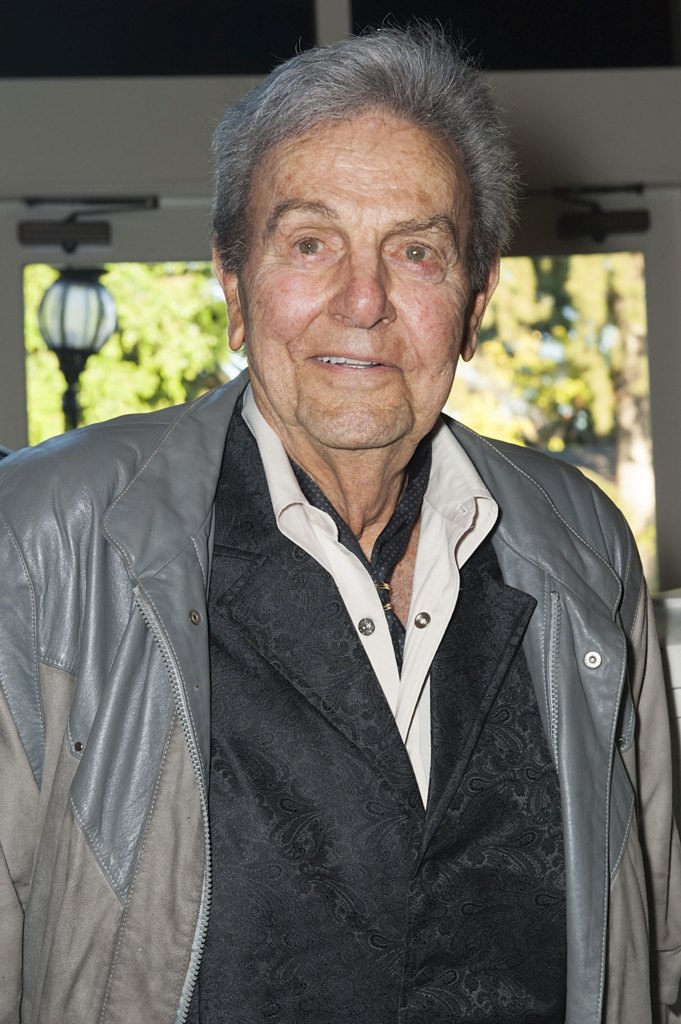
Interestingly, Connors had a few opportunities to revisit Joe Mannix after the series ended. He first reprised the role in the 1971 episode of Here’s Lucy titled “Lucy and Mannix Are Held Hostage,” followed by an appearance on a 1973 Bob Hope Special. He returned to the character one last time in 1997 on Diagnosis: Murder, in the episode “Hard-Boiled Murder.”
MIKE CONNORS: “I knew the end had to come eventually. What the hell, we had a good ride. Now it’s time for me to get off my dead butt and get my career rolling after eight years in one job. I want to do pictures and then get ready to do another series. But not for another year.” (Democrat and Chronicle)
“There were a couple of weeks after the show was over where I’d get up and feel lost. It’s been like a whole life, like a family. I sort of felt, ‘Well, it’s the end of the life.’ But then I began to enjoy the time off and really started to unwind. Then, after about four, five months, I began again to get very restless. There wasn’t enough action going on.” (Independent Press-Telegram)
Following Mannix, Connors continued to work steadily, though his career never quite recaptured the momentum it had enjoyed during the series. He appeared in fewer than a dozen films, including Avalanche Express (1979), Too Scared to Scream (1985), which he also produced, Downtown Heat (1994), and an uncredited role in The Extreme Adventures of Super Dave (2000). On television, he headlined 10 TV movies and made numerous guest appearances, along with starring in 18 episodes of Today’s F.B.I. from 1981 to 1982.
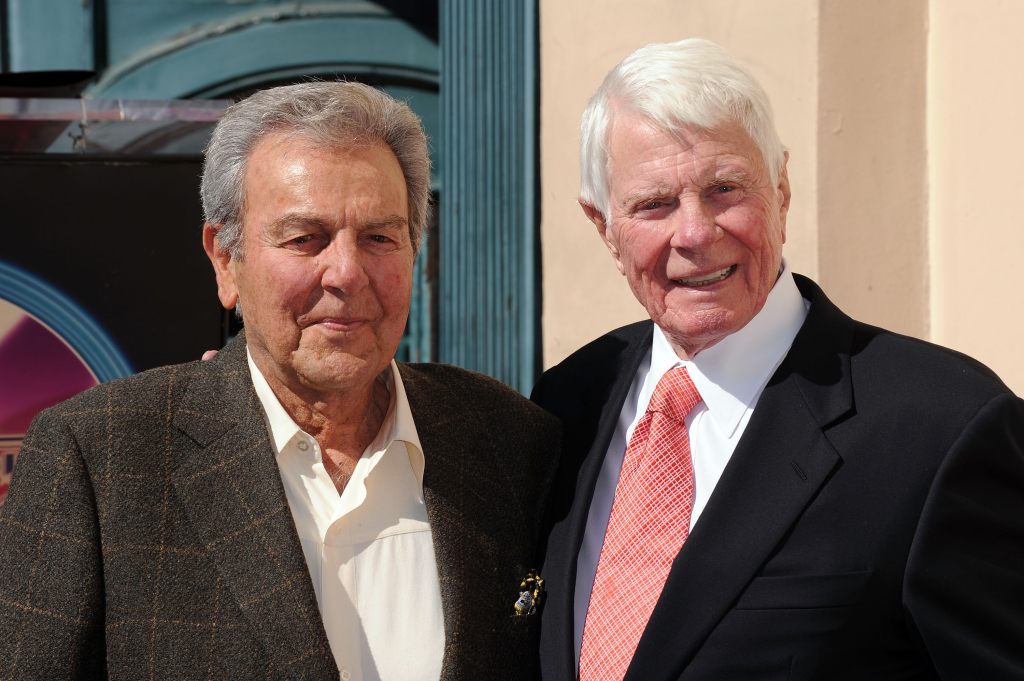
JOANN M. PAUL: “Mannix was an incredibly demanding series. Mike was in almost every scene, and many of the scenes not only were on location, but also involved stunts. Mixed in with that kind of shooting were the emotional scenes Mike specifically wanted to include. He wound up with a bad back and bad knees as a result of working on the series. Because the series was built around him – no gimmick, no real co-stars, other than Gail Fisher — and was an hour-long, action packed, story-driven series that ran for eight seasons, I can think of no other television series in the history of television that was so demanding of an actor as Mannix was of Mike Connors.”
Another important aspect of Connors’ story was his personal life. On September 10, 1949, he married his college sweetheart, Mary Lou Willey, while they were both students at UCLA — a marriage that would last for the rest of his life. Connors was studying law on an athletic scholarship while Mary Lou was studying education.
MIKE CONNORS: “I told her along the way that I was very much in love with her, and wanted to get married. But she kept stalling, saying she didn’t think she was ready. By this time, she had dropped her college courses and was at home in Laguna Beach, where I was installing sprinkler systems and selling brushes and vacuum cleaners door to door so I could be near her. Finally, I told her to make up her mind, that either we got married or we called off the romance. I left Laguna and went back to school. A couple of weeks later, she said yes.” (The San Francisco Examiner)
There was, however, a more difficult side to their story. The couple had two children — Matthew Gunner Ohanian, born in 1958, and daughter Dana Lee Connors, born in 1960. At 15, Matthew was diagnosed with schizophrenia, a challenge the family would face for decades. He ultimately passed away from heart failure in 2007. In the years between, Connors became deeply involved in organizations supporting mental health awareness and research.
JOANN M. PAUL: “His son ultimately had to be institutionalized. Mike was devoted to his wife and family. His two children (he also had a daughter) even appeared in the pilot episode of Mannix. It had to have hit him very hard. And in terms of his career, my guess is that, in the big scheme of things, his son’s illness probably took precedence.”


Mike Connors died on January 26, 2017, at the age of 91, just a week after being diagnosed with leukemia. In his final years, he was well aware of the lasting impact of Mannix and appreciated how fondly audiences continued to remember it. Even so, he never seemed entirely comfortable with the notion of being regarded as a television superstar.
MIKE CONNORS: “You can’t call anybody in television a superstar, because they can come back in another series and bomb. I’ve always believed you’re nothing if you’re not honest. I know many people standing in unemployment lines and pumping gas who are far more talented actors than most of us who are successful. As Mannix, I’ve tried not to shock people or to be gimmicky, but to make them believe I’m that character. I want them to say, ‘Yeah, that’s the way I would react.’ When I was doing the Tightrope! series, I visited Spencer Tracy on the set of The Devil at Four O’Clock. ‘Goddamn it, kid,’ he said, ‘there’s not a moment that I don’t believe you in that show and don’t you forget it, because that’s what it’s all about.’” (San Francisco Examiner)
“I fully intended to become a lawyer. And I think that’s why Mary Lou married me, but when I switched into theater arts, she stuck with me even though my mother and her friends in Fresno disowned me. They said, ‘He’ll come to his senses.’” (Daily News-Post)
Conversation
All comments are subject to our Community Guidelines. Woman's World does not endorse the opinions and views shared by our readers in our comment sections. Our comments section is a place where readers can engage in healthy, productive, lively, and respectful discussions. Offensive language, hate speech, personal attacks, and/or defamatory statements are not permitted. Advertising or spam is also prohibited.