How to Tighten Loose Skin After Weight Loss: 4 Doctor-Approved Strategies That Really Work
The third hack is proven to help older women produce 40 percent more skin-firming collagen!

Key Takeaways
- Strength training builds lean muscle to firm up sagging skin, aiding in body toning.
- High protein intake accelerates skin healing by boosting collagen production.
- Pycnogenol can significantly boost the body’s natural collagen synthesis by 40 percent
As more people lose huge amounts of weight than ever before, it means millions of us are happier and healthier (yay!). It also means that lots of us are suddenly wondering how to tighten loose skin after weight loss. Great news for anyone who doesn’t want or can afford to go under the knife to fix the problem: “There are plenty of nonsurgical options that can make a big difference,” says Columbia University-trained nutrition expert Fred Pescatore, MD. Keep reading as he breaks down your best options.
How to tighten loose skin after weight loss: 4 proven methods
The science behind loose skin after significant weight loss isn’t too complicated. Weight gain can cause skin proteins called collagen and elastin to become overstretched and damaged, which prevents skin from fully snapping back when you slim down. Think of a rubber band that loses its elasticity, explains Dr. Pescatore, author of The A-List Diet. Here’s what you can do about it.

Firm and fill skin with new muscle
When Dr. Pescatore’s weight-loss patients want to firm loose skin, “my go-to recommendation is strength training,” he says. Building lean muscle mass basically helps fill the space created when we lose fat. And it also becomes a solid structure behind skin, giving it a firmer appearance.
And that’s not all: a 2023 study published in Scientific Reports found that resistance training can reduce inflammatory factors that make sagging worse, leading to a mini-rejuvenation that includes improved overall skin elasticity and thickness.
Do you have to lift like Arnold Schwarzenegger? Nope! “It doesn’t have to be heavy weights, it just has to be consistent,” says Dr. Pescatore, who recommends at least two strength training sessions per week targeting all major muscle groups. Being stronger is great for overall health, “and, in my experience, it’s the best nonsurgical solution for loose skin.”
Eat to boost collagen production
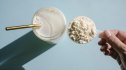
While there’s no hope for an overstretched rubber band, your body can make new collagen to help restore damaged skin. But only if you do your part. Our systems cannot synthesize collagen without an adequate supply of amino acids from protein-rich foods. Recent research published in JPRAS Open found that getting enough protein is linked to enhanced skin healing, while skimping on protein leads to significantly worse skin outcomes.
So how much is enough? Tightening skin is a form of healing, so you do want more protein than normal. “Try to eat one gram of protein for each pound you weigh,” suggests Dr. Pescatore. That’s 150 grams a day for a 150-pound woman. Once your skin improves, you can cut back to about half a gram for every pound you weigh.
Also key: Vitamin C supports collagen synthesis, so be sure to get several daily servings of C-rich fruit and veggies, such as berries, citrus, red bell pepper and broccoli.
Try a pine bark supplement
Dr. Pescatore says pycnogenol—an antioxidant from the bark of certain pine trees—may be one of the most underrated tools for tightening loose skin after weight loss.
A Skin Pharmacology and Physiology study found that taking 75 mg of the compound per day led to a 25 percent improvement in skin elasticity, a 21 percent increase in skin hydration, and a whopping 40 percent boost in collagen synthesis in women aged 55 to 68 after 12 weeks. Basically, the supplement helped switch on the body’s collagen-making machinery, says Dr. Pescatore.
Consider microneedling to boost elastin production
Once we hit puberty, we barely make any new elastin, the protein that gives skin spring. The exception is when a wound is healing. Enter microneedling.

“It’s a minimally invasive procedure where a small tool with tiny needles is used to make microscopic holes in the top layer of the skin,” explains Robert Schwarcz, MD, a double board-certified plastic surgeon based in New York City. “This triggers the body to heal itself and make more collagen and elastin, which helps firm the skin and smooth and even out skin texture.”
A 2026 review in Aesthetic Plastic Surgery analyzed 41 studies and found microneedling consistently improved skin elasticity and firmness, with results continuing to develop for up to six months after treatment. Most people need three to four sessions spaced about a month apart, with minimal downtime, typically just a day or two of redness. Standard microneedling runs $100 to $600 per session—so it’s not cheap, but it’s much more affordable than other medical options.
The bottom line on tightening loose skin after weight loss
How much improvement you see from nonsurgical methods depends on factors like your age, genetics, how much weight you lost and how quickly you lost it. In some extreme cases, a surgical skin lift may be the best bet. But most of us can see a big difference using only nonsurgical techniques. “Use the strategies we’ve discussed and be patient,” says Dr. Pescatore. “For most people, tightening skin will absolutely happen.”
Conversation
All comments are subject to our Community Guidelines. Woman's World does not endorse the opinions and views shared by our readers in our comment sections. Our comments section is a place where readers can engage in healthy, productive, lively, and respectful discussions. Offensive language, hate speech, personal attacks, and/or defamatory statements are not permitted. Advertising or spam is also prohibited.