Lorenol Labs’ Answer to the Recovery Gap in Aesthetic Medicine

Confidence often begins with the face people present to the world. For many individuals living with visible skin concerns like scars, persistent acne or hyperpigmentation, something as simple as leaving the house can feel daunting. A mirror can become a daily reminder of what they hope to change, and even after seeking professional treatment, the journey toward healthy skin may not feel straightforward.
Today’s aesthetic medicine can offer remarkable solutions, with advanced laser technologies, non-invasive procedures and surgical techniques expanding what clinicians can achieve. Yet Laura Montry, founder of Lorenol Labs, believes that for many patients, the final outcome can depend on a stage that receives far less attention: recovery.
She argues this overlooked phase represents one of the most important conversations within the industry. “The treatment doesn’t end when the procedure ends. What you put on the skin afterward is just as important as the treatment itself,” she says.
According to her, aesthetic procedures are designed to trigger the body’s natural repair mechanisms. Treatments such as laser resurfacing can intentionally create controlled damage within the skin so that new collagen and healthier tissue can form. The science behind these procedures continues to evolve, yet Montry argues that the products often recommended for recovery have not kept pace.
“Many practitioners are still using products that were introduced decades ago,” she explains. “Many of them simply coat the skin instead of helping it actively recover.”
She believes the gap exists partly because clinical focus tends to remain on the procedure itself. Surgeons and dermatologists devote years of training to mastering highly technical treatments, while skincare, she observes, is sometimes viewed as a secondary product instead of an extension of the treatment plan. “If you overlook recovery, you can influence how well the skin heals and how long that healing takes,” Montry says.
Understanding what happens beneath the surface can help clarify why recovery care matters. “When the skin experiences injury, whether through a small cut or an aesthetic procedure, the body initiates a healing sequence that begins with inflammation. In everyday wounds, this inflammation may subside before the rebuilding phase begins,” she explains. “But that’s not what always happens.”
According to her, procedures that treat larger areas of skin can trigger a stronger and longer-lasting inflammatory response. Research has shown that certain inflammatory mediators can remain elevated for a long duration following ablative laser resurfacing.
Patients who receive prolonged inflammation may experience hyperpigmentation, sensitivity, redness, and slower healing. “People with darker skin tones may face a higher likelihood of hyperpigmentation following the procedure, which is what makes thoughtful recovery strategies even more important,” Montry explains.
Montry’s work at Lorenol Labs has centered on designing formulations intended to support this healing environment. One principle guiding the company’s approach is the Dalton 500 rule, a concept suggesting that molecules larger than approximately 500 Daltons have difficulty penetrating the skin barrier.
She explains, “Most creams and lotions often rely heavily on water and larger molecules. Those ingredients can sit on the surface rather than reaching the layers where healing activity is happening.”
Her team, therefore, focuses on lower-molecular-weight ingredients and oil-based delivery systems intended to support deeper absorption. Among the compounds incorporated into Lorenol Labs, the Post Treatment Balm, was formulated with sulforaphane specifically to address the inflammatory response following clinical treatments. This plant-derived bioactive ingredient was studied for its anti-inflammatory properties which build up enzymes directly in the skin cells.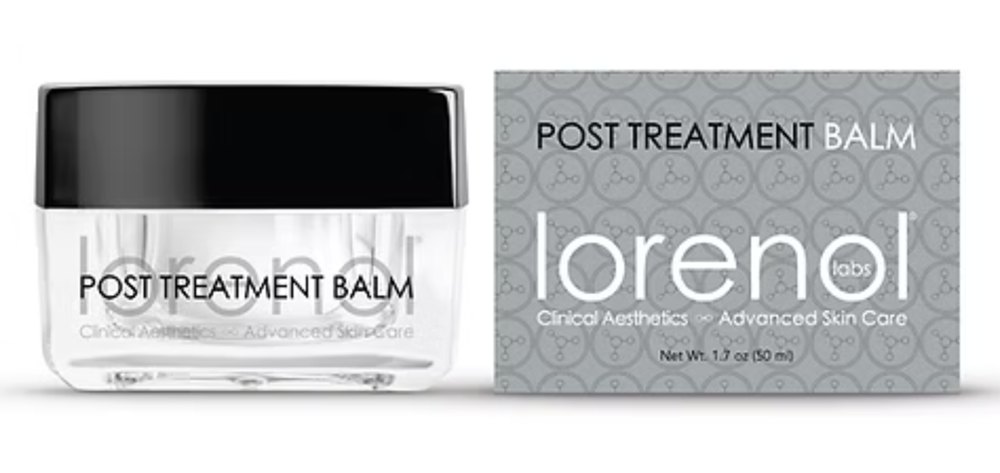
Montry emphasizes that the intention is not to replace the body’s natural healing processes. “We see the product as a vehicle that helps the skin do what it’s already designed to do, recover and rebuild,” she says.
She highlights that post-procedure guidance can vary widely. Some patients may be advised to keep the skin bare and allow it to heal on its own. Montry believes that perspective overlooks how vulnerable the skin barrier could become immediately after treatment.
“When layers of skin are removed through a laser procedure, the barrier has been disrupted,” she explains. “Supporting the skin during that recovery period can make a meaningful difference in the outcome, comfort and healing.”
Through Lorenol Labs, Montry aims to shift the narrative toward recovery strategies that address inflammation, hydration, and protection, recognizing that post-procedure care deserves the same level of attention as the treatment itself. Her initial focus was centered on recovery care following aesthetic procedures such as laser treatments and surgical interventions. Over time, the product line has expanded to include daily skincare designed for maintenance.
In Montry’s view, the conversation ultimately returns to the people whose lives are shaped by their skin. She vehemently believes that healthy skin goes beyond appearance. It affects confidence, self-esteem, social interactions, and emotional well-being. A clear complexion or softened scar, she believes, can restore a sense of comfort in one’s own reflection. “When someone’s skin improves, you can see the difference in their confidence, and in their life,” Montry says. “That’s the part that makes this work meaningful.”


