Crafted for the Stage, Coveted in Resale, Committed to Giving Back: Inside Magnolia Pearl

Fashion has long trained desire to worship the untouched. Magnolia Pearl has built a following by asking people to treasure the opposite: the frayed, the patched, the visibly mended, the garment that looks as though it has already lived.
That makes the brand feel oddly precise for 2026. At a moment when resale is growing faster than the broader apparel market and luxury is moving through a cooler, more selective cycle, Magnolia Pearl sits at the intersection of scarcity, sentiment and afterlife value. ThredUp says the U.S. secondhand apparel market grew 14% in 2024, five times faster than the broader retail clothing market, while Bain forecasted a slight decline in personal luxury goods sales in 2025.
A brand built on mood, scarcity and recognition
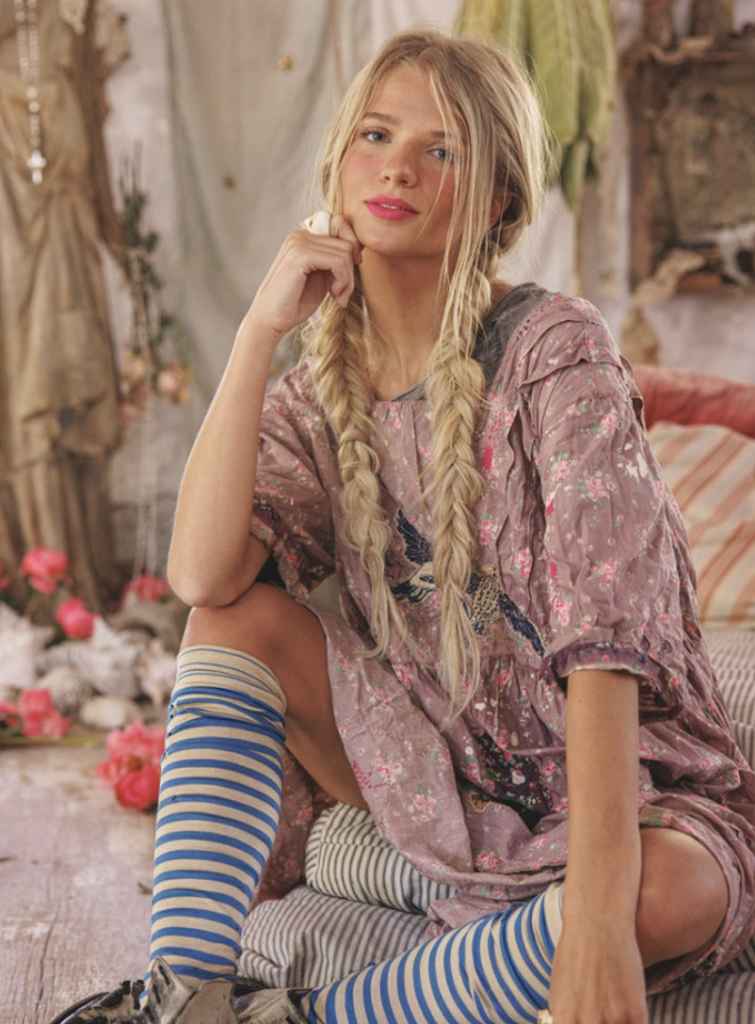
Magnolia Pearl’s official site reads less like a standard store than a sealed world. The company leans into handmade craft, layered styling, visible wear and a kind of emotional authorship that turns clothing into storytelling. Even its shopping model reinforces that tone, offering personal shopping through “MP Maestro” rather than pushing the brisk, frictionless logic of mainstream e-commerce.
Celebrity attention has widened the audience. But visibility is only part of the story. The stronger signal is that Magnolia Pearl has developed a collector aura. Its garments are treated less like ordinary apparel than like scarce objects with a second life and, often, a higher price on the resale market.
That logic fits the wider mood in fashion. Recent fashion reporting from Milan noted an emphasis on layering and clothes with mileage, a sign that designers and shoppers alike are placing more value on garments that feel lived in rather than immaculate. Magnolia Pearl, with its lace, patchwork and softened surfaces, has been speaking that language for years.
Robin Brown and the language of visible mending
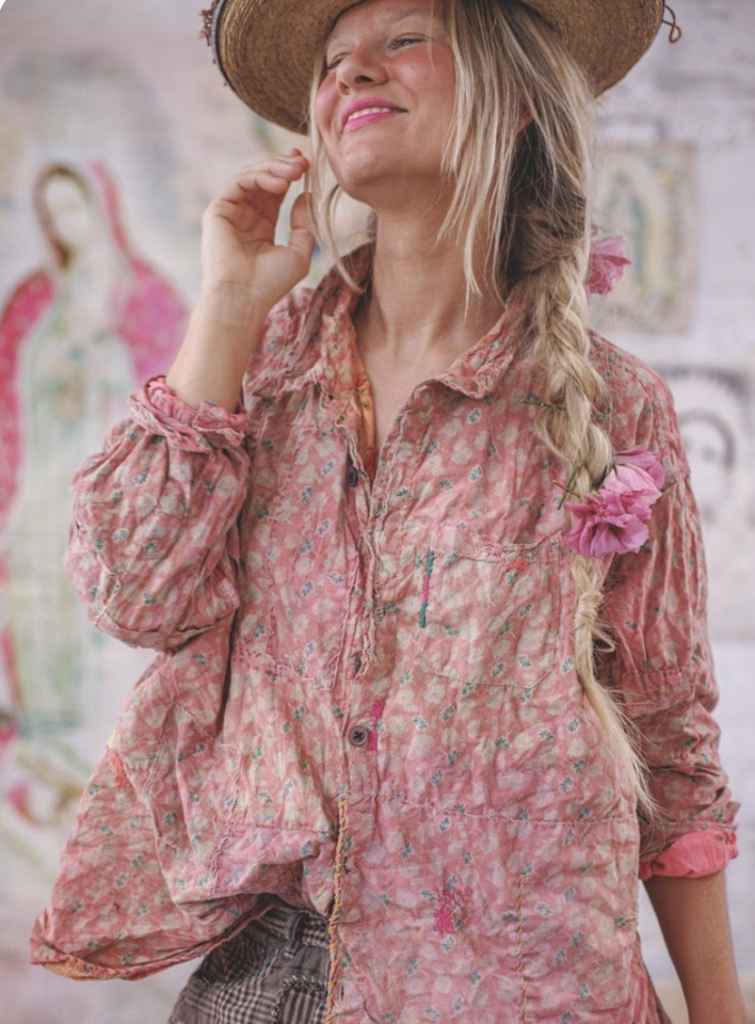
Magnolia Pearl is inseparable from Robin Brown, whose biography shapes the brand’s emotional and visual code. The company presents Brown’s life story as a source of the label’s sensibility: hardship, salvage, beauty found in remnants and repair treated as something worthy of display rather than concealment. That helps explain why Magnolia Pearl’s garments look less polished than witnessed.
That authored identity gives the label clarity in a crowded market. Many brands sell mood boards. Magnolia Pearl sells a fully formed worldview. Some shoppers will find that persuasive; others may see a carefully merchandised mythology. Either way, the company is unmistakable, and in a market full of sameness, distinctiveness carries real value.
There is room for skepticism. Fashion has often borrowed the textures of hardship and returned them to the market as luxury. Yet Magnolia Pearl is more coherent than most brands making moral claims. Its clothes look repaired. Its resale model depends on longevity. Its storytelling insists that garments should keep meaning after the first sale. At minimum, the product and the message are aligned.
Resale and giving as part of the product
The sharpest move Magnolia Pearl has made may be Magnolia Pearl Trade, its official resale platform for pre-loved pieces, rare samples and hard-to-find items. That choice lets the company keep the secondhand life of its garments within its own orbit rather than leaving it entirely to outside platforms or private groups.
That matters because resale is no longer marginal. ThredUp projects the global secondhand apparel market will reach $367 billion by 2029, and brands with scarcity, recognizability and loyal communities are well placed to benefit. Magnolia Pearl’s garments already carry those traits, so resale becomes part of the product, not merely what happens after ownership changes hands.
The company ties that resale market to giving. Magnolia Pearl and Magnolia Pearl Trade present the Peace Warrior initiative as central to the brand’s identity, with trade commissions supporting charitable work. That does not free the brand from fashion’s contradictions, but it does give Magnolia Pearl a more substantial answer than most when asked what purpose a luxury garment might serve after purchase.
Magnolia Pearl’s real appeal lies in that afterlife. Plenty of labels want to be seen. Fewer want to be kept, traded and imbued with moral weight. Magnolia Pearl has found a way to make age look glamorous, repair look intentional and resale feel like part of a garment’s prestige. In 2026, that is a powerful position to occupy.


