Why Skin pH May Be the Missing Piece in Eczema Care

For millions of people living with eczema, the condition can feel relentless. The itching often begins quietly, a dry patch on the arm or a small irritation behind the knee, but it can quickly escalate into inflamed skin, sleepless nights and an exhausting cycle of scratching and flare-ups. Parents watch toddlers cry from the itch. Adults struggle through workdays distracted by burning skin.
Despite decades of treatments, many patients remain trapped in a frustrating cycle of temporary relief followed by another flare. Eczema affects millions of people worldwide. Nearly one in ten adults and up to one in five children live with atopic dermatitis, a chronic inflammatory condition marked by intense itching, inflamed skin and recurring flare-ups.
For many patients, eczema is far more than a dermatological inconvenience. Persistent itching can disrupt sleep, affect mood, impair concentration and significantly diminish quality of life. In recent years, scientists have begun paying closer attention to a factor that was long overlooked in eczema research: the chemistry of the skin itself, specifically its pH.
Soteri Skin, a science-driven skincare company, notes that healthy skin generally maintains a slightly acidic surface, often referred to as the acid mantle, which tends to fall within a mildly acidic range. This acidity is understood to support key biological processes, including enzyme activity, microbial balance and the overall integrity of the skin barrier.
When this delicate balance is disrupted, problems can follow.
Research has shown that in people with atopic dermatitis, the skin’s pH often becomes elevated, meaning the skin becomes less acidic than normal. That seemingly small shift can trigger a cascade of biological changes.
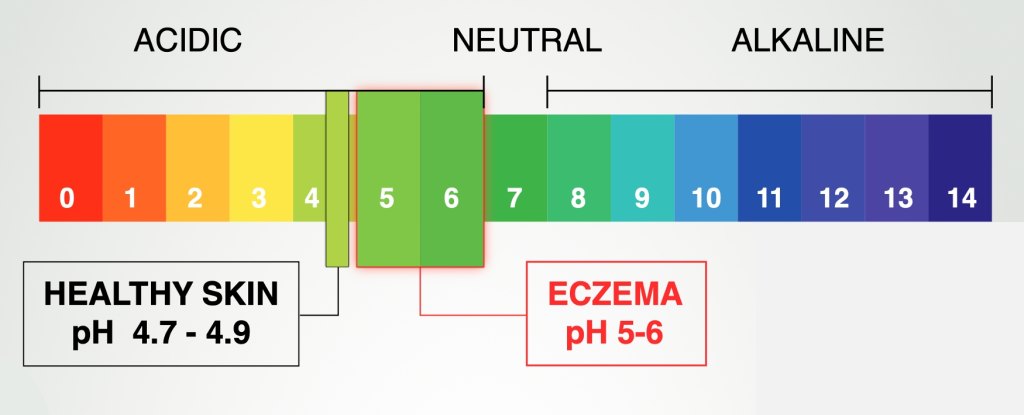
Higher pH levels can encourage the growth of harmful bacteria such as Staphylococcus aureus, a bacterium frequently associated with eczema flare-ups. At the same time, enzymes responsible for producing ceramides, lipids that help hold skin cells together, become less efficient. Without these lipids, the skin barrier weakens. Irritants and allergens penetrate more easily while moisture escapes from the skin, leading to dryness and inflammation. The result is a vicious cycle: barrier disruption leads to inflammation, which further damages the barrier. Elevated pH may also influence the nerve endings embedded in the skin, amplifying the signals that produce itching, the defining symptom of eczema.
For Dr. Rafal Pielak, a biomedical scientist with a PhD from Harvard Medical School, the question of skin pH became personal when his wife struggled with severe eczema for years. Despite visits to dermatologists and treatment with a range of medications, from prescription therapies to over-the-counter creams, the flare-ups repeatedly returned.
Frustrated by the lack of lasting solutions, Dr. Pielak began exploring the scientific literature on skin barrier biology and pH regulation.
What he found was surprising.
Many topical products commonly used for eczema were formulated at neutral or slightly alkaline pH levels, conditions that differ significantly from the skin’s naturally acidic environment. At the same time, many prescription treatments focus primarily on suppressing the immune response rather than addressing the underlying barrier dysfunction that contributes to flare-ups.
This led to a different question: what if restoring the skin’s natural acidity could help repair the barrier and strengthen its resilience against flare-ups?
While working at the Harvard Innovation Labs, Dr. Pielak began developing a formulation designed to help restore the skin’s optimal pH and stabilize it over time. His approach involved carefully selecting acidic compounds with the appropriate concentrations and molecular sizes, combined with buffering components intended to maintain the skin’s natural acidity for extended periods.
This work ultimately led to the development of a patented pH-correcting technology and the founding of Soteri Skin, a medical skincare company focused on supporting barrier repair through pH correction and control.
In a clinical study evaluating Soteri Skin Cream, patients with atopic dermatitis showed meaningful improvement over the four-week treatment period. Among the 10 participants with atopic dermatitis, 6 achieved complete symptomatic and visual improvement, as documented through clinical and dermoscopic photography as well as SCORAD and VAS assessments. These findings suggest that Soteri’s ceramide- and niacinamide-rich formulation may offer a beneficial, steroid-free option for managing chronic eczema conditions.
Interest in skin pH is growing among dermatologists, and Soteri Skin has observed that many experts now view acidity as an important factor in maintaining the skin’s ecosystem. When the skin becomes less acidic, several interconnected processes may be disrupted: bacteria may grow more readily, enzymes involved in barrier maintenance may not function as effectively and the skin may become more susceptible to irritation and itching. These observations have helped shape a broader understanding of how pH influences the skin’s overall environment.
Soteri Skin also points out that approaches aimed at supporting the skin’s natural acidity are increasingly seen as a promising area of innovation in eczema care. The company emphasizes that its moisturizing topical was specifically designed with pH correction in mind, with the goal of helping the skin return to and maintain a more optimal acidic state. This type of approach may be particularly appealing to individuals seeking non-steroidal, non-invasive options for managing eczema.
While moisturizers remain a cornerstone of eczema care, many dermatologists now believe that maintaining the skin’s optimal pH environment plays an important role in restoring barrier function.
As research into eczema continues to evolve, one idea is becoming increasingly clear: the health of the skin barrier depends not only on hydration, but also on the chemistry of the skin itself, specifically its pH.
Understanding and restoring that chemistry may offer a new, non-invasive, and non-steroidal path forward for millions of people living with eczema.


