The Enduring Bridge of Music: How Làng Văn Connects Generations Through Sound

Music doesn’t just bring in the present; it carries the essence of every generation before it. It is a memory wrapped in melody, an inheritance that moves through families and communities, reminding people where they come from and shaping how they see themselves. For diasporic communities, especially the Vietnamese, who are scattered across the world, music becomes more than sound. It becomes the ties that bind them to their home, a lifeline to culture, and a way to belong to something larger than themselves.
“Every generation has a distinct sound,” says Mimi Nguyễn, COO of Làng Văn, a Vietnamese-American cultural institution and music company. “When you listen to a song from the ‘70s or ‘80s, you not only hear the music. You hear how love, heartbreak, or longing was expressed in that moment in time. The choice of words, the instruments, the rhythms, they all tell a story of that era.”
Làng Văn’s catalog itself is intertwined with Vietnamese history. Much of its music emerged during political unrest, as hundreds of thousands fled Vietnam and rebuilt their lives abroad. The songs carried the longing of separation, the pain of exile, and the hope of return. “You can strip the sound and just read the lyrics,” Nguyễn explains. “They’re beautiful on their own because they capture what people went through, them missing their homes, their parents, their families. Music connected them then, and it still connects us now.”
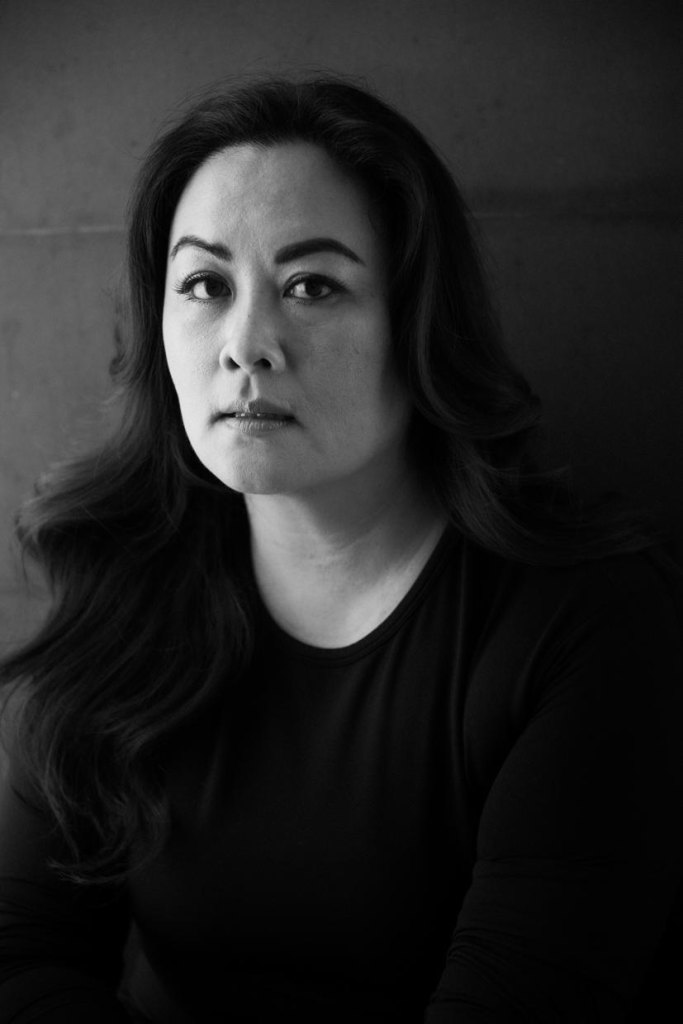
That connection remains vital for younger generations. Many Vietnamese Americans born decades after their parents fled may not speak the language fluently. However, they can experience the depth of their heritage through music. Nguyễn acknowledges this challenge, but also sees the opportunity.
“With today’s tools, it’s different. There’s a lot that’s possible now,” she says. “Translation technology has gotten so good. It doesn’t just translate word for word; it captures meaning, emotion, and connection. For the first time, even third-generation kids can experience these songs as they were meant to be felt.”
History, Nguyễn emphasizes, is not static. It inspires. And in music, history never really disappears. It just transforms. The rise of sampling and reinterpretation has been able to breathe new life into old sounds. “So much of today’s music is sampled from the past,” she says. “It’s reimagined, layered, remixed. When kids discover that the song they love comes from something written decades ago, they suddenly appreciate that history matters.” This cycle of borrowing, adapting, and reshaping ensures that music remains both timeless and alive.
Among Làng Văn’s most remarkable stories is that of child star Xuân Mai. Born in Vietnam, she moved to the U.S. and began singing before the age of two and, by five, had toured nationwide. Her father produced her records, and it was Làng Văn who partnered with them, later distributing her work worldwide, making her a household name. “She was one of the first Vietnamese artists to hit a billion views,” Nguyễn notes. “Her reach is proof that even the youngest voice can echo across decades.”
“She only had a career from about one and a half to five years old,” Nguyễn recalls. “But the impact, unbelievable. She’s 30 now, and her content has resonated with audiences for almost three decades. We are proud that Xuân Mai’s music has been a part of Làng Văn’s catalog through the years.”
Her influence has been impactful. To Nguyễn, the explanation is simple: “She spoke in a lingo kids understood. Maybe it was a secret connection she could form with the children through the music, but whatever it was, they got it.”
The interplay between memory and reinvention, tradition and technology, is at the heart of Làng Văn’s mission. The company’s foundation is built on preserving and celebrating the past, while ensuring it speaks to the present. Gen Z listeners, with their affinity for remixes and hybrid sounds, are already engaging with Vietnamese music in new ways, carrying the cultural thread forward in their own language.
For Nguyễn, this continuity is the real story. “Music connects us to our roots, but it also connects us to each other,” she says. “It reminds us that history inspires, and that even as time passes, the emotions remain the same.”
Ultimately, music shows that heritage is not something that fades with time. It adapts, reemerges, and finds new relevance. A ballad from the 1970s can become a lo-fi track on a Gen Z playlist. A children’s song from thirty years ago can soothe newborns today.
In a world where identity can feel fragmented, music remains whole. It is the bridge between generations, a shared archive of sound and sentiment. And through the work of Làng Văn, that bridge continues to expand, carrying with it the voices of those who came before, and the promise of those yet to come.
Woman's World partners with external contributors. All contributor content is reviewed by the Woman's World editorial staff.


