The Best Sci-Fi Books of 2026 Coming This Fall: John Scalzi’s ‘Cozy Cronenberg’ Monster Novel and 7 More Picks
Aliens, cyberpunk and fractured realities await in new books from Emily St. John Mandel and more

Key Takeaways
- John Scalzi returns with the wonderfully weird 'Monsters of Ohio.'
- James Islington makes his sci-fi debut with cyberpunk thriller 'Scion.'
- New fall releases explore aliens, alternate realities and generation ships.
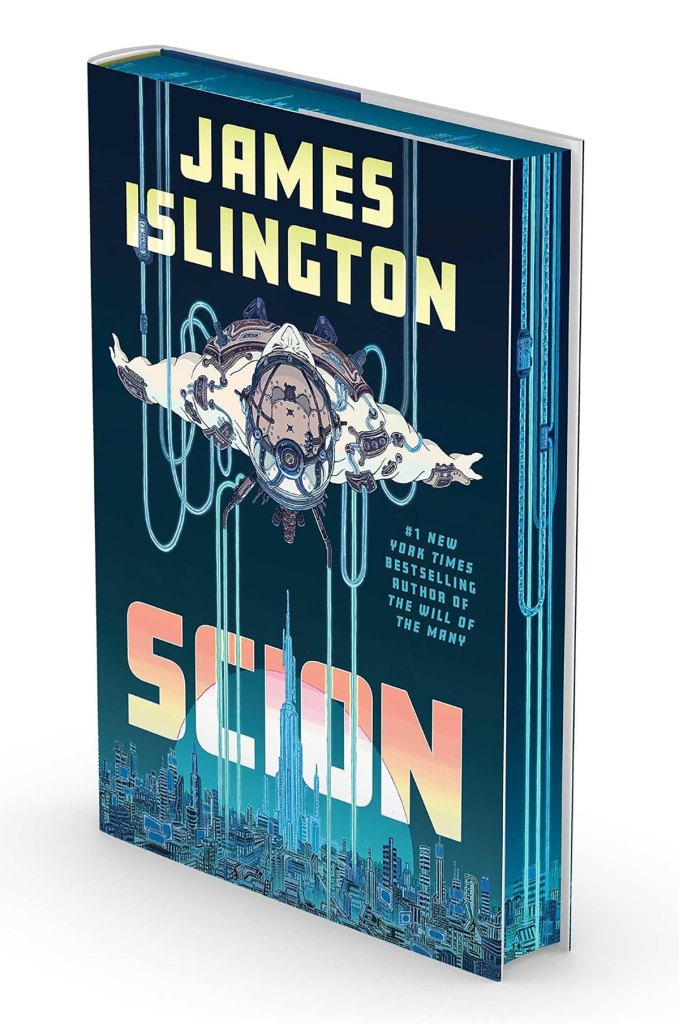
‘Scion’ (September 1, 2026)
Author: James Islington
Publisher: Saga Press
What it’s about: After the massive fantasy success of The Will of the Many and The Strength of the Few, James Islington is doing something very different: his first science-fiction novel.
Scion launches a cyberpunk series set in a future where the ultrawealthy have figured out how to extend their lives indefinitely. Society’s rather drastic solution is to make killing these “lifers” legal under certain circumstances, and the novel’s cybernetically enhanced protagonist, Azure, happens to be particularly good at the job thanks to his genetic compatibility.
Islington’s publisher describes the result as a fast-paced cyberpunk thriller involving assassins, immortality, organized crime and potentially world-changing technology. Islington has sold more than two million books, while his Hierarchy series has turned him into one of fantasy’s hottest current authors, making his jump into science fiction one of the more commercially interesting releases on this list.

James Islington says: “Scion started life as a short side project that I began in my downtime while waiting for edits – just a fun break from the often more serious tone of Hierarchy – but one that I enjoyed writing so much, I ended up expanding on and finishing during my holidays. It’s now the first in a planned series, and follows a genetically enhanced assassin as they start working for an unusual client.”
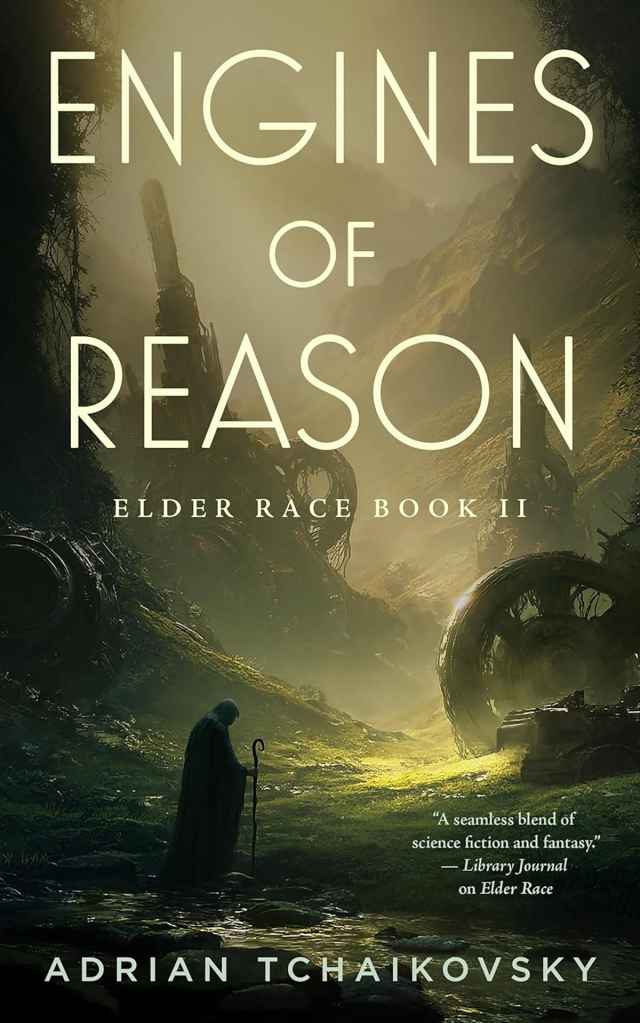
‘Engines of Reason’ (September 1, 2026)
Author: Adrian Tchaikovsky
Publisher: Tordotcom
What it’s about: Adrian Tchaikovsky returns to the unusual science-fiction/fantasy collision he created in his Hugo-nominated Elder Race. The original story played with a wonderfully simple idea: what looks like magic to one civilization may simply be sufficiently advanced technology to another. Engines of Reason returns to that world, where stories and myths have become intertwined with identity and the distinction between science and magic depends largely on who’s doing the observing. This time a fallen princess, reluctant wizard and precocious child are thrown together as they attempt to understand their world’s past and determine its future, with ancient myths and competing perceptions of reality complicating matters.
Tchaikovsky also gives us considerable name recognition. He’s the Arthur C. Clarke Award-winning author of Children of Time, and Tor is explicitly positioning this as the highly anticipated sequel to Elder Race.
Adrian Tchaikovsky says: “Elder Race and Engines Of Reason are a weird fit, genre-wise. From one protagonist’s point of view they’re hard sci-fi, where a scientist is studying a post-tech extrasolar colony that’s been developing in isolation for centuries. From the other it’s a fantasy quest narrative where the heroine recruits a wizard to fight a demon. Both are right; that was the challenge I wanted to address, that neither point of view ends up dominant.”
“Engines Of Reason shows Nyr and Lynesse after quite a few years, somewhat estranged from one another after a falling out, with the kingdom threatened by a new ‘sorcerer’: someone who’s unearthed and revived some of the old technology used by the original colonists. Except that, as Nyr and Lyn enact their separate investigations, what’s going on might be much worse.”
‘Exit Party’ (September 15, 2026)

Author: Emily St. John Mandel
Publisher: Knopf
What it’s about: The author of Station Eleven and Sea of Tranquility returns to speculative fiction with a novel involving doubles, shadow worlds and fractured timelines. It begins at a glamorous Los Angeles party where a man disappears. Searching for answers is a woman who appears in different circumstances—as a gunrunner, an art collector and an operative of the State—as Mandel gradually plays with different versions of reality and identity.
The novel returns Mandel to some of the territory that has made her such an interesting crossover between literary and science fiction. Station Eleven imagined civilization following a catastrophic pandemic, while Sea of Tranquility moved between centuries, Earth and a lunar colony. That history makes Exit Party one of the few books on our list capable of reaching well beyond the traditional SF readership.
Emily St. John Mandel says: “Exit Party is a speculative novel, because it’s set in the future, and it has both utopian and dystopian elements. But it’s also literary fiction, by which I mean that there’s an emphasis on prose style and character development, and it’s also sci-fi, because it employs a fictional futuristic technology. One could make a case that the book’s also a mystery. I wouldn’t particularly want to wade into a debate between Atwood and Le Guin, but the broader point I’d like to make is that just as a person can be more than one thing—I’m a novelist, a screenwriter, a parent, a wife, a runner, a very mediocre pianist, etc.—so too can a book.”
“I’m interested in the way art travels through time and means different things to different people. I wanted to write about a painting specifically, because paintings are static and can pass easily from hand to hand over the passage of years. Three characters in this novel love the same painting for different reasons. So that’s the artistic reason for the painting’s existence in Exit Party, but there’s also a technical reason: I find that in a very complicated novel—one with multiple timelines, a lot of characters, multiple points of view, etc.—it can be helpful to have an object or two that travels through the narrative. It helps pull the whole thing together.”
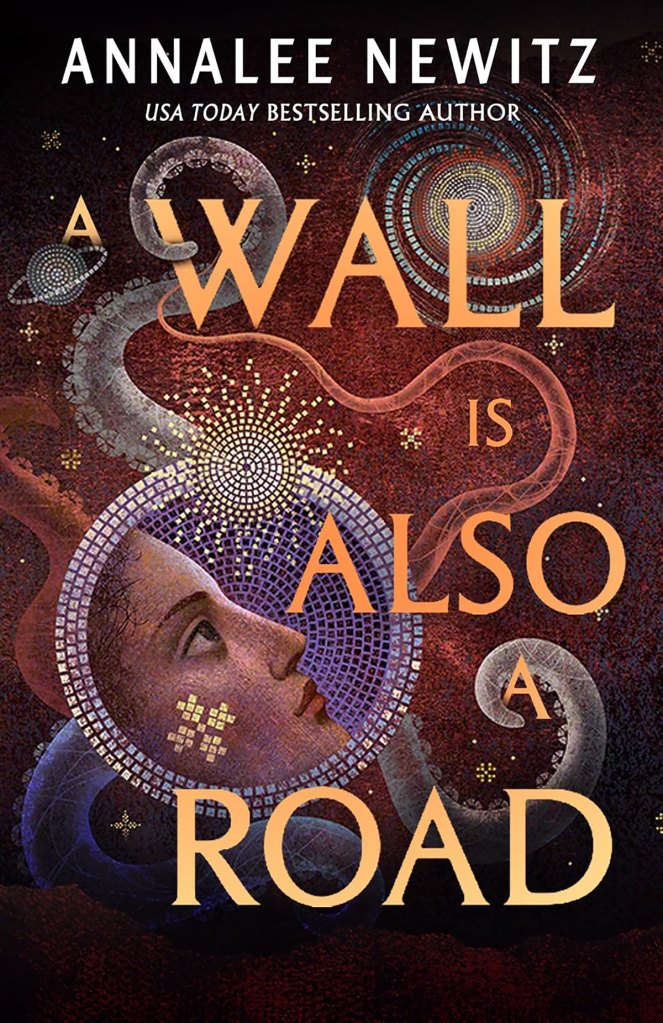
‘A Wall Is Also a Road’ (October 6, 2026)
Author: Annalee Newitz
Publisher: Tor Books
What it’s about: What if humans weren’t the ones making first contact? Annalee Newitz turns the traditional alien-contact story on its head by introducing Gardenpath, a biology graduate student from an ancient civilization that exists in the spaces between the stars. Gardenpath is also an amoeba—or, more specifically, a slime mold—with many eyes and an academic problem familiar to graduate students throughout the universe: they need to distinguish themselves by discovering something genuinely new.
That search takes Gardenpath to a remote planet that other researchers have dismissed as essentially dead. Instead, they discover a complicated ecosystem populated by multicellular creatures capable of language and culture. One of them is Murtis, who lives in a seaside city called Pompeii and works at a brothel known as the lupanar. Murtis takes the strange visitor from the stars under her wing, and Gardenpath gradually begins questioning whether academic achievement is really all there is to life.
The twist, of course, is that the mysterious planet Gardenpath is studying is Earth, making humanity the strange alien species in this first-contact story. Tor positions the novel for readers of Becky Chambers and Martha Wells, with science, love and the meaning of life at the center of the story.
Eventbrite says: “A Wall Is Also a Road is a story about what happens when the alien becomes familiar–and beloved. Gardenpath expected to finish their research, present their discovery, and take their place among the decorated scholars of the floating cities. But when they look at their wild new friend Murtis’ sensor bulb, attached to a bizarre electro-chemical control system, they begin to realize there’s more to life than academic achievement. They’re not sure what it is, but they’re going to use science to find out.”
‘Code and Codex’ (October 27, 2026)

Author: Yoon Ha Lee
Publisher: Saga Press
What it’s about: Ninefox Gambit author Yoon Ha Lee returns to adult science fiction with a new space opera built around a wonderfully SF idea: language itself can alter reality. The Censorate has outlawed every language except its own lingua rubra, which possesses reality-changing properties. Other languages aren’t simply discouraged—they’re systematically erased.
At the center of the story is Valentina, who was sold as a child to the family of Aurelia, the Censorate’s ruler. Valentina’s job involves extracting useful information from forbidden texts before destroying them and the languages they represent. Things become more complicated when Aurelia seeks control over an ancient prisoner known as the Basilisk, whose gaze once destroyed an entire fleet through camera feeds—and who has deliberately given himself a form of aphasia that makes him immune to her linguistic commands.
Lee is a three-time Hugo Award finalist, while Ninefox Gambit won the Locus Award for Best First Novel.
‘Monsters of Ohio’ (November 3, 2026)
Author: John Scalzi
Publisher: Tor Books
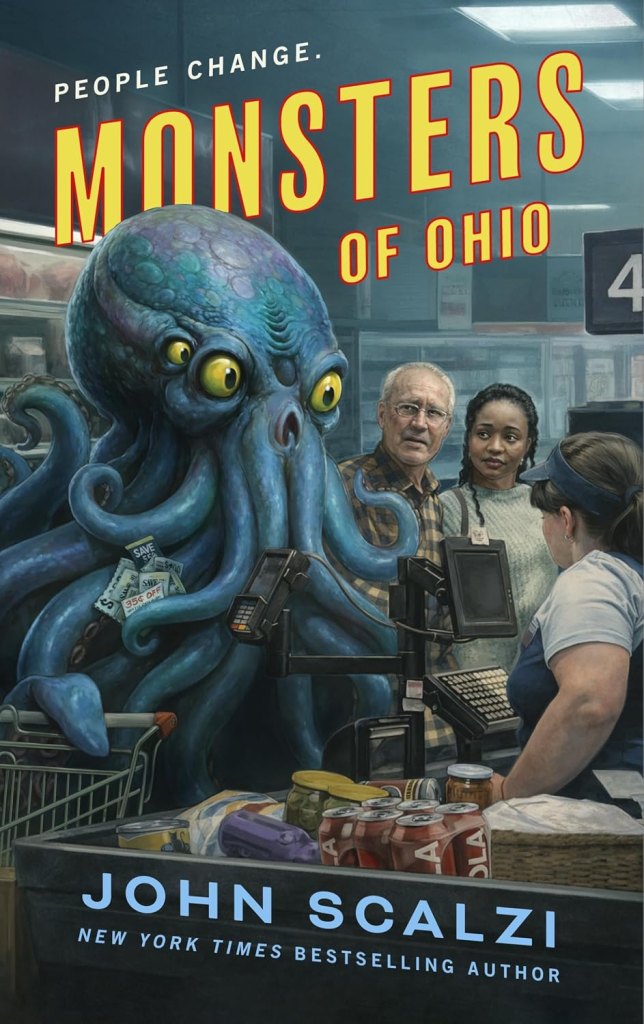
What it’s about: Things aren’t going particularly well in Richland, Ohio. The town’s biggest employer is shutting down, the local economy is teetering and Mike Boyd has returned after decades away without any intention of sticking around. Then things get weird.
Mike, his old friend Dave and newcomer Andi find themselves caught up in everything from private equity and executive theft to something decidedly abnormal involving a prize cow. Tor rather wonderfully describes the novel as a “tentacular solution to the struggles of the modern world,” while early comparisons have ranged from The Twilight Zone to John Carpenter’s The Thing.
John Scalzi says: “How would I describe it? Two words: ‘Cozy Cronenberg.’ What’s it about? Well, if the title is to be trusted, it’s about monsters! In Ohio!”
‘There Used to Be People Here’ (November 3, 2026)
Author: Kennedy Cole
Publisher: Berkley
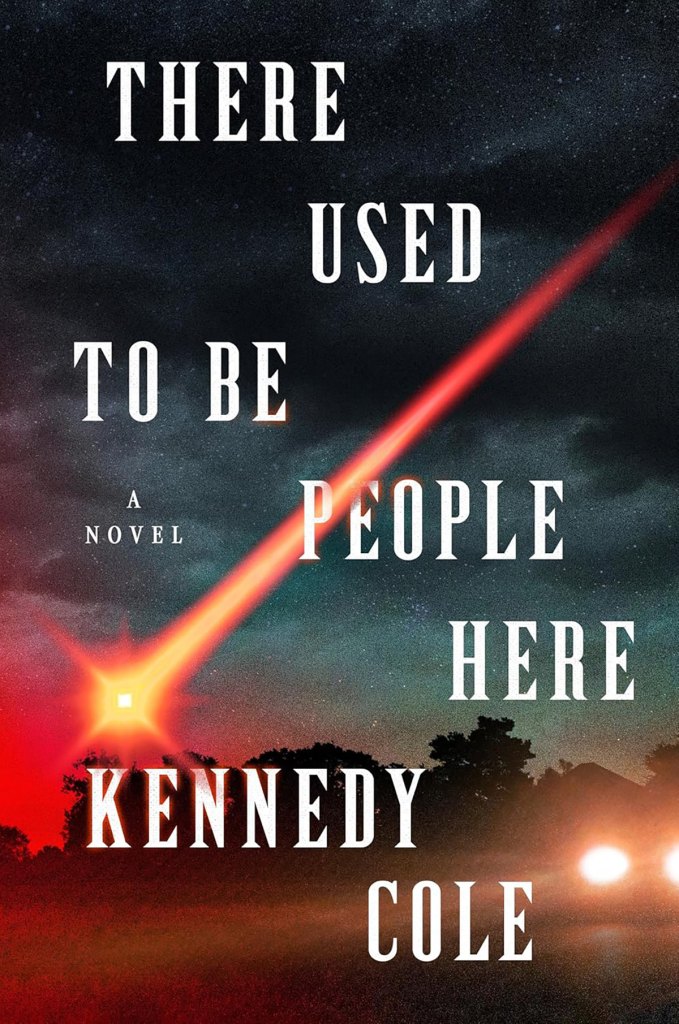
What it’s about: Think The X-Files by way of a 1970s Southern murder mystery, and you’ve got some idea of where Kennedy Cole is heading with her debut novel. In Wenton, Mississippi, a man enters the bathroom of a local gay bar—and never comes back out. He’s subsequently discovered dead on the floor, facing a wall, with no obvious explanation for what happened to him.
Samuel Barkley, the town’s only Black detective, is assigned to investigate. While he would prefer to keep his head down and advance through the department without attracting too much attention—something that’s already difficult in 1970s Mississippi—he’s also saddled with Harvey, a temporary partner he’s not quite sure what to make of. Whatever crashed in Wenton wasn’t an airplane—and Samuel soon discovers that there are otherworldly visitors in Mississippi who have no intention of leaving.
Cole mixes first contact, murder mystery, conspiracy thriller and historical fiction while using the arrival of literal aliens to explore the way society treats people it already considers outsiders. Berkley itself invokes The X-Files and crime novelist S.A. Cosby in describing the book, while Publishers Weekly singled it out in its fall SF/fantasy/horror preview as a “historical first-contact mystery.”
Thestorygraph.com says: “Kennedy Cole’s debut paranormal thriller is a fast-paced ride through 1970s Alabama and all the socioeconomic realities of that time of place to boot. While the plot hits beats that are familiar to fans of stories like The X-Files, Invasion of the Body Snatchers, and Jordan Peele movies, the book is best when exploring the broken emotions of its main character, Samuel, and his growth from a desire to be invisible to living life more fully.”
‘Line of Descent’ (November 17, 2026)
Author: Adam Oyebanji
Publisher: DAW
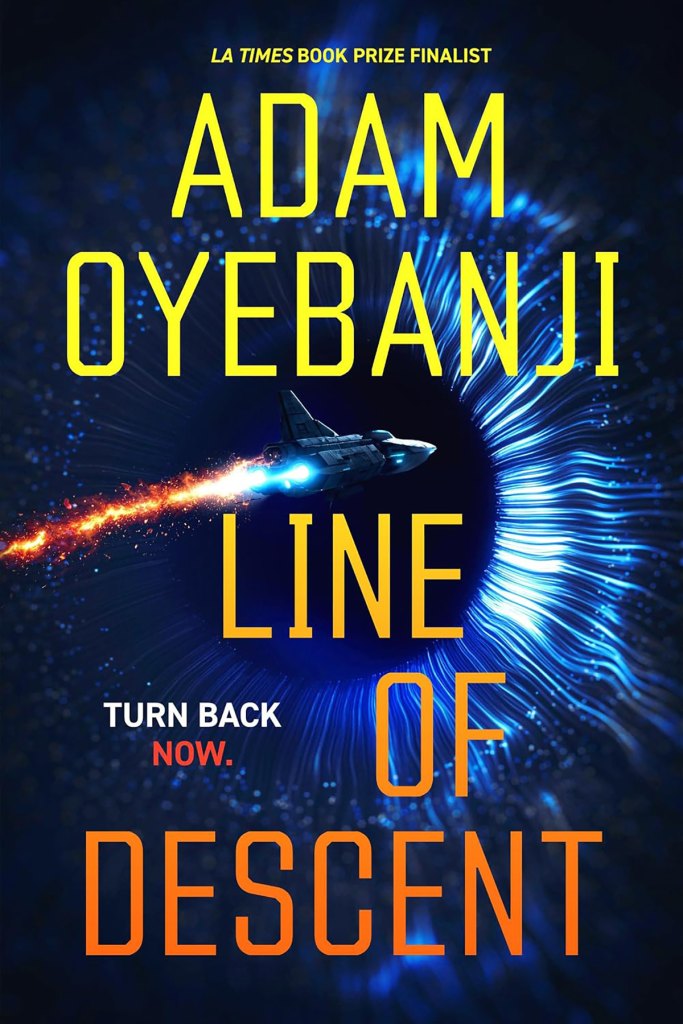
What it’s about: More than a century into its voyage toward Tau Ceti, the generation ship Archimedes has become home to the fifth generation of humans born aboard it. Maintaining order is essential—which makes it particularly strange when a junior officer claims to have been kidnapped outside a shipboard bar and returned 24 hours later with no memory of what happened.

Officer Faisal Vasconcelos initially suspects alcohol rather than abduction, but his investigation leads into shipboard politics, terrorism and murder, including a body discovered drowned in an artificial womb. Meanwhile, some factions aboard Archimedes want to abandon the mission entirely and turn the ship around.
It’s essentially a locked-room mystery in which the “room” happens to be an enormous spacecraft hurtling toward another star. DAW is positioning it for readers of Andy Weir and Blake Crouch, and Publishers Weekly selected it as a top fall release.
Adam Oyebanji says: “What I’ve written is political sci-fi set aboard a generation ship in deep space, with a mix of terrorism, power plays, and a murder, the latter forming the lens through which the rest of the story is told. As some of you may have figured out, I have a thing for generation ships. There are a couple of reasons for this. First and foremost, I just think they’re cool—at least when they’re city-sized like mine. It’s like writing a story set in London or New York, except with noir corridors, family-driven politics, and the occasional absence of gravity.”
“Secondly, though, I can’t quite shake myself of the (possibly retro) view that science fiction should, at some level, be about science. That it should offer a glimpse of a plausible future. A future plausible enough, perhaps, to encourage a younger reader somewhere to grow to adulthood and make it happen. Which brings me to this: space travel is hard. Right now, we are struggling to land humans on the moon. Genuine interplanetary flight, to Mars and beyond, is at least ten times harder. As for interstellar travel, I shudder to think how many zeroes one would have to add to the ten to encompass the level of progress needed to do that. We can presently get to the moon in about three days and hope to reach Mars in roughly a year. The nearest star? Many thousands of years. In every sense of the words, we have a long way to go. In SF, though, we mostly ignore this with our warp drives, dimension hopping, and star gates. Alpha Centauri? Poof! Easy as pie. Let the story begin. And let’s face it, the stories are great!”
Conversation
All comments are subject to our Community Guidelines. Woman's World does not endorse the opinions and views shared by our readers in our comment sections. Our comments section is a place where readers can engage in healthy, productive, lively, and respectful discussions. Offensive language, hate speech, personal attacks, and/or defamatory statements are not permitted. Advertising or spam is also prohibited.