Why 3 of the Best Sci-Fi TV Shows Are Suddenly on Hold: ‘Star Trek,’ ‘Doctor Who’ and ‘Stargate’
Three iconic franchises are in limbo as rising costs and shifting priorities reshape sci-fi TV

Key Takeaways
- Even the best sci-fi TV shows are facing major streaming-era challenges.
- Rising budgets and shifting studio priorities are reshaping sci-fi.
- 'Star Trek,' 'Doctor Who' and 'Stargate' have survived long gaps before.
Three of the best sci-fi TV shows or franchises—Star Trek, Doctor Who and Stargate—all find themselves in remarkably similar positions right now: on hold. Star Trek has slowed after years of aggressive expansion across Paramount+, Doctor Who is being reassessed following its recent Disney+ era and Stargate, after finally appearing poised for a comeback, has once again been put on hold. Different studios and circumstances, but the same strange reality: all three are in limbo at the same time.
There was, of course, a time when fans of Star Trek waited a decade to see Captain Kirk and the Enterprise return after the original series ended in 1969. That wait finally ended with the arrival of Star Trek: The Motion Picture in 1979.
Fans of Doctor Who endured an even longer drought. After the show’s cancellation in 1989, the franchise entered what became known as the Wilderness Years, with only the 1996 TV movie starring Paul McGann keeping the flame alive before the series returned full-time in 2005.
And then there’s Stargate. It has now been 15 years since Stargate Universe ended, with fans recently riding an emotional roller coaster after Amazon MGM appeared ready to revive the franchise (going so far as to hire writers, producers and other behind-the-scenes personnel)—only to abruptly shelve those plans.
So while sci-fi fans understand patience better than anyone, it nonetheless feels strange that three of the genre’s most enduring franchises are all effectively in holding patterns at the same time. Admittedly, the circumstances are different in each case.

Star Trek has spent the last several years flooding the zone with series ranging from Discovery to Picard and Strange New Worlds, only to now find itself in a period of uncertainty as Paramount recalibrates. Doctor Who is being reassessed by the BBC after its recent Disney+ era failed to generate the momentum many hoped for and they’re looking for new production partners. And Stargate, after finally appearing poised for a comeback, is back on the shelf.
Why is this happening?
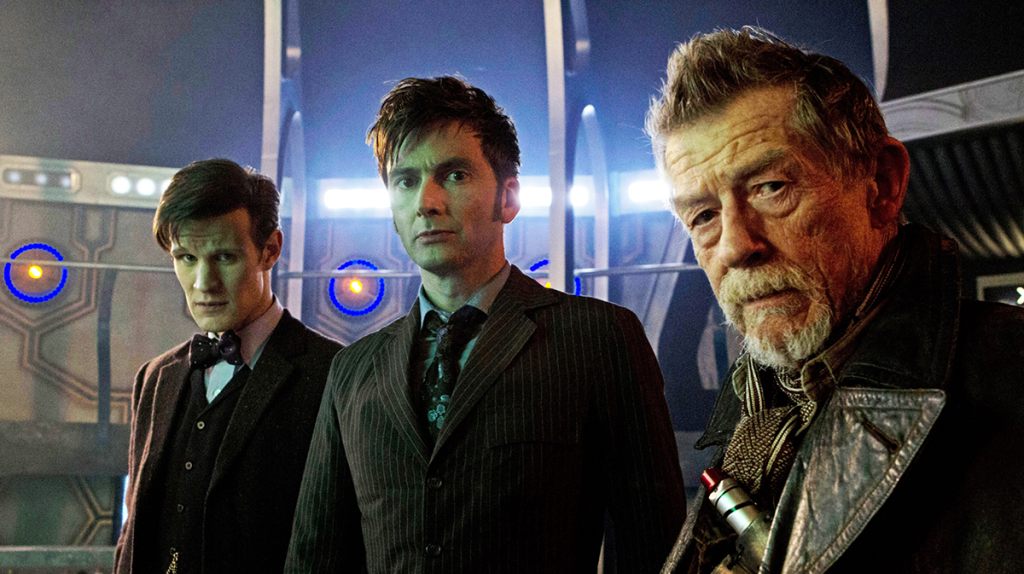
So, what’s going on? Part of the answer may be as simple as this: making science fiction has never been more expensive. Doctor Who historian Richard D. Carrier believes the economics of modern television have fundamentally changed. “Things are more expensive now anyway,” he notes, “and the standard of television that people demand since the streaming era has come in, building off the ’90s and early 2000s—The Sopranos, where television became a cinematic medium in a way. That’s the expectation, especially for a science fantasy show.”
That shift has changed the rules for franchises that once thrived on imagination as much as spectacle. “Some of the best Doctor Who stories, even in the modern era, have been the cheapest ones,” he adds. “Sometimes the necessity to do something under certain constraints actually forces you to be creative.”

That idea applies far beyond Doctor Who. Whether it’s the original Star Trek, classic Doctor Who or early Stargate, these franchises were never built solely on visual effects and high production values. They were built on ideas, characters and worlds that invited audiences in. But today, the studios aren’t just looking for loyal fans. They want global hits—a pressure that changes everything.
If Doctor Who illustrates the growing cost of producing prestige science fiction, Stargate may be the clearest example of just how volatile the business side has become. After 15 years off the air, the franchise finally appeared ready to return. Better still, the revival was reportedly being developed by writer and producer Martin Gero with support from Amazon MGM—exactly the kind of scenario longtime fans had hoped for. Then it all fell apart.
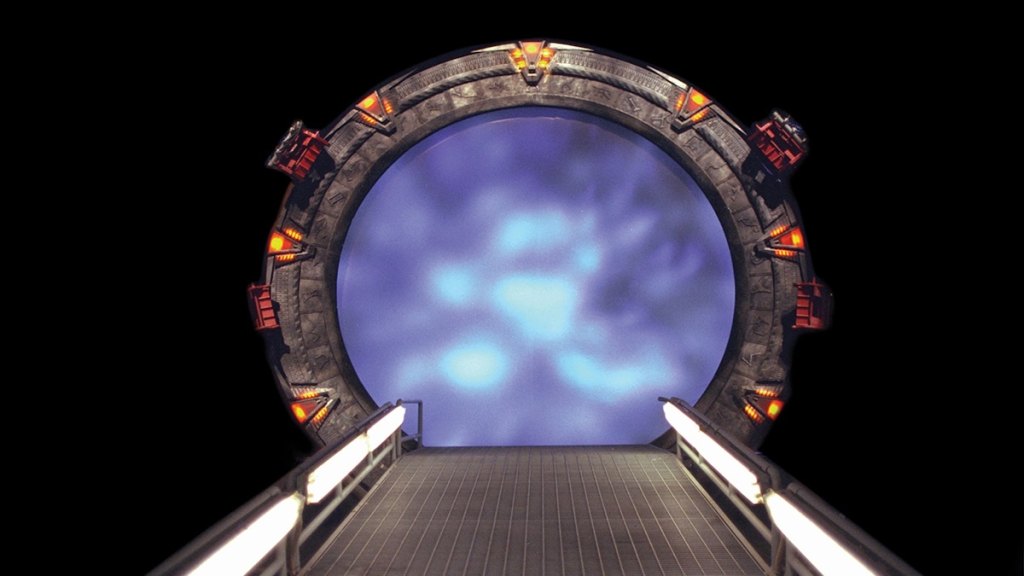
For Darren Sumner, co-founder of Gateworld.net and one of the most plugged-in voices in the Stargate community, the reversal was stunning. “Completely out of left field,” he says, his voice still laced with disbelief. “We had had conversations with Martin Gero after the announcement. We had him on a livestream in December and again in March, just basking in his enthusiasm and, to a degree, his confidence.”
What made the situation especially frustrating for fans wasn’t simply that the show was canceled, but how far the revival had progressed. “After 15 years of waiting, we finally get this news that the franchise is being revived—not just revived, but revived by some of the original creators with a good healthy-size budget to be a prestige streaming series. And then it was a giant rug pull. For fandom, it felt like a giant rug pull.”
According to Sumner, the creative vision itself wasn’t what changed behind the scenes: “Martin was working on this show for a year and a half before it was announced. So two years finally in the end. The show didn’t change. The pitch didn’t change. Martin didn’t change. What changed was the strategy inside the studio because the executives changed.”
Misreading the audience?

That gets to the heart of what may be happening not just with Stargate, but across modern franchise television. Rather than stalling because nobody wants them, it’s more because the studios are recalculating what kind of returns they expect from them. And, in truth, expectations in the streaming era have become enormous. Even Sumner acknowledges that Stargate couldn’t simply return as a niche fan favorite.
“We’ve always known that for Stargate to be revived this many years later, with the attrition that happens in any fan base over the course of the years that it’s off the air, it had to appeal to a wider audience,” he says. ““If it doesn’t reach more people, if it doesn’t bring in new viewers, then what you have is a one-season show that gets canceled.”

He also points out that the current situation likely has more to do with what studios are doing with these franchises as opposed to it being a reflection of audience interest or lack thereof. “You look at what’s been happening with major franchises like Star Trek and Star Wars and Doctor Who and other science fiction and fantasy properties,” Sumner muses. “The newer shows and films certainly have their audience. They’ve found viewers, but apparently it’s not enough for whatever studio is producing those projects. It feels like they’re deciding that the problem is the audience—that the audience just isn’t into this right now, when, in fact, my opinion is that the problem is, by and large, with the content. It’s with what the studios are choosing to do with these IPs and what the creatives are writing.”
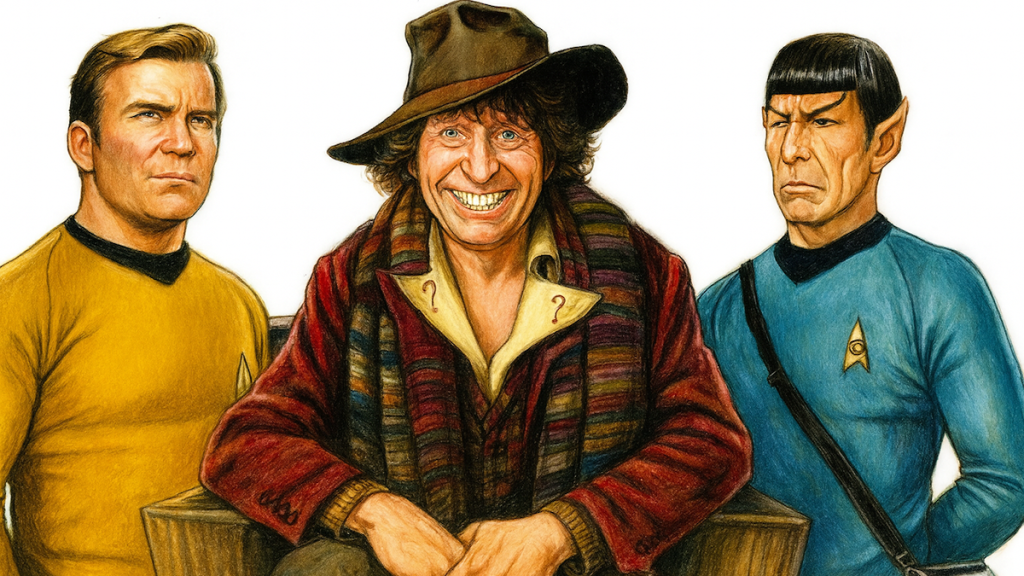
That may be a sharp assessment, but it’s hard to ignore, because this isn’t happening in a vacuum. Carrier sees a similar issue with Doctor Who, arguing that one of the franchise’s recent struggles has been an over-reliance on familiar formulas.
“I think there wasn’t enough of an opportunity taken to refresh,” he offers. “They relied a bit too much on that fan-service kind of approach. It starts to eat its own tail a little bit when you get too self-referential and too conscious of the fandom and giving what you think fans want. What they want is something new.”
That’s the balancing act every legacy franchise is wrestling with right now, preserving what longtime fans love while finding a way to evolve. “In a way,” suggests Carrier, “I think the pause is probably a good thing. Rather than rushing something out to tick a box, I’d rather they take some time and actually develop something new.”
Carrier sees these pauses less as warning signs and more as opportunities to reset and he points to Star Trek as proof that a long absence doesn’t necessarily mean the end: “Star Trek had to go away and come back again and be successful.”


That’s true not only of Star Trek, but of Doctor Who as well. After all, few people in 1989 could have predicted the franchise would return in 2005 bigger and more culturally relevant than it had been in years. Even Stargate, despite the recent disappointment, hardly feels finished.
“People are still discovering Stargate on streaming, including on Amazon’s own Prime Video service,” Sumner points out. “It’s a timeless show because of the adventure, the camaraderie of the team and the humor. It’s classic science fiction storytelling.”
History suggests none of these franchises are finished. Star Trek and Doctor Who have been here before, and now Stargate finds itself in a similar position. For fans, that means doing what they’ve always done: waiting. The problem, of course, is that waiting has never been easy. Carrier smiles, “People aren’t very patient with these things, are they?”
Conversation
All comments are subject to our Community Guidelines. Woman's World does not endorse the opinions and views shared by our readers in our comment sections. Our comments section is a place where readers can engage in healthy, productive, lively, and respectful discussions. Offensive language, hate speech, personal attacks, and/or defamatory statements are not permitted. Advertising or spam is also prohibited.