The Lost ‘Star Trek: Legacy’: Why Fans Still Want the Unmade ‘Picard’ Sequel Series
How 'Picard' Season 3 set up 'Legacy'—and why fans still hope Captain Seven gets her own series

Key Takeaways
- 'Picard' Season 3 felt like the launchpad for 'Star Trek: Legacy.'
- Showrunner Terry Matalas had real plans for Captain Seven and the Enterprise-G.
- Comics may be the closest fans get to 'Star Trek: Legacy' for now.
When the third season of Star Trek: Picard wrapped in 2023, it left fans with something unusual: the feeling that they hadn’t just watched an ending, but the beginning of an entirely new chapter. The USS Titan had been rechristened the Enterprise-G, Seven of Nine was now sitting in the captain’s chair, Jack Crusher had joined Starfleet and a new generation of familiar names—including the La Forge daughters—had quietly taken their places on the board.
And that assumption wasn’t coming out of nowhere. For years, Star Trek fans had been waiting for the franchise to stop circling the same familiar territory and move decisively forward. While recent series had explored prequels, alternate timelines and origin stories, Picard Season 3 seemed to offer something different: a genuine continuation of the 24th-century timeline. Not a return to Kirk’s era, not another look backward, but a chance to finally see what came next.
Even longtime Trek novelist Dayton Ward saw that possibility immediately. Speaking exclusively with Woman’s World recently about his latest book, Picard: To Defy Fate, Ward suggests that Season 3 of the series “scratched an itch that had been festering for a while,” largely because it gave fans of Star Trek: The Next Generation something they had never fully received after 2002’s Star Trek: Nemesis—closure. At the same time, though, it also opened a door. As Ward put it, “I want them to push forward. What’s in the 25th century? Go six weeks after the last TV show, Picard, and you’re in fertile ground that’s not been explored yet.”
Reddit users have their say
Not surprisingly, fan reaction to the idea of Star Trek: Legacy has been passionate—but far from unanimous. For supporters, the appeal is obvious: Picard Season 3 seemed to hand Star Trek a ready-made path forward. More than anything, these fans, sounding off on Reddit, see Legacy as a chance to return to the kind of storytelling they feel has always defined Star Trek at its best: exploration, discovery and character-driven adventures. As one user put it, “A ship full of people good at their jobs seeking out new worlds and new civilizations? Sounds like Star Trek to me.”
At the same time, critics of the concept have raised concerns that go well beyond simple skepticism. Some worry Legacy leans too heavily on nostalgia, relying on well-known characters and familiar bloodlines rather than building something truly new. Others point to the practical realities of modern television, noting that enthusiasm alone doesn’t guarantee a green light. Streaming budgets are tightening, corporate restructuring has complicated decision-making at Paramount and executives ultimately have to decide whether fan passion translates into enough viewers to justify the cost. Even among those who like the basic idea, there’s a common belief that the show would only succeed if it could stand on its own. Strong writing, a clear premise and a willingness to move beyond fan service would be essential.
The proposed series was never officially announced by Paramount, but in the months after Picard ended, the excitement around it felt very real. Fans weren’t simply speculating about whether a new show might happen; many were already imagining what it would look like.
The showrunner speaks out
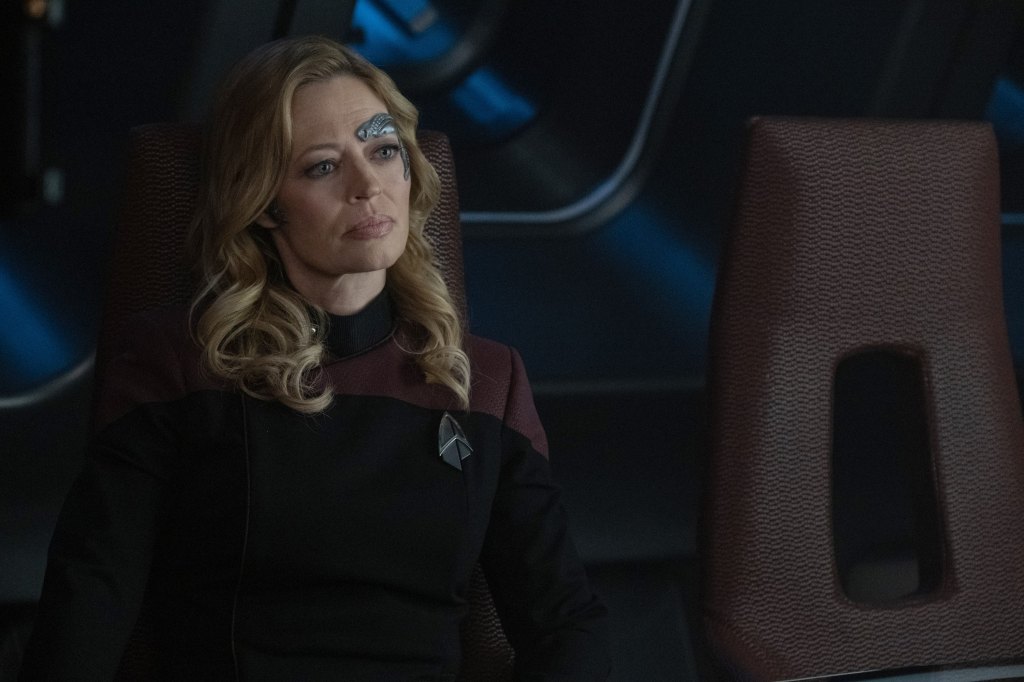
Picard showrunner Terry Matalas has only fueled that belief, openly admitting that he had ideas for where this story could go and that they went far beyond vague wishful thinking. “There was a moment in which I was pretty inspired,” he said. “I just sort of spit out 30 pages over a couple of weeks… I knew what the first 20 minutes of it was.” He also revealed he knew Seven’s eventual captain’s catchphrase and had already mapped out when audiences would hear it—though not right away. “You wouldn’t find out in the pilot, let’s just say.”
What makes those comments so interesting is that they suggest Legacy wasn’t envisioned as a simple nostalgia machine built around familiar faces. Matalas hinted that the Klingon Empire would play a major role in the series, signaling a larger political and exploratory story. Even his plan for the return of Captain Liam Shaw (Todd Stashwick) reflected a character-driven sensibility rather than pure fan service. Shaw wasn’t going to be resurrected through some convenient sci-fi twist; instead, Matalas imagined him returning as the Emergency Engineering Hologram, still bitter that the Titan had been renamed Enterprise and stubbornly refusing to call it by its new name.
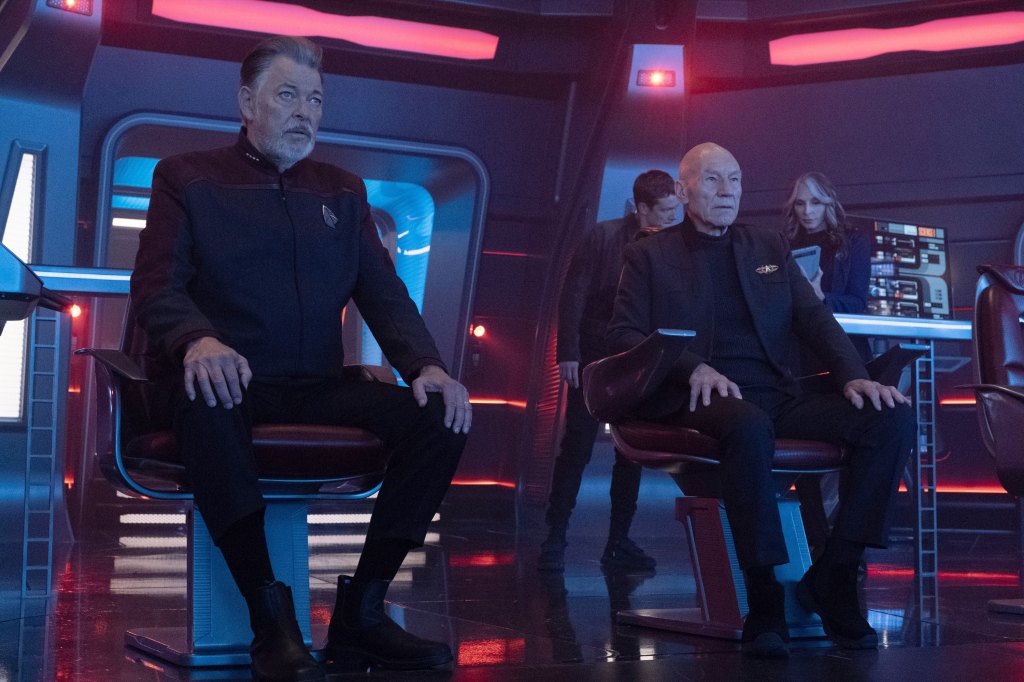
Jonathan Frakes (frequent Trek director and actor behind Will Riker) clearly saw the same roadmap. In discussing the potential series, he talked openly about how the baton might be passed to a new generation while legacy characters remained part of the world. “It feels to me like there’s a real opportunity for three of the legacy characters’ children to carry on and sort of be the next Star Trek: The Next Generation,” he observed. “It just feels like it’s laid out there. It’s the blueprint for the next phase.”
Though that would naturally depend on what the next phase will be, as the future of Star Trek feels more uncertain than it has in years. With production on television series coming to a halt (for the first time since the 2017 debut of Star Trek: Discovery) and a movie in some vague form of development, coupled with the industry becoming increasingly cautious with franchise spending, the landscape has shifted dramatically. Star Trek isn’t alone in that. Franchises like Stargate (which was gearing up for a reboot… until it wasn’t) and Doctor Who are facing similar uncertainty as studios reassess long-term strategies in an increasingly unstable streaming environment.
‘Star Trek: Legacy’ pushes forward… in a way
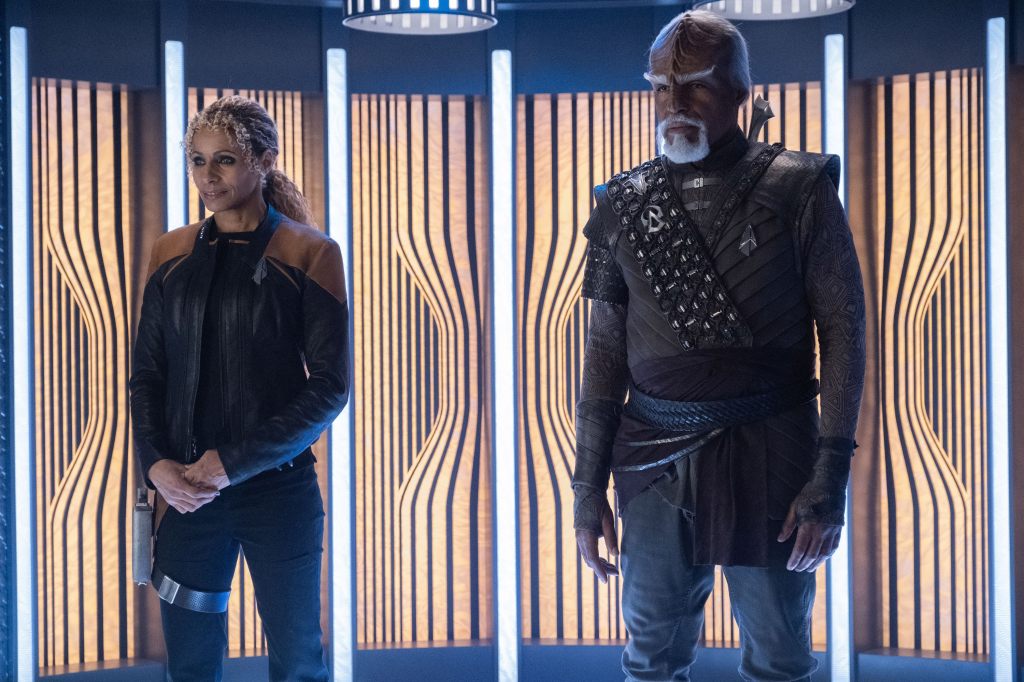

Still, Legacy hasn’t vanished. If anything, it may simply be evolving into other forms, a possibility becoming even clearer when IDW Publishing announced new Star Trek comics centered on Captain Seven and the Enterprise-G, alongside a companion title focused on Raffi Musiker. While neither book carries the Legacy name, the similarities are impossible to miss, so these comics are the closest thing fans currently have to the series they hoped would materialize on television.
And perhaps that’s fitting. Star Trek has always had a way of refusing to let good ideas disappear completely. Concepts from Phase II eventually found their way into films, novels and future series—the franchise has a long history of shelving ideas, reshaping them and bringing them back when the time is right.
That’s one reason Ward remains optimistic. “We’ve been here before,” he said. “Star Trek fans in particular are pretty good about that—keeping the fires burning while we wait.”
Conversation
All comments are subject to our Community Guidelines. Woman's World does not endorse the opinions and views shared by our readers in our comment sections. Our comments section is a place where readers can engage in healthy, productive, lively, and respectful discussions. Offensive language, hate speech, personal attacks, and/or defamatory statements are not permitted. Advertising or spam is also prohibited.