The Surprising Link Between Gene Roddenberry’s ‘Andromeda,’ ‘Star Trek’ and His Other Sci-Fi Worlds
Gene Roddenberry’s sci-fi worlds shared 1 recurring idea: humanity must build—and rebuild—the future

Key Takeaways
- Gene Roddenberry revisited the same core ideas throughout his career.
- Dylan Hunt became one of Roddenberry’s most important recurring heroes.
- Even Gene Roddenberry’s optimistic view of the future came with warnings.
When people think of Gene Roddenberry, they usually think of Star Trek, which is understandable considering that the franchise—which launched 60 years ago this September—became his greatest success and ultimately one of the most influential science-fiction properties ever created for television. Yet a closer look at his career, including the posthumous series Gene Roddenberry’s Andromeda, reveals something fascinating: over the decades he kept returning to many of the same ideas, reshaping them into new characters, new settings and entirely new worlds.
One of the clearest examples can be found in The Questor Tapes, Roddenberry’s 1974 television pilot about an android searching for his creator and trying to understand his purpose. A decade later, Star Trek: The Next Generation would introduce Data, another artificial being on a remarkably similar journey. The connection is striking, but it was hardly the first time Roddenberry had explored those themes.
In fact, many of his science-fiction projects seem connected by a common thread. Again and again, he imagined individuals placed in positions where they could help humanity become something better. Sometimes they were secret agents operating behind the scenes, in other instances androids. Sometimes they were explorers or survivors attempting to rebuild civilization after catastrophe. Different stories, but all driven by the same belief that humanity’s future could be brighter than its present.
The pattern begins not aboard the Enterprise, but in 1968 with a mysterious man named Gary Seven.
‘Assignment: Earth’
The first clue that Gene Roddenberry was fascinated by humanity’s potential didn’t come from Captain Kirk or Mr. Spock. It arrived in 1968 in the form of a sharply dressed stranger named Gary Seven.
Introduced in the Star Trek episode “Assignment: Earth,” Gary Seven was unlike any character viewers had encountered in the series before. While Kirk and the crew of the Enterprise represented humanity’s future, Gary Seven operated in the present day. Trained by an advanced alien civilization, he had been sent to Earth with a mission: help humanity survive its most dangerous moments and guide it toward a better future.
ROBERT LANSING (actor, “Gary Seven”): “What Gene had done was go to futurists and scientists and ask them what advanced societies out in space might do towards more primitive societies like ours. One of the futurists said that they would probably kidnap children from various planets, take them to their superior civilization, raise them, teach and enlighten them and then put them back as adults to lead their worlds in more peaceful ways. That was the idea behind Gary Seven.”
The episode itself was unusual. Although it aired as part of Star Trek’s second season, “Assignment: Earth” was designed as a backdoor pilot for a proposed spin-off series starring Robert Lansing as Gary Seven, with Teri Garr as his enthusiastic assistant, Roberta Lincoln. The new series would have shifted Roddenberry’s focus away from starships and distant planets, placing the action squarely on contemporary Earth.
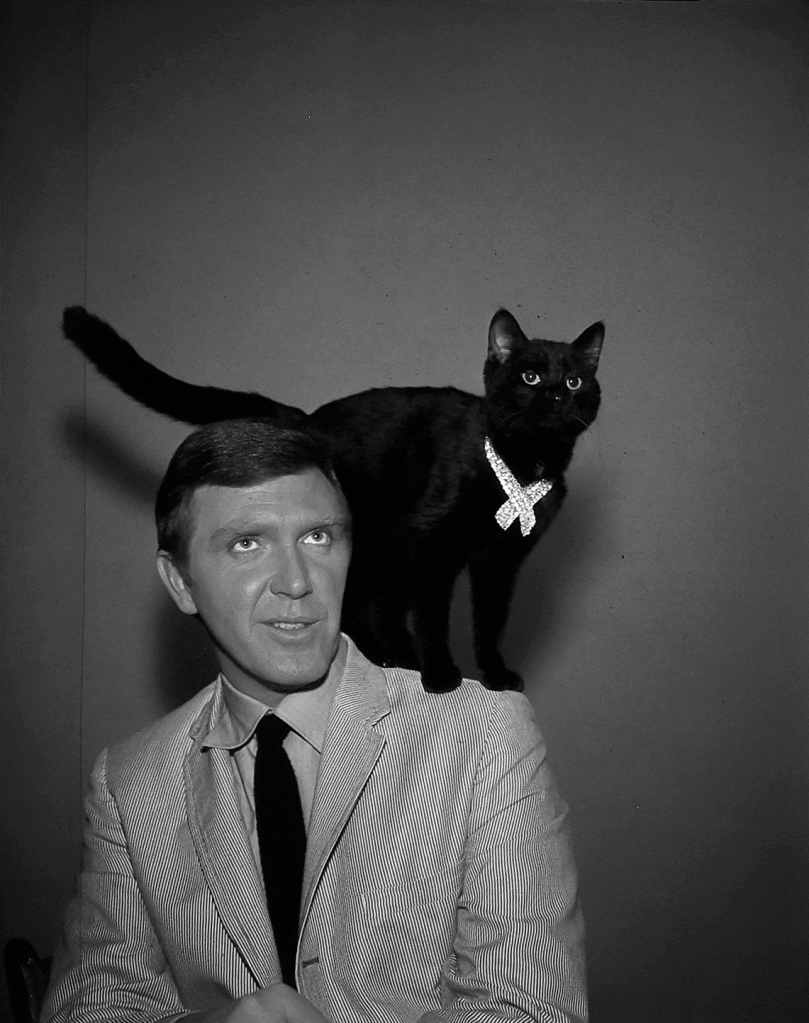
The premise revealed something important about Roddenberry’s thinking. Gary Seven wasn’t a conqueror, a military hero or even a traditional adventurer. His role was far more subtle. He worked behind the scenes, nudging events in the right direction and attempting to prevent humanity from making catastrophic mistakes. The future wasn’t something that would simply happen on its own. It had to be protected, a notion that would become one of Roddenberry’s favorite recurring themes.
Although Assignment: Earth never moved forward as a series, the concept clearly stayed with him. The idea of a superior force quietly guiding humanity’s development would resurface repeatedly throughout his career, often in slightly different forms. Sometimes the guide would be human. Sometimes it would be artificial. Sometimes it would be a lone individual and other times part of a much larger plan. But the underlying concept remained remarkably consistent.

Roddenberry believed humanity was capable of extraordinary things. He also believed that getting there might not be easy.
A few years after Gary Seven’s mission ended, Roddenberry returned to the idea once again. This time, however, the guide wasn’t a human agent trained by aliens. It was an android named Questor.
‘The Questor Tapes’
When The Questor Tapes premiered in 1974, it looked at first glance like a very different kind of story. Instead of a secret agent operating on behalf of an advanced civilization, Roddenberry’s new protagonist was an android. Questor, played by Robert Foxworth, awakens with vast amounts of knowledge but only a partial understanding of who he is, why he was created and what role he is supposed to play in the world. Accompanied by scientist Dr. Jerry Robinson, portrayed by Mike Farrell, Questor embarks on a journey to find his creator and uncover the truth about his existence.
GENE RODDENBERRY (creator): “’Cogito ergo sum—I think, therefore I am.’ You think, you wonder, you move like a living thing. But can a mechanical thing like yourself be called ‘alive’? Whatever you are, that question leads inexorably to the enigma which has puzzled and plagued Man himself from his own beginning: it is the most powerful of all dramatic themes. Who was my architect? For what reason am I placed here? We boldly challenge the audience to identify with an unusual television character who begins as a machine but who may turn out to share more of our own thoughts, doubts, frustrations, loneliness and dreams than many human fictional characters. Questor, in fact, is designed to become more human than human.”
Beneath the surface, The Questor Tapes was revisiting many of the same ideas Roddenberry had explored in Assignment: Earth. As the story unfolds, Questor learns that he is not unique. He is one of a series of androids secretly placed throughout human history by an advanced alien race. Their purpose is not conquest or control, but guidance. For centuries they have quietly influenced events, protecting key individuals and helping humanity move toward a more enlightened future. Suddenly the similarities become difficult to ignore. Gary Seven had been sent to Earth by a superior civilization to help humanity navigate dangerous moments in its development. Questor and his predecessors had been doing much the same thing, only from the shadows and over a far longer period of time.
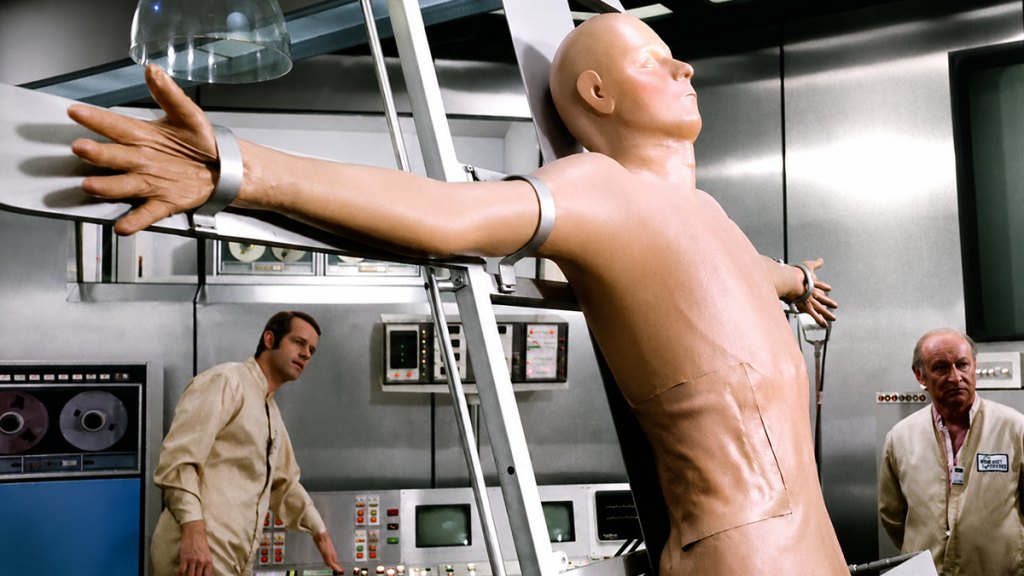
The difference was that Gary Seven understood his mission. Questor was still trying to discover his and that distinction gave The Questor Tapes an emotional dimension that made it one of Roddenberry’s most intriguing unrealized projects. While Gary Seven’s story focused largely on humanity, Questor’s story focused equally on the search for identity. The android possessed abilities beyond those of ordinary humans, yet he was haunted by the same questions people have asked throughout history. Who am I? Why am I here? What am I supposed to do with my life? Those themes would sound familiar to anyone who later watched Star Trek: The Next Generation.
More than a decade before Lieutenant Commander Data stepped aboard the Enterprise-D, Roddenberry was already exploring the idea of an artificial being attempting to understand humanity. Like Data, Questor was intellectually superior in many respects but emotionally incomplete. Like Data, he spent much of his journey trying to comprehend the people around him. And like Data, his greatest challenge was not mastering technology but understanding what it meant to be alive.
The similarities were not lost on those who worked with Roddenberry. Questor Tapes and Next Generation director Richard Colla would later share.
RICHARD COLLA: “Since I’d talked to Gene while he was putting Star Trek: The Next Generation together, I told him that I felt Data was a combination of Spock and Questor. When I was over there, I said, ‘Brent [Spiner], you’ve got the part, because this is the intellectual side of man, this is the other side of the conversation. All of the other characters are dealing from an emotional standpoint, but this character alone is the intellectual side of Man. So you’ve got the entire other side of the conversation.’”
What makes The Questor Tapes particularly important in the context of Roddenberry’s larger body of work is that it expanded the scope of the ideas introduced in Assignment: Earth. Humanity was no longer receiving guidance from a single agent. Instead, Roddenberry envisioned a vast, centuries-long effort by advanced beings committed to helping civilization reach its full potential.
Once again, the future wasn’t guaranteed. It required nurturing, protection and, perhaps most importantly, faith that humanity was capable of becoming better than it currently was. The concept fascinated Roddenberry, but there was also a warning embedded within it. Because for all of his optimism about humanity’s future, he never ignored our capacity for self-destruction. In fact, some of the darkest ideas in the Star Trek universe were born from his belief that progress could be lost just as easily as it could be achieved.
That warning would eventually take the form of a genetically engineered tyrant named Khan Noonien Singh.
The Eugenics Wars and Khan
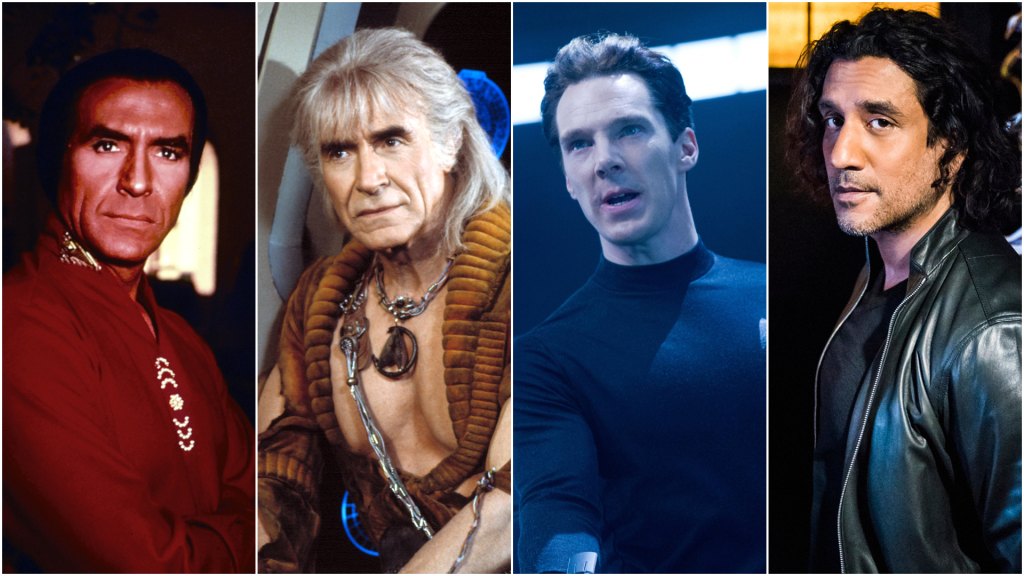
For all of Roddenberry’s optimism, he was never naïve. One of the reasons Star Trek’s vision of the future resonated with audiences was that it wasn’t presented as something humanity achieved effortlessly. The Federation did not emerge because people suddenly learned to get along, but rather because humanity survived some of its darkest chapters and learned from them. And no character embodied that warning more powerfully than Khan Noonien Singh.
Introduced in the classic 1967 episode “Space Seed,” Khan was the product of the Eugenics Wars, a period in Earth’s history when genetically engineered superhumans seized power and plunged much of the planet into conflict. Handsome, intelligent and charismatic, Khan represented humanity’s potential taken to a dangerous extreme. He possessed all of the qualities people often associate with progress—strength, intelligence and ambition—but lacked the wisdom and compassion necessary to use those gifts responsibly.
RICARDO MONTALBAN (actor, “Khan Noonien Singh”): “Khan was not the run-of-the-mill sort of portrayal. It had to have a different dimension. That attracted me very much. When they sent me the script, I thought it was a fascinating character. He was extremely powerful both mentally and physically, with an enormous amount of pride, but he was not totally villainous. He had some good qualities. I saw a nobility in the man that, unfortunately, was overridden by ambition and a thirst for power.”
The character became one of Roddenberry’s most enduring creations because he wasn’t a monster in the traditional sense. Khan was, in many ways, humanity itself. He represented what could happen when technological advancement outpaced moral growth, an idea that would become increasingly important throughout Roddenberry’s work.
In Assignment: Earth and The Questor Tapes, advanced beings quietly guided humanity toward a brighter future. The Eugenics Wars demonstrated why such guidance might be necessary in the first place. Left unchecked, humanity’s intelligence could become destructive. Progress was possible, but it was never inevitable.
The concept grew even darker as Roddenberry and subsequent Star Trek writers fleshed out Earth’s history. The Eugenics Wars eventually gave way to the broader devastation of World War III, a conflict that left much of the planet in ruins. By the time humanity began its climb toward the Federation era, civilization had already come dangerously close to destroying itself.

Yet even here, Roddenberry’s optimism remained intact, because the point was never that humanity was doomed, it’s that it had a choice. Again and again, he returned to the idea that people could choose fear or cooperation, they could pursue power or understanding or they could repeat the mistakes of Khan or learn from them. The future would ultimately be determined by which path they chose.
That belief became the foundation of Star Trek’s future history, but Roddenberry wasn’t content merely to describe civilization’s collapse. He also wanted to explore what came afterward.
‘Genesis II’/‘Planet Earth’
GENE RODDENBERRY: “Humanity has always progressed by three steps forward and two steps back. The entire history of our civilization has been one society crumbling and a slightly better one, usually, being built on top of it. And on mankind’s bumpy road to the Star Trek era, we passed through this time, too.”
So, what would happen if humanity had to start over? That question became the driving force behind one of the most fascinating—and often overlooked—chapters of his career: Genesis II and its remake, Planet Earth.
If Khan represented humanity at its worst, Genesis II and Planet Earth explored what might happen after the damage had already been done. Produced in the 1970s following The Questor Tapes, the two television pilots introduced a character who would become one of Roddenberry’s most persistent creations: Dylan Hunt. Unlike Kirk, who explored a future where humanity had largely solved its problems, Hunt was a man from the 20th century who found himself thrust into a world still struggling to recover from civilization’s collapse.
The premise was simple but powerful. Hunt, a scientist working on a suspended-animation project, is buried underground when catastrophe strikes. Centuries later he awakens to discover that the world he knew is gone, nations have disappeared, society has fractured into competing factions and much of humanity’s knowledge has been lost or forgotten.
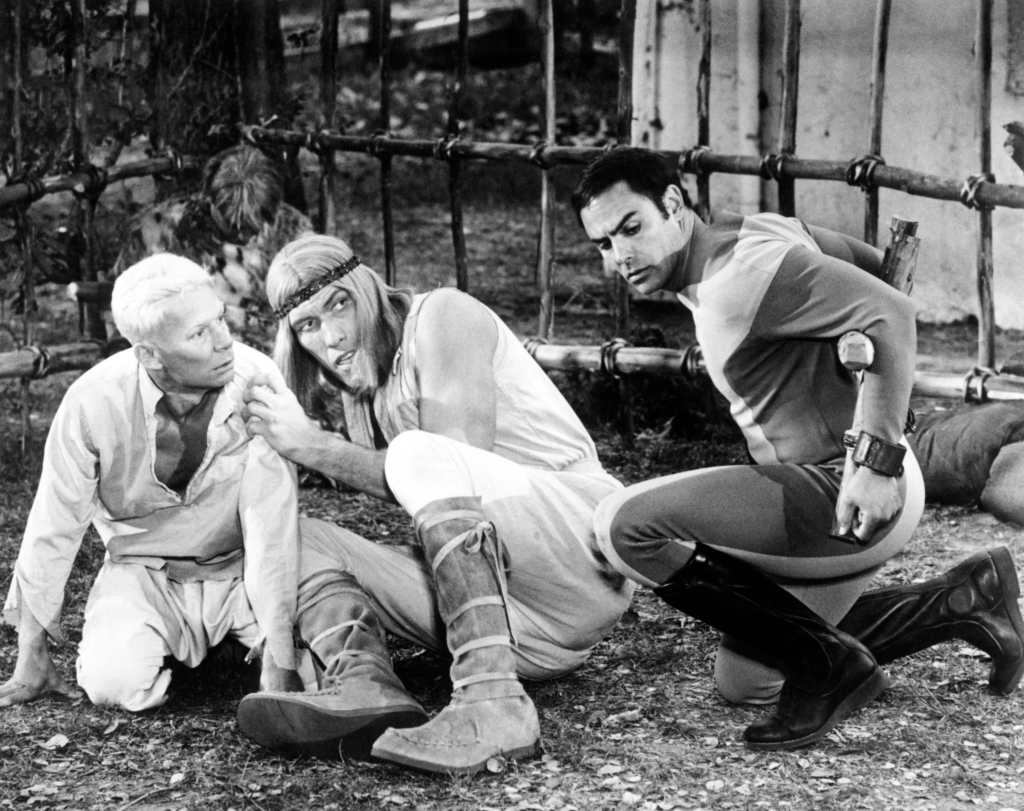
It was a far cry from the gleaming optimism of the Federation, yet even in these darker stories, Roddenberry’s fundamental outlook remained remarkably consistent. Genesis II and Planet Earth were not tales of hopelessness. They were stories about recovery.
Hunt’s mission was not to conquer anyone or impose his will on the future. Instead, he served as a bridge between what humanity had been and what it might become. Armed with knowledge from the past and an unwavering belief in human potential, he traveled through a fractured world attempting to encourage cooperation, understanding and progress.
In many respects, Dylan Hunt occupied the same narrative space previously held by Gary Seven and Questor. Gary Seven guided humanity away from disaster while Questor quietly helped steer humanity toward a better future. Hunt arrived after the disaster and tried to help humanity find its footing again. Different circumstances, but remarkably similar goals.
The parallels become even more interesting when viewed alongside Star Trek. In Kirk’s era, humanity has already completed the journey. Earth has survived its wars, overcome many of its divisions and become a founding member of the Federation. But Genesis II and Planet Earth focus on the difficult years in between—the period when civilization is still struggling to climb out of the darkness.
GENE RODDENBERRY: “Our civilization as we know it has been destroyed. It had fallen apart. It had not been, however, due to nuclear warfare. Really, nuclear warfare is not necessary to cause a breakdown of society. You take large cities like Los Angeles, New York, Chicago—their water supply comes from hundreds of miles away and any interruption of that, or food or power, for any period of time and you’re going to have riots in the streets. Our society is so fragile, so dependent on the interworking of things to provide us with goods and services, that you don’t need nuclear warfare to fragment us anymore than the Romans needed it to cause their eventual downfall.”
Roddenberry rarely portrayed progress as automatic. People had to work for it and sometimes they had to rebuild it from scratch. That belief may explain why Dylan Hunt remained so important to Roddenberry. When Genesis II failed to launch a series, he tried again with Planet Earth. The details changed, but the core idea remained intact because Roddenberry clearly felt there was still something worth exploring. The future wasn’t simply about starships and advanced technology, but really about resilience and humanity’s ability to recover from its makes and keep moving forward. That was certainly the idea behind Dylan Hunt teaming up with the group known as PAX to help with that forward progression.
GENE RODDENBERRY: “The idea of PAX must have come from Lost Horizon. It was a society of people who said, ‘Let us preserve the books and knowledge until man is ready to come back.’ When Rome fell, there was no one to preserve their society and culture and within a short while, villages a hundred miles apart spoke different languages. Our stories were about how different parts of our country evolved into their own societies….The idea of a subshuttle traveling to locations around the world is based on the fact that if the world does go through another war, surface, air and sea transportation will become impossible. With the massive destruction that would occur, those kinds of transportation certainly would not function the way they do now. The only effective long distance transportation that would be left would be an underground shuttle system. And today, for environmental and economic reasons, this type of system is being studied. The shuttle travels in a near vacuum in these tunnels and uses electrical power that could come from solar, nuclear or hydroelectric plants. We were talking about things that might become realities just as we were on Star Trek.”
‘Star Trek’
By the time viewers first heard Captain Kirk’s famous mission statement in September 1966, Gene Roddenberry was offering something television had rarely seen before: an optimistic vision of humanity’s future.
The 23rd century of Star Trek was hardly perfect. The Enterprise encountered war, prejudice, political intrigue and countless forms of danger as it traveled among the stars. Yet there was a fundamental difference between the world of Star Trek and the world audiences were living in. Humanity had survived and, more than that, had matured. Earth was no longer defined by conflict, poverty, or division; human beings had learned to cooperate and had turned their attention outward toward exploration and discovery.
In many ways, Star Trek represented the destination that so many of Roddenberry’s other concepts were trying to reach. Gary Seven worked to keep humanity from destroying itself, Questor and his fellow androids quietly encouraged civilization’s development from the shadows and Dylan Hunt struggled to help rebuild society after catastrophe. The Federation was what success looked like, Roddenberry’s vision of a civilization that had finally made it through the gauntlet.
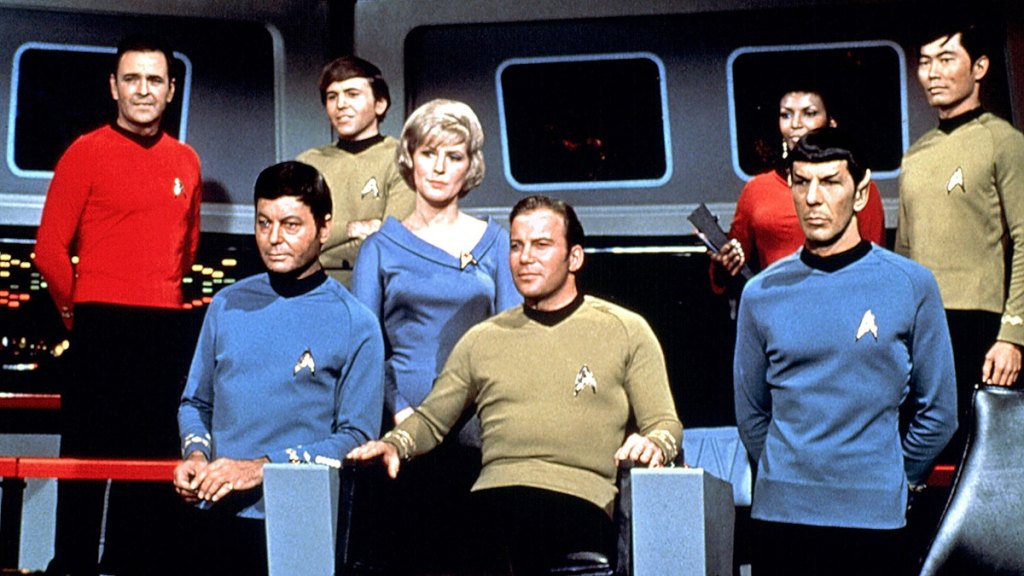
That optimism became even more pronounced when he returned to the franchise with 1987’s Star Trek: The Next Generation. Yet even as Roddenberry expanded the scope of his fictional universe, some familiar ideas found their way back into the storytelling. One of the clearest examples came in the form of Lieutenant Commander Data.
Data was not a copy of Questor any more than Questor had been a copy of Gary Seven, but the lineage is difficult to miss. Roddenberry had spent much of his career returning to certain ideas, refining them, reimagining them and placing them in new contexts. Each time he did so, he found another way to examine humanity through the eyes of an outsider.
By the late 1980s, it seemed as though his dream had finally reached its fullest expression. The Federation was thriving. Starfleet was exploring farther than ever. Humanity had become the best version of itself.
Or so it seemed. Decades later, the franchise would revisit one of Roddenberry’s oldest themes—the idea that progress is never guaranteed and that even the greatest civilizations sometimes need to find their way back from the brink.
‘Discovery’ and ‘Andromeda’: Rebuilding what was lost
For much of Star Trek’s history, the Federation stood as the ultimate expression of Gene Roddenberry’s optimism. It represented a future in which humanity had survived war, moved beyond many of its divisions and joined with other worlds in a common pursuit of exploration, knowledge and cooperation. Whether viewers were watching Kirk, Picard, Sisko, Janeway or Archer, there was always an underlying assumption that the hard work had already been done. Humanity had made it through its darkest periods and emerged stronger on the other side.
That is one reason the later seasons of Star Trek: Discovery felt so different. When Michael Burnham and her crew travel to the 32nd century in an effort to literally save all life, they discover that the Federation has not continued on an uninterrupted upward trajectory. The catastrophic event known as the Burn has shattered the infrastructure that once connected hundreds of worlds. Former member planets have withdrawn, alliances have frayed and the Federation itself has become a fraction of what it once was. Instead of exploring a thriving future, Burnham finds herself confronting a civilization that has lost confidence in itself.
Viewed through the lens of Roddenberry’s broader body of work, however, the premise feels surprisingly familiar. Burnham is not simply exploring the future; she is helping to restore it. Much like the heroes who populated so many of his earlier concepts, she finds herself in a position where progress can no longer be taken for granted. The challenge is not discovering new worlds but reconnecting old ones, rebuilding trust and reminding people why the ideals of the Federation were so significant in the first place.
ALEX KURTZMAN (co-creator/executive producer Star Trek: Discovery): “I think the jumping to the future was about a lot of things for us, but one of them was Trek as a mirror that holds itself up to a time in which it was made. And it felt to us like we are at a moment where so many of the ideals that we have assumed and taken for granted, not just in our country, but around the world, are under fire. So the idea of jumping to the future is what Trek does best, which is coming up with an allegorical story that reflects what’s happening now. The idea that you had to rebuild the Federation, and therefore define its most prized ideals, felt very right. The idea of what it means to be the Federation, what it means to restore it, what it means to fight for it, was perfect. It was just a perfect allegory or metaphor, or whatever you want to call it.”
That theme becomes even more apparent when looking at Gene Roddenberry’s Andromeda, a posthumous series aired from 2000 to 2005 and developed from concepts he had created years before his death. Although the show exists outside the Star Trek universe, it shares a striking amount of DNA with many of the ideas that fascinated him throughout his career. Once again the central figure is Dylan Hunt, but this time he awakens to find an interstellar civilization rather than a planet in ruins. The Systems Commonwealth has collapsed, old alliances have disintegrated and large portions of the galaxy have retreated into isolation and conflict.

MAJEL BARRETT (Gene Roddenberry’s widow, executive producer Andromeda): “It’s a fabulous premise. Kevin Sorbo plays Captain Dylan Hunt, captain of the starship Andromeda. He gets trapped in a black hole for 300 years and when he comes out, everything he knew is gone. The Commonwealth is gone. Civilization has broken down. His mission becomes rebuilding what was there before—to pull civilization back together again.”
What follows is not a story about conquest or military victory. Instead, Hunt dedicates himself to restoring something that once seemed lost forever. The goal is to reunite worlds that no longer trust one another and to prove that cooperation remains possible even after catastrophic failure. It’s a premise that echoes not only Genesis II and Planet Earth, but many of the larger themes that ran through Roddenberry’s work from the beginning.

Seen together, Discovery and Andromeda complete a fascinating cycle. To reiterate: in Assignment: Earth, Gary Seven worked to help humanity avoid disaster. In The Questor Tapes, advanced beings quietly guided civilization’s development from behind the scenes. In Genesis II and Planet Earth, Dylan Hunt struggled to help rebuild society after its collapse. Star Trek then showed audiences what success looked like—a future in which humanity had finally realized its potential. Yet even there, Roddenberry’s stories never entirely abandoned the possibility that progress could be fragile. The futures depicted in Discovery and Andromeda serve as reminders that civilization requires constant effort, vigilance and belief.
What emerges from all of these projects is not a shared universe, but something arguably more interesting: a shared vision. Again and again, Roddenberry returned to the idea that humanity’s future would not be determined by technology alone. The real challenge was whether people could learn from their mistakes, overcome their divisions and continue moving forward even when setbacks seemed overwhelming. His heroes took many forms—secret agents, androids, scientists, starship captains and explorers—but they were often engaged in the same essential mission. More than saving the world, it was to help it become better than it had been before.
Quick facts about Gene Roddenberry
- Full Name: Eugene Wesley Roddenberry
- Born: August 19, 1921
- Birthplace: El Paso, Texas
- Died: October 24, 1991
- Age at Death: 70
- Military Service: U.S. Army Air Corps during World War II
- Aviation Career: Commercial pilot for Pan American World Airways
- Law Enforcement: Served with the Los Angeles Police Department
- Best Known As: Creator of Star Trek
- Major TV Series: Star Trek, Star Trek: The Next Generation
- Major Films: Star Trek: The Motion Picture, Star Trek VI: The Undiscovered Country (he passed away in its post-production stage)
- Other Notable Projects: The Questor Tapes, Genesis II, Planet Earth
- Posthumous Series: Earth: Final Conflict, Gene Roddenberry’s Andromeda
- Legacy: Creator of one of the most influential sci-fi universes in entertainment history
Conversation
All comments are subject to our Community Guidelines. Woman's World does not endorse the opinions and views shared by our readers in our comment sections. Our comments section is a place where readers can engage in healthy, productive, lively, and respectful discussions. Offensive language, hate speech, personal attacks, and/or defamatory statements are not permitted. Advertising or spam is also prohibited.