4 Lost ‘Star Trek’ Films of the 70s: Roddenberry, Kirk and Kennedy, Black Holes and More (Exclusive)
From time travel chaos to cosmic disaster, these early ideas almost defined 'Trek' on film

Key Takeaways
- Kirk once teamed up with Kennedy in a 'Trek' film idea that never reached the screen.
- Early 'Trek' movies explored black holes and threats to all existence.
- Bold ideas kept collapsing before 'Star Trek' reached theaters in 1979.
Before Star Trek: The Motion Picture finally made it to the screen in 1979, there were years—nearly a decade—of false starts, abandoned concepts and competing visions of what a Star Trek movie should be. Ideas were developed, pitched, written and discarded, often just as quickly as they were submitted. Looking back now, what’s perhaps most fascinating is how many of those unrealized projects came from some of the most respected writers in science fiction—and how close some of them came to becoming the franchise’s big-screen debut.
One of the earliest efforts came from Gene Roddenberry himself, with a script that has come to be known as The God Thing (and which Woman’s World has covered in depth HERE). As writer Jon Povill recalls, “Gene went to work on The God Thing in May of 1975, and it was his first attempt at a Star Trek feature. By August, it was rejected by Paramount president Barry Diller.”
And that rejection opened the floodgates.
Roddenberry encouraged Povill to take a shot at a feature story of his own, not telling him that he wasn’t alone in that invitation. “What I didn’t know at the time,” Povill admits, “was that about seven hundred thousand other writers had been told the same thing. Amongst them there was Harlan Ellison, Norman Spinrad, John D. F. Black, Richard Matheson, and Ted Sturgeon.”
The Gene Roddenberry/Jon Povill version of ‘Star Trek II’ (1975)
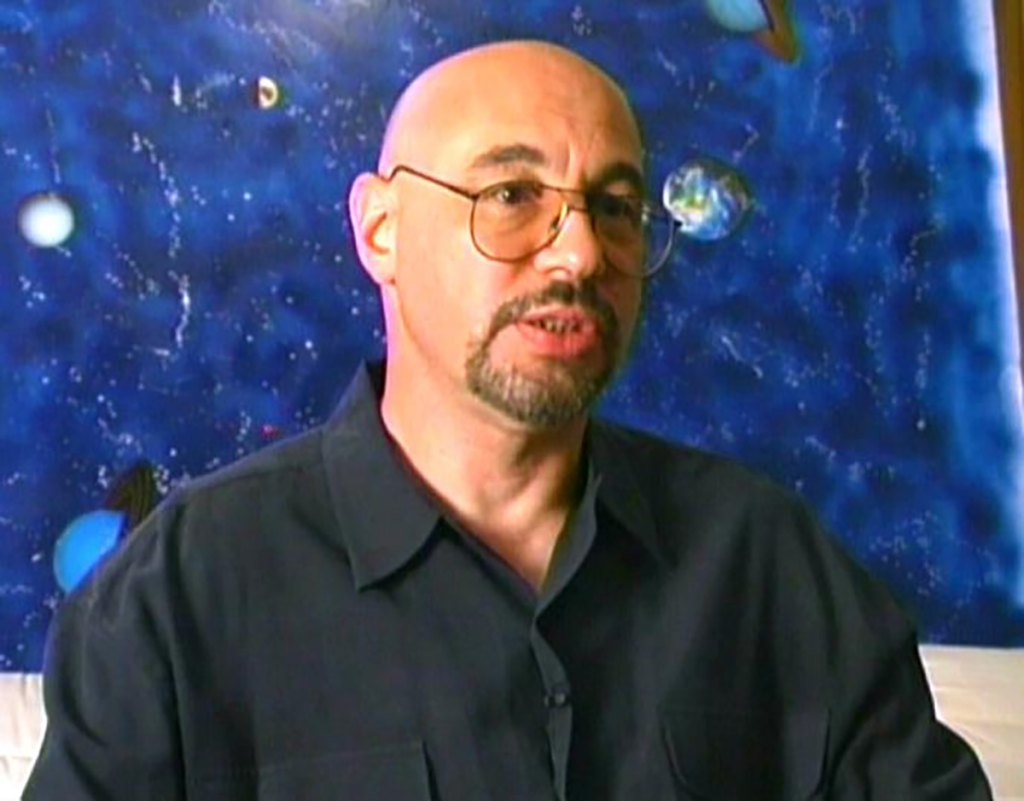
Povill’s first effort—what he refers to as “Treatment One” (previously covered in depth HERE)—centered on a Vulcan-created “psychic cloud” that ultimately turns against its creators, forcing the Enterprise to travel back in time to prevent a catastrophic war. It was ambitious, philosophical and very much in line with the kind of storytelling that defined the original series. But as Povill puts it, Roddenberry’s response was telling: “He read it and said it would have made a swell episode, but that he didn’t think it would work as a feature.”
Still, that wasn’t the end of Povill’s involvement. In fact, it led directly to what he believed might be his breakthrough. “In December of 1975, Gene called me and said he had a new idea for a feature—would I like to work on it with him?” he remembers. “I still remember standing in my kitchen… and then whooping so loudly that my neighbors came running over to see what the hell was going on.”
The result was what he calls “Treatment Two”—a darker, more complex story built around time travel, catastrophe and unintended consequences. “It was my first work for a studio and Paramount paid me for my efforts on it,” he says.
Details Povill, “in this one, rather than Spock being responsible for the change in Vulcan personality from hot-blooded warriors to peaceful beings ruled by logic, Scotty is responsible for wiping the Earth out of the Federation. The Enterprise and all aboard it had been destroyed by a black hole while Spock and Scotty, in smaller research vessels without the gravitational disrupting issues of warp engines, had managed to escape. Scotty, in a desperate attempt to go back in time and prevent his precious ship and crew from slipping into the event horizon, miscalculates, winds up in 1937 and triggers changes with a snowball effect.

“His efforts to stop the snowball only make things worse for his original time period,” he continues, “though they do make things considerably better between 1937 and 1964. World War II is avoided, Kennedy is not assassinated, medical science advances substantially and a whole bunch of other boons make it impossible for world leaders to agree to help Kirk set things right for the future by plunging the 20th century back into the horrors stored in the Enterprise’s history records. Kennedy, however, recognizes the greater good and helps Kirk destroy his world to create the better one. There’s also a cool bit of stuff as Einstein, along with Churchill, Kennedy, Hitler and others tour the Enterprise.”
Ultimately, this was a classic Star Trek dilemma: do you preserve a better present, or restore the future you know is “right?” Yet despite its scope, and even a device that would have allowed the crew to be “literally resurrected by a mysterious process,” the project stalled. “Both stories needed a lot of reworking,” Povill admits, “but there was potential there. If the studio had any real sense of what Star Trek was about, they might have shown more patience, but the plug was quickly pulled.” Povill’s wasn’t the only ambitious concept on the table.
A black hole and the end of the universe
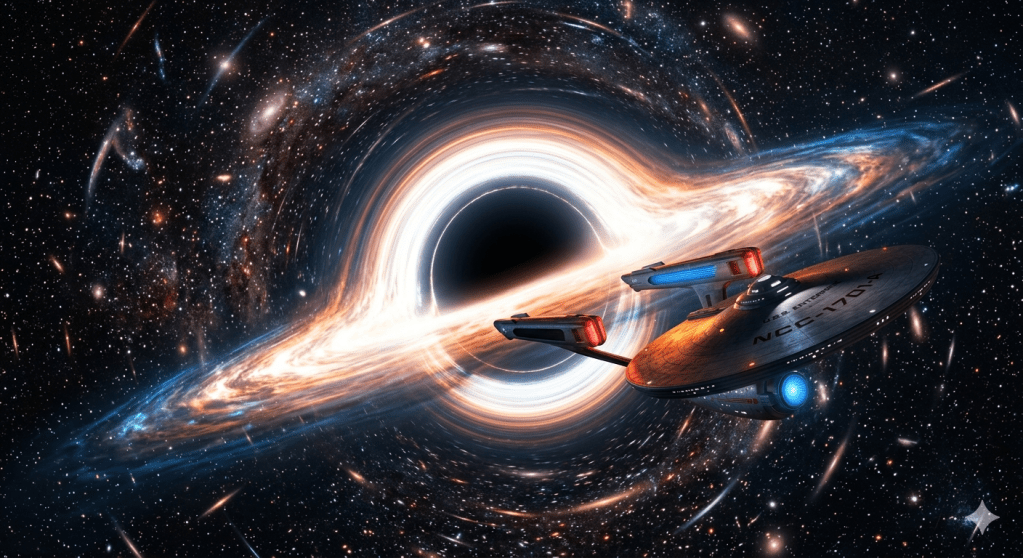
Writer John D. F. Black (Star Trek’s first story editor) envisioned a story centered on a black hole being used as a kind of cosmic dumping ground—until physics catches up with it. “I came up with a story concept involving a black hole, and this was before Disney’s film,” Black shares. “The black hole had been used by several planets in a given constellation as a garbage dump. But with a black hole, there’s a point of equality. In other words, when enough positive matter comes into contact with an equal amount of negative matter, the damn thing blows up.
“Well, if that ever occurs with a black hole, it’s the end of the universe. It will swallow everything. The Enterprise discovers what’s happened with this particular black hole and they try to stop these planets from unloading into it. The planets won’t do it. It comes to war in some areas and as a result, the black hole comes to balance and blows up. At that point, it would continue to chew up matter. In 106 years, Earth would be swallowed by this black hole, and the Enterprise is trying to beat the end of the world. There were at least 20 sequels in that story because the jeopardy keeps growing more intense. Paramount rejected the idea. They said it wasn’t big enough.”
If anything, that comment underscores the confusion at the studio level. These weren’t small ideas—they were massive, existential, universe-ending concepts. And yet, somehow, they still weren’t what Paramount was looking for.
The return of Harlan Ellison
As described by Enterprise Incidents magazine editor James Van Hise, Harlan Ellison, author of the original series’ classic episode “The City on the Edge of Forever,” pitched a concept that opened not in space, but on Earth, with reality itself beginning to fracture.
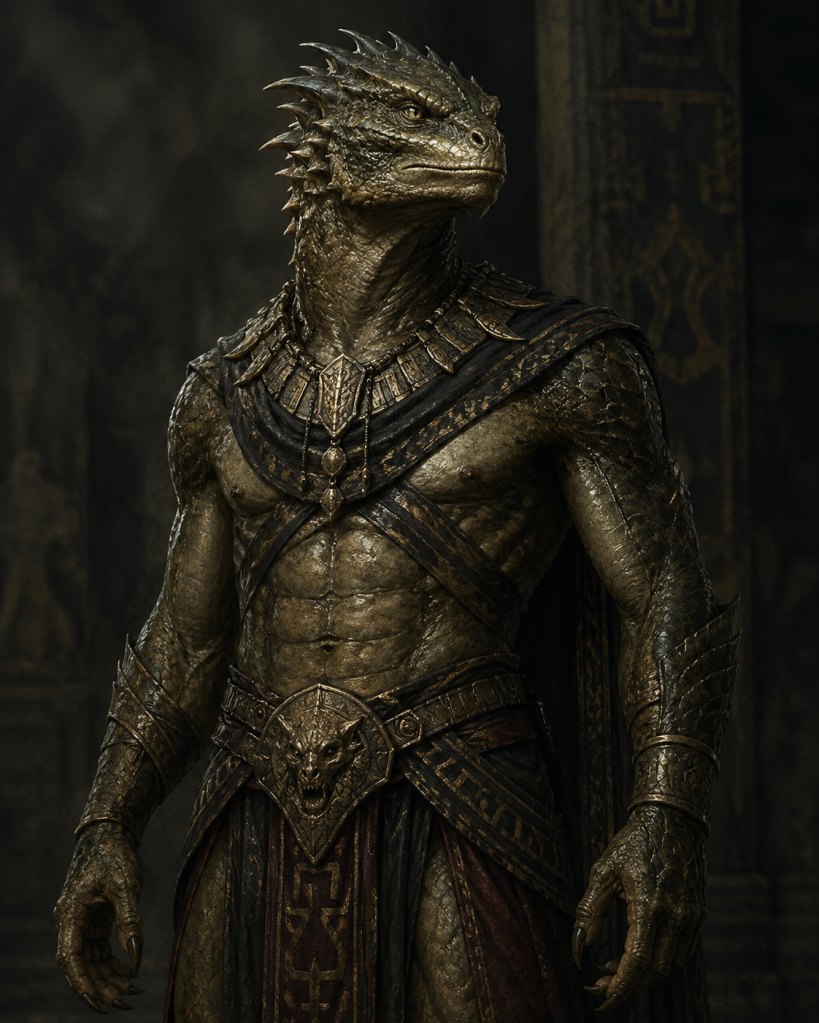
“The story that Harlan came up with was never written down but presented verbally,” Van Hise detailed. “The story did not begin with any of the Enterprise crew but started on Earth, where strange phenomena were inexplicably occurring. In India, a building where a family is having dinner just vanishes into dust. In the United States, one of the Great Lakes suddenly vanishes, wreaking havoc. In a public square, a woman suddenly screams and falls to the pavement, where she transforms into some sort of reptilian creature.”
“The truth is suppressed, but the Federation realizes that someone or something is tampering with time and changing things on Earth in the far distant past. What is actually happening involves an alien race on the other end of the galaxy. Eons ago, Earth and this planet both developed races of humans and intelligent humanoid reptiles. On Earth, the humans destroyed the reptile men and flourished. In the time of the Enterprise, when the race learns what happened on Earth in the remote past, they decide to change things in the past so that they will have a kindred planet. For whatever reason, the Federation decides that only the Enterprise and her crew are qualified for this mission, so a mysterious cloaked figure goes about kidnapping the old central crew. The figure is finally revealed to be Kirk. After they are reunited, they prepare for the mission into the past to save Earth. And that would have been just the first half hour of the film!”

In a 10th-anniversary article on Star Trek that appeared in Crawdaddy! magazine, Ellison elaborated, “My involvement with the film amounted to bulls**t,” he said. “It was the kind of bulls**t you get from amateurs and independents but you don’t expect from a major studio like Paramount. They don’t know what they’re doing over there. Gene may know, but the studio sure doesn’t. They called me in on four separate occasions and they never paid me a nickel. I did one complete script that Gene liked. It was rejected. We worked on another idea together. We took it up to the executive who was in charge of the film, the head guy who, by the way, has never produced a film in his life. He’s an ex-designer—right away you know where he’s coming from.
“Now, the guy is a complete and utter moron,” Ellison added. “We’re showing him the script and he’s just read a von Däniken book about the Aztec calendar and how the Aztec gods were from outer space. He looks at us and says, ‘Do you think you can put in something about the Aztecs?’ Agghhh. And we’re saying, ‘Look. This story takes place at the dawn of time. There weren’t any Aztecs then!’ He doesn’t flinch. ‘How about one or two?’ What can you do? These people are schmucks.”
‘The Billion Year Voyage’
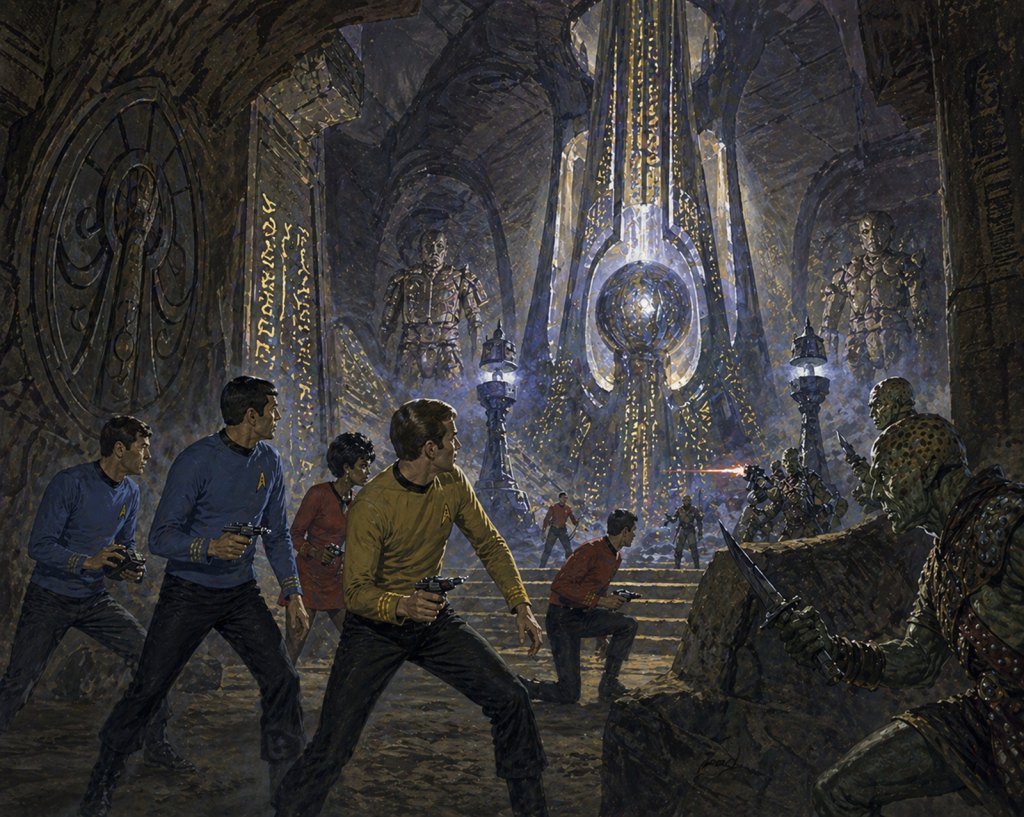
Even respected novelist Robert Silverberg found himself briefly pulled into the process. Titled The Billion Year Voyage, his treatment was more of an intellectual foray as the Enterprise crew discovers the ruins of an ancient but far more advanced civilization, and must battle other aliens in order to take possession of the wondrous gifts left behind—gifts which would surely benefit mankind someday in the future when he is ready to accept that responsibility.

“My Star Trek involvement was minimal,” Silverberg says. “I met with the Paramount executives, pitched an idea, was asked to write a treatment, wrote it, was paid quite generously for it, and then vanished from the scene when the project was canceled.”

And that, in many ways, sums up the era—big ideas, big names and big ambitions. But nothing that actually made it to the screen. Though from here, the story would take another turn, one that would bring Star Trek closer than ever to becoming a feature film, before collapsing once again. That next chapter would come in the form of a project known as Planet of the Titans.
This was 1976 and while more aborted attempts would follow, it would only be three years before Star Trek: The Motion Picture would finally reach theaters, launching the rebirth of Star Trek that continues to today, 60 years after the original series launched.
Conversation
All comments are subject to our Community Guidelines. Woman's World does not endorse the opinions and views shared by our readers in our comment sections. Our comments section is a place where readers can engage in healthy, productive, lively, and respectful discussions. Offensive language, hate speech, personal attacks, and/or defamatory statements are not permitted. Advertising or spam is also prohibited.