How Gene Roddenberry Created ‘Star Trek’ the Original Series: Remembered In His Own Words
Gene Roddenberry on how childhood dreams, network battles and creative risks led to 'Star Trek'

Key Takeaways
- Gene Roddenberry created the original 'Star Trek' to explore ideas TV avoided.
- NBC wanted the character of Spock removed, but Roddenberry refused to back down.
- The second pilot sold the series—and opened the door to bigger ideas.
More than half a century after its debut, Star Trek remains one of the most influential television series ever produced. Countless books, documentaries and interviews have explored its creation, but perhaps no one told the story better than the man who created it. Over the years, Gene Roddenberry reflected on the inspirations, frustrations and creative battles that led to the birth of Star Trek. Taken together, his comments reveal a fascinating picture of how a former police officer, airline pilot and television writer transformed his dissatisfaction with television into a series that would change popular culture.
It began long before Captain Kirk, Mr. Spock or the starship ‘Enterprise’
“I remember myself as an asthmatic child, having great difficulties at seven, eight, and nine years old, falling totally in love with Tarzan, Lord of the Jungle and dreaming of being him and having his strength to leap into trees and throw mighty lions to the ground. It was a part of my growing up. It was a lovely dream. It carried me through many a hacking and coughing and sneezing attack.
“Then there was a boy in my class who life had treated badly. He limped, he wheezed. I don’t know all the things that were wrong with him, but he was a charming, lovely, intelligent person. He, because of being unable to get on the athletic fields and do many of the things that others were able to do, had sort of gone into his own world of fantasy and science fiction. He had been collecting the wonderful old Amazing and Astounding magazines from those great old days, and he introduced me to science fiction.”
Becoming a writer
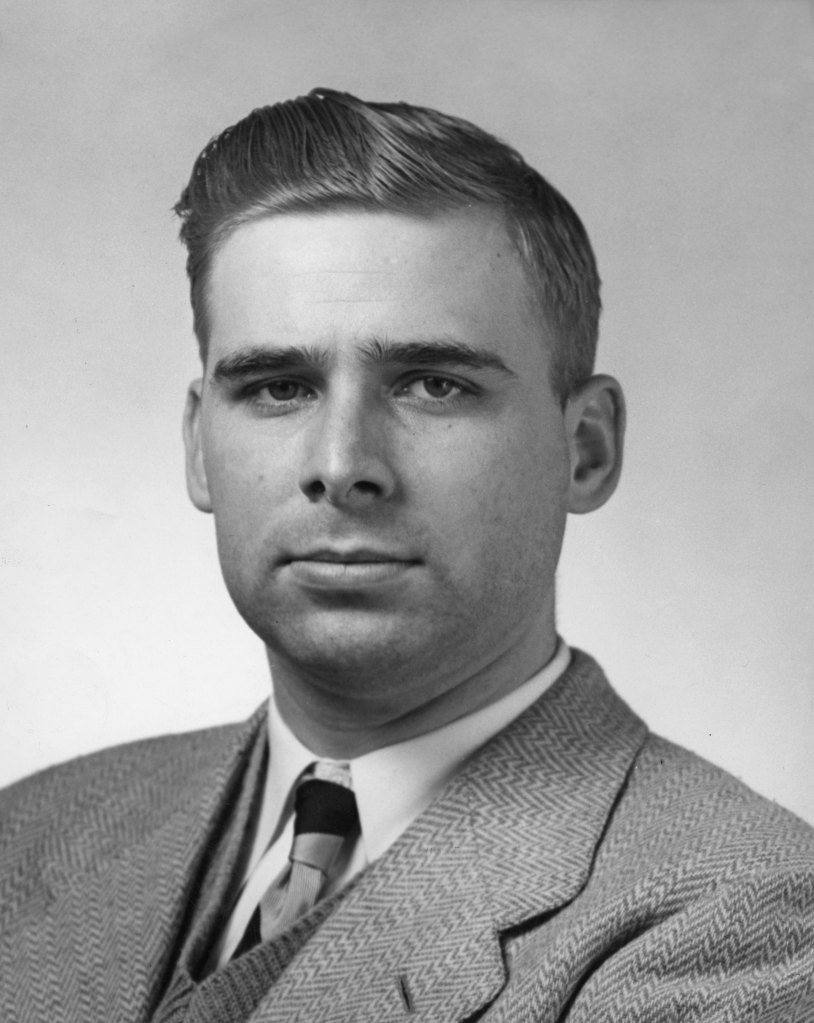
“I was a policeman and learned to write as a speechwriter for police chief Parker. I learned to write long before that, though, with the idea that if you write 800 words a day, soon you will be a writer. It took me eight years or so. Once I quit Pan American as a pilot, it seemed to me that, yes, I’m a writer, whether people believe that or not.”
“Although I suppose you could have called me a science-fiction fan, this certainly was not the alpha-omega of my reading. I think all writers are omnivorous in their reading. I know few writers that I respect that read only science fiction. As a result, when I decided to become a writer, I decided to become a writer, not just a science-fiction writer.”
Television success brought frustration as well
“Star Trek came about very slowly, as everyone who was with me at the time can testify. I was so tired of writing about what I considered nothing. I was tired of writing for shows where there was always a shoot-out in the last act and somebody was killed. I do not consider that the ‘ending’ of anything. I would watch a whole show in those early days and, at the end, would feel like I had wasted time on nonsense. Star Trek was formulated to change that.”
“I had been a freelance writer for about a dozen years and was chafing increasingly at the commercial censorship on television, which was very strong in those days. You really couldn’t talk about anything you cared to talk about, and I decided I was going to leave TV unless I could find some way to write what I wanted to. [Then] I recalled that when Jonathan Swift was writing Gulliver’s Travels, he wanted to write satire on his time and went to Lilliput in his story to do just that, and then he could talk about insane prime ministers and crooked kings and all of that.
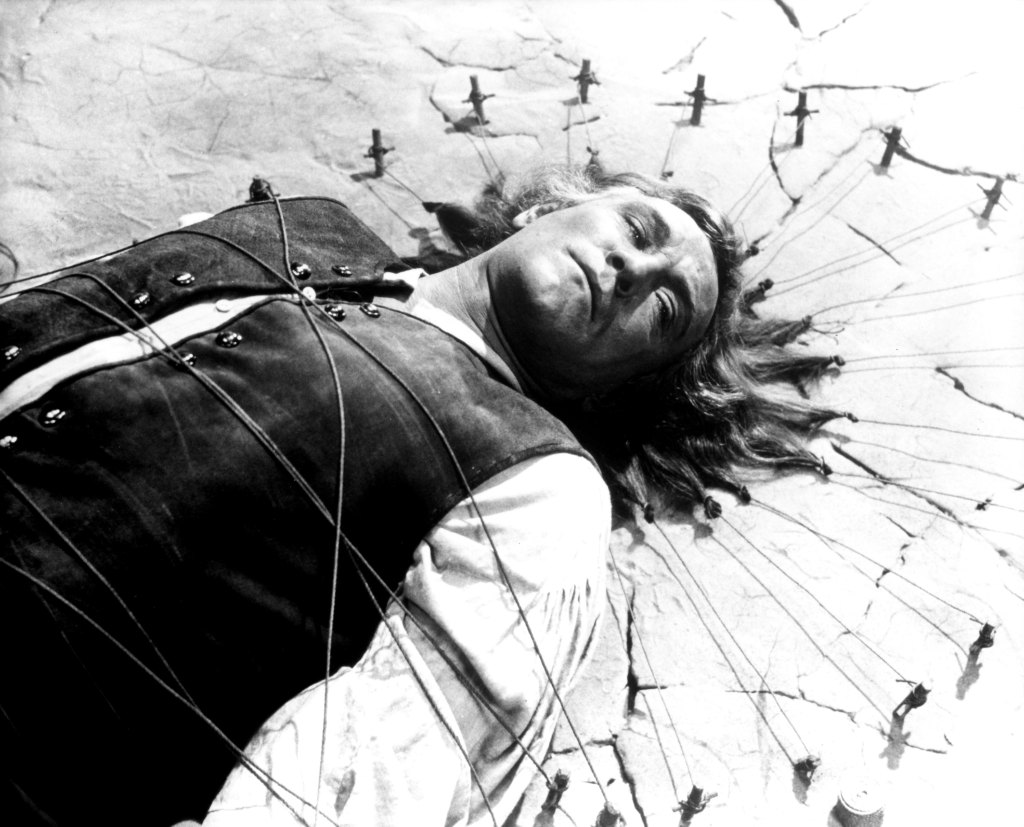
“It seemed to me that perhaps if I wanted to talk about sex, religion, politics, make some comments against Vietnam, and so on, that if I had similar situations involving these subjects happening on other planets to little green people, indeed it might get by, and it did. The power you have is in a show like Star Trek, which is considered by many people to be a frothy little action-adventure; unimportant, unbelievable, and yet watched by a lot of people. You just slip ideas into it.”
Simply writing a script wasn’t enough
“Before Star Trek, I had written pilots that were produced by other people, and none of them sold. I began to see that to create a program idea and write a script simply wasn’t enough. The story is not ‘told’ until it’s on celluloid. Telling that final story involved sound, music, casting, costumes, sets, and all the things that a producer is responsible for. Therefore, it became apparent to me that if you want the film to reflect accurately what you felt when you wrote the script, then you have to produce it, too.”
It’s all in the details
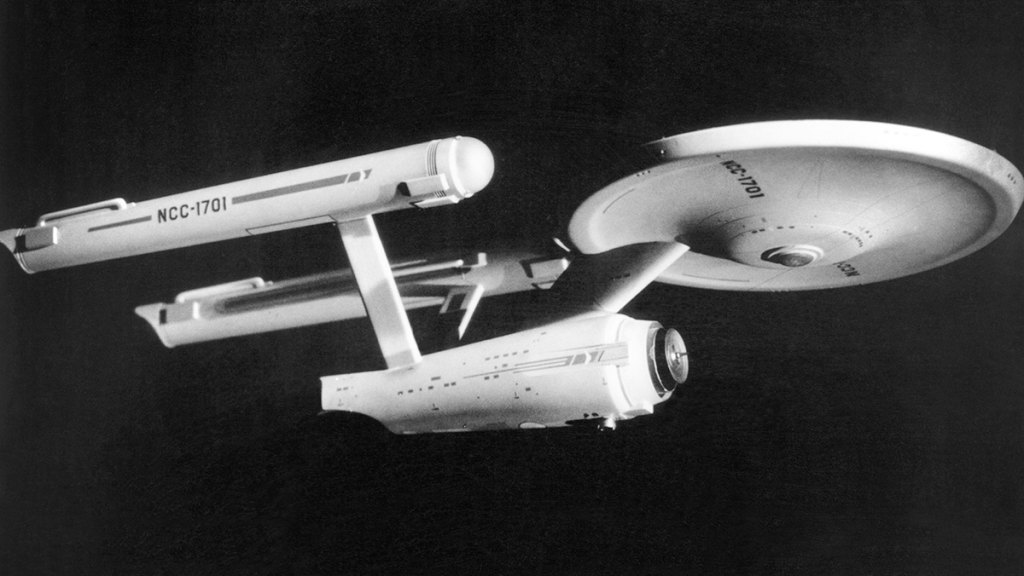
“With the name Enterprise, I’d been an army bomber pilot in World War II. I’d been fascinated by the Navy and particularly fascinated by the story of the Enterprise in World War II, which at Midway really turned the tide in the whole war in our favor. I’d always been proud of that ship and wanted to use the name.”
“The ship’s transporters—which let the crew ‘beam’ from place to place—really came out of a production need. I realized with this huge spaceship we’d come up with, which is practically the size of an aircraft carrier, that number one, I would blow the whole budget of the show just in landing the thing on a planet. And secondly, it would take a long time to get into our stories, so the transporter idea was conceived so we could get our people down to the planet fast and easy, and get our story going by page two.”
Mr. Spock
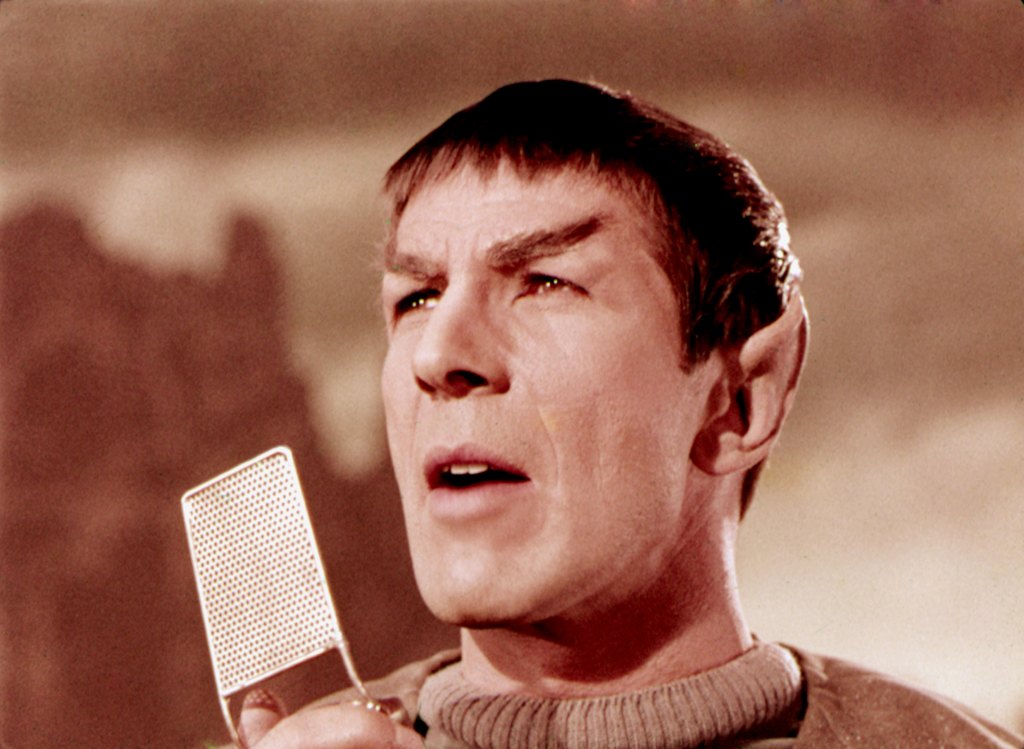
“Leonard Nimoy was the one actor I definitely had in mind for the character of Spock—we had worked together several years previously when I was producing The Lieutenant. Leonard had been a guest star and I was struck at the time with his high Slavic cheekbones and interesting face, and I said to myself, ‘If I ever do this science fiction thing I want to do, he would make a great alien. And with those cheekbones, some sort of pointed ear might go well.’ And then I forgot entirely about it until I was laying out the Star Trek characters, and then to cast Mr. Spock, I simply made a phone call to Leonard and he came in. That was it.”
“Series are a process of refining ideas. I’d like to say that all the ideas that I get are bright and eternal and right for all time, but they’re not. You do evolve things. With Spock, originally, I also thought that there were such few choices in doing someone who was of average height. You can do a little with the ears and fake eyes and so on, but actors tend to come in roughly the same size. So I was thinking of making Spock a ‘little person,’ which would at least break some of those things, and make him stand out.”

“One thing I wanted to do was make Spock half human and half Vulcan. I wanted to have an interesting personality. I wanted part of him to be at war with one another, the human part and the alien part. And half-breeds traditionally on dramas have always been highly interesting characters.”
Pilot number one, ‘The Cage’
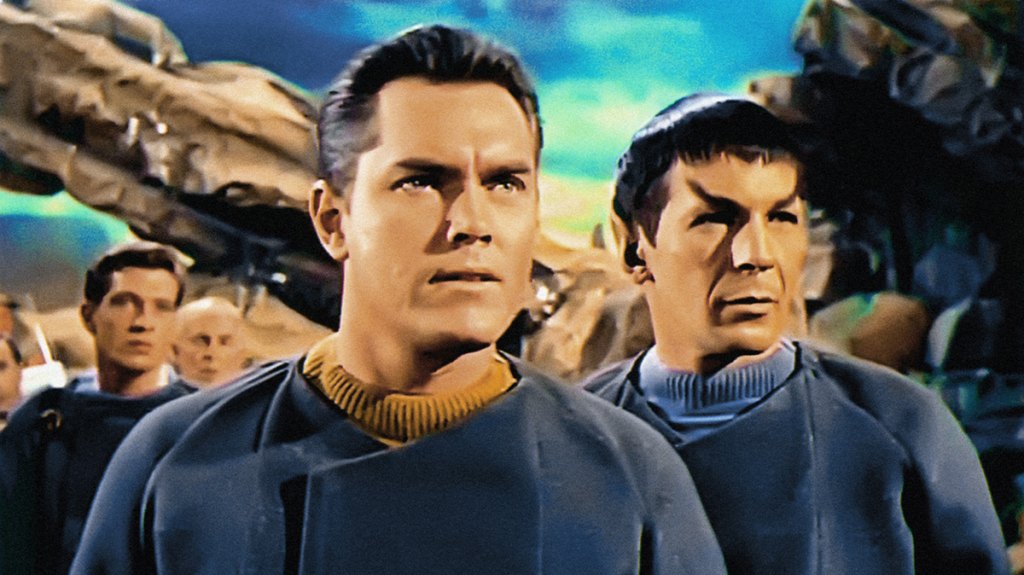
The version of Spock seen in the original pilot, “The Cage,” was very different from the one audiences would eventually come to know.
“Number One [Majel Barrett] was originally the one with the cold, calculating, computerlike mind. Spock, at the start, was not quite the character he became. He was the science officer on the Enterprise, but he was sort of Satanic. He even smiled and got mad. He had a catlike curiosity.”
“When we had to eliminate a feminine Number One for a second pilot—I was told you could cast a woman in a secretary’s role or that of a housewife, but not in a position of command over men on even a 23rd century spaceship—I combined the two roles into one. Spock became the second in command, still the science officer but also the computerlike, logical mind never displaying emotion.”
Desilu says ‘yes’

“Desilu was the only studio that would take it. The reason Desilu took it was because they had gone five years without selling a pilot and they were desperate. They said, ‘We’ll even try Roddenberry’s crazy idea!’ I think we would have had an easier time with it if we’d been at a bigger studio with more special-effects departments and so on, but it probably wouldn’t have ended up much different.”
Captain Christopher Pike
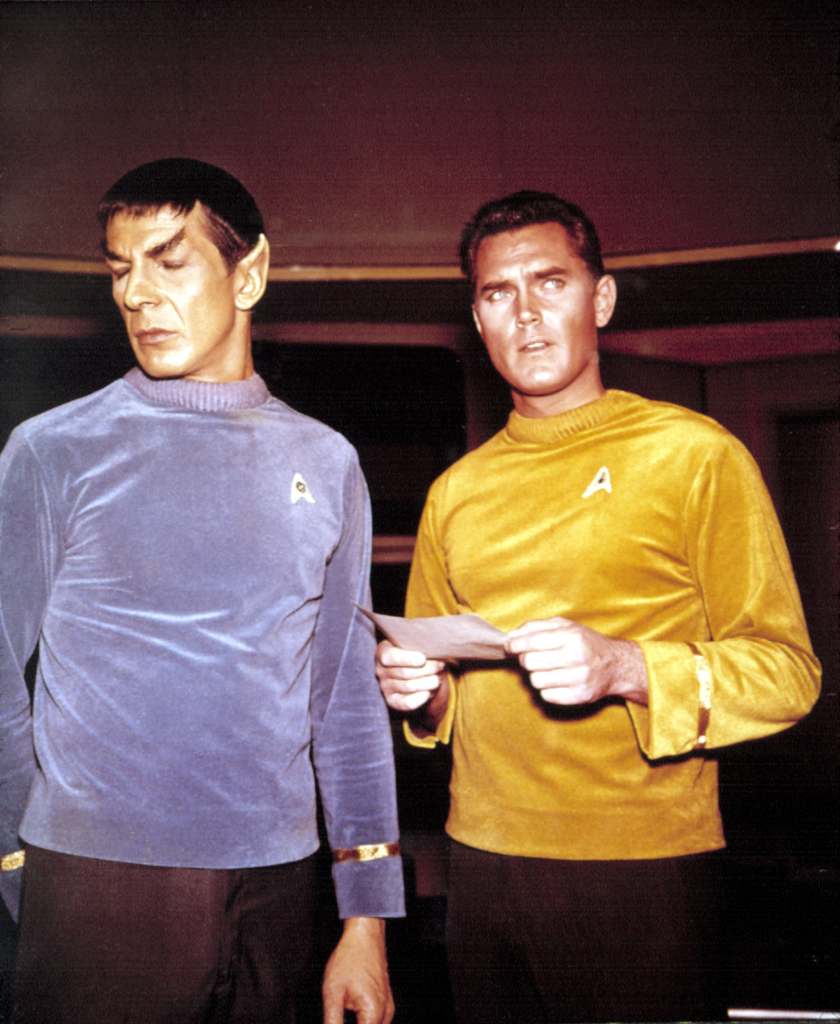
“When it came to the role of Captain Christopher Pike in ‘The Cage,’ we considered a number of actors, including Lloyd Bridges. I remember Lloyd was very much under consideration, except when I approached him with it, he said, ‘Gene, I like you, I’ve worked with you before in the past, but I’ve seen science fiction and I don’t want to be within a hundred miles of it.’ I understood what he meant then, because science fiction was usually the monster of the week. I tried to convince him that I could do it differently, but at the time, I wasn’t sure that I would treat it differently.”
Rejecting ‘The Cage’

The pilot eventually starred Jeffrey Hunter as Pike, but when NBC reviewed the finished production, the reaction was mixed.
“The reason they turned it down was that it was too cerebral and there wasn’t enough action and adventure. ‘The Cage’ didn’t end with a chase and a right cross to the jaw, the way all manly films were supposed to end. There were no female leads then—women in those days were just set dressing. So, another thing they felt was wrong with our film was that we had Majel as a female second-in-command of the vessel. It’s nice now, I’m sure, for the ladies to say, ‘Well, the men did it,’ but in the test reports, the women in the audience were saying, ‘Who does she think she is?’ They hated her.”
The problem with Spock
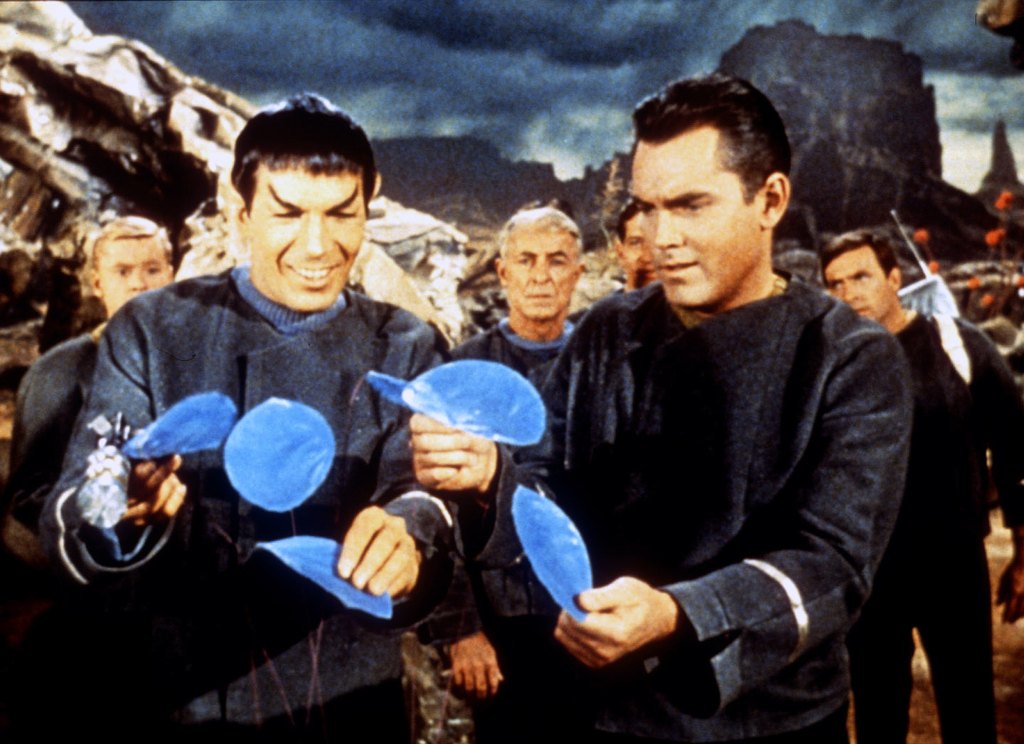
“We had what they called a ‘childish concept’—an alien with pointy ears from another planet. People in those days were not talking about life forms on other worlds. It was generally assumed by most sensible people that this is the place where life occurred and probably nowhere else. It would have been all right if this alien with pointy ears, this ‘silly creature,’ had the biggest zap gun in existence, or the strength of a hundred men, that could be exciting. But his only difference from the others was he had an alien perspective on emotion and logic. And that didn’t make television executives jump up and yell, ‘Yippee.'”
“The idea of dropping Spock became a major issue. I felt that was the one fight I had to win, so I wouldn’t do the show unless we left him in. When they initially wanted Spock dropped, it was one of those cases where you go home at night and pound your head against a wall and say, ‘How come I am the only one in the world that believes in it?’ But I said I would not do a second pilot without Spock because I felt we had to have him for many reasons. I felt we couldn’t do a space show without at least one person on board who constantly reminded you that you were out in space and in a world of the future.”
Pilot 2: ‘Where No Man Has Gone Before’
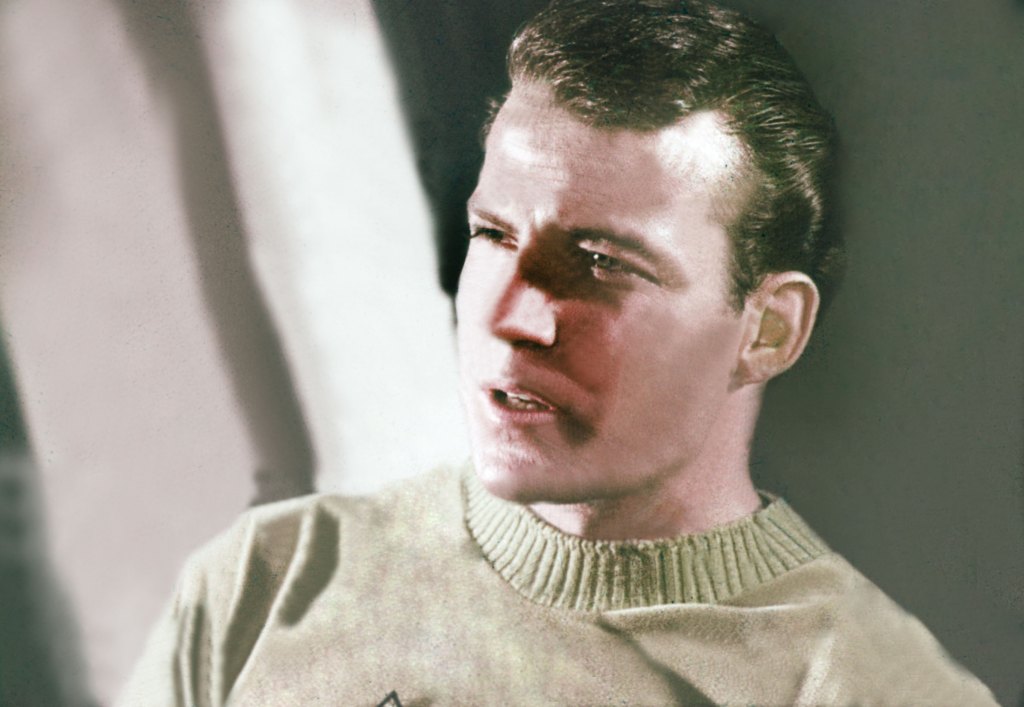
NBC eventually agreed to move forward with a second pilot, but significant changes would be required. One of the biggest involved Captain Pike.
“Jeffrey Hunter decided he did not want to come back and play Pike again. I thought highly of him and he would have made a grand captain, except his family convinced him that science fiction was really beneath him.”
“At that time, we were putting Star Trek on, TV was full of antiheroes, and I had a feeling that the public likes heroes. People with goals in mind, people with honesty and dedication, so I decided to go with the straight heroic roles, and it paid off. My model for Kirk was Horatio Hornblower from the C. S. Forester sea story that I always enjoyed. We had a great deal of trouble casting it; many actors turned us down, and later on, of course, wished they hadn’t. But science fiction at that time had a very bad name and many serious actors had made up their minds because what they had seen on TV was so bad they didn’t want their name associated with it.”
“William Shatner was available, he needed a show, was open-minded about science fiction and a marvelous choice because he did great things for our show. I was happy to get him. I’d seen some work he did, and I thought he was an excellent choice, no question of it at all.”
Enter Scotty
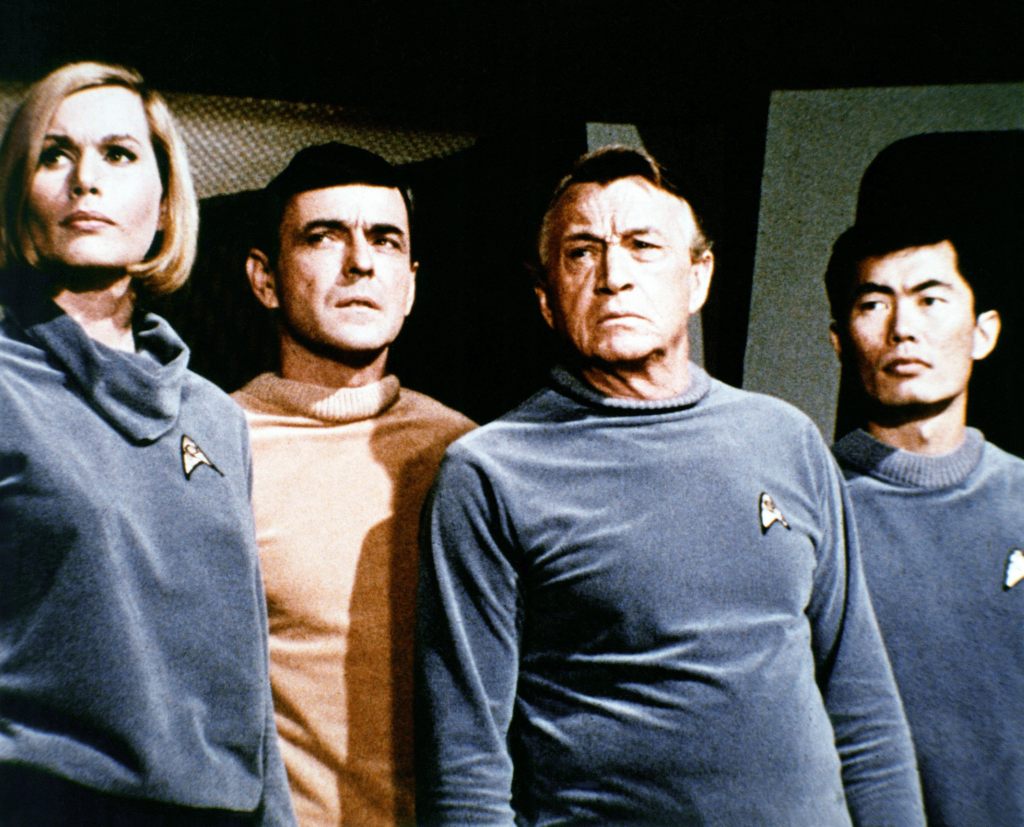
Another key member of the crew arrived thanks to “Where No Man Has Gone Before” director James Goldstone.
“I had never worked with him, but director James Goldstone brought James Doohan in and asked him if he could do a Scottish accent. He did like an hour and a half of accents and had us falling on the floor laughing, so there was never any doubt that he had the job.”
The strengths of the second pilot
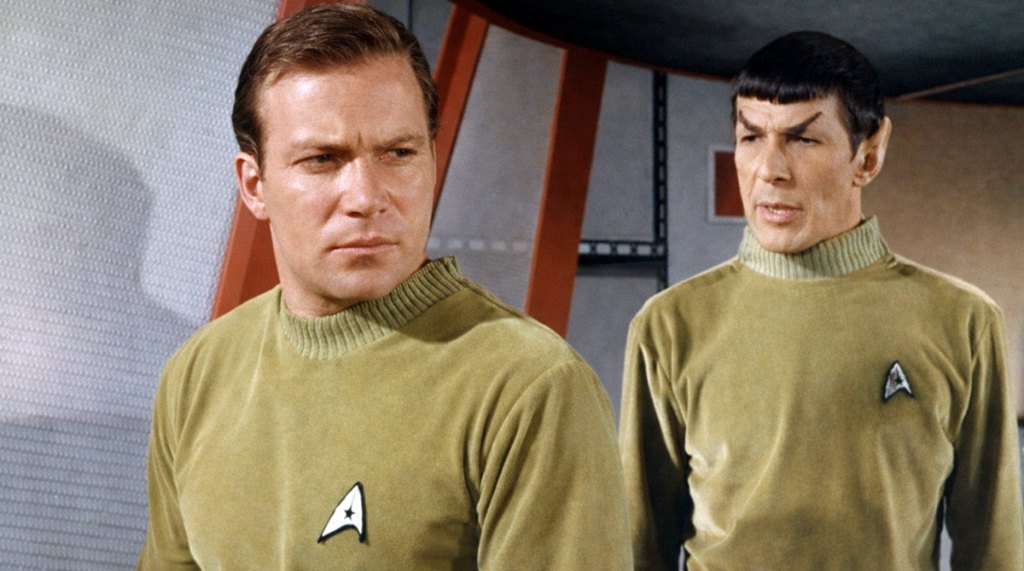
As production moved forward, Roddenberry also found himself refining the concept itself.
“When you get into science fiction, you’re lucky if 75 percent of your pilot is believable, because you’re creating, in space science fiction, everything new. It was very helpful to be able to do one pilot, take a look at it, and then do a second. The second pilot was really better in many ways because we had a chance to look at the costume work, how the gadgets worked and all that. And the second pilot seemed to have great concepts with humans turning into gods. But they were nice, safe gods, gods who go, ‘Zap! You’re punished!’ Kind of like the guys you see on those Sunday morning shows.”
‘Star Trek’ goes to series
“The biggest factor in selling the second pilot was that it ended up in a hell of a fistfight with the villain suffering a painful death.”

After years of development, two pilots, network resistance, casting changes and countless creative battles, Star Trek was finally headed to series. Only then could Roddenberry begin doing what he had wanted to do all along.
“Then, once we got Star Trek on the air, we began infiltrating a few of our ideas into it, the ideas the fans have all celebrated.”
Conversation
All comments are subject to our Community Guidelines. Woman's World does not endorse the opinions and views shared by our readers in our comment sections. Our comments section is a place where readers can engage in healthy, productive, lively, and respectful discussions. Offensive language, hate speech, personal attacks, and/or defamatory statements are not permitted. Advertising or spam is also prohibited.