As the BBC ‘Doctor Who’ Faces Future Uncertainty, One Fan’s Doctor Is Finding a Growing Audience
From 'Star Trek' to 'Stargate,' fandom has sustained franchises before—and is again with 'Doctor Who'

Key Takeaways
- One fan-created Doctor is attracting attention as the BBC rethinks the 'Doctor Who' series
- The Battle-Doctor is inspiring artwork, stories and a growing fan community.
- The Battle-Doctor is the latest example of fans keeping beloved franchises alive.
The timing couldn’t be more interesting. Just as the BBC has announced that Doctor Who is being put out to competitive tender, effectively placing the long-running sci-fi series on pause while its future is determined, an entirely different Doctor has begun attracting attention online. She doesn’t appear on television, isn’t part of any official BBC production and exists entirely in the imagination of one devoted fan. Yet in recent weeks, the AI-generated Battle-Doctor—featured on a dedicated Facebook page—has quietly built a following of her own.
Created by lifelong Doctor Who fan R.A.D. Cooper, the Battle-Doctor, is a darker, more haunted incarnation of the Time Lord—one shaped by centuries of loss, conflict and regret. But what began as a creative experiment has unexpectedly resonated with fellow fans, generating artwork, discussion, story ideas and even offers to create collectibles based on the character. For Cooper, the project’s growth has been as surprising as anyone’s. “This was the first thing that was a total stab in the dark that’s just absolutely ballooned,” he says.
On the surface, it might seem like an amusing bit of fan creativity arriving at precisely the right moment, but viewed through the larger history of genre fandom, the Battle-Doctor represents something much bigger. Because this isn’t the first time fans have stepped forward when a beloved franchise found itself in limbo.

From ‘Star Trek’ to ‘Doctor Who’ and ‘Stargate’

In fact, sci-fi history is filled with examples of passionate audiences refusing to let their favorite worlds disappear while studios, networks and rights holders decide what comes next. The most famous example may be Star Trek. When NBC canceled the original series in 1969, there was no guarantee Captain Kirk and Mr. Spock would ever return. Instead, fans transformed the franchise into a cultural phenomenon through conventions, fanzines and grassroots enthusiasm. Their efforts kept interest alive long enough for Star Trek: The Animated Series, the planned Star Trek: Phase II television series and ultimately Star Trek: The Motion Picture. Without fandom, there’s a strong argument that modern Star Trek simply wouldn’t exist.
Doctor Who experienced a remarkably similar journey. After the original series ended in 1989, the Doctor largely vanished from television for more than a decade, save for the 1996 Paul McGann television movie. Yet the franchise never truly went away. Fans sustained it through conventions, novels, magazines, websites, fan films and audio dramas. By the time that Russell T Davies revived the series in 2005, he wasn’t resurrecting a forgotten property, but was reconnecting with a fan community that had spent years keeping it alive.

More recently, Stargate demonstrated the same phenomenon. Long after the television franchise went dormant, fan communities like GateWorld and Dial the Gate became gathering places where viewers continued celebrating and discussing the series. In fact, when Amazon sought to engage the fandom regarding a potential revival, it turned directly to those fan-driven platforms to spread the news (this before they changed their corporate mind and canceled the reboot).
The pattern is difficult to ignore: when an official franchise pauses, fans rarely do, and that’s where the Battle-Doctor enters the story.
Meet the Battle-Doctor
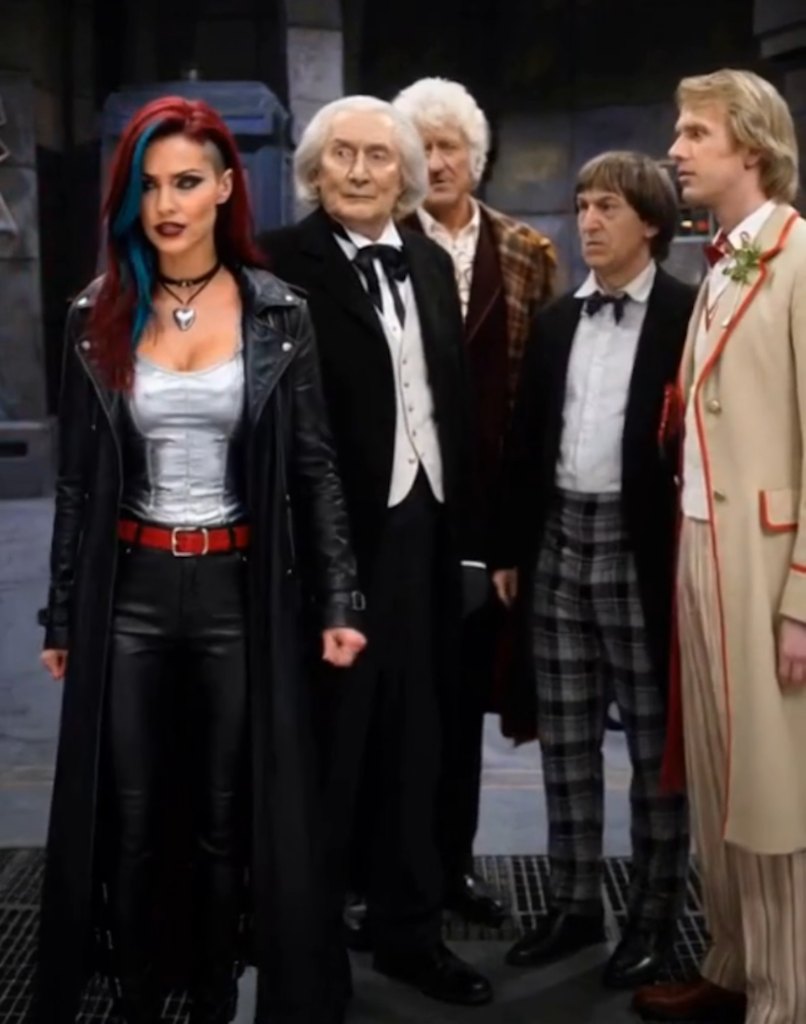
According to Cooper, the Battle-Doctor emerged from a simple question: what would happen if the Doctor’s accumulated trauma finally became impossible to ignore? “I wanted to write a Doctor that would be intense, that would be strong, that could be independent, but also lean into the darker side of the Doctor to the point where it would almost consume her, so she had to rely on a few other people to make her step back, which I thought was an interesting twist on the character.”
In Cooper’s backstory, a regeneration goes wrong. Rather than emerging as a fresh incarnation, the Doctor is overwhelmed by memories stretching back across centuries. “The Doctor’s memories of the battles and everything else all poured into the regeneration, which created the Battle-Doctor,” he explains. “And she’s incredibly haunted by everything she’s done in the past, but she’s also a lot more aggressive.”
Unlike most modern incarnations, the Battle-Doctor travels alone. Cooper believes the character sees herself as too dangerous to expose companions to the consequences of her decisions. “The universe throughout the Doctor’s timeline has gotten meaner and harder,” he says. “She’s having to be harder, make tougher decisions and she’s a lot more impulsive. She’s very much an ‘act now, ask questions later’ kind of thing.”

Yet Cooper also understands that the Doctor traditionally needs someone to challenge and ground them. His solution was inspired: a holographic version of Paul McGann’s Eighth Doctor who exists within the TARDIS itself. “He’s the Jiminy Cricket to the Battle-Doctor,” Cooper says. “He’s the one that stops her from completely going over the edge.” That relationship creates the central tension of the character. The Battle-Doctor wants to be stronger than her previous selves, but she also fears becoming something worse.
In Cooper’s long-term plans, that fear takes shape in the form of the Valeyard, the dark future incarnation of the Doctor who believes the Battle-Doctor can ultimately be manipulated into becoming him.
The strength of the Battle-Doctor

What makes the Battle-Doctor noteworthy isn’t that she’s an unofficial Doctor. It’s that she’s exactly the kind of creation that tends to emerge whenever a franchise enters a period of uncertainty. Cooper wasn’t responding to the BBC’s latest announcement when he created the character, yet his work arrives at a moment when fans once again find themselves wondering what the future of Doctor Who will look like, and the answer, ultimately, won’t come from one fan project. It will come from whatever direction the BBC chooses as the series enters its next phase.

But the Battle-Doctor serves as a reminder that the health of a franchise has never been determined solely by the people who own it, but, instead, oftentimes by the people who love it. And whether the Battle-Doctor remains a fan project or grows into something larger, Cooper has already accomplished something unexpected.
He shares, “I’ve got a lot of people saying, ‘Oh, you’ve inspired me to do this. I’ve had this character, and what you’re doing is something I want to do as well.’ That was completely unexpected.”
Now, as the TARDIS sits temporarily parked while the BBC charts its next course, one fan-created Doctor is demonstrating that the imagination of the fandom remains as active as ever. So, whether the next official Doctor arrives in two years or five, fans will almost certainly still be there when the doors of the TARDIS open once again.
Conversation
All comments are subject to our Community Guidelines. Woman's World does not endorse the opinions and views shared by our readers in our comment sections. Our comments section is a place where readers can engage in healthy, productive, lively, and respectful discussions. Offensive language, hate speech, personal attacks, and/or defamatory statements are not permitted. Advertising or spam is also prohibited.