Why Everyone Is Talking About Pierce Brown’s ‘Red Rising’—the Sci-Fi Series Readers Can’t Resist
From Darrow's rise to BookTok buzz, here's why 'Red Rising' became a modern sci-fi phenomenon

Key Takeaways
- Discover why 'Red Rising' has become one of science fiction's biggest success stories.
- Meet Darrow and the unforgettable saga that's captivated millions of readers.
- Learn where to start if you're ready to dive into the sci-fi book series.
For years, Red Rising quietly built one of the most passionate fan communities in modern publishing. While readers eagerly anticipated new books from Brandon Sanderson, James S.A. Corey and Rebecca Yarros, Pierce Brown‘s science fiction saga spread largely through word of mouth, with fans recommending it to friends, BookTubers unable to stop talking about it and Reddit discussions stretching into thousands of comments. Yet outside those circles, many readers had never even heard of Darrow, the Society or the Color hierarchy. Until they did.
As BookTok embraced the series, gorgeous collector’s editions began appearing in bookstores. On top of that, new readers started sharing emotional reaction videos after finishing the books, often warning others to avoid spoilers at all costs. Suddenly, Red Rising had become one of those rare series that seemed to be everywhere.
What Is ‘Red Rising’ about?
The story follows Darrow, a young Red—a caste in a strict, color-coded hierarchy engineered by the ruling Gold caste—who spends his days mining beneath the surface of Mars. Like everyone around him, he believes his dangerous work is helping prepare the planet for future generations, but after a devastating personal loss, he discovers that everything he’s been taught is a lie. Mars has already been colonized, humanity already thrives among the stars and Reds aren’t pioneers building a better future, but rather an exploited underclass, deliberately kept in the dark. Determined to bring down the system responsible, Darrow undergoes an extraordinary transformation that allows him to infiltrate the ruling Gold class from within.

If that setup sounds a little like The Hunger Games, you’re not imagining it. Many readers notice those initial YA dystopian parallels, but reviewers and fans urge newcomers to stick with it past the opening act. As book content creator Captured in Words noted on YouTube:
“Book one on a surface level is kind of like The Hunger Games meets Ender’s Game meets Gladiator, but that’s just the beginning. The next books in the saga open this up to a full-blown epic space opera, and it’s incredible.”
That shift toward an expansive, gritty space opera was fully intentional on the author’s part. Reflecting on his process, author Pierce Brown explained that he built the series around an evolving emotional arc rather than a rigid plot blueprint:
“I planned on getting darker and darker. I didn’t so much have the events plotted out and the narrative arcs plotted out as I had the tonal structure plotted out because that’s more how I operate. I usually have a tone for something and then have to figure out everything else. Some authors are very, very good at creating these great outlines that are very detail-driven and then they don’t really stray too far from them. I stray very far from them because I know the tone I want, but I don’t know necessarily how I’m going to achieve it.”
For Brown, expanding the scope meant taking a hard, realistic look at what actually happens after a revolution succeeds:
“For me, this journey was always about an archetypal rebellion in the first three books and then digging into the disillusionment of characters, of the rebellion not panning out the way they wanted, making it more realistic as it goes. So really embrace the archetype and then dig into the difficulties of violence, the difficulties of the things these characters did in their youth. And then seeing whether or not the idea that they had, this noble idea of the Republic and of liberty, can sustain itself even when faced with its own demons. So it’s about that journey. And so it has to be darker because of that.”
Who is Darrow?
At the beginning of the series, Darrow isn’t a legendary hero. Instead, he’s a miner who believes he’s sacrificing his life so future generations can one day live on Mars. He’s proud of his work, devoted to his family and convinced that suffering today will create a better tomorrow. Then everything he believes is ripped away.
What follows isn’t simply the story of one man seeking revenge. It’s the story of someone forced to reinvent himself over and over again, from infiltrator to soldier, a revolutionary and ultimately a leader. With every victory comes another impossible decision, and with every success comes another consequence he never anticipated.
That shift from straightforward revenge to a far more complex exploration of power and violence was intentional for Pierce Brown, who wanted to evolve beyond basic power fantasy as the series grew:
“I think that part of what was so fun about the first trilogy was the pacing and the wish fulfillment, not just of the reader, but of the main character, of being ineffectual and small and having so much anger, wanting it vented out on people, and then getting to realize it. There’s parts in there where Darrow just enters a room full of people and then he just says, ‘And I killed them all.’ And that’s cathartic. But I feel as though as you write more, you want to get a little bit more complicated because you’re interested in the things you haven’t explored yet. So if these books stayed the same, then I wouldn’t have as much fun writing them. I wouldn’t be interested. I wouldn’t be intrigued because I’m not the kind of writer that’s trying to tell the reader what to think. I’m trying to just investigate things myself. Investigate themes, investigate characters, and investigate concepts like violence.”
That complexity is something readers frequently point to when explaining why the series stays with them long after they’ve finished it. Darrow is brave, but he’s also stubborn. He’s inspiring, but he’s deeply flawed. He’s capable of extraordinary acts of compassion and extraordinary acts of violence, often within the same chapter. Those contradictions make him feel less like an action hero and more like a real person trying to navigate an impossible world.
It’s precisely this friction between Darrow’s raw flaws and his strategic growth that makes his arc so compelling to fans. As book reviewer Captured in Words highlights:
“Darrow is proud, angry, sometimes reckless, but he is relentlessly driven and the story keeps forcing him to choose between being feared and actually leading. And what I loved is how often he fails, adapts and then changes the other people around him by outthinking rather than just outfighting.”
Understanding the society
One of the reasons Red Rising stands apart from so many other science fiction series is that its world feels both enormous and surprisingly easy to understand, with everything revolving around the Color hierarchy.
Humanity has divided itself into a rigid caste system, with every Color created to serve a specific purpose. At the top are the Golds, genetically engineered rulers who believe strength gives them the right to lead. Beneath them are dozens of other Colors, each assigned a role that keeps society functioning. Grays become soldiers and police. Blues pilot the fleets. Coppers administer government. Obsidians are raised as warriors. At the very bottom are the Reds, who are miners, laborers and workers who spend their lives believing they’re sacrificing everything so future generations can one day inhabit Mars. It’s a lie that’s been carefully maintained for centuries, and once Darrow discovers the truth, the entire series is set in motion. And what makes the system so effective as worldbuilding is its simplicity.
What makes this system so effective as worldbuilding is its simplicity—a foundation that book reviewer Captured in Words points out allows for incredible cultural depth:
“The Color caste system is simple to grasp, but it’s surprisingly deep in practice. You have the Golds using these razors, these morphing whip blades. We have grav boots, dueling codes, family politics that all feel half mythic and half futuristic. I really enjoyed the Roman flavor blended with sci-fi tech in this series.”
That Roman influence can be found in the names, the politics and the obsession with honor, conquest and legacy. The Golds don’t simply govern; they see themselves as the natural heirs to the great empires of history. It’s one of the reasons the world feels so distinctive—rather than relying solely on futuristic technology, Brown blends ancient ideas with science fiction, creating a civilization that feels strangely familiar despite taking place hundreds of years in the future. Just as importantly, you don’t need a degree in astrophysics to enjoy it.
For readers who normally avoid science fiction because they worry it’ll be filled with technical jargon or complicated scientific explanations, Red Rising takes a different approach. The technology serves the story rather than the other way around.
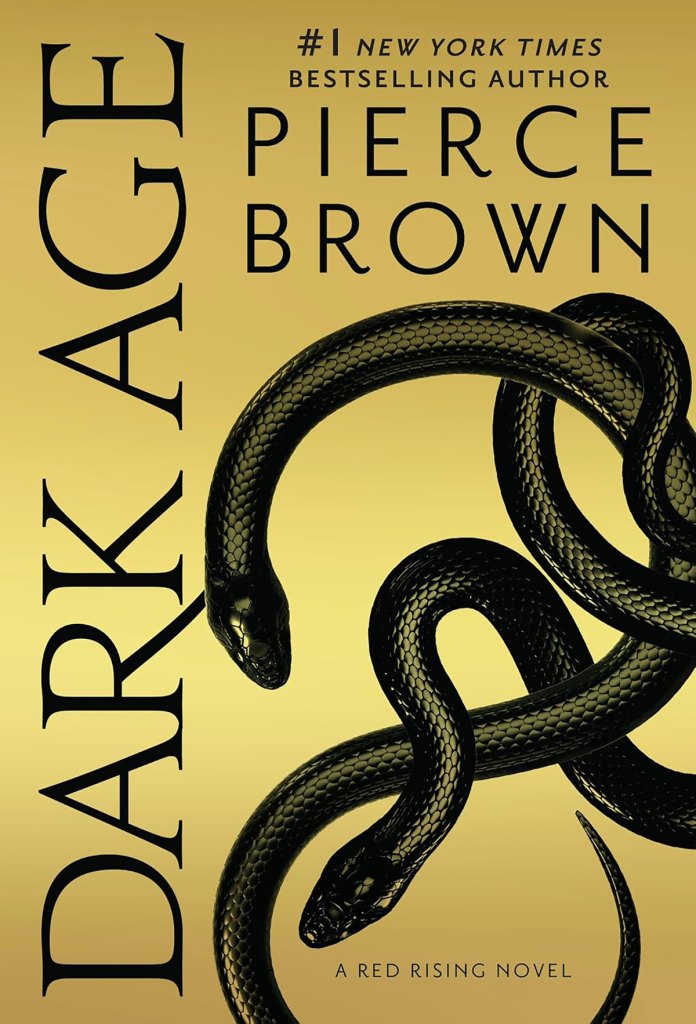
As the narrative expands beyond the initial trilogy, however, the storytelling evolves alongside its characters into something far richer and more emotionally demanding. Describing this tonal and stylistic leap in the later books, Dan from Dan’s Books YouTube channel observed:
“When I got to these ones, four, five, and six, they’re much heavier. They’re not as addicting in the same way because these are depression, but also some joy, but more characters to fall in love with and be devastated by. At the same time, the writing gets better. You can tell that as we go from this first trilogy to the next part of this series, Pierce has become a better writer. The prose improve, the way he describes things improves, the way he connects you to characters improves. It changes and adapts.”
Why has ‘Red Rising’ become such a phenomenon?
Every year, publishers release thousands of science fiction and fantasy novels, but only a handful become books that readers can’t stop recommending—Red Rising is one of them.
What’s interesting is that its “rise” hasn’t followed the usual blockbuster formula. There wasn’t a movie adaptation that suddenly pushed it into the spotlight or a celebrity book club that introduced it to millions of readers overnight. Instead, the series built its momentum the old-fashioned way: through organic, word-of-mouth enthusiasm across online reader communities.
That massive grassroots hype often makes skeptics hesitant at first. Book reviewer Dan from Dan’s Books admitted he was initially one of the series’ biggest doubters before finally caving in:
“Are there books in 2026 more hyped than the Red Rising series? I don’t know if there are, but is it warranted? I myself was the biggest hater of Red Rising. I did not want to read it and I had no intentions of reading it. I thought this was just the most over-hyped thing I’d ever seen on BookTok, on Bookstagram, on BookTube. It was everywhere. Everybody’s talking about it, so, naturally, it must be sh**. Why would everybody be talking about it? Does that make sense? No, it doesn’t. Popular things, are they always good? No, they’re not. But if everybody, literally everybody, cannot shut up about something, usually there’s at least some merit to it.”

Once Dan actually picked up the first novel, however, his skepticism vanished almost instantly:
“After six months of me refusing to read these books, I caved. I got the first one. I’m, like, ‘All right, I’ll read the first one. Let’s see what’s up with the first one. If it’s sh**, I don’t got to buy the rest.’ I read this book in three days. And then I bought this book. And I read this book in three days. And I bought this book the day that I bought Golden Son, and I read it in four days. It’s a little longer. Give me a break. The addiction that I had to these books was unrivaled since I read Harry Potter when I was a teenager. That’s the type of feeling that I got when I was reading these again. It was pure addiction. I could not stop; I did not want to stop. I did not feel bored at any point in time. It lived up to the hype for me.”
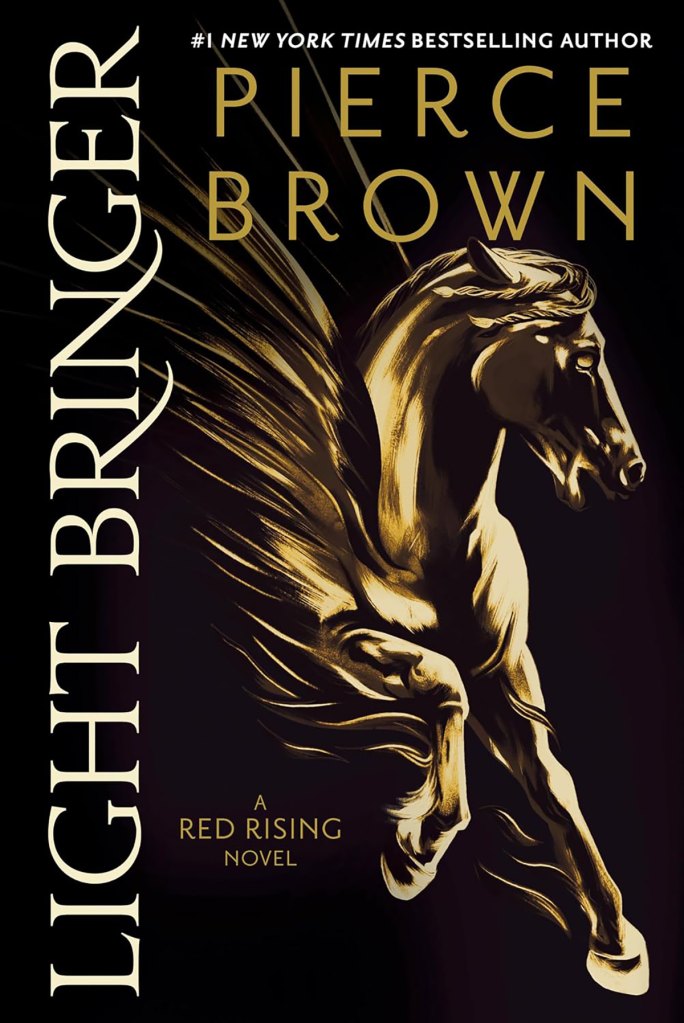
Part of what fuels that uncontrollable reading pace is the breakneck velocity Pierce Brown builds into the narrative structure. As Captured in Words points out, once the foundational setup is complete, the story rarely lets readers catch their breath:
“After a few setup chapters in book one, it then hits a nitro switch and the middle of this book is relentless. And then the last third is a string of these ‘oh wow’ moments that kept me glued to the page. If you like your stories to escalate, this one climbs fast.”
That remarkable, long-term staying power has surprised no one more than Pierce Brown himself. Looking back nearly a decade after the initial launch, the author credits passionate readers, rather than publisher promotion, for turning the series into an enduring cultural staple:
“I was more surprised that I guess it got picked up than I was about it being successful, because it was successful and it debuted on the list at number 15. But it wasn’t like people were talking about it on Good Morning America or anything. Red Rising’s growth has been the most surprising thing and how long its legs have proven nine years after its initial release. People are still reading it. To be honest, it had a lot of marketing push behind it. I felt as though the marketing push made it seem like it would hit the list to me, but the marketing push can’t sustain a book. That has to be readers and grassroots enthusiasm. So I think that staying power has been much more impressive and startling to me.”
What’s next for ‘Red Rising’?
For fans, the biggest question isn’t whether there will be another Red Rising book; it’s when they’ll finally get to read it. The upcoming seventh novel, Red God, is expected to bring Darrow’s story to its conclusion, wrapping up a saga that has grown from a single revenge story into one of modern science fiction’s most ambitious series. But, again, the question is when.
While constant inquiries about release dates can wear on any author, Pierce Brown views the anticipation with gratitude, even reflecting on how his writing mindset has evolved since the early days:
“On a day when I was tired, I might get snippy about that question. But at the same time, you’ve got to recognize the blessings that there are so many people eager for it, that people like this series, that the next book is anticipated. It’s been a while since I’ve written a book thinking no one would read it. I wrote Red Rising thinking no one would read it; that’s why I killed Pax in that one. I thought no one would read him. I’m like, ‘F**k it, let’s just throw it all in and kill the most lovable character.’ Then I got addicted to that.”
He will, however, complete the saga. “I find it a violation of my contract with the reader to be writing other novels when this one’s not done.”
That relationship with readers extends beyond the books themselves. For years, fans have also been waiting for news about a television adaptation. Rumors have surfaced, disappeared and resurfaced again, but Brown has consistently emphasized that he’s more interested in getting the adaptation right than getting it made quickly.

Recalling his early experiences navigating the Hollywood studio system, Pierce Brown shared why he ultimately took back control of the project:
“I showed up to Hollywood, there was a bidding war between Sony and Universal and I thought it was going to get made. Then it got stuck in development hell—I wrote the first 13 drafts. Eventually they hired another writer, and when I read that draft, I was actually thanking Athena that it was so bad because I knew there was no way they could make it. I got the rights back and I held onto them because I didn’t want to get squashed again. They were changing so many things; one idea was making Sevro a girl and creating a love triangle with Mustang and Darrow. The love triangle was already there. It was Eo, Mustang and Darrow—but I kill one corner of it. Then the story becomes about how Darrow honors someone he truly loved instead of asking, ‘Who do I choose?’ That’s a far more interesting story.”
For readers, that’s probably reassuring. Hollywood has adapted countless beloved novels over the years, sometimes brilliantly and sometimes disastrously. Brown’s willingness to slow the process rather than compromise the story suggests he sees himself not simply as the author, but as the steward of a world millions of readers have come to love.
How to dive into the series
If you’ve made it this far and are ready to jump into the world of Red Rising, the starting point is refreshingly simple: begin on page one of book one. Although the saga eventually expands into a sprawling space opera, every major relationship, rivalry, and political shift grows directly out of Darrow’s initial journey. The temptation to skip ahead because you’ve heard the later entries are even bigger and darker is understandable—but don’t do it. Much of what makes the series so rewarding is watching the scope expand naturally, one book at a time.
The publication and reading order is straightforward:
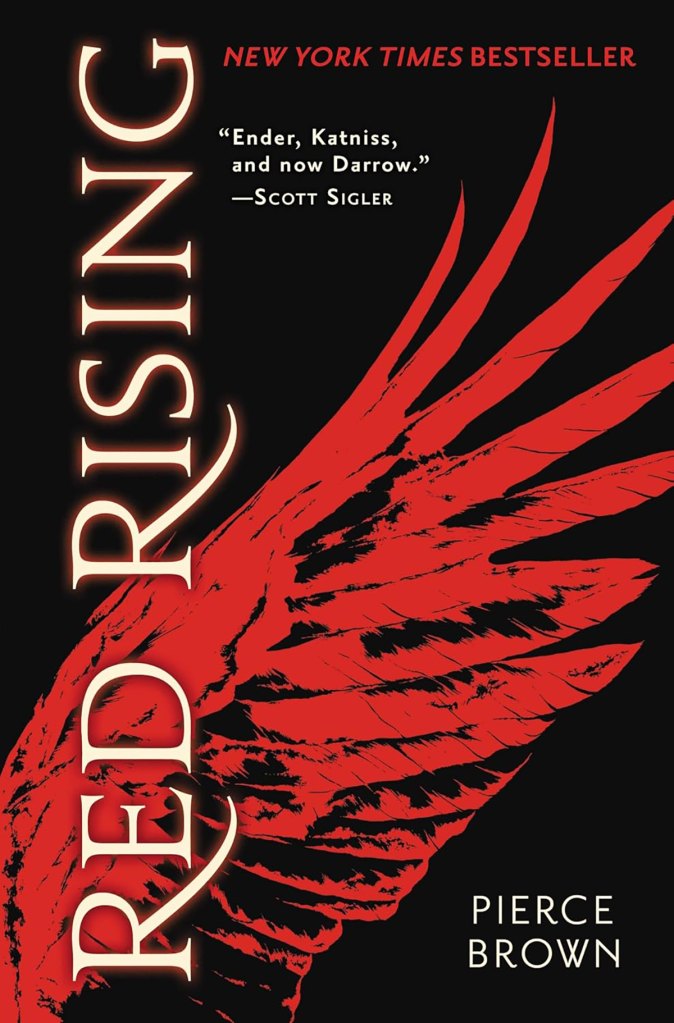
- Red Rising
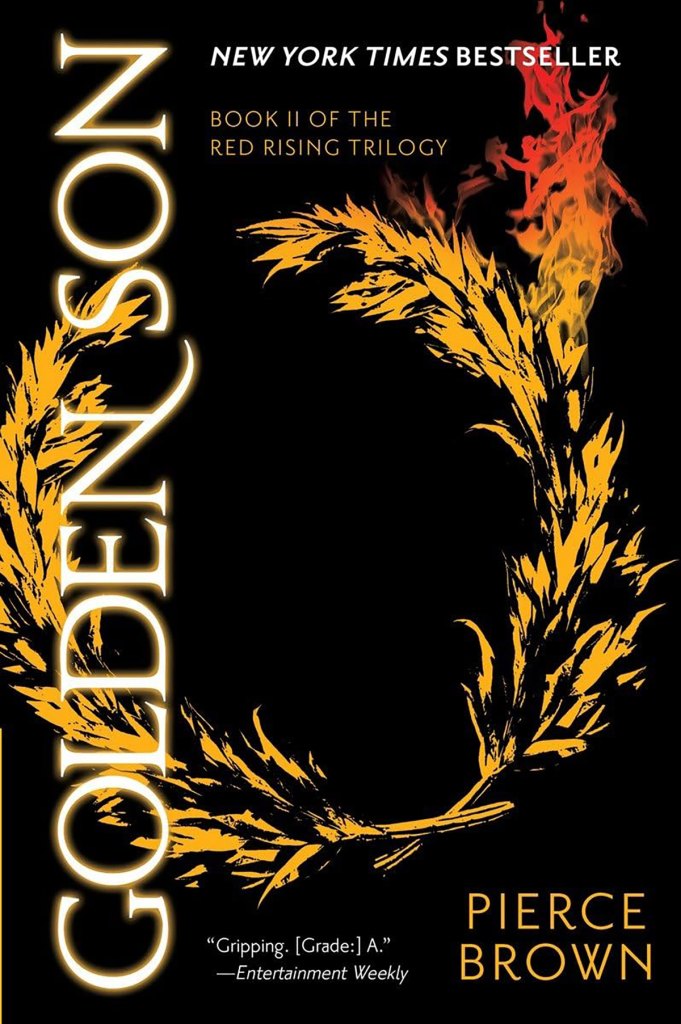
- Golden Son
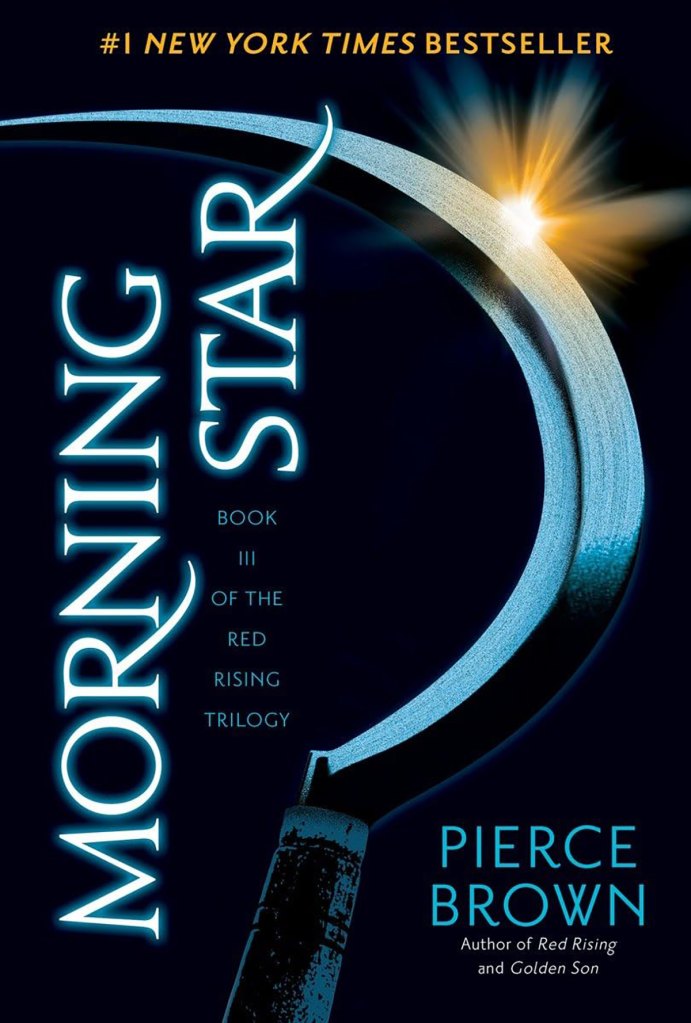
- Morning Star
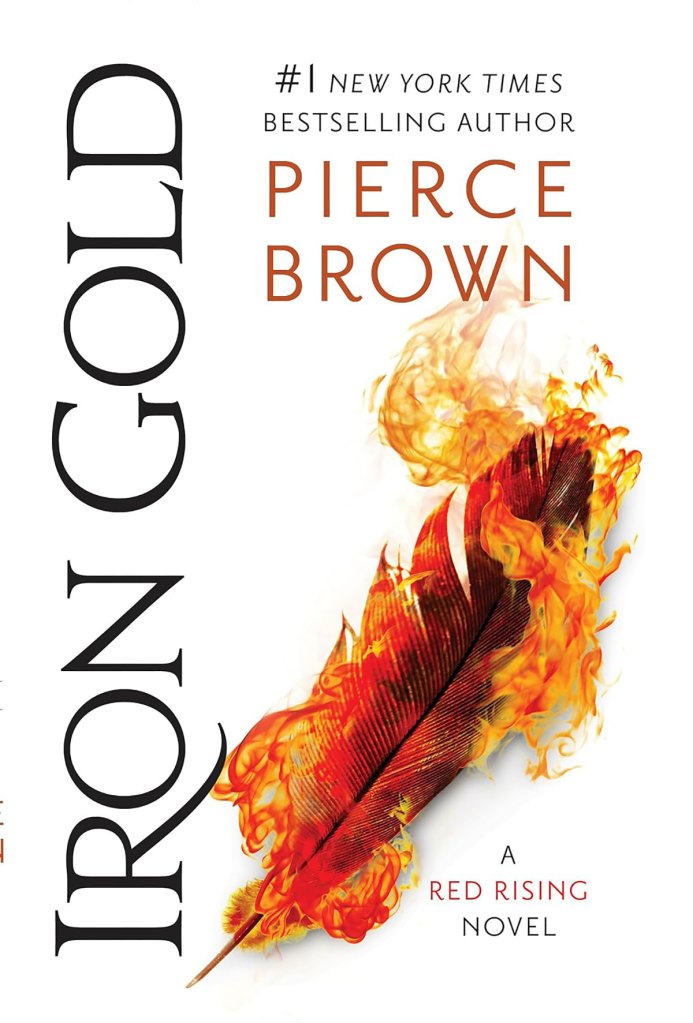
- Iron Gold
- Dark Age
- Light Bringer
- Red God (forthcoming)

(Pro tip: If audiobooks are your preferred format, many diehard fans argue narrator Tim Gerard Reynolds gives one of the best voice performances in modern sci-fi.)
Looking at the massive fanbase from the outside, it’s easy to wonder if the enthusiasm surrounding Pierce Brown’s universe is a bit exaggerated. But as book reviewer Dan from Dan’s Books sums up, the series earns every bit of praise it gets:
“The main thing that I want to get across is that the hype is warranted. Is this literary excellence when we’re comparing to masterworks of the past? Probably not, but is that what you’re reading for? I’m here to have fun. If that’s what you’re looking for, that’s what you’re going to get right here with Red Rising. Give it a try. Come back and thank me later.”
Conversation
All comments are subject to our Community Guidelines. Woman's World does not endorse the opinions and views shared by our readers in our comment sections. Our comments section is a place where readers can engage in healthy, productive, lively, and respectful discussions. Offensive language, hate speech, personal attacks, and/or defamatory statements are not permitted. Advertising or spam is also prohibited.