Remembering Gene Hackman: 20 Things to Know About His Legendary Life and Career
From 'The French Connection' to 'Superman' and ‘Unforgiven,' we’re honoring his incredible legacy

People were stunned by the death of screen legend Gene Hackman on February 26, 2025, not so much because a 95-year-old had passed away, but the bizarre circumstances surrounding that passing: Hackman, his wife, Betsy Arakawa; and their dog were all found deceased by police at their home in New Mexico. Yet while all of that is being sorted out, we’re offering up this tribute to the life and career of one of Hollywood’s greats.
1. Gene Hackman’s difficult childhood

Gene Hackman was born Eugene Allen Hackman on January 30, 1930, in San Bernardino, California. His early childhood was marked by frequent moves due to his father’s unstable employment, and the family eventually settled in Danville, Illinois, when Gene was still young. He was raised in a working-class family, and his parents, Lyda and Eugene Ezra Hackman, divorced when he was 13 years old. The separation had a lasting effect on him, particularly because his father walked out on the family without saying goodbye. Hackman later recalled watching his father leave and never return, which instilled in him a sense of emotional toughness that would inspire many of his performances.
In Danville, Hackman attended Danville High School, where he was more interested in sports than academics. He was tall for his age, sometimes making him seem older than his classmates, a trait that later helped him in Hollywood. However, he struggled in school and found authority figures restrictive, which may have contributed to his decision to leave home at a young age. Despite his rough childhood, Hackman later credited Danville as the place where he first developed a love of storytelling, as he spent time at local theaters watching movies that would inspire him.
2. He joined the Marines

At just 16 years old, Hackman was eager to escape his home life and enlisted in the U.S. Marine Corps—despite being underage. To do so, he lied about his age, a fact he later admitted with a mix of pride and regret. He was eventually stationed in China, Hawaii, and Japan, serving as a field radio operator during the post-World War II years. His time in the military was formative, exposing him to a broader world beyond the small-town life he had known.
During his nearly five years of service, Hackman experienced strict discipline, which clashed with his natural rebelliousness. He frequently butted heads with authority figures, a theme that would carry over into many of his on-screen roles. However, he also honed his communication skills, which would later serve him well as an actor. After his military service, Hackman was discharged in 1951 and struggled to find direction, briefly working odd jobs before deciding to pursue higher education.
3. His struggles as an actor

After leaving the Marines, Hackman enrolled in the University of Illinois, initially studying journalism and television production. However, he soon lost interest in academics and dropped out. By his mid-20s, he had developed a strong desire to become an actor, though he had no formal training or connections in the industry. Undeterred, he moved to California and enrolled at the Pasadena Playhouse, a prestigious acting school that trained future stars.
Unfortunately, Hackman was far from an overnight success. His instructors were unimpressed with his talent, and he was even voted “least likely to succeed” by his classmates. Instead of discouraging him, this only strengthened his resolve. Hackman later said he used the rejection as motivation to prove them wrong. However, his early years were difficult—he worked odd jobs to make ends meet, including as a doorman at a Howard Johnson’s restaurant, a furniture mover, and even a “soda jerk.” Through it all, his commitment to acting never wavered, and despite repeated rejections, he continued to audition for roles in television and theater.
4. Friendship with Dustin Hoffman and Robert Duvall

After struggling in California, Hackman relocated to New York City in the late 1950s to immerse himself in the theater scene. There, he crossed paths with Dustin Hoffman and Robert Duvall, two other actors trying to make a name for themselves. The three men became close friends and even shared living arrangements at different points, forming a supportive group that helped each other through the inevitable setbacks of a fledgling acting career.
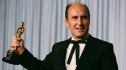
Hoffman and Hackman, in particular, had a unique bond. Both were considered “unconventional” actors, lacking the traditional leading-man looks that Hollywood preferred at the time. Their appearances often led to early rejections, with casting agents dismissing them as character actors rather than stars. They frequently joked about their failures, keeping each other motivated in an industry where rejection was constant. Interestingly, all three men—Hackman, Hoffman, and Duvall—would go on to become Oscar-winning actors and some of the most respected performers of their generation.

Their early days were spent hustling for roles in off-Broadway plays, taking small TV parts and working side jobs to survive. Hackman eventually landed roles in television shows like Route 66 and The Naked City, small opportunities that kept him going until his big break arrived.
5. He got a late start in Hollywood
Unlike many actors who find fame in their 20s, Hackman was well into his mid-30s before he achieved widespread recognition. His rugged, everyman persona didn’t fit the conventional Hollywood mold, and he was frequently overlooked for leading roles. However, his persistence paid off in 1967, when he landed a supporting role in Arthur Penn’s Bonnie and Clyde.
Hackman played Buck Barrow, the older brother of Warren Beatty’s Clyde, in what would become one of the most influential films of the 1960s. His performance earned him his first Academy Award nomination for Best Supporting Actor, finally putting him on Hollywood’s radar and instantly proving the naysayers wrong. At 37 years old, Hackman had gone from a struggling actor scraping by to one of the most in-demand performers in the industry.

The late start to his career ultimately worked in his favor. Because he had spent years refining his craft in theater and television, he arrived in Hollywood as a fully developed actor, able to deliver performances that felt genuine and lived-in. Unlike many young stars who burned out quickly, Hackman’s career would span more than four decades, filled with iconic roles in a wide variety of genres.
6. He was a versatile performer
Hackman never allowed himself to become typecast, seamlessly transitioning between genres. He played hard-nosed detectives, politicians, military officers, sports coaches and even comedic roles. In Mississippi Burning (1988), he delivered a powerful performance as an FBI agent investigating a racially motivated murder. He later brought a hilarious, over-the-top energy to The Birdcage (1996), playing a conservative senator unknowingly caught up in a farcical situation.
7. The importance of ‘Bonnie and Clyde’
Director Arthur Penn’s Bonnie and Clyde is considered to be an important start in the chapter of “New Hollywood,” where maverick filmmakers shook up the status quo of Hollywood at the time. And Hackman was the perfect performer to ride that wave.
8. ‘The French Connection’ (1971)
One of Hackman’s most legendary performances came in 1971 when he played the rough-edged detective Popeye Doyle for director William Friedkin in The French Connection. His portrayal of Doyle, an obsessed cop willing to cross ethical lines, earned him his first Academy Award for Best Actor. The movie’s thrilling car chase sequence remains one of the most famous in cinema history.
9. ‘The Conversation’ (1974)
Directed by Francis Ford Coppola, this psychological thriller starred Hackman as a paranoid surveillance expert caught in a moral crisis. The film is considered one of the greatest thrillers of all time.
10. Lex Luthor in ‘Superman: The Movie’ (1978)
In 1978, Hackman took on one of his most memorable roles, playing Lex Luthor, Superman’s arch-nemesis in Superman: The Movie. Unlike traditional supervillains, Hackman’s Luthor was charming, sarcastic, and even humorous, giving the role a unique spin. He returned for Superman II (1980) and Superman IV: The Quest for Peace (1987), though he famously refused to shave his head for the part, requiring wigs and camera tricks to give the illusion of baldness.
11. ‘Hoosiers’ (1986)
Hackman’s role as Coach Norman Dale in Hoosiers made the film one of the greatest sports movies ever made. His gruff but inspiring coaching style remains iconic.
12. ‘Mississippi Burning’ (1988)
In this gripping civil rights drama, Hackman plays FBI Agent Rupert Anderson, based on real-life investigators who sought justice for murdered activists. His intense but humanistic portrayal earned him an Oscar nomination for Best Actor.
13. ‘Unforgiven’ (1992)
In 1992, Hackman teamed up with Clint Eastwood in Unforgiven, playing the brutal sheriff Little Bill Daggett. His menacing yet oddly principled performance won him his second Academy Award, this time for Best Supporting Actor. The film was a revisionist Western that redefined the genre, and Hackman’s performance was widely praised.

14. ‘Enemy of the State’ (1998)
Hackman plays a retired surveillance expert, in a role that many considered an unofficial sequel to The Conversation, reflecting themes of government overreach. From producer Jerry Bruckheimer and starring Will Smith.
15. ‘The Royal Tenenbaums’ (2001)
Playing the eccentric and selfish Royal Tenenbaum, Hackman delivered a witty, layered performance, that resulted in his winning a Golden Globe for Best Actor.
16. His final film role
Hackman’s last on-screen role was in 2004’s Welcome to Mooseport, a comedy starring Everybody Love Raymond‘s Ray Romano.
17. His retirement from acting

Citing his age and declining health, Hackman chose to retire from acting in 2004, despite still being offered many roles. In essence, Hollywood wasn’t ready for him to retire, but that didn’t change his mind.
18. Gene Hackman had serious health concerns

Hackman’s decision to retire from acting was not just a personal choice but also a matter of health and well-being. Over the years, he faced various heart-related issues, including undergoing angioplasty, a procedure to open blocked arteries. Concerned about the physical demands of filmmaking, he chose to step away from the industry rather than push his limits.
19. He moved to New Mexico

After retiring from Hollywood, Hackman settled in Santa Fe, New Mexico, a place known for its serene landscapes and artistic community. He has embraced a quiet, private life, preferring the open spaces and relaxed atmosphere over the hustle of Los Angeles. While he no longer acts, he has been seen cycling around town and enjoying outdoor activities, staying active in his later years.
20. He transitioned into being a successful novelist

Acting may have been behind him, but Hackman didn’t stay idle creatively, pursuing a long-held dream of becoming an author. His novels are:
Wake of the Perdido Star (1999): Co-written with Daniel Lenihan, this nautical adventure novel follows a young man seeking revenge after his family is attacked at sea.
Justice for None (2004): A historical thriller set during the Great Depression about a man falsely accused of murder.
Escape from Andersonville (2008): A Civil War-era novel about a Union officer’s daring escape from the infamous Confederate prison camp.

Payback at Morning Peak (2011): A Western revenge story following a young man seeking justice after his family is murdered.
Pursuit (2013): A modern-day thriller about a ruthless contract killer and the people caught in his crosshairs.
Conversation
All comments are subject to our Community Guidelines. Woman's World does not endorse the opinions and views shared by our readers in our comment sections. Our comments section is a place where readers can engage in healthy, productive, lively, and respectful discussions. Offensive language, hate speech, personal attacks, and/or defamatory statements are not permitted. Advertising or spam is also prohibited.