Debbie Harry, 80, Isn’t Just a Musical Icon, She’s Also an Actress: A Look Back at the Blondie Frontwoman’s Quirky Roles
The musician may say, 'I'm not presumptuous enough to say I'm an actress,' but we disagree!

As the frontwoman of Blondie, Debbie Harry won over countless fans with her signature mix of glamour and punk rock, and her band’s songs, from “Heart of Glass” to “Rapture,” remain just as potent today as they were in the late ’70s and early ’80s. After establishing herself as a rock icon, Harry took on a new path as an actress. Many musicians before and since have transitioned to acting, with various degrees of success, but Harry’s acting career is just as dynamic as her musical output.
Read on to learn about Debbie Harry’s impressive work in film and TV and see what she’s had to say about it.

From punk singer to punk actress
Blondie emerged from downtown New York’s gritty ’70s arts scene. During this era, film, visual art and music converged in exciting new ways, leading Debbie Harry to make her earliest screen appearances in low-budget indie films created within this milieu, among them Unmade Beds (1976), The Foreigner (1978), Downtown 81 (1981) and Wild Style (1982).
Harry had her first starring role in the ’50s-set drama Union City (1980). Her experience on the set of the film inspired her to write the Blondie song “Union City Blue.” The film failed to find an audience, and Harry then played herself in the music-themed comedy Roadie that year.

Becoming a cult movie star with ‘Videodrome’ and ‘Hairspray’
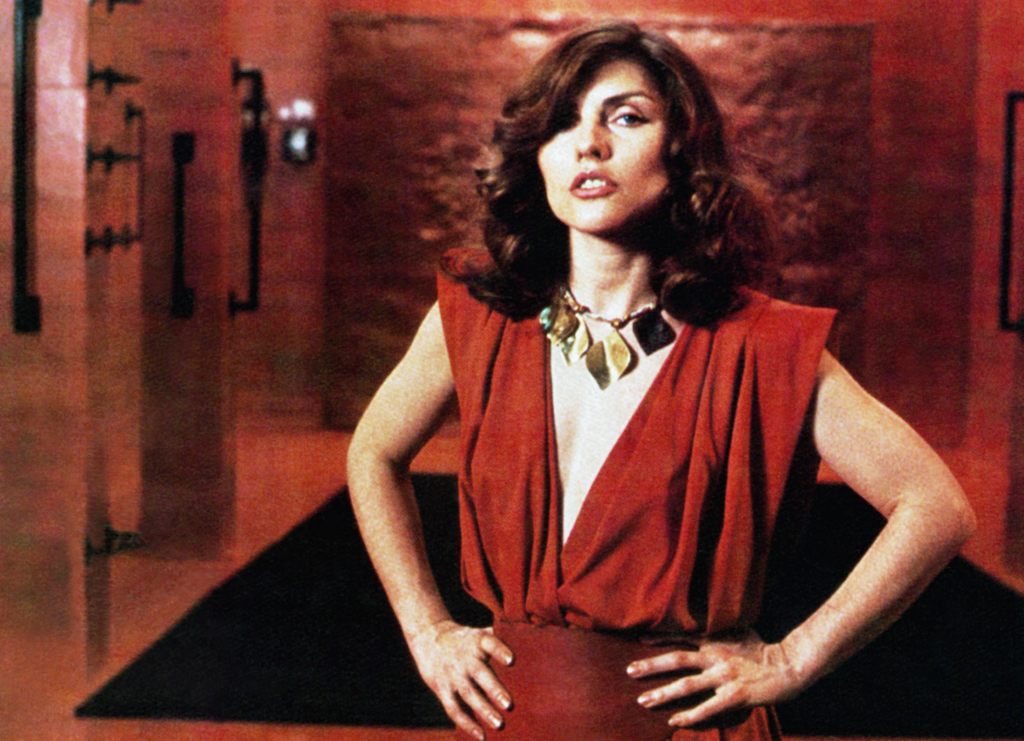
After Blondie broke up in 1982, Harry focused more on acting, and as the ’80s continued, she had some of her most memorable roles. In 1983, after auditioning for sci-fi films like Blade Runner and Tron, she starred in the cult classic body horror film Videodrome (credited as Deborah Harry) opposite James Woods.
Videodrome was anything but your typical star vehicle due to its sexual and violent nature, and it was helmed by director David Cronenberg, who was known for pushing boundaries in his work. On top of all that, Harry dyed her hair brown for the movie, as she didn’t want audiences to associate her with her signature platinum blonde (as she put it, “I thought it was good for the character, and it helped me to be that character. I think had I faced every day with the same blonde hair, it would have been a little bit different for me”). As one of the most prominent women in the punk scene, Harry reveled in provocation, making her a perfect fit for Cronenberg’s bizarre meditation on technology and perversity.
After her breakthrough role, Harry played the title character in the little-seen 1987 comedy Forever, Lulu. In 1988, Harry worked with another cult director, John Waters, playing the stuck-up mom of a ’60s teen in his quirky comedy Hairspray. For her campy role, Harry wore a dramatic bouffant wig and had fun with the film’s colorful, over-the-top style.
In 1989, Harry moved to the small screen, earning acclaim for her three-episode arc playing a singer in the trailblazing crime drama Wiseguy.

Debbie Harry’s eclectic ’90s and ’00s roles
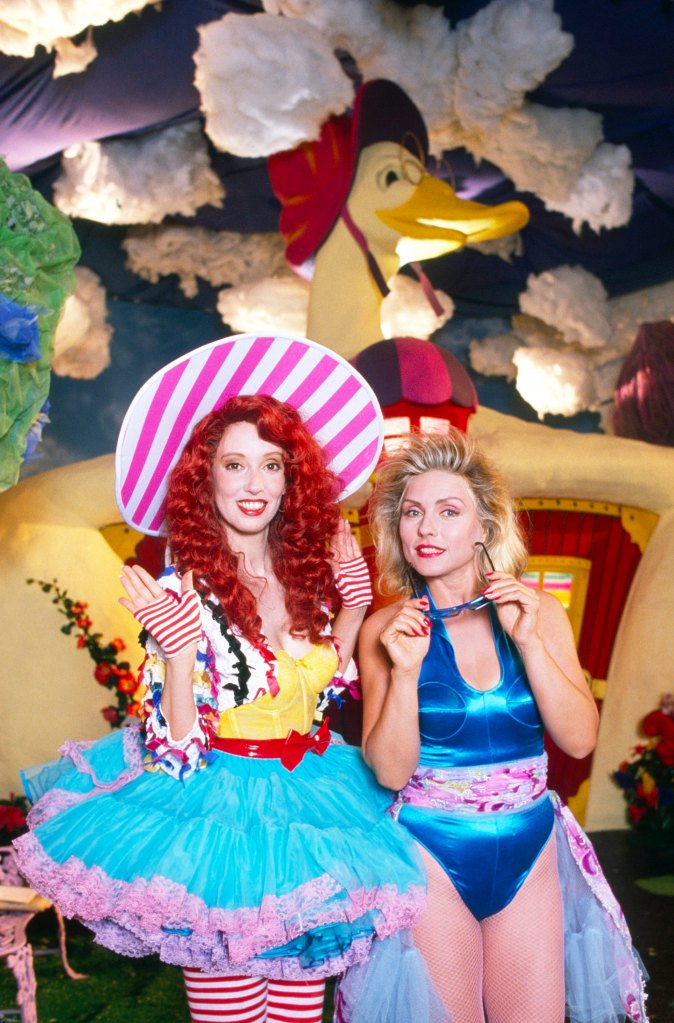
In the ’90s, Harry continued to build up a delightfully odd filmography, with roles in everything from family-friendly fare like 1990’s Mother Goose Rock ‘n’ Rhyme (in which she played the Old Woman Who Lived in a Shoe) and episodes of The Adventures of Pete & Pete (1990) and Sabrina the Teenage Witch (1996), to horror movies like Tales from the Darkside: The Movie (1990) and Body Bags (1993). Harry could also be seen in movies like Dead Beat (1994), Heavy (1995), Cop Land (1997) and Six Ways to Sunday (1997) during this time.
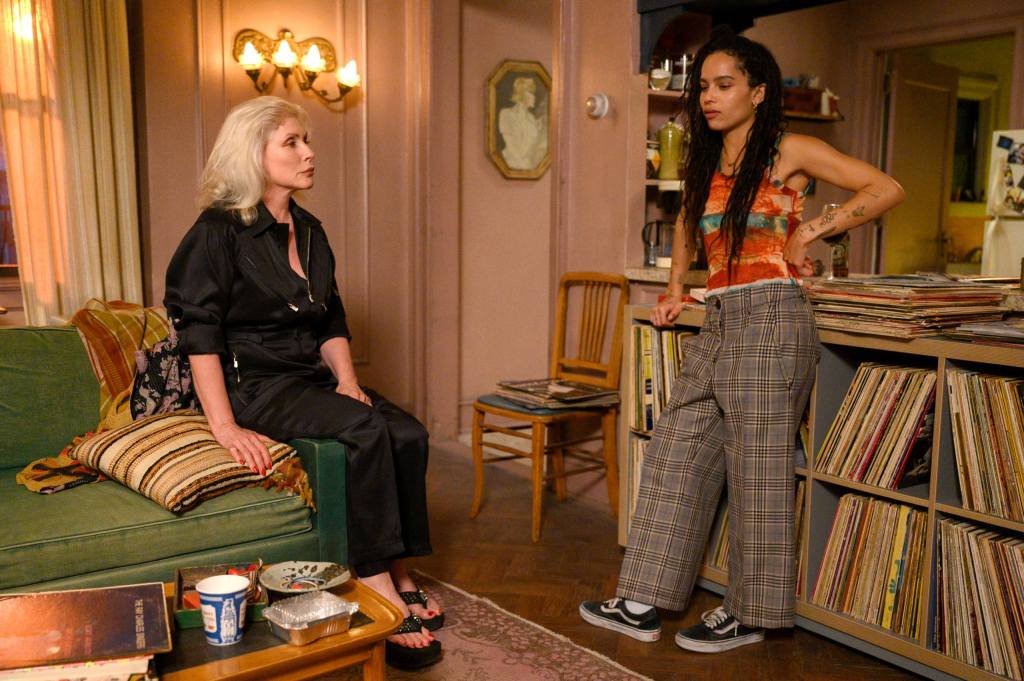
15 years after their breakup, Blondie reunited in 1997. The band has been back together ever since then, leading Harry to slow down her acting career in the aughts. While she didn’t step away from the screen entirely, she took on smaller roles, showing up in the films The Fluffer (2001), Deuces Wild (2002), Spun (2002), All I Want (2002), My Life Without Me (2003), A Good Night to Die (2003), Full Grown Men (2006), Anamorph (2007) and Elegy (2008) and appearing on TV in episodes of Difficult People (2015 to 2016) and High Fidelity (2020).
What Debbie Harry has said about acting
Decades later, Videodrome and Hairspray remain Harry’s most famous films, and it’s hard to picture anyone else but the Blondie singer navigating those weird cinematic worlds with such confidence and charisma.

Harry sees a deep connection between music and acting, and in a Rolling Stone interview, she said that Method acting was important to her as a musician, observing, “Initially, it helped me to really bring strong emotional content to songs that I didn’t write. The hard part is—and it’s the same for actors as for singers—to make choices for yourself that are going to resonate within your life experience and your emotional world. When I started out, [the Method] gave me that overview kind of thing, where you’re looking down at yourself. This, to me, was a tremendous advantage.”
Harry also takes pride in the atypical film credits she’s racked up. As she told Variety, “I am not really fluent in the film industry, but I have been fortunate to get scripts from the directors I admire and trust, and who scare me a little. It’s a small selection of interesting films that are a bit odd. I guess my oddness fits into that.”

Overall, Harry is modest about her acting career, saying, “I like acting. I’ve dabbled in it. I wish that I had another life so that I could go a bit deeper into it. I’m just really focused on music more, and that’s how people really know me. You know, it’s like anything that’s really important and worth doing well and focusing on. I’ve invested that into music. I haven’t done the same with acting the way some of my favorite people have. I’m not presumptuous enough to say I’m an actress, but I’ve had a few roles, and have really enjoyed it. It’s a great process; it’s another way of thinking. It’s sort of nice to give up control in a way. You have your character that you work on, and that you know, but there’s a director there that’s really running the show. It’s a whole different experience than what I’m doing with the band, because that’s my show, and nobody tells me what to do. There’s no outside overlord telling me to ‘do this, this way.'”
Even when a director’s telling Debbie Harry what to do, she still brings her own inimitable sense of cool to every role, and she remains fascinating to watch on both stage and screen.
Conversation
All comments are subject to our Community Guidelines. Woman's World does not endorse the opinions and views shared by our readers in our comment sections. Our comments section is a place where readers can engage in healthy, productive, lively, and respectful discussions. Offensive language, hate speech, personal attacks, and/or defamatory statements are not permitted. Advertising or spam is also prohibited.