The Difficult Mother–Son Relationship of Mary Martin and Larry Hagman—and How ‘Dallas’ Saved Them
How the 'Peter Pan' star’s ambition and a 'tyrannical' stepfather shaped Larry Hagman’s early life

In Hollywood history, the children of famous performers often grow up navigating complicated emotional terrain. For some, the challenge is stepping out of a parent’s enormous shadow. For others, it means carrying forward a legacy that audiences already know by heart.
Recently, Woman’s World looked at two such relationships: the complicated bond between Bewitched star Elizabeth Montgomery and her father Robert Montgomery, and the affectionate but complicated legacy shared by Gilligan Island‘s Skipper, Alan Hale Jr. and his father Alan Hale. Each story revealed how family history can shape a performer’s identity long before they step in front of a camera. And few parent–child relationships in show business were quite as layered as the one shared by Broadway legend Mary Martin and her son, television star Larry Hagman.
Martin wasn’t simply a Broadway star — she helped define the American musical in the mid-20th century. She originated the role of Nellie Forbush in South Pacific, brought Peter Pan to television audiences around the world and later created Maria in the original production of The Sound of Music. By the 1950s, she was widely considered one of the most important musical theater performers in the world. Her son would eventually achieve fame in a very different arena: Hagman became a household name as astronaut Tony Nelson in I Dream of Jeannie before redefining television villainy as J.R. Ewing on Dallas.
What you’ll discover in this story
• The surprising childhood story behind Dallas star Larry Hagman and his famous mother, Broadway legend Mary Martin
• Why Martin later admitted she sometimes felt she had “cheated” her children because of her demanding career
• How Hagman’s difficult early years shaped the personality that colleagues would later see on television sets
• The unexpected frustrations Hagman experienced while starring in the hit sitcom I Dream of Jeannie
• How the global success of Dallas finally gave him the identity and confidence that had long eluded him
• The emotional reconciliation that ultimately allowed Mary Martin and her son to make peace later in life

In one of show business’s more unusual family stories, a woman who helped define Broadway musical theater gave birth to a son who would later become one of television’s most famous villains. And, according to pop culture historian and performer Geoffrey Mark, who knew Martin personally, the relationship between mother and son was shaped by circumstances that began long before either of them became famous.
GEOFFREY MARK: “We’re discussing a very complicated relationship. If a woman has a child when she’s very, very young and pretty much marries because she gets pregnant, that sets up one set of complications. Which includes immaturity, not knowing how to be a good parent, not being able to show the child the family, husband, wife or love that child needs. Then, when you have someone with burning ambition to be in show business and kind of leaves her child behind so she can pursue that, and Larry is raised mostly by his father and his grandparents in his early years, it’s another set of complications.”
MARY MARTIN: “I often have felt that I cheated my children a little. I was never so totally theirs as most mothers are. I gave to audiences what belonged to my children and got back from audiences the love my children longed to give me.” (Hugh Downs interview)
That personal revelation, which came late in the actress’ life, did little to ease the pain that her son felt growing up and into much of his adulthood.
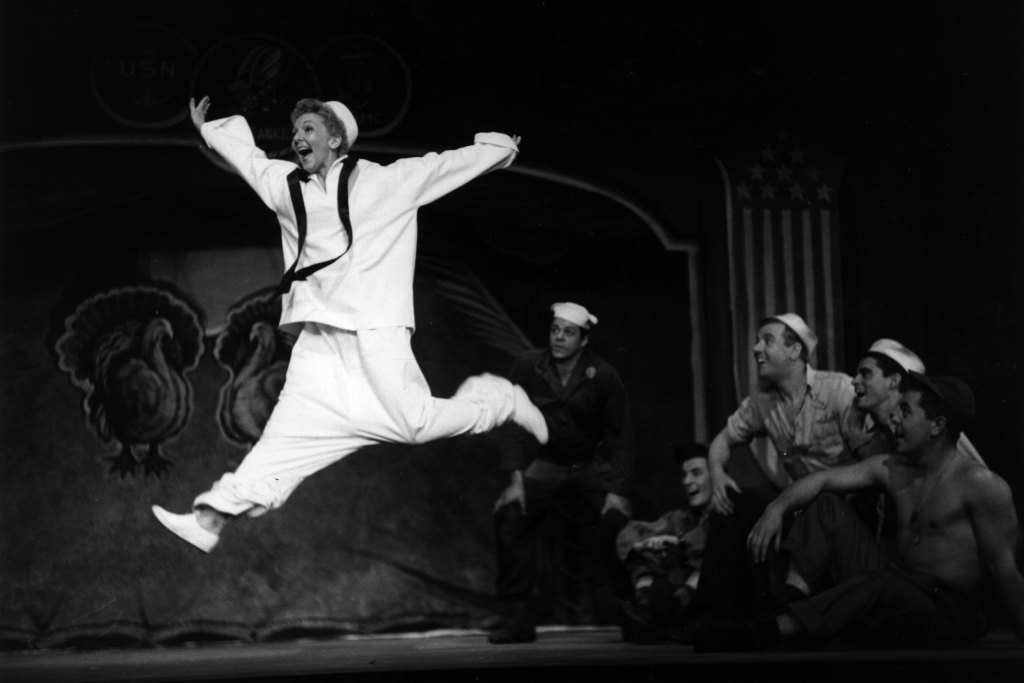
LARRY HAGMAN: “I was brought up by my mother’s mother, whom I called Nanny, and also a black woman hired help, Billy Jones, who had also helped to raise my mother. My mom had me when she was very young, just 17, and she didn’t know what had hit her. My parents divorced when I was five. By then, my mother had opened her own dance schools and had taken to travelling to perform. She and my dad had nothing in common anymore. After the divorce, my life changed and Nanny and I went to live with my mother in Hollywood. I moved around an awful lot. I went to five or six schools in Texas, then California, New York, back to California, then Vermont. I kind of learned to be a chameleon and fit in wherever I went. My mother remarried when I was small — her manager, Richard Halliday. Let us just say that Richard and I just did not get on. At all. When my gran died, when I was 12, I had to move in with Mom and Richard, and it didn’t really work. I was miserable.” (Television Academy Foundation)
GEOFFREY MARK: “Mary Martin’s star was rising and when you become this huge star and your entire life is focused on, ‘I’ve got to be ready at 8:30 to go on in a Broadway show or a film or a television special,’ that’s another set of circumstances. So, n top of everything else, you don’t get along with your stepfather, whose entire life is built around getting that star ready for 8:30 and you’re being pushed aside and told, ‘Don’t wake her up, don’t make noise, don’t upset her, don’t ask her to be a mom, because she has to go on.’”
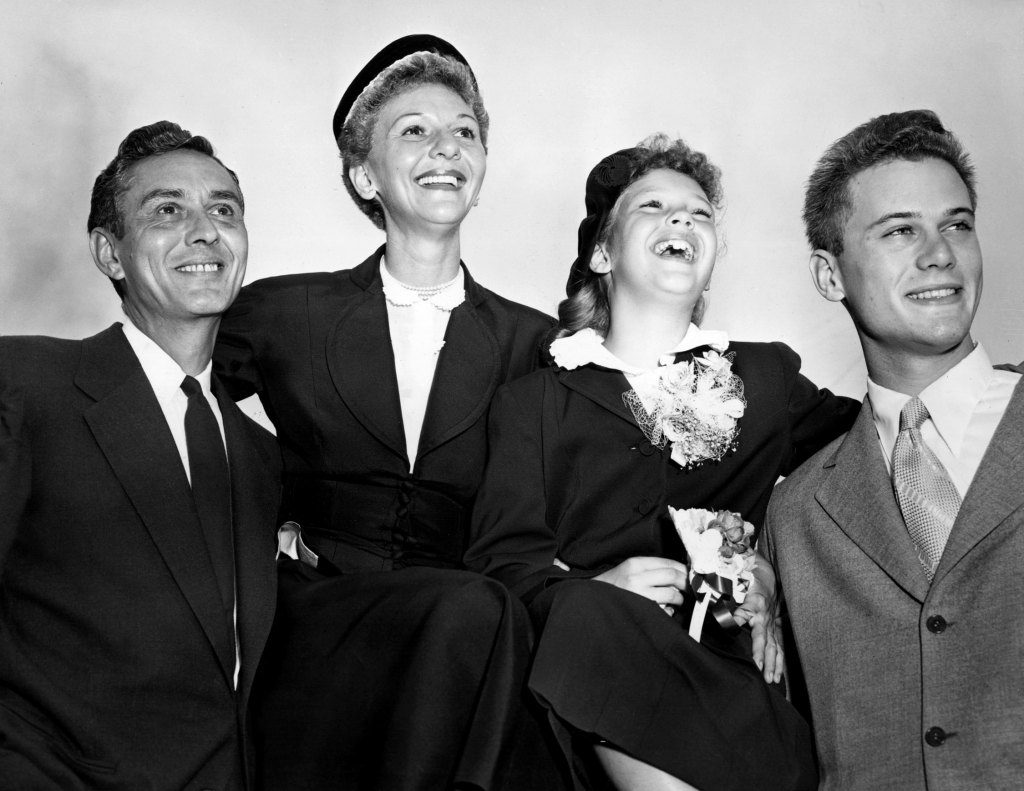
LARRY HAGMAN: “Mother would get up at 11 o’clock and I was in school by eight, and then she would get ready to go to the theater at five, six o’clock and I was just coming home from school. So we’d always have dinner together, which was a disaster. I mean, it was tyrannical. My stepfather was, like, ‘Keep your elbows off the table, don’t speak until you’re spoken to and eat all the peas on your plate,’ that kind of stuff. And that didn’t suit me terribly well, but I’d had discipline in the military school, so I knew how to put up with it.”
MARY MARTIN: “The dedication I had was the way it had to be. I mean, I had to be that dedicated. There’s no other way to do it. You can’t do three and a half years in one show and never be out unless you’re that dedicated.”
LARRY HAGMAN: “Eventually, I decided to move back to Texas to be with my dad, who I barely knew. He was a tough lawyer and typical Texan man. He wanted me to hunt, shoot, fish, learn how to box—do all the manly things that boys did in those days.”
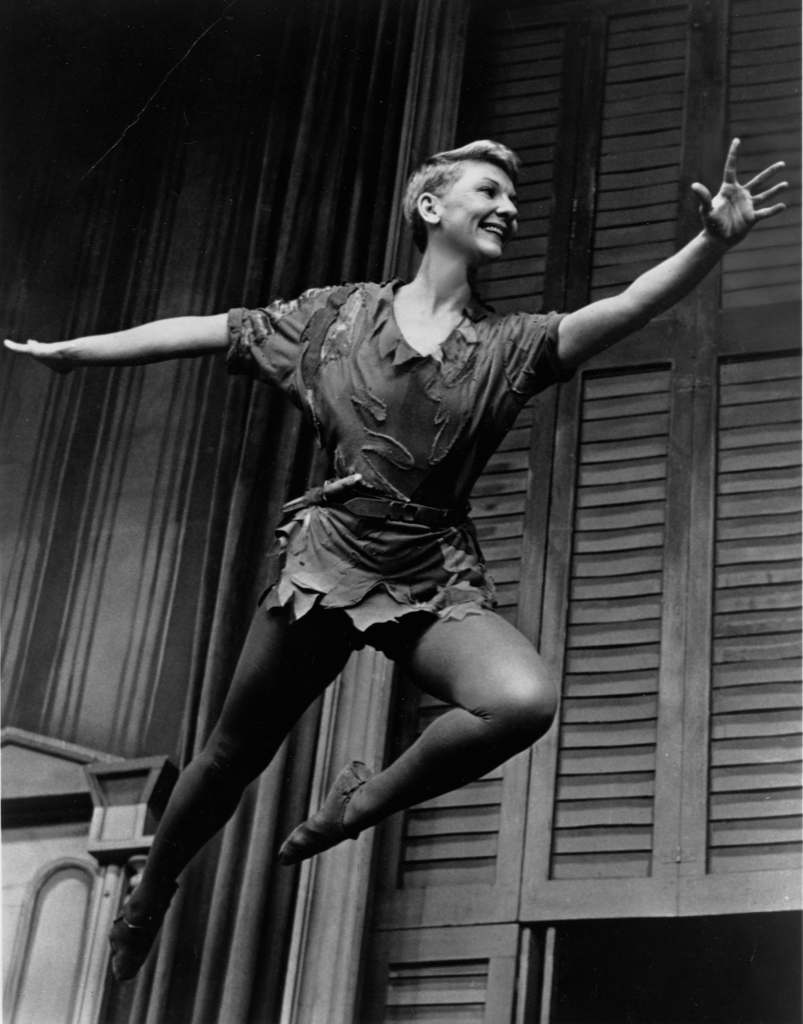
GEOFFREY MARK: “So there’s all these levels of dysfunction between Larry and his mother. As a result, you end up with a person who is neurotic, who is difficult to deal with and in Larry’s case, exhibits very odd behaviors. One day a week he refused to speak, just because that somehow pleased his soul. Larry also had alcohol and drug problems and was difficult on the set of both I Dream of Jeannie and on Dallas. Mother and son really don’t learn how to get along until mom semi-retires, stepdad is dead and Larry is this huge star because of these two television series. So towards the end of Mary’s life, they found a way to bond, but from birth to Larry’s middle age, it’s a very, very difficult relationship. Long periods of not speaking, anger on both parts, not understanding each other’s behaviors.”
The Problem With ‘I Dream of Jeannie’

Before I Dream of Jeannie, Hagman had been working steadily in television and film throughout the early 1960s. Handsome and charismatic, he appeared in a variety of dramatic and comedic roles, including stage productions in New York and London. Still, he had not yet found the breakout role that would transform him into a household name. That opportunity arrived in 1965 when he was cast as astronaut Tony Nelson opposite Barbara Eden in the NBC sitcom I Dream of Jeannie.
The series would eventually become a television classic, but according to Mark, the experience of making the show was not particularly joyful for many of the people involved—especially Hagman.
GEOFFREY MARK: “It was not necessarily a happy set. [Series creator] Sidney Sheldon was not a sitcom guy. He was a novelist and a screenwriter who came up with this idea because Screen Gems, which was the production company from Bewitched, wanted to rip itself off in another series for a different network. Larry was not happy on the show. Bill Daley, who played Major Roger Healey, was not happy on the show—he resented how little time he got—but Barbara Eden embraced the show wholeheartedly. Really, the only one who was very happy with this series was Barbara. She loved doing what she was doing. She was grateful for it.”
For Hagman, the experience carried an additional layer of frustration. Although he played the male lead, the show’s cultural focus quickly settled elsewhere.
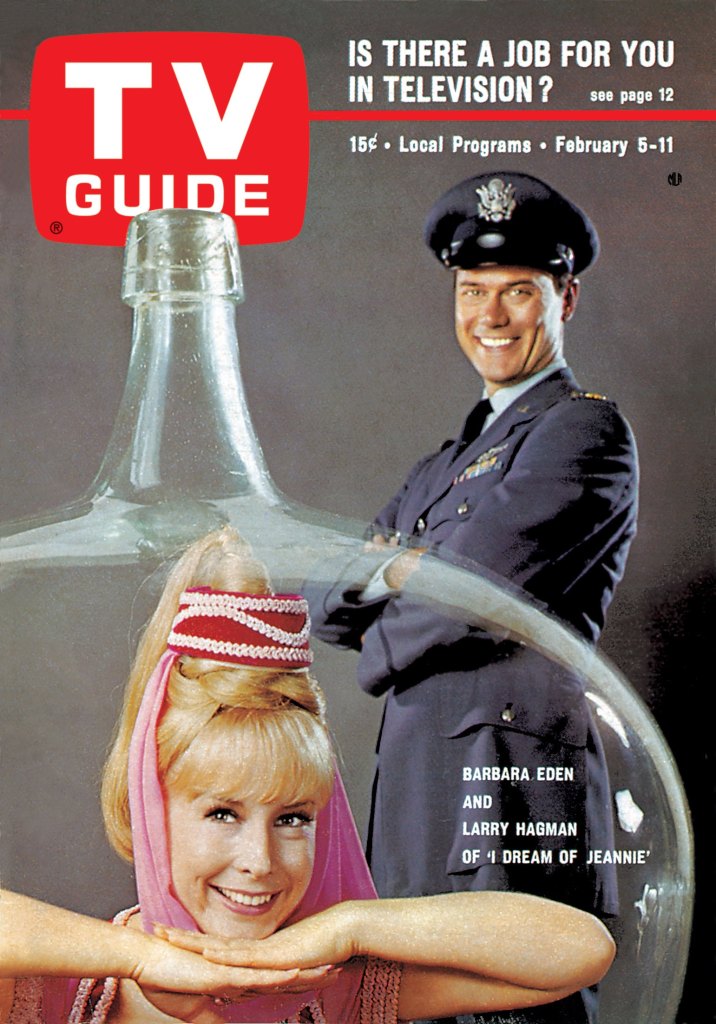
GEOFFREY MARK: “Larry walked away from I Dream of Jeannie being a celebrity, being known for that, and still being known as Mary Martin’s son. Barbara walked away an enormous television star and was able to parlay Jeannie into decades of touring productions of musicals and summer stock musicals and starring in Annie Get Your Gun and The Sound of Music. People all over the country wanted to come see her because she could sing and dance very well and had wonderful comedy timing. Larry wasn’t doing that.”
The irony, he notes, was that Eden eventually found herself performing in many of the same stage musicals that had originally made Mary Martin famous. For Hagman, however, the success of I Dream of Jeannie proved to be something else.
GEOFFREY MARK: “It becomes his breakthrough, but it’s a double-edged sword because he does become very famous, but the show is not I Dream of Major Nelson. It’s the same as I Love Lucy. Desi Arnaz is absolutely a co-star and much bigger co-star than Larry was on Jeannie, but the I refers to the guy. The focus is the girl.”
The breakthrough of ‘Dallas’
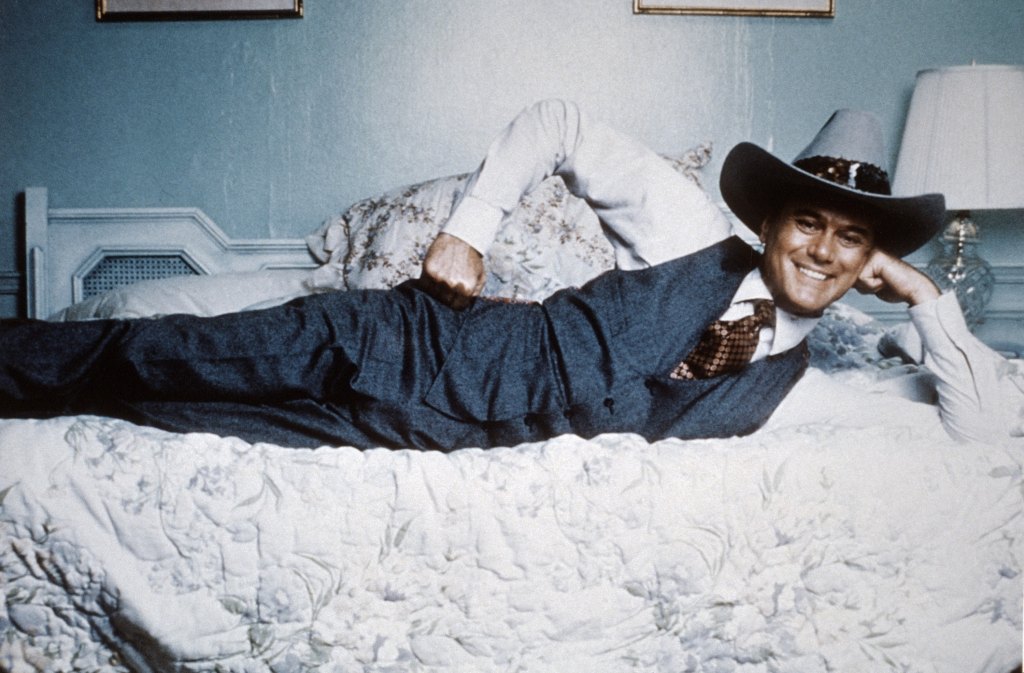
For several years after I Dream of Jeannie ended in 1970, Hagman remained a familiar face on television, but he had not yet found the role that would define him. Like many actors leaving a successful sitcom, he spent the decade appearing in television movies and short-lived series while trying to establish himself beyond the character audiences already knew. Then, in 1978, everything changed when he was cast as oil baron J.R. Ewing on CBS’ primetime drama Dallas.
Few expected the character of J.R. Ewing to dominate the series, but Hagman’s sly, mischievous performance turned the oil tycoon into one of television’s most notorious villains. By 1980, the mystery of “Who Shot J.R.?” had become an international media event, watched by hundreds of millions of viewers around the world. At the same time, the role would transform his career—and, according to Mark, it would also help reshape his relationship with his mother.
GEOFFREY MARK: “The perfect storm was Larry becoming this huge television star on his own at a point where the stepfather he didn’t like, who kept him away from his mother, was dead and Mary was just working here and there. She wasn’t focused entirely on the career anymore. Mary began putting energy into her social life and having some fun.”
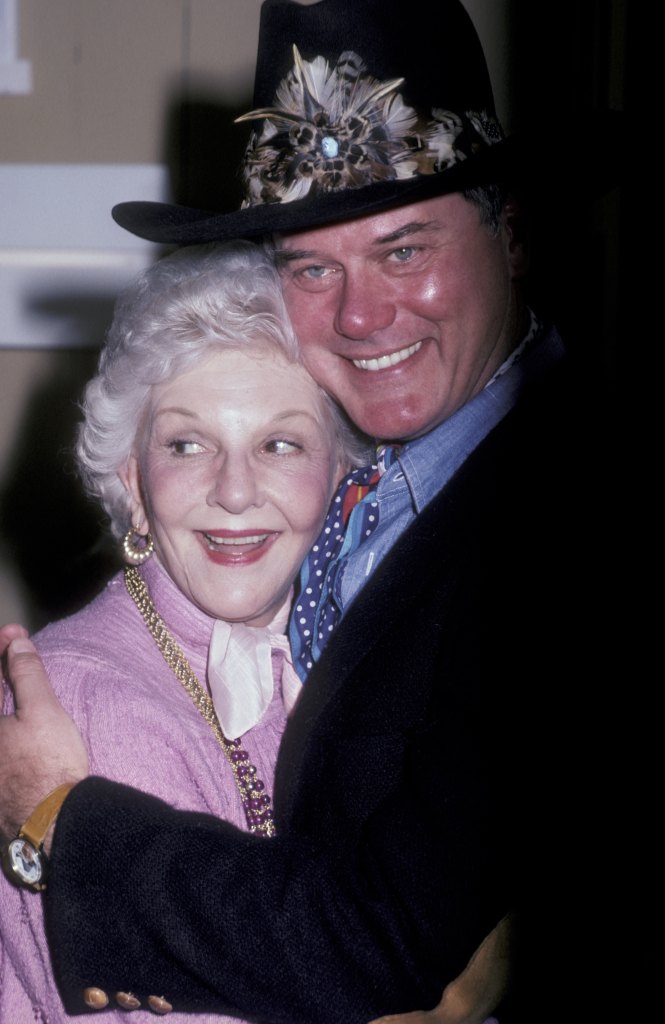
With the pressures that had once dominated Martin’s life easing, mother and son finally had room to address the tensions that had existed between them for decades.
GEOFFREY MARK: “Mary told me this. Unlike someone like Ethel Merman, she did not like singing her hit songs over and over again. She did not really relish reliving her triumphs. If she couldn’t do something new and different, she wasn’t all that interested in doing it. So they had a reconciliation of sorts.”
MARY MARTIN: “He accepts me and I accept him. You see, that’s what you have to learn to do. You have to say, all right, you can’t mold every single person the way you want it to be. My mother couldn’t mold me, so she tried to mold Larry and she did not succeed.”
It was a simple understanding, but after decades of misunderstanding, it represented something important: a chance for reconciliation. By that time, of course, Hagman had finally achieved something that had eluded him for most of his career—an identity that was entirely his own.
GEOFFREY MARK: “When Dallas hit, all of a sudden, he’s rediscovered and becomes this enormous television star.”
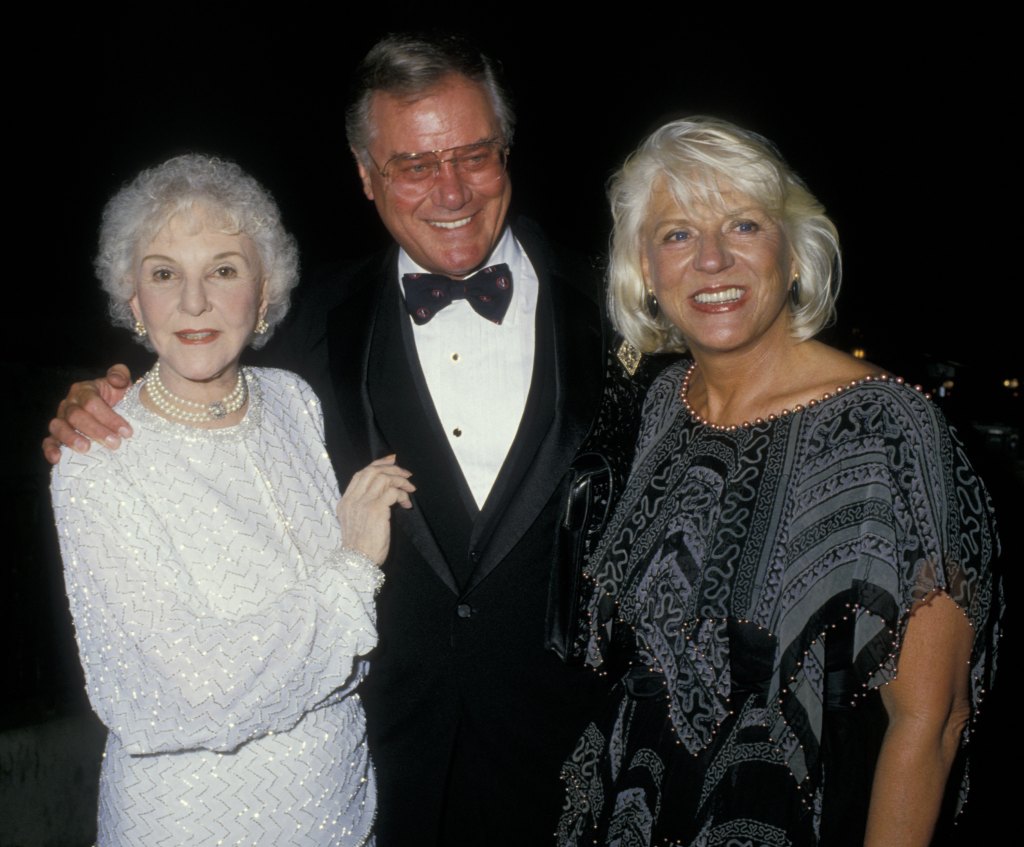
As the charmingly ruthless J.R. Ewing, Hagman became one of the most recognizable figures on television, and the character’s popularity turned Dallas into a worldwide phenomenon. For the first time in his life, Hagman was no longer simply the son of Mary Martin or the co-star of a famous sitcom. He was, unmistakably, Larry Hagman.
After their reconciliation, while being interviewed by journalist Hugh Downs, there was a moment where their different perspectives became clear—Martin as the parent who had been absent for much of her son’s childhood, Hagman as a father determined to do things differently.
MARY MARTIN: “Larry was five years old when I was on the stage in New York in Leave It to Me. And this was the way it was. He’s having a wonderful career, but he has something for his children that I never did have because mine was so concentrated in the theater—time. He brings his children with him wherever he goes.”

LARRY HAGMAN: “I guess I learned from you that you really have to be with your children. And whenever I’d go on location, I’d take the whole family with me. Because in our business, especially in films, you could be in Acapulco for six months or Russia or someplace, and if your family’s not with you, you don’t see them and it breaks the connection… So, maybe I’ve been overly close to them.”
In the end, the story of Mary Martin and Larry Hagman isn’t really about Broadway triumphs or television fame, but rather a mother and son who spent much of their lives misunderstanding one another before finally finding a way to make peace. For all the contrasts between them—the radiant musical theater star and the actor who became one of television’s most famous villains—they ultimately arrived at the same place.
GEOFFREY MARK: “So there came a point where Mary was able to say, ‘Gee wiz, I’m sorry you didn’t get what you needed.’ And Larry was able to say, ‘I’m sorry I couldn’t be a very good son.’ And they agreed to disagree… ‘All right, neither of us did very well with this. Let’s try and do better with the little bit of time we have left.’”
Conversation
All comments are subject to our Community Guidelines. Woman's World does not endorse the opinions and views shared by our readers in our comment sections. Our comments section is a place where readers can engage in healthy, productive, lively, and respectful discussions. Offensive language, hate speech, personal attacks, and/or defamatory statements are not permitted. Advertising or spam is also prohibited.