‘I Felt Lucky Just To Get Where I Was’: James Arness, 6′7″ Star of ‘Gunsmoke’, Reflects on His Legacy
The man behind Marshal Matt Dillon looks back on two decades of 'Gunsmoke' and a lifetime of memories

For 20 years, television audiences rode into Dodge City with Marshal Matt Dillon on a weekly basis, and when Gunsmoke finally ended in 1975, James Arness had quietly become one of the most familiar figures in American homes. Standing six-foot-seven and speaking with the slow authority of a man who had seen it all, Arness defined the strong, decent lawman for a generation that grew up on Westerns. Yet behind that stoic image was a modest Minnesotan who never expected fame, never chased it and never pretended to be anything other than who he was.
From the battlefields of Anzio to the backlot streets of Dodge, Arness carried the same sense of duty that made Matt Dillon believable. He approached acting as work worth doing the right way and even decades after the final episode aired, fans still greeted him as “Marshal,” which he accepted with quiet gratitude. Drawn from his extensive interview with the Television Academy Foundation, and in Arness’ own words, these are the stories behind the man who became a symbol of television’s Golden Age presented as 19 facts about his experience on Gunsmoke.
1. John Wayne gave him his big break
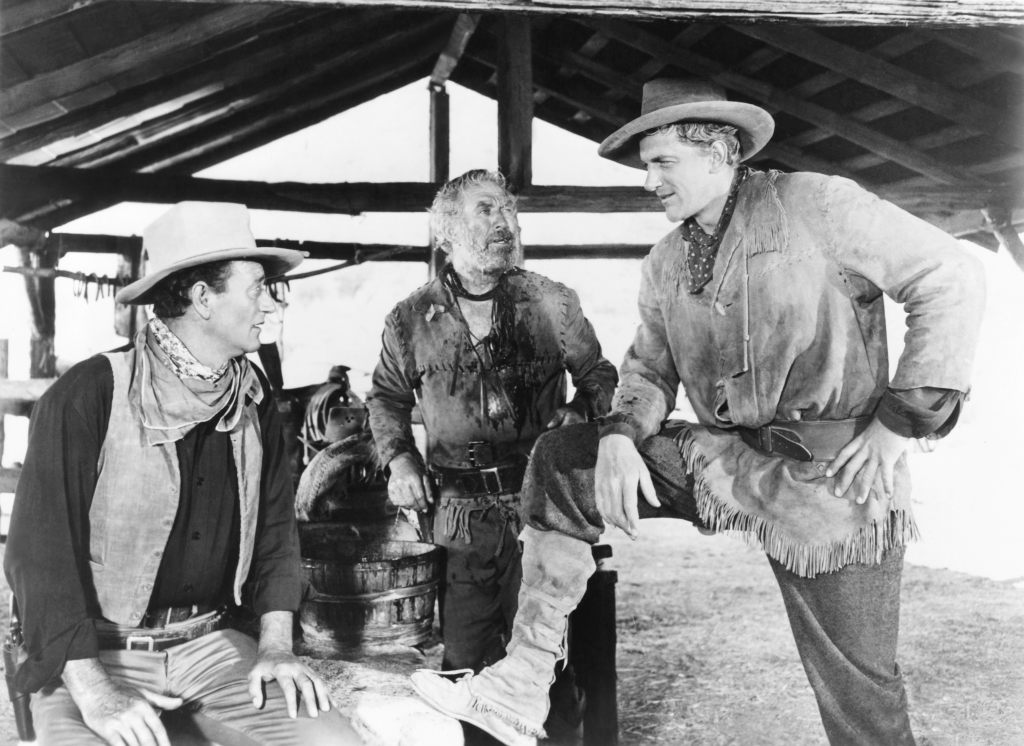
James Arness’ life changed in 1952 after a small performance in a little Hollywood theater. “I was in a play at The Player’s Ring Theater,” he recalled. “It was kind of theater in the round where the audience sits all around you, and you’re right out in the middle of the stage.” One night, fate walked in. “John Wayne’s agent happened to be there and offered to have me come over to his agency. He said, ‘I want you to meet a guy we have who’s going to make a movie.’”
That meeting led Arness to Wayne’s office—and straight into the biggest opportunity of his young career. “I met him and wound up getting a part in one of his movies,” Arness said. “After we did that picture, they put me under contract to his company for three years. I appeared in about four pictures with him, and he also loaned me out for a couple of others. It was a wonderful time.” As for the Duke himself: “He was a great guy. Work was his life. He was totally committed and dedicated to it. He didn’t take much time off or have many outside interests, but when you were around him, you couldn’t help but admire what he was doing. It was a great experience being with him.”
2. He was talked into taking ‘Gunsmoke’

Arness was filming in the Bahamas when Gunsmoke came calling. “I’d heard they were going to do a television version of Gunsmoke,” he said. “I’d listened to it on the radio and read they were going to make it a big prestige show. They were looking at practically every actor in town, but they hadn’t called me.” Then CBS reached out. “They wanted to know how quickly I could get back because they had to test me,” he recalled. His director, veteran Eddie Ludwig, warned against it. “He said, ‘You’re doing pretty well in the movies right now. If you get stuck in a TV Western that runs a couple of seasons and dies, you’ll be used goods and in bad trouble.’”
Arness initially agreed. “I said, ‘Thank you very much, but I think I’m going to pass.’” But the call didn’t end there. “I was still under contract to Duke, so they called him. He phoned me and said, ‘You’d be crazy not to take this thing. It’ll be like it was for me when I was a young actor doing those serials on Saturday afternoons. You’ll really learn your craft.’” Wayne’s advice changed everything. “He talked turkey to me,” Arness said. “He was totally right. I would’ve been crazy to pass it up.”
3. A surprise from the Duke
When Gunsmoke premiered on September 10, 1955, viewers were initially greeted by John Wayne himself, whom Arness had no idea was coming. “He was friends with one of the big guys from New York,” he recalled. “I guess this gentleman asked Duke if he would do an intro for it, and being the kind of guy he was, he was more than willing. He introduced our premiere episode.” The Gunsmoke cast watched the broadcast together at Arness’ house. “All the gang was there,” he said. “The show comes on, and here’s Duke Wayne with this intro. It was absolutely marvelous—he was wonderful.”
4. ‘Gunsmoke’ was designed as an adult show
Gunsmoke had a history before the television series. “It started out, of course, as a radio show,” noted Arness. “It was conceived and put together to do not a shoot-’em-up type Western, but much more of a character study show.” He noted that the term “adult Western” became overused, “but that’s what it was, because almost every Western series that had been on television were slanted mainly at the kids.”
When the series transitioned to television, it was informed by the radio drama. “We used the scripts from the old radio shows for most of our first two or three seasons,” Arness said. “My gosh, we had the whole thing laid out for us—all we had to do was step in and try to play those fully-dimensional characters. We were lucky to start with that kind of material.”
5. Milburn Stone fought for authenticity
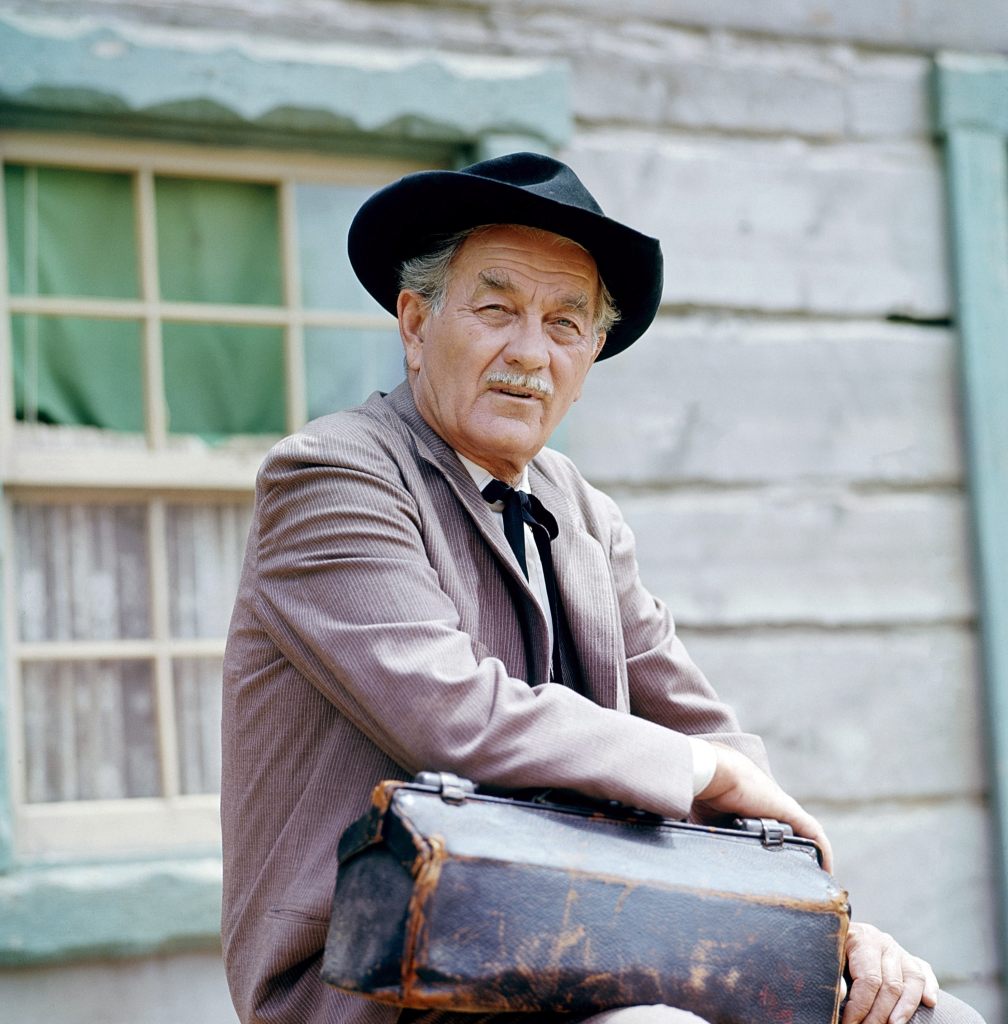
“Milburn Stone,” Arness said with deep respect, “had a whole lot to do with getting us off to a good start.” Stone, who played Doc Adams, was more than just a cast member. “He was a very dedicated actor, serious about his work,” Arness explained. “And he’d been raised in a little town in western Kansas back in the early part of the century.”
Stone often drew from his memories of small-town life. “He told us that when he was a boy, he and his pals would be playing around the streets of this little town, and these old-timers would be sitting up on the boardwalk whittling away, talking about the very times when Dodge City and other frontier towns were operating,” Arness recalled. “He had that in his mind and he wasn’t going to let anything get through that he didn’t feel was authentic. He didn’t hesitate to speak up and say, ‘No, that wouldn’t work—that’s not the way it would’ve been.’ He turned out to be a great help, a major contribution to those early, formative years.”
6. Matt Dillon hated violence
Arness said that one of the rules for his character was simple: “He had to obey the letter of the law, no matter what else was going on.” But the deeper truth, he explained, set Gunsmoke apart from other Westerns. “It sounds crazy,” Arness said, “but Matt Dillon hated violence—particularly shooting. He hated to kill a man. I tried to get that across in the early going. If Matt had to shoot somebody, when the camera cut back to him, you could see that he hated having to do it. He felt a kind of revulsion over it.” For television at the time, that was groundbreaking. “I think that hadn’t really been done much—if at all—up to that point. It was a totally different approach to a Western hero.”
7. Violence was never glorified
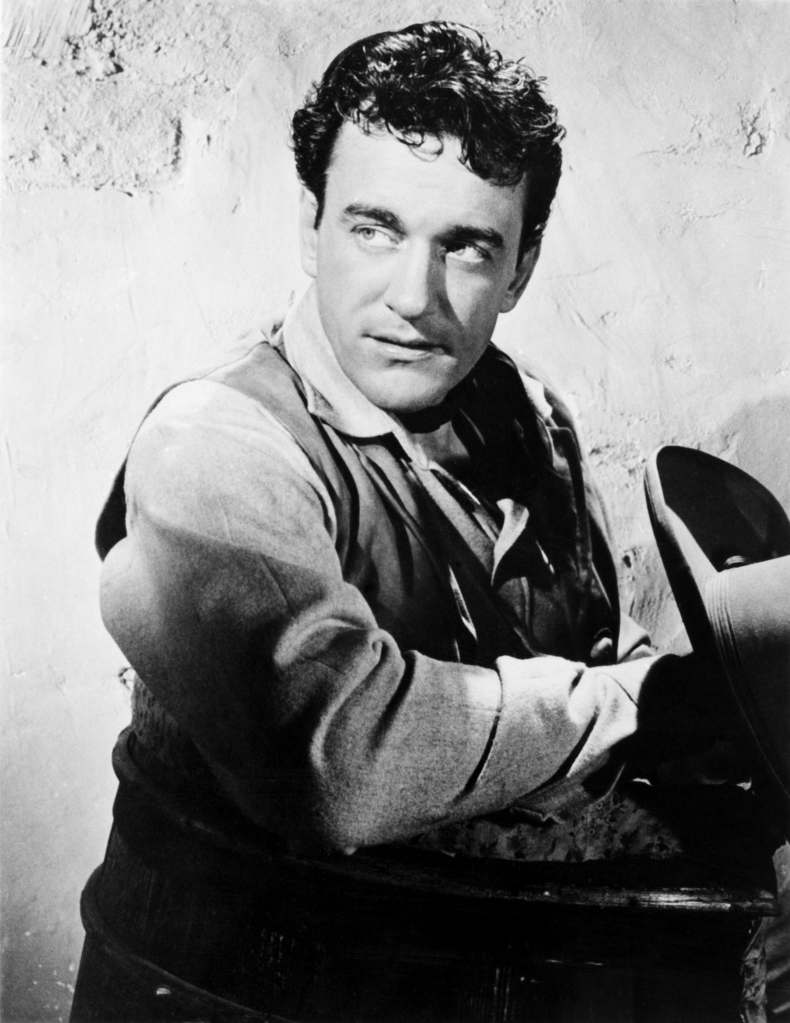
Arness explained that while Gunsmoke didn’t shy away from violence, it was always treated as a last resort. “Of course, when it was necessary, we had to do it,” he said. “Especially in the early years—there was a great deal of that. It was in every episode.” But that changed later. “The FCC—or whoever was controlling television at the time—came in with this big violence campaign,” Arness recalled. “We had to tone down the amount of violence in each episode. It made the producers mad as heck because it really put limitations on them. They’d tell you how many bar fights you could have, maybe one shooting per episode and so forth.”
Even without those restrictions, Gunsmoke never embraced gratuitous bloodshed. “Earlier, yes, there was a lot of violence,” Arness said. “But it wasn’t gratuitous. It was part of the story. If it was necessary, we did it—but not with any satisfaction. You didn’t see Matt Dillon blowing smoke off his gun or twirling it around. That wasn’t who he was.”
8. CBS chief William S. Paley was one of the show’s biggest fans
“Bill Paley loved Gunsmoke,” Arness recalled. “I would say it was one of his very favorite shows.” The powerful CBS president not only championed the series but made personal visits to the set whenever he was on the West Coast. “He would make it a point to come down. I remember on several occasions, he’d get me aside and say, ‘Well, Jim, how are things going? Anybody giving you a bad time? If you ever have a problem, I want you to call me.’”
Paley even gave Arness his direct number—“his red phone or whatever it was,” Arness joked—but it was never needed. “As it turned out, I never had anything to call him about. I used to tell him, ‘No, things are wonderful, couldn’t be better.’ And he’d say, ‘That’s great, but if you ever have a problem, you call me at that number.’”
9. Matt and Kitty’s relationship was left to the imagination

Fans wanted to see Marshal Dillon and Miss Kitty take their relationship further—but that was never the plan. “They felt you could only go so far with it,” Arness explained. “If you had Matt and Kitty have an onscreen love affair, then they’d have to get married or something, and then you’d have a different show. We used to get a lot of mail from people—particularly women—saying, ‘Why don’t you get Matt and Kitty together more?’ They always felt that was the kind of mail we wanted to get. We wanted viewers eager to tune in and see what might happen, so they kept it at that level purposely and it worked out awfully well.”
Arness had an enormous affection for Amanda Blake, who played Kitty. “She was a wonderful character,” he said. “I watch the old shows now all the time, and she comes across as beautifully as anyone ever did. She was a consummate actress with various shadings and an ability to play a scene in a way I hadn’t fully realized back then.”
10. Dennis Weaver’s Chester became a fan favorite

“Dennis Weaver was on in the early years, and he went over gangbusters,” Arness recalled. “He was a trained actor—he’d already appeared on Broadway and had a lot of stage experience. They asked him to play Chester with the stiff leg, and he agreed. He was able to incorporate that into the character beautifully.”
The choice helped define Chester and made him beloved by audiences far beyond the coasts. “I think a large portion of our audience were people between New York City and Los Angeles,” Arness said. “It was everybody else out there in the country really living with Gunsmoke, and they loved Chester.”
Weaver left the series in 1964 after nearly a decade. “He’d played the character for seven or eight years and wanted to move on,” Arness explained. “We hated to see him go; he was such an integral part of the show. But we lucked out with Ken Curtis coming in as Festus. He filled that slot perfectly for the rest of the run.”
Arness fondly remembered the personal appearances he and Weaver did together. “We went to rodeos and fairs all over the country,” he said. “I’d ride in on horseback, give a little spiel, and then Dennis would come walking out of the gate with his stiff leg—‘Mister Dillon!’—and the crowd would go wild.” He laughed about one unforgettable moment years later. Invited to make an appearance at Huntsville Prison in Texas, Arness felt uneasy about walking through the yard in costume. “I felt like a complete fool,” he admitted. “Here I was, this phony TV lawman.” As inmates began to laugh, he braced for the worst—until he turned around. “There was an inmate following me with a stiff leg, saying, ‘Howdy, Mister Dillon.’ The whole place broke up. It saved the day. I’ve never forgotten it.”
11. Ken Curtis’ Fetus added new depth
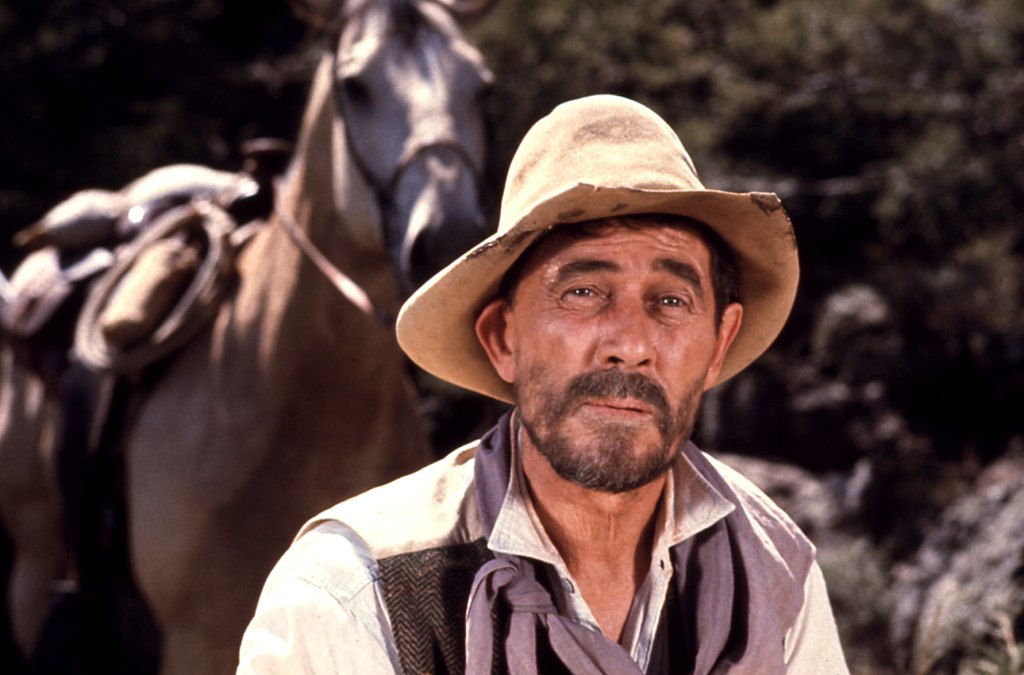
“Ken Curtis turned out to be a marvelous actor,” Arness said. “Seeing the reruns now, I realize it even more.” Festus was introduced after Dennis Weaver’s departure, and though the characters shared certain traits, Arness noted clear differences. “He was somewhat similar to Chester in that he had the accent and kind of a hillbilly type of character, but he could do much more serious stuff. Many times I’d have him go out for me as a deputy and bring in some bad guys by himself, and he had great dramatic stories he could play.”
Curtis also contributed humor. “The funny banter between him and Doc became a standard part of the show. But at the same time, he could go off and do something serious and touching. He created a part that was very distinctive and it worked great for the 12 years we had him.”
12. Burt Reynolds brought energy and warmth

When Burt Reynolds joined Gunsmoke as Quint Asper, Dodge City’s blacksmith, Arness immediately recognized his potential. “You could tell very quickly that Burt was a guy who had great presence,” he said. “Of course, as we’ve learned in later years, one of his great skills was his comedic ability. But in Gunsmoke, he couldn’t really use that. He had to play a very serious guy.”
Reynolds’s character, a half-breed who faced discrimination, demanded restraint. “He was playing a form of racial discrimination, so he couldn’t bring out his marvelous sense of humor,” Arness explained. “But he was a wonderful guy to work with. He fit right into the family group, and we had a wonderful time.” Arness admired Reynolds’s range. “He could do much more serious stuff,” he said. “There were a couple of shows where Matt came to his defense because of how Quint was treated. We even had a couple of fights or hassles over it.”
13. Dodge City was a character
Arness said that Dodge City itself became one of Gunsmoke’s most important characters. “We had the Dodge City street built on a set over at CBS in Studio City,” he explained. “All the streets were actually interiors on a stage. It worked very well because anytime it was Dodge City, we could shoot it right there. It was a great time saver.” At the same time, not every story stayed on the lot. “A lot of the show took place outdoors, somewhere out in the boonies,” he said. “We’d spend a couple of days on the stage and then three or four days out somewhere in Thousand Oaks or some outlying area. And several times a year we went on distant locations to Arizona or someplace else.”
When they did travel, the crew often maximized the trip. “They tried to do a two-part show when we went to a distant location,” Arness noted. “Those were more expensive, so they had to budget carefully. At the opposite end, we sometimes did whole shows right on the stage.”
14. Matt Dillon evolved with James Arness
Asked whether he saw growth in Matt Dillon over the years, Arness paused. “Gee, that’s a hard one,” he admitted. “I guess inevitably that happened, because in playing the character over such a long period of time, I just fitted in more closely as the years went by.”
He remembered the early seasons as a challenge. “The first two or three years were very difficult for me,” he said. “I had so much material to do each day that I really wasn’t prepared for it.” Determined to improve, Arness sought professional help. “I actually went ahead at that time and got some coaching, which turned out to be great for me because it made me feel a lot more comfortable in the character.” Over time, the transformation was natural. “From then on, I think I just evolved,” he reflected. “As the years went by, I went from 33 to 53, and that was all part of the same thing.”
15. Expanding to an hour changed the show’s rhythm
When Gunsmoke expanded from a half-hour to an hour, the adjustment wasn’t as difficult for Arness as it was for the creative team. “By that time, we’d been doing six years of the half-hours, and I was pretty well comfortable in the character,” he said, “so I don’t think it was much of a change.”
The challenge fell to the writers, producers and directors. “They’re the ones who had to make that switch. They wound up running into trouble trying to move from a half hour to an hour. That was a big change.” The transition period even affected the show’s performance. “I think it reflected a little bit in the ratings or the quality for a while,” Arness admitted. “Then they picked back up. It was just a new technique they had to learn—and it took a little time.”
16. Cancelation came as a shock
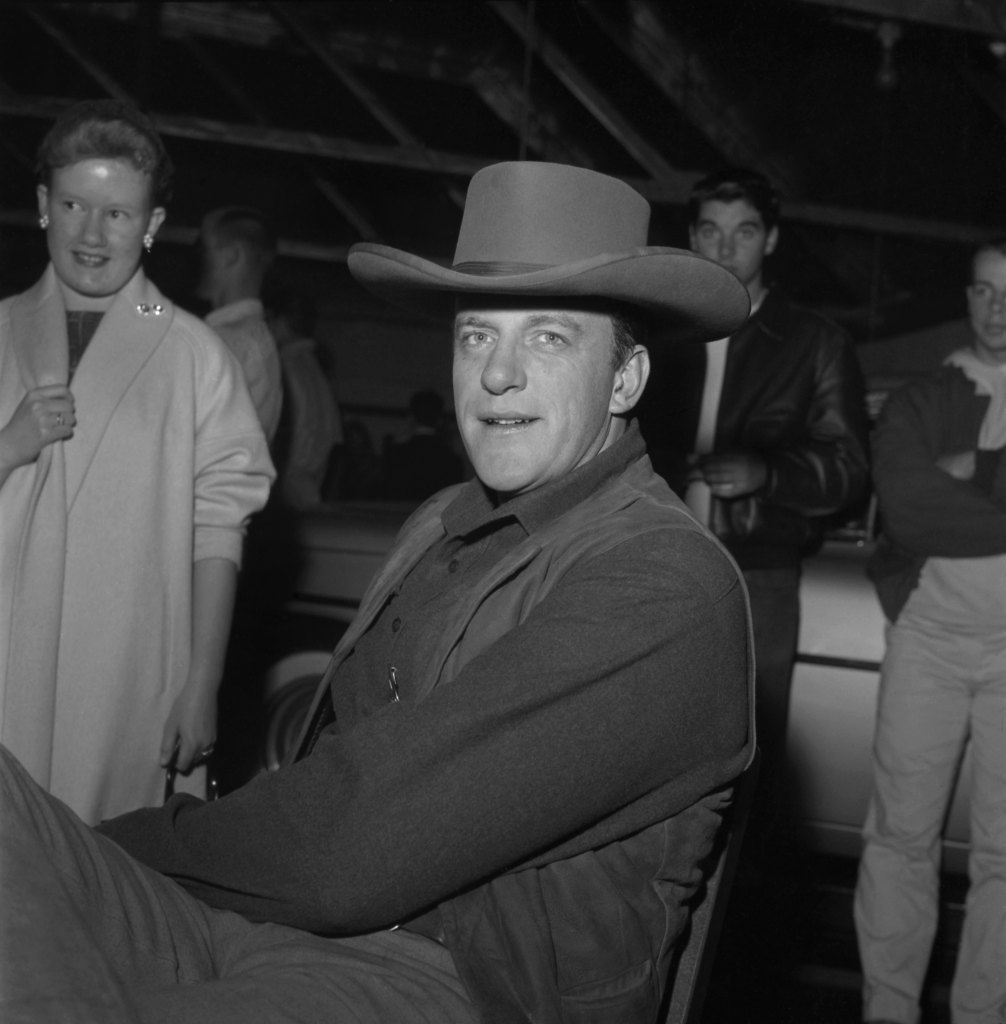
When Gunsmoke ended in 1975 after 20 years, Arness was as surprised as anyone. “It was the same thing again,” he said. “Some newer, younger guys upstairs wanted to put their own shows on. That’s how it happened. We were still in the top 30 shows—and if you’re in the top 30, they don’t cancel you. Somebody up there just made it happen. I know we could’ve gone several more seasons, no doubt about it.”
Even worse, the news wasn’t delivered directly. “They don’t tell you,” Arness said. “Our producer, John Mantley, called me one morning and said, ‘Have you seen The Hollywood Reporter?’ I said no. He said, ‘Well, get one and read page one.’ There was just a little box at the bottom saying Gunsmoke is canceled.”
Mantley was furious. “He was madder than a hatter,” Arness recalled. “He was a fighter and a feisty guy—just beside himself that they did it in such a callous way. They didn’t even have the courtesy to call him.” But fate had other plans. “About three days later, MGM called and wanted us to do the television version of How the West Was Won,” Arness pointed out. “We were off and running on that within days of the cancellation. It turned out to be a tremendous hit, and we got a big kick out of it. I think CBS had to feel a little odd about that. We killed whatever show they put opposite us.”
17. He returned to Dodge in five TV movies
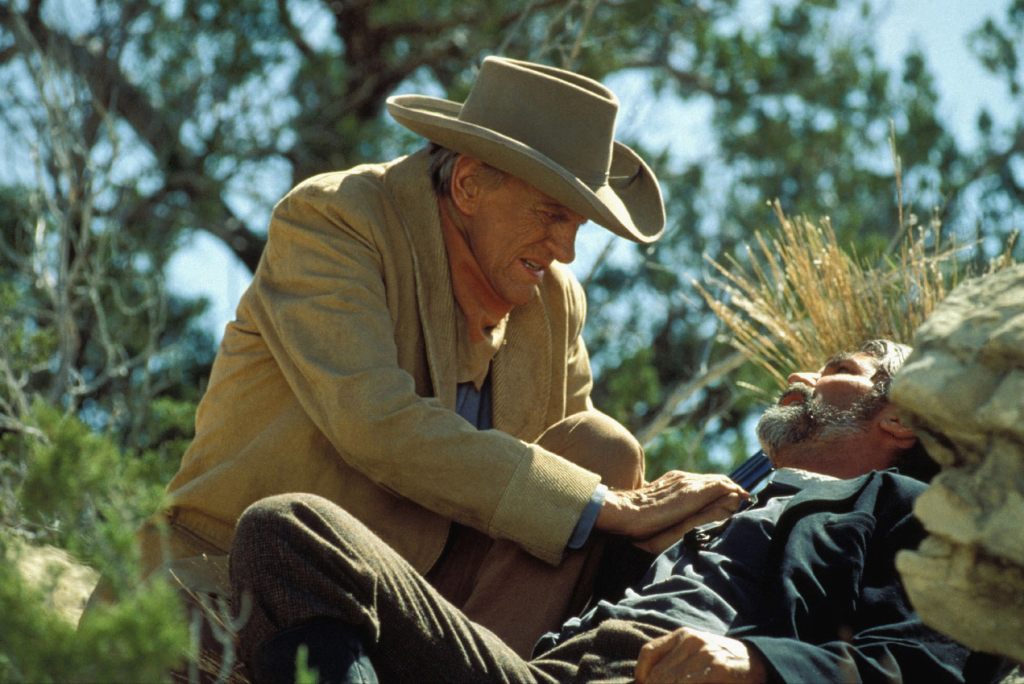
In 1987, James Arness once again strapped on Matt Dillon’s gun belt for Gunsmoke: Return to Dodge, followed by The Last Apache, To the Last Man, The Long Ride and One Man’s Justice. He felt the films measured up. “Oh, absolutely,” he said. “It was harder, of course, for the people—the directors and writers—because we’d been away from the show for a number of years. But they were all done by John Mantley, so we had him there to guide things, and I think most of them turned out pretty well.”

By the time he filmed his final Gunsmoke project, One Man’s Justice (1993), Arness had achieved a milestone few could match. “I’ve always felt proud that we were in five decades with Gunsmoke: the ’50s, ’60s, ’70s ’80s, and ’90s,” he said. “That’s a 50-year period. What a record.”
18. No regrets in a life well-lived
Looking back on his extraordinary career, James Arness remained remarkably grounded. “It’s been fun,” he said. “Every minute of it’s been wonderful.”
Asked if he had any regrets about the path he’d taken, the actor was firm. “No, I don’t think so,” he said. “It’s all been the best it possibly could be for me. A lot of guys from series tried to get into movies, but only a handful ever made it big—Burt Reynolds did, certainly, and Clint Eastwood and Steve McQueen. But that’s about it. I’ve always looked back and felt lucky just to get where I was on the show and to stay with it. Once I got on Gunsmoke, I didn’t have any fear or desire to go chase movie roles. I felt very comfortable with what was going on.”
As to how he hoped to be remembered, Arness smiled. “Just as one of the luckiest guys that ever came through the business,” he said simply. “That’s all. I had a marvelous life.”
Conversation
All comments are subject to our Community Guidelines. Woman's World does not endorse the opinions and views shared by our readers in our comment sections. Our comments section is a place where readers can engage in healthy, productive, lively, and respectful discussions. Offensive language, hate speech, personal attacks, and/or defamatory statements are not permitted. Advertising or spam is also prohibited.