The Real Sebastian Cabot: The Life of Mr. French From ‘Family Affair’ Revealed
Behind Mr. French was a witty, complex actor whose life was far richer than most fans ever knew

Key Takeaways
- Sebastian Cabot nearly turned down the role of Mr. French on 'Family Affair.'
- Before fame, Cabot worked as a chauffeur, chef and garage helper in London.
- Behind Mr. French was a witty actor who loved fishing, cooking and classic cars.
To millions of television viewers, Sebastian Cabot will always be Mr. French, the warm and dignified English butler from the 1966 to 1971 sitcom Family Affair, whose impeccable manners, dry wit and unmistakable voice made him one of television’s most beloved characters. Others perhaps remember him as Dr. Carl Hyatt from Checkmate, as the voice of Bagheera in The Jungle Book or from his narration work on Disney’s Winnie the Pooh and the Honey Tree and its sequels. What many people may not realize is that the sophisticated, polished figure audiences came to know so well came from remarkably humble beginnings.
Born Charles Sebastian Thomas Cabot on July 6, 1918, in London, England, Cabot’s life looked nothing like the elegant image he would later project so effortlessly onscreen. Though the Cabot name traced back to explorer John Cabot, his early years were shaped far more by hard work than privilege. After his father’s business collapsed, Cabot left school at just 14 and went to work.
As The Ledger-Star reported in 1960, his first job was as a garage keeper, though that didn’t last long after an unfortunate incident involving a car and garage doors that weren’t yet open. He later worked as an apprentice chef in fashionable London restaurants before taking the job that changed everything: chauffeur and valet to British actor Frank Pettingell. That job opened the door to a completely different world and Cabot suddenly found himself surrounded by actors and the theater, and he knew he wanted in. Of course, recognizing the goal and achieving it were two very different things. As he later admitted, “It was very difficult at first because even though I knew quite a few actors, they only knew me as a chauffeur.”
Still, he persevered, joining repertory theatre in the mid-1930s and learning his craft through hard work and repetition. The Daily Breeze later noted that Cabot discovered he had a real gift for mimicry and dialects, eventually becoming known for his ability to shift from Cockney to Italian with ease. Film work soon followed, with Cabot making his screen debut in 1935 and, just a year later, appearing in Secret Agent for director Alfred Hitchcock. Over the next decade, he steadily built his resume through stage, film and radio while also serving in the British Army during World War II.
By the 1950s, Cabot had become a respected character actor with a highly distinctive presence—and an equally distinctive beard. As he told The Minneapolis Star in 1960, “I’m concerned about it because I used to be fairly original. Now you can’t tell us ‘beavers’ apart without a razor. I began growing my beard for a role in a play that I was to do in England. They needed an actor with a heavy growth of stubble to take the part of a beachcomber. Well, there was one delay after another in the opening of the play, and by the time it was finally canceled, I had a full growth of beard and decided to keep it. It’s taken me years to establish my face with a beard, and I don’t intend to give it up now. If they want me for a part, they will have to take my beard, too.” That beard, along with his voice and commanding presence, would soon help make Sebastian Cabot unforgettable.
Hollywood, Disney and ‘Checkmate’
By the early 1950s, Cabot’s career was steadily gaining momentum. He had built a strong reputation in British film, stage and radio, and Hollywood was beginning to take notice. He appeared in films like The Barefoot Contessa and Kismet, though he had no illusions about the latter. As he told The Buffalo News in 1960, he came to America in 1954 for the movie version of Kismet, which he bluntly described as “a terrible bomb.” Still, the move opened doors.
Soon Cabot was working steadily in American film and television, appearing in everything from Gunsmoke to Alfred Hitchcock Presents and The Twilight Zone. Of the latter, his episode was “A Nice Place to Visit,” where he plays Mr. Pip, a guide of sorts into the afterlife. Opines pop culture historian Geoffrey Mark, “To literally play the devil in a Twilight Zone episode and not once telegraph to the audience that what he is portraying is anything less than what he’s portraying—he didn’t wink at the audience. That’s great acting.”
Disney also took notice. After seeing his work in Romeo and Juliet, the studio cast him in Westward Ho, the Wagons! and later had him shave off his now-famous beard for Johnny Tremain—a rare occurrence by that point in his career.
By 1960, Cabot’s career took another major step forward. That year he appeared in The Time Machine as Dr. Philip Hillyer, and then landed the role that would make him a familiar face to television audiences across America: Dr. Carl Hyatt on Checkmate, which would run from 1960 to 1962. The CBS crime drama centered on a team with a unique specialty, Hyatt serving as the cerebral heart of the operation.
Cabot explained the show’s premise to The Plain Dealer in 1960: “We are more interested in preventing crimes than in solving them after they have happened.” He then illustrated how Dr. Hyatt approached cases with logic and observation rather than brute force, describing one storyline in which a bullet removed from a tree revealed that an alleged assassination attempt could not possibly have happened the way a witness claimed.
The role suited him perfectly. With his beard, commanding presence and rich voice, Cabot brought intelligence and authority to Dr. Hyatt. Audiences responded immediately, and what had initially been conceived as a supporting role quickly grew into something much larger.
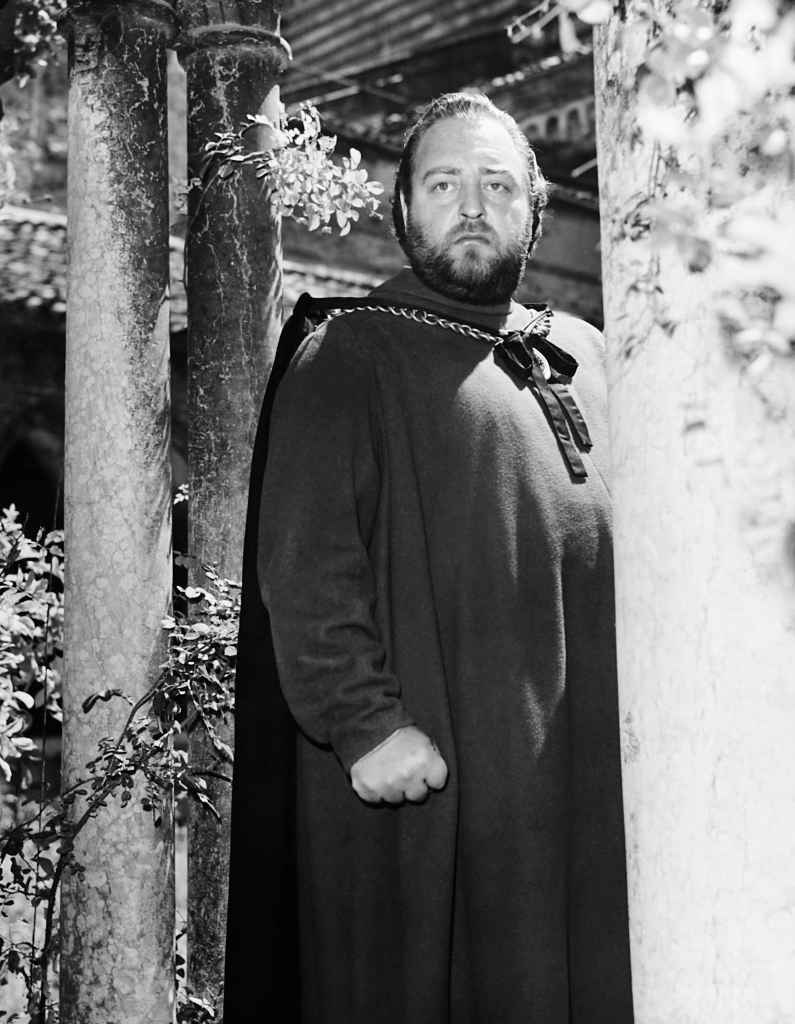
He later reflected on just how much he invested in the character during an unusually candid 1963 interview with the Hartford Courant. “Permit me to elaborate, for it is a subject I know much too well. I have been an actor for 25 years. I made over 60 films in Europe before coming to America, and perhaps a dozen more here. Add to that several dozen TV performances in everything from Gunsmoke to Noah and the Flood. When I was offered the role of Dr. Hyatt in Checkmate, it was an afterthought by the producers, who threw in the role as added potential for the series. It was not meant to be a leading role, but by the time we finished the 70 episodes, it was.
“You can believe me when I say I worked hard perfecting that character. For the first few weeks I did little but delve deeper and deeper into the personality and makeup of Dr. Hyatt. When I had him, I turned on full steam and it seems the audience loved it.”
Adds Geoffrey Mark, “Sebastian Cabot was a complete pro. For a heavyset man, he worked an awful lots in parts that did not require him to be heavyset. He was playing roles where his physicality wasn’t pro or con, good or bad. He was being hired for his talent. And he did very well on television in the ’50s and ’60s into the ’70s.”
But success came with a downside, with the actor quickly discovering what many television actors eventually learn: a hit role can become both a breakthrough and a trap. “In the beginning, I was Sebastian Cabot, the actor, playing the role of Dr. Hyatt the criminologist and few people remember that I am also Sebastian Cabot, the actor. Some producers have the unbelievable gall to tell me they don’t need a Dr. Hyatt type. It doesn’t bother me that I’m not acting or working in a TV drama or movie, but it is the grossest insult to any actor who has spent his lifetime polishing his professional ability to be told by the minuscule mind of a Madison Avenue mouse that he is a type.”
Still, he had no intention of giving up. “It is difficult to overcome that image and many stars who have found themselves in the limbo of canceled television series tend to give up. That I cannot do. I am an actor and I always will be.”
It was a revealing glimpse into the kind of actor Cabot really was—serious about his craft, fiercely protective of his range and determined not to be reduced to a single role. “He was an incredible actor who could bring whatever was needed to a part,” says Mark. “Just because one happens to be elegant doesn’t mean you can’t relax and have fun. The British training of acting, the elegance that British theater training requires of its actors, the ability to speak English so well and use their voices so well, helped him create these iconic characters.”
Becoming Mr. French
By 1966, Cabot had built a strong career in film and television, but the role that would define him for the rest of his life almost didn’t happen. That role was Giles French, the proper British butler at the center of Family Affair—and Cabot wanted nothing to do with it.
As he reflected to LNP Lancaster Online in 1966, “When my agent told me my part in this series would be a gentleman’s gentleman, I said, ‘Me play a butler? Never. In a thousand years, never.’ Well, he wouldn’t let me off the phone. I kept saying no and he kept telling me how much money he had lost because of all the work I’d turned down. Finally he said the magic sentence: ‘Do the pilot, Sabby. It’ll never sell. It’s just another little family thing.’”
Of course, it sold—and quickly became one of television’s biggest hits. The series premiered during the extraordinary 1966 television season, alongside future classics like Star Trek, Batman, The Monkees and Dark Shadows—all of which are celebrating their 60th anniversaries.
Family Affair centered on bachelor engineer Bill Davis, played by Brian Keith, whose life is suddenly turned upside down when he becomes guardian to his late brother’s three children: teenager Cissy, played by Kathy Garver, and young twins Buffy and Jody, played by Anissa Jones and Johnny Whitaker. Helping hold the household together was Cabot’s Giles French.
Cabot turned what could have been a stereotypical TV butler into the emotional center of the series. Mr. French wasn’t simply the family servant—he was caregiver, disciplinarian, confidant and, in many ways, the steady heart of the show.
And he knew exactly what he was risking by signing on to another weekly series. His experience on Checkmate had already taught him how quickly a successful television role could become a double-edged sword. As he admitted in that same interview, “After Checkmate, I swore to myself and to anybody who would listen to me, that I would never again, under any circumstances, do another television series. After Checkmate went off, I couldn’t get a part that didn’t resemble Dr. Hyatt. I thought I would play the dignified, benevolent square forever. I’ll have the same problem all over again, I know it. When this series goes off, I’ll probably spend the rest of my life playing a fat Arthur Treacher. It’s most depressing. I refuse to think about it. I’m filing that under ‘future problems.’”
At the same time, he did tell the Detroit Free Press in 1966, “I am not at all like them. Look, I have one suit. This is it. I am not happy unless I am dressed in old clothes with my shirttail out. If you want the real Sebastian Cabot, you can find him fishing off Vancouver Island in British Columbia, looking completely disreputable.”
One area where Cabot and Mr. French did overlap, however, was in their warmth toward children. Over time, Cabot developed real affection for young co-stars Johnny Whitaker and Anissa Jones. In 1968, he told The Nashua Telegraph, “The children are wonderful and unspoiled. They call me ‘Mr. Cabot’ or ‘Mr. French’ off camera. We’d all like to be a little less formal, but if we did it would be difficult for them to show the kind of respect their roles call for in the series. Because of the children, we have a very unusual way of shooting the series. We work on six or seven scripts at a time. That’s because the children have to go to school and when they are available to work we shoot all the scenes in which they appear for several programs.”
By 1969, any early concerns he had about working with children had disappeared. As he told the Telegraph Journal, “I was terrified when we shot the pilot for Family Affair. I mean, really, the upstaging possibilities were frightening. And being asked to play a male nanny! Ridiculous! I didn’t suppose I had a chance for survival. When I took the part, I expected two totally spoiled children. I had no way of knowing that Anissa Jones and Johnny Whitaker would be such loves… We really are all like one happy family. When we resume work after a break, Johnny and Anissa will rush forward to throw their arms around me. They are delightful, I must say.”
Life beyond ‘Family Affair’
As beloved as Mr. French became, Sebastian Cabot had a full life and wide-ranging interests away from the set. Vancouver Island became his refuge, the place where he could get away from Hollywood and simply be himself. He owned a home there and spent as much time there as possible, surrounding himself with the hobbies and interests he genuinely loved. Detailed The Daily Breeze in 1967, Cabot was an enthusiastic sportsman who loved swimming, rifle shooting and cricket, the latter dating back to his school days in London. Boating and fishing were particular favorites, which made Vancouver Island an ideal home base. He was also an avid photographer and a serious car enthusiast.
The paper reported that collecting and restoring cars had become one of his favorite hobbies, while The Sioux City Journal later devoted an entire feature to his passion for classic automobiles. It was another side of Cabot that many viewers never saw—the man behind the beard spending his free time around engines, tools and restoration work.
Food was another lifelong passion. That probably shouldn’t come as a surprise given his early years working as an apprentice chef in London. He never completely lost that love of cooking, and it remained one of the constants in his life. He appreciated good food, good conversation and good company—things that seemed to matter to him far more than celebrity.

Professionally, he remained just as candid and self-aware as ever. As he told The Houston Post, “The role of Mr. French is completely different from anything I’ve done before. Of course I’m an Englishman again and will be for several years after the series. It took me years to get rid of Dr. Hyatt. French is the only one on the show I call larger than life. When it comes to the comedy, I can overdo, as long as I don’t overact all the time. But at times, Brian Keith will turn and say, ‘I can’t watch it.’”
He also admitted he had been surprised by just how strongly viewers responded to the show. “I took the show because I liked it, obviously, or I wouldn’t have done it. But I must say I was a little startled when it became the second best new show of the season. I didn’t know people were hungry for something besides judo chopping and blood letting.”
Final years and legacy
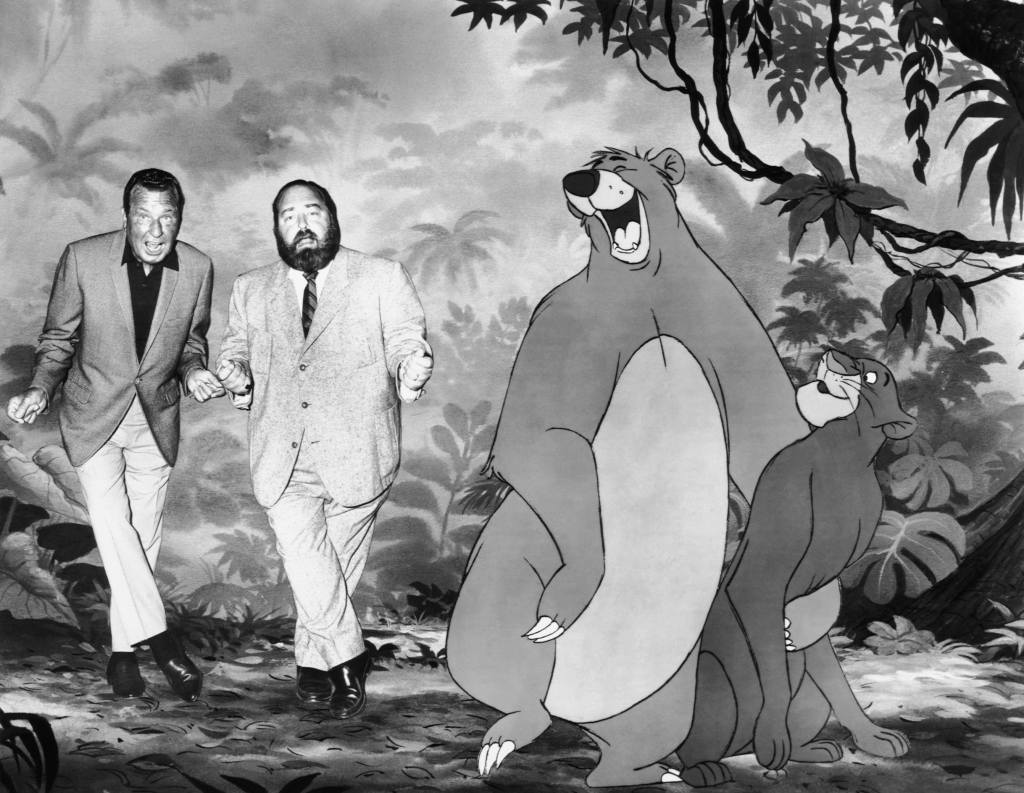
When Family Affair ended in 1971 after five seasons, Sebastian Cabot was once again faced with a challenge he knew all too well: moving beyond the role that had made him famous. And his reaction to the show’s cancellation was classic Cabot, telling The Billings Gazette in 1971, “It’s wonderful. I’m unemployed. In no way am I like Mr. French or even Dr. Hyatt. Now I’ve got to work on living down the French image.”
Work came soon enough in the form of Ghost Story, the supernatural anthology series that cast Cabot as Winston Essex, the mysterious host of a world filled with haunted mansions and unsettling mysteries. It was a very different kind of role from Mr. French, but one that played beautifully to his strengths.
As The Arizona Daily Star noted in 1972, Ghost Story gave Cabot “the best of all possible worlds.” It kept him on television while allowing him to continue spending much of his time at home on Vancouver Island. As the urbane and mysterious Essex, Cabot would fly in to film the opening and closing segments for each episode before returning home.
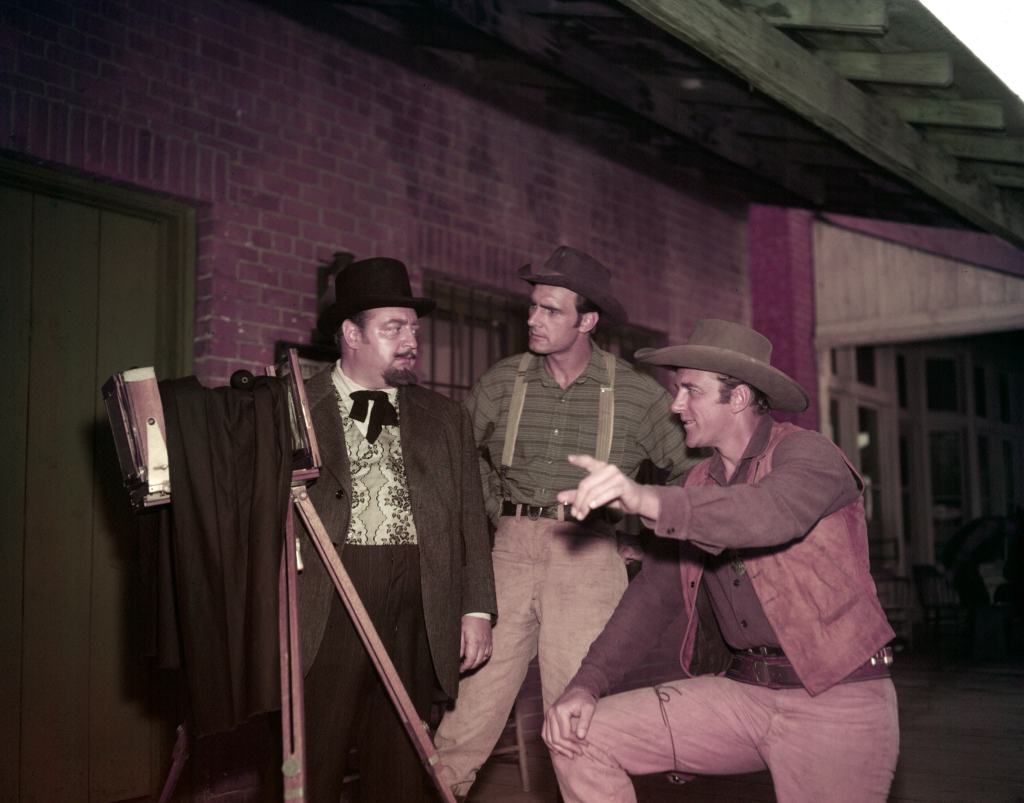
Away from acting, Cabot’s greatest constant was his family. He married Kathleen Rose Humphreys in 1941, and the two remained together for the rest of his days. Together they raised three children—Yvonne, Annette and Christopher—while building a life that increasingly revolved around British Columbia and Vancouver Island. For all of his success in Hollywood, Cabot seemed happiest away from the spotlight, spending time with family, enjoying the outdoors and embracing the quieter life he had built for himself.
By the mid-1970s, however, Cabot’s health began to decline. He suffered two strokes and was forced away from acting. For a man whose voice had become one of his defining gifts, the impact was especially cruel.
In 1976, he spoke candidly to the Victoria Times about what he was facing. “I think sometimes I’m completely gone. I can’t say a word. I don’t have any resonance and it’s very hard for me to talk. But other times, the words come out quite well, although if I talk a lot at one time, it’s an effort. I think tonight I won’t be able to say a word.”
As he told the paper, “I don’t think I’ll ever get my voice back, but I would still like to work. I’ve been hoping someone would write a part for me—a non-speaking part—but nobody has.”
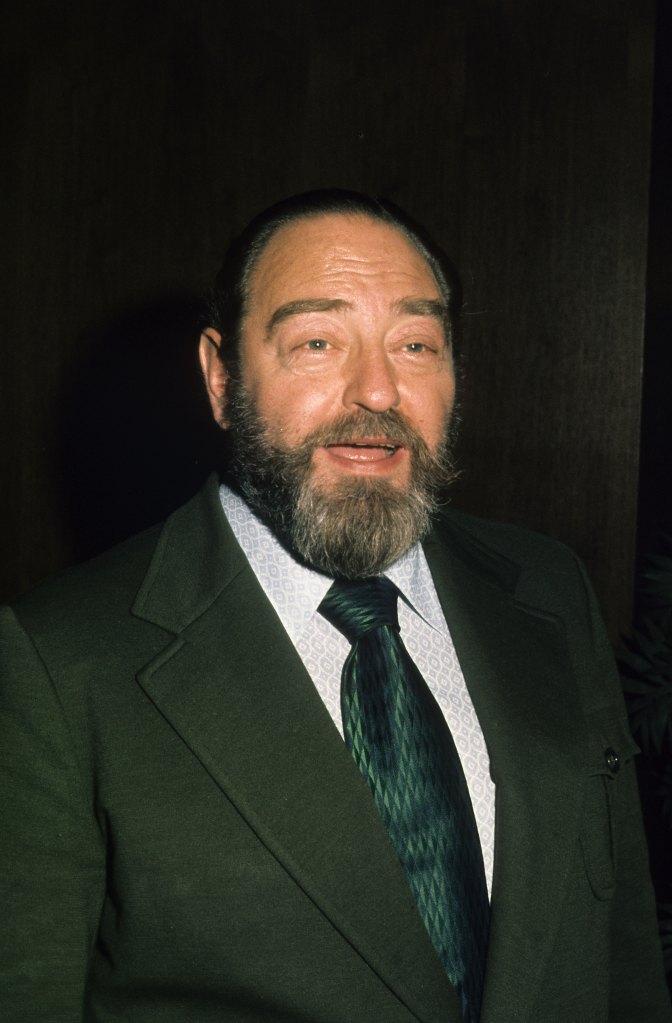

It’s a heartbreaking quote, especially from a man whose voice had become so central to his identity and career. But it also says a great deal about Cabot the actor. Even after everything, he still wanted to perform.
On August 23, 1977, he died of a stroke at his home in North Saanich, British Columbia. He was 59. Today, he remains best remembered as the beloved Mr. French. But as the many interviews and newspaper profiles over the years make clear, there was much more to Sebastian Cabot than the roles he played. He was witty, thoughtful and fiercely dedicated to his craft. He loved fishing, cooking, photography and restoring classic cars. He could be blunt, funny and deeply self-aware, particularly when talking about fame and acting. And he never lost sight of the fact that beneath the image audiences embraced was simply an actor who loved the work.
Perhaps Sebastian Cabot said it best himself. In that 1976 Victoria Times interview, reflecting on the affection the public still showed him, he said, “Elderly people will stop me and say how glad they are that I’m still with them, and they thank me for all the enjoyable hours I’ve given them. And I hear the little ones say, ‘Oh, look, there’s Mr. French.’ That’s what makes it all worthwhile.”
Conversation
All comments are subject to our Community Guidelines. Woman's World does not endorse the opinions and views shared by our readers in our comment sections. Our comments section is a place where readers can engage in healthy, productive, lively, and respectful discussions. Offensive language, hate speech, personal attacks, and/or defamatory statements are not permitted. Advertising or spam is also prohibited.