The Ultimate Track-by-Track Playlist of the Best Beatles Christmas Songs of All Time
From rare 1960s 'flexi-discs' for fans to John Lennon’s peace anthem, relive the magic of the Fab Four this holiday season

For fans of The Beatles, Christmas has always come with a little extra audio wrapping. In the days before boxed sets, deluxe reissues or surprise digital drops, the band marked the season with something far more personal: a Christmas record sent directly to members of their fan club. These flexi-discs weren’t polished performances or chart-minded singles, but rather loose, silly, occasionally chaotic snapshots of John Lennon, Paul McCartney, George Harrison and Ringo Starr sounding like four friends cutting loose when no one was watching—or at least when they thought no one was listening too closely.
Over the years, those annual greetings quietly traced The Beatles’ evolution, from the wide-eyed energy of 1963 through the increasing experimentation and fragmentation of the late 1960s. Along the way, each Beatle also found his own way of engaging with the holiday season after the band split, whether through John Lennon’s pointed seasonal anthem, Paul McCartney’s synth-driven earworm, George Harrison’s year-end reflection or Ringo Starr’s wholehearted embrace of Christmas music itself.
Taken together, these recordings tell a uniquely Beatles story of Christmas—one that blends humor, warmth, experimentation and nostalgia. This Beatles Christmas playlist brings those threads together, alternating between the original fan club records and select solo tracks to create a holiday soundtrack that feels as personal, unpredictable and enduring as the band itself.
What you’ll find in this ‘track-by-track’ guide to the best Beatles Christmas songs
-
A complete guide to every Beatles Fan Club Christmas record from 1963 to 1969, with behind-the-scenes details
-
A festive, chronological playlist that pairs each Beatles Christmas disc with a solo holiday song by John, Paul, George or Ringo
-
Behind-the-scenes stories of fan favorite tracks like “Happy Xmas (War Is Over),” “Wonderful Christmastime” and “Christmas Time Is Here Again”
-
A look at how The Beatles’ Christmas messages evolved alongside the band—from early Beatlemania to the final years
-
Embedded videos to listen along to while learning and revisit these holiday classics.
Track 1. The Beatles’ 1963 fan club Christmas album

The first Beatles Christmas Record was sent exclusively to members of the official fan club at the end of 1963, arriving at the height of Beatlemania in England, when the group had barely a moment to breathe between tours, recordings, radio appearances and television commitments. Unlike the polished singles dominating the charts, the flexi-disc was intentionally informal—a loose, good-natured audio greeting stitched together from jokes, skits, snippets of music, and personal messages addressed directly to their fans. John, Paul, George and Ringo riff on seasonal clichés, poke fun at one another and casually break into fragments of familiar tunes, including a playful take on “Good King Wenceslas.” Check out a video on this 1963 track here.
Track 2. John Lennon – ‘Happy Xmas (War Is Over)’ (1971)
Recorded in October 1971 and released just weeks later, “Happy Xmas (War Is Over)” stands as John Lennon’s most enduring seasonal statement, inseparable from the political moment that inspired it. The song grew out of Lennon and Yoko Ono’s ongoing peace campaign during the Vietnam War, including their billboard slogan “WAR IS OVER! If You Want It,” which appeared in major cities around the world in late 1969. Musically, Lennon framed the message within the familiar structure of a traditional Christmas singalong, drawing on the melody of the folk song “Stewball,” and enlisted the Harlem Community Choir to reinforce its communal spirit.
Track 3. The Beatles’ 1964 fan club Christmas album
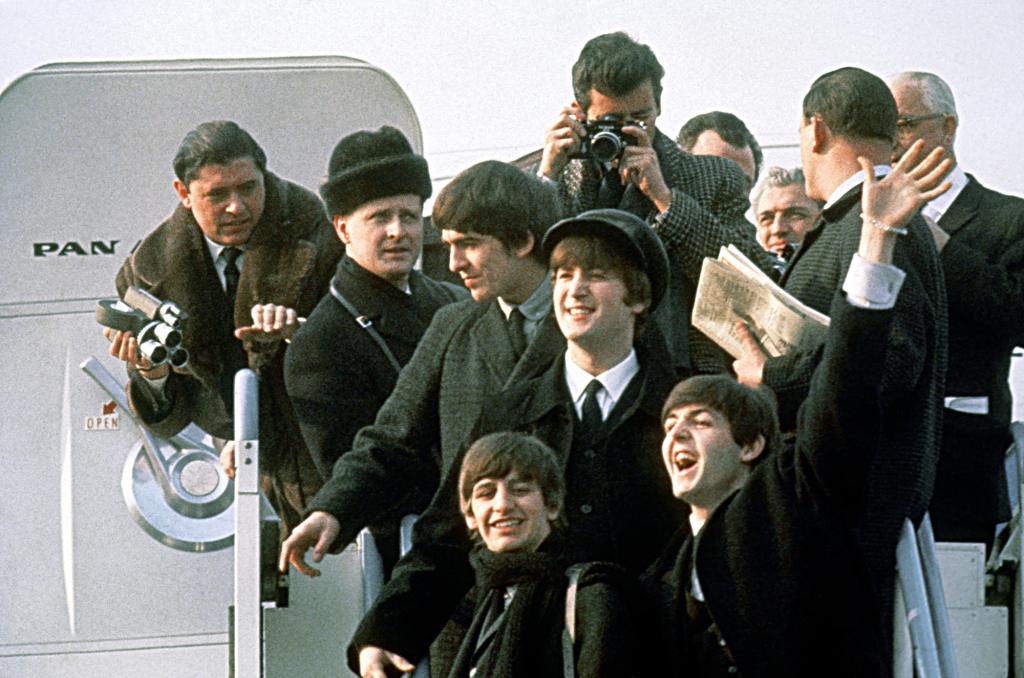
By the time The Beatles recorded their second fan club Christmas disc, the scale of their fame had exploded, and the 1964 flexi reflects that escalation in both energy and attitude. Issued as Another Beatles Christmas Record, it abandons the relatively gentle charm of the previous year in favor of deliberate chaos, rapid-fire banter and overlapping voices that frequently talk over one another. The record plays like a parody of broadcasting itself, with mock announcements, exaggerated accents and nonsensical dialogue replacing any straightforward seasonal greeting. Musical fragments surface only briefly before being interrupted, reinforcing the sense that polish was beside the point. You can listen to it here.
Track 4. Paul McCartney – ‘Wonderful Christmastime’ (1979)
Recorded during the sessions for McCartney II and released as a standalone single at the end of 1979, “Wonderful Christmastime” reflects Paul McCartney’s growing interest in synthesizers and home recording at the close of the decade. He wrote, performed and produced the track largely on his own, using a Sequential Circuits Prophet-5 to create its distinctive electronic textures, a sharp contrast to the more traditional holiday arrangements that dominated Christmas radio at the time.
Track 5. The Beatles’ 1965 fan club Christmas album
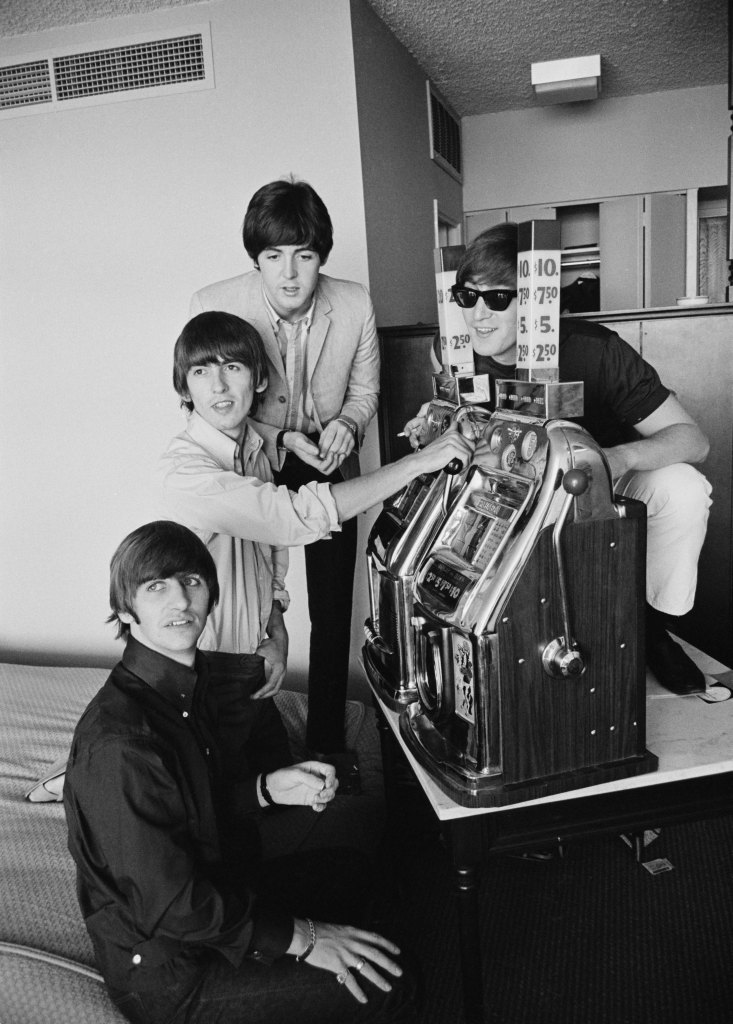
The 1965 fan club Christmas disc marks a noticeable shift in how The Beatles approached these annual recordings, moving away from sheer noise toward something more deliberately constructed. Issued as The Beatles’ Third Christmas Record, it still relies heavily on humor and wordplay, but the sketches feel more paced and intentional than the free-for-all of the previous year. Individual voices are more clearly defined, and the group takes time to address fans directly, offering greetings that feel slightly more personal despite the continued layer of parody. Musical excerpts appear in brief, often tongue-in-cheek forms and are woven into the spoken material rather than erupting randomly. You can listen to it here.
Track 6. Ringo Starr – ‘Come On Christmas, Christmas Come On’ (1999)
Released on Ringo Starr’s holiday album I Wanna Be Santa Claus, “Come On Christmas, Christmas Come On” reflects Starr’s unusually enthusiastic embrace of holiday music late in his solo career. Rather than relying solely on familiar standards, Ringo chose to record several original songs for the album, positioning himself not just as an interpreter but as an active contributor to the seasonal canon.
Track 7. The Beatles’ 1966 fan club Christmas album

By late 1966, The Beatles were no longer a touring band, and that shift is immediately evident in Pantomime: Everywhere It’s Christmas, their most concept-driven fan club record to date. Rather than a loose collection of jokes and greetings, the flexi takes the form of a surreal Christmas pantomime, complete with characters, recurring motifs and a loosely sustained narrative. Each Beatle adopts exaggerated roles, delivering scripted dialogue alongside absurd asides. You can listen to it here.
Track 8. George Harrison – ‘Ding Dong, Ding Dong’ (1974)
Recorded for George Harrison’s Dark Horse album and released as a single in late 1974, “Ding Dong, Ding Dong” was written specifically as a New Year’s song rather than a Christmas one, a distinction Harrison himself made clear over the years. Inspired in part by the passing of time and the ringing of bells at Friar Park, the lyric emphasizes renewal and moving forward, with repeated references to welcoming a new year while leaving the old one behind. Harrison later expressed mixed feelings about the song, regarding it as lightweight compared to much of his other work, yet its seasonal timing has ensured its regular inclusion on holiday playlists.
Track 9. The Beatles’ 1967 fan club Christmas album
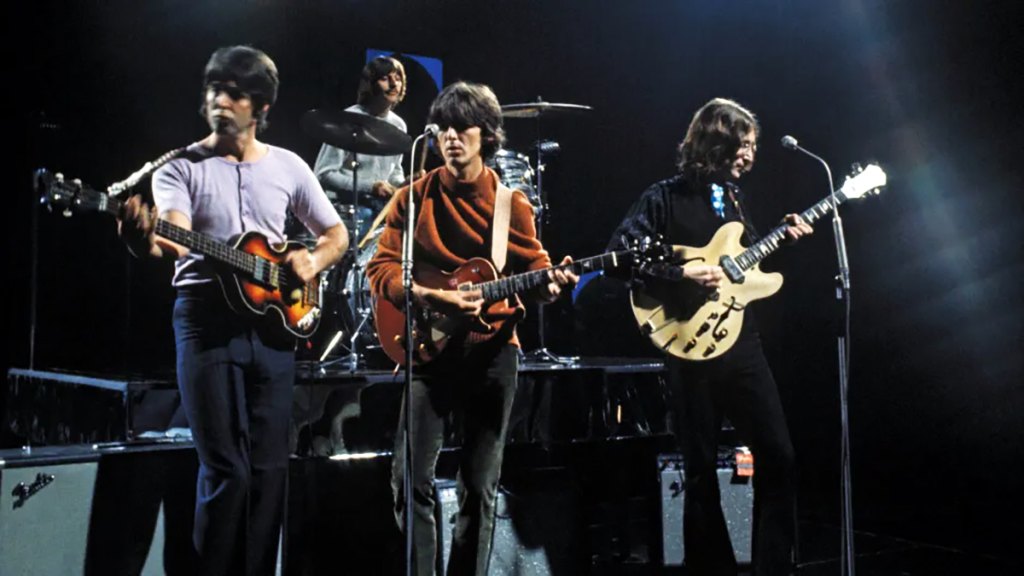
The 1967 Beatles Christmas Record marks a clear departure from the more structured pantomime of the previous year, embracing instead the fragmented, experimental spirit that defined the band’s post-Sgt. Pepper period. Built around a repeated chorus of the sung phrase “Christmas time is here again,” the flexi functions less as a traditional holiday greeting and more as a loose sound collage. You can listen to it here.
Track 10. The Beatles – ‘Christmas Time Is Here Again’ (1995 single version, B-side of ‘Free as a Bird’)
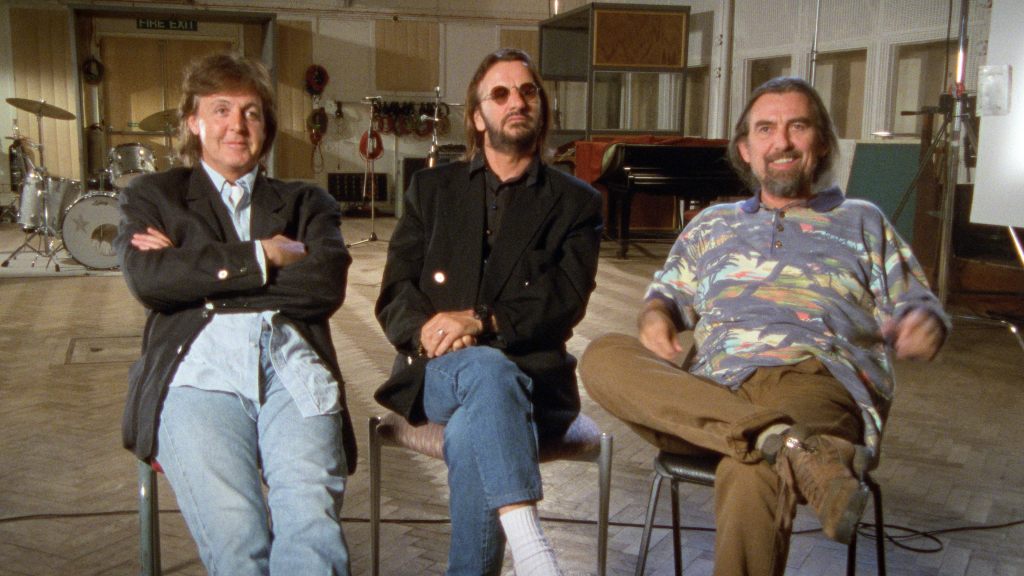
When “Christmas Time Is Here Again” reappeared in 1995 as the B-side to “Free as a Bird,” it offered a rare moment in what was a bit of a Beatles-era oddity that was reframed for a contemporary audience. Rather than recording a new performance, Paul, George and Ringo drew on the original 1967 fan club material, editing and presenting it in a more focused form as part of the Anthology project. You can listen to it here.
Track 11. The Beatles’ 1968 fan club Christmas album
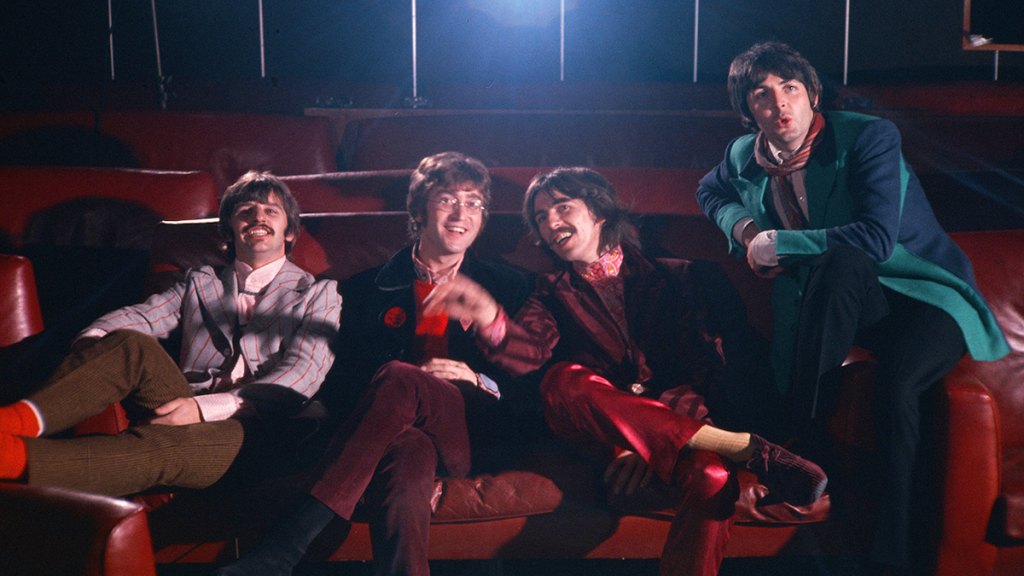
The 1968 fan club Christmas disc reflects a band in the midst of internal strain and increasingly separate creative paths. Rather than functioning as a group performance, the record is largely constructed from individual contributions, with the Fab Four recording messages independently. These are assembled alongside brief musical snippets, spoken fragments and a central segment featuring a young Julian Lennon, whose presence lends the disc a rare note of warmth and domesticity. The overall tone is quieter and more subdued than earlier Christmas records, with less emphasis on group comedy and more on personal, sometimes introspective greetings. You can listen to it here.
Track 12. Paul McCartney – ‘Rudolph the Red-Nosed Reggae’ (1979)

“Rudolph the Red-Nosed Reggae” was released in 1979 as the B-side to “Wonderful Christmastime,” offering a playful counterpoint to its A-side companion. Unlike the vocal-driven single, the track is an instrumental reworking of the familiar holiday standard, filtered through a relaxed, reggae-tinged arrangement. McCartney again handled the performance himself, leaning into a light, almost throwaway feel that underscored the experimental freedom he was enjoying at the time.
Track 13. The Beatles’ 1969 fan club Christmas album

The final Beatles fan club Christmas record, issued in 1969, functions less as a seasonal novelty than as a quiet close to the group’s shared history. Rather than featuring new performances or comedy sketches, the disc is built around edited excerpts from earlier Christmas records, interspersed with brief spoken introductions. By this point, The Beatles were effectively no longer operating as a band and the record reflects that reality by looking backward instead of attempting to create something new. You can listen to it here.
Track 14. Ringo Starr – ‘Christmas Eve’ (1999)
“Christmas Eve,” another original from Ringo Starr’s I Wanna Be Santa Claus, showcases the reflective side of his approach to holiday music. Slower and more contemplative than some of the album’s more upbeat tracks, the song emphasizes the quiet moments that precede the holiday. Starr’s vocal is relaxed and conversational, supported by a restrained arrangement that avoids excess sentimentality.
Conversation
All comments are subject to our Community Guidelines. Woman's World does not endorse the opinions and views shared by our readers in our comment sections. Our comments section is a place where readers can engage in healthy, productive, lively, and respectful discussions. Offensive language, hate speech, personal attacks, and/or defamatory statements are not permitted. Advertising or spam is also prohibited.