Robert Redford Was Almost John Dutton: Inside the Lost ‘Yellowstone’ Pilot That Never Happened
The hit series almost looked very different—and Beth Dutton was nearly unrecognizable

During the Season 1 premiere of The Madison, viewers noticed something strange. The episodes—three of them aired that first night—were dedicated to the late actor Robert Redford, who was never actually a part of the Yellowstone universe. They began to wonder why, and the reason is that long ago Redford was actually supposed to play John Dutton III. That’s right, Kevin Costner wasn’t originally cast in the series, and that’s not the only change that Taylor Sheridan made to the script and cast. Below, we take you inside the lost Yellowstone pilot and share why Redford was in it and what Beth Dutton was originally supposed to be like.

A look at the lost ‘Yellowstone’ pilot
In a 2023 interview with The Hollywood Reporter, Sheridan revealed many things that were supposed to be in the original Yellowstone script. Highlights are as follows.
Robert Redford was originally cast as John Dutton III

When he was trying to get the Yellowstone pilot greenlit, Sheridan was told by HBO—who was looking to produce it—that it was never going to happen unless Redford was cast as John Dutton III.
“They said, ‘We want Robert Redford,” Sheridan said. “They said, ‘If you can get us Robert Redford, we’ll greenlight the pilot.’”
“I drive to Sundance and spend the day with him and he agrees to play John Dutton,” Sheridan says. “I call the senior vice president in charge of production and say, ‘I got him!’ ‘You got who?’ ‘Robert Redford.’ ‘What?!‘ ‘You said if I got Robert Redford, you’d greenlight the show.’ And he says—and you can’t make this sh-t up—‘We meant a Robert Redford type.’”
In the end, Costner was cast as John Dutton III. It’s unclear why or how Sheridan informed Redford that they no longer wanted his involvement.
Beth Dutton had a different personality

Beth Dutton (Kelly Reilly) is a fiery, sassy and stubborn woman that viewers fell in love with. HBO didn’t agree with those personality traits, though, and actually asked Sheridan to change them.
‘We think she’s too abrasive,’” Sheridan recalled the studio executives telling him. “‘We want to tone her down. Women won’t like her.’ They were wrong, because Beth says the quiet part out loud every time. When someone’s rude to you in a restaurant, or cuts you off in the parking lot, Beth says the thing you wish you’d said.”
“So I said to them, ‘OK, everybody done? Who on this call is responsible for a scripted show that you guys have on the air? Oh, you’re not? Thanks.’ And I hung up. They never called back,” Sheridan continued.

It was originally pitched as a movie
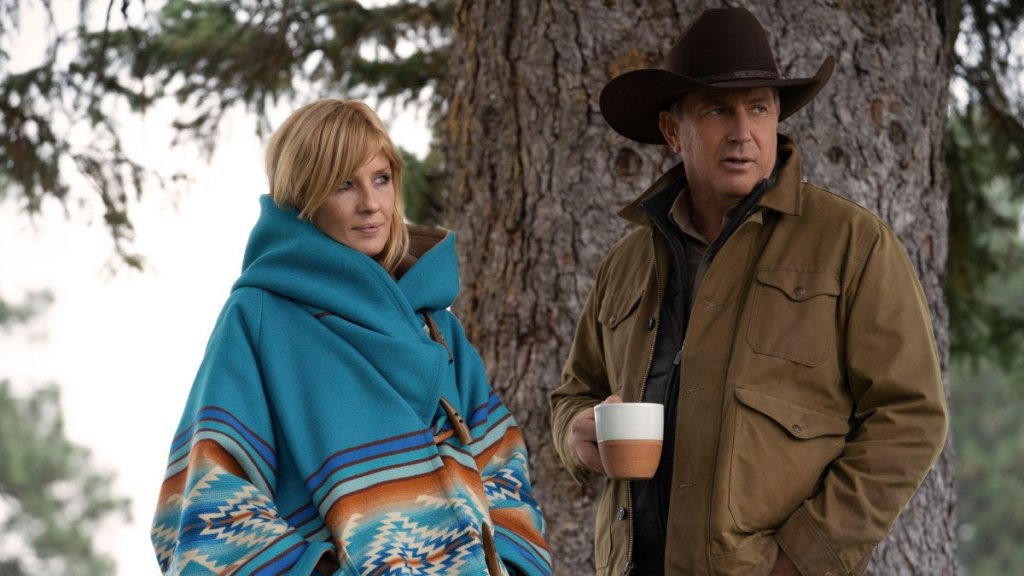
Imagine a world without five seasons of Yellowstone. It almost happened. Originally, creator Taylor Sheridan conceived the story as a feature film—something he described as “The Godfather in Montana.” But as the scope of the narrative expanded, it became clear there was far more story to tell, and the project evolved into a television series—a decision fans have every reason to be grateful for.
“I thought Taylor was the real deal,” Michael Lombardo, the former HBO programming president said in that same Hollywood Reporter interview. “In a world of people who pose, he was writing what he knew, and he cared desperately about the show. The idea of doing a modern-classic Western was a great idea—we were always doing urban shows, and this felt fresh.”
The budget almost ruined the show and its prequels


Yellowstone and its prequels cost a lot to make and initially executives told Sheridan to create cheapter storylines that were easier to make. He didn’t.
“There is compromising on things like budget,” Sheridan said. “You write a thing and it costs what it costs. I will not change a script to meet a budget. You read the scene [in the Yellowstone prequel 1883] where the wagons go across the river when you decide to green light it. So don’t pitch me an idea where we see them before the river and after the river. That’s not what I do. You read it, you had every chance to say no.”
“They gave me a budget of $175 million [for 1883],” he said. “I thought it was going to be $225 [million] with the rush costs. We did it for $169 [million]. And it was the biggest show.”
Conversation
All comments are subject to our Community Guidelines. Woman's World does not endorse the opinions and views shared by our readers in our comment sections. Our comments section is a place where readers can engage in healthy, productive, lively, and respectful discussions. Offensive language, hate speech, personal attacks, and/or defamatory statements are not permitted. Advertising or spam is also prohibited.