Joshua Jackson’s ‘Fringe’ Defined a New Era of Sci-Fi Mystery TV—and It’s Free to Stream!
From parallel universes to family drama, we revisit the evolution of the beloved J.J. Abrams hit

When Fringe premiered on Fox in 2008, it arrived during a period when genre television was rapidly evolving. Created by J.J. Abrams, Roberto Orci and Alex Kurtzman (who, with Abrams, would bring Star Trek back to the big screen in 2009), the series initially appeared to be another procedural exploring strange phenomena in the spirit of The X-Files. But over the course of its five-season run, Fringe transformed into something far more ambitious: a sweeping sci-fi drama built around parallel universes, moral consequences and one of television’s most unusual family relationships.
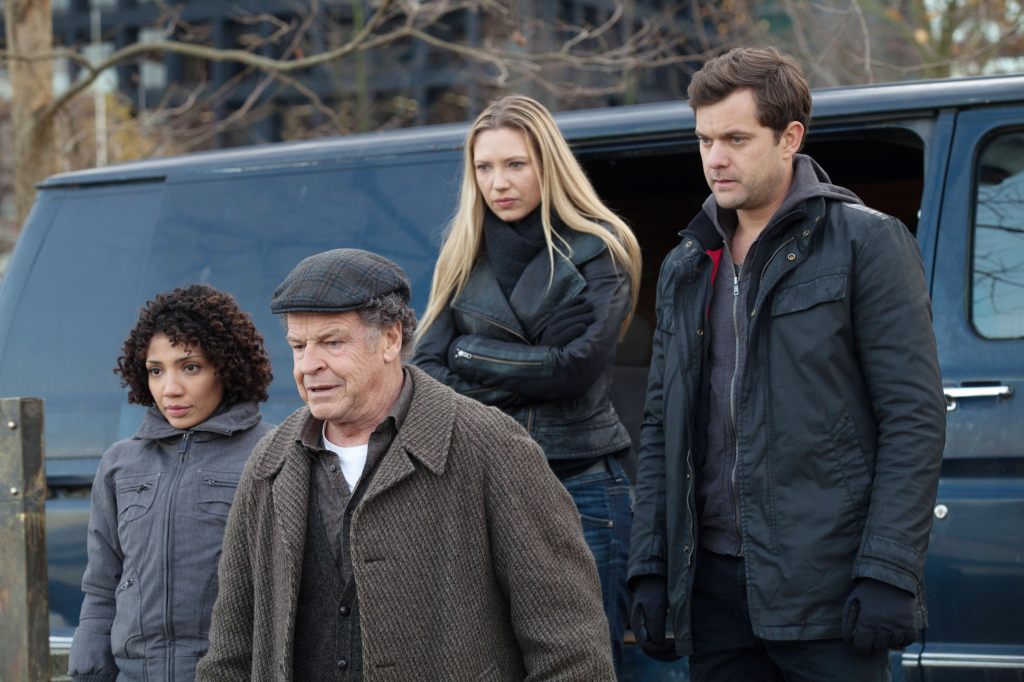
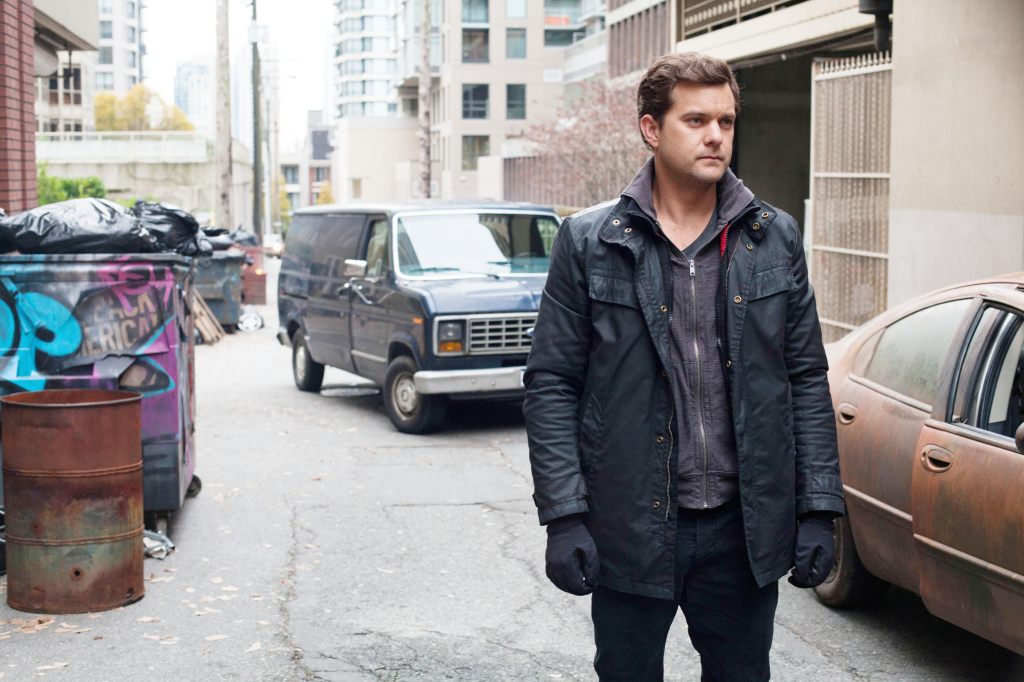
Looking back now, what makes Fringe especially remarkable is the way it continually reinvented itself. The show began as an investigation-of-the-week series centered on FBI agent Olivia Dunham (Anna Torv), reluctant civilian consultant Peter Bishop (Joshua Jackson) and Peter’s brilliant but unstable father Walter Bishop (John Noble), a disgraced scientist whose past experiments often lay at the heart of the bizarre cases the team investigated. Each week the trio confronted strange phenomena tied to what the series called “fringe science”—teleportation experiments gone wrong, genetic mutations, mind control technologies and other scientific nightmares that blurred the line between theoretical research and the impossible.
Yet as the seasons unfolded, the storytelling expanded outward to reveal a much larger mythology. The strange events the team investigated were ultimately connected to a parallel Earth that existed alongside our own—a world both familiar and unsettlingly different. At the center of that conflict was Walter’s most devastating decision: after losing his own son, he crossed into that alternate universe and kidnapped the other world’s version of Peter, bringing the child back to raise as his own. That single act set off a chain reaction that would eventually threaten both universes, transforming what began as a procedural into an epic story about family, identity and the consequences of trying to rewrite fate.

Behind the scenes, the writers of Fringe often described the show as a constant balancing act between episodic storytelling and serialized mythology—a creative evolution that gradually reshaped the series as both the characters and the audience discovered what the story was truly about.
Building the ‘Fringe’ mythology
“The first season was all about set-up,” executive producer J.H. Wyman reflected during the show’s production. “You have to get an idea of who the characters are, and as an audience member, it’s sort of more of an objective view. Season 2 became a little bit more about starting to slowly uncover a larger mythology that allowed people to get more of a subjective point of view from the characters. And now in Season 3, we’re truly ensconced in the subjective, from the characters’ point of view, and very, I guess, settled on watching their self-actualization.
“So it took three seasons to really begin to care to a certain extent about the people and their positions in this story. As soon as you start looking at the objective and subjective viewpoints, any first season of a show is really, ‘Hey, we’re going to set the table for you.’ And then, as you get to know them, you’re allowed to tell stories about personal things, because you actually care for the characters. So that sort of changed in the writing of the show. We learned a great deal in that the first season was more standalone with some mythology.”
Executive producer Joel Pinkner emphasized that the series’ gradual reveal of its mythology was deliberate. Audiences had to develop a connection with the characters before the larger secrets could be unveiled. “These three characters were forced by choice, not by circumstances, and the storytelling was very much from the outside in,” he explained. “And then as we tried to reveal more about the characters, it enabled us to tell stories from their point of view.
“We knew from the beginning that we were telling a show about an alternate universe,” he continued. “We knew from the beginning we were telling a show that was going to be about Peter being stolen from an alternate universe, but that’s not just a story you can get into immediately. We knew the secrets of the storytelling, but we couldn’t reveal them until we had sort of earned the audience’s trust and earned the surprise of that. So by the end of the first season, when we could actually reveal what the show was about organically, it changed the storytelling, and now that the secret is out, we can tell stories about the consequences of that.”
One of the recurring challenges for mythology-driven television is balancing serialized storytelling with episodic narratives. Viewers often become frustrated when major developments appear to vanish until the next mythology-heavy episode. On Fringe, episodes that didn’t focus directly on the overarching narrative were often described as “monster-of-the-week” stories—a label that co-executive producer David Wilcox felt missed the point.
“I think all of these episodes speak to the world of Fringe,” he said. “Even with a so-called monster-of-the-week, they’re contextually in a world where this kind of crazy stuff can happen. To me, even though it’s a one-off case we’re not going to see again, it still speaks to the world that Walter Bishop had a hand in creating—this sort of science-run-amok theme that was always front and center in the show. We’ve tried to go with a combination of standalone and mythology. Even in the monster-of-the-week episodes, we’ll have mythological elements or at least as they exist in the context of this world. There has always been continuity with the characters in those episodes.”
Learning from ‘The X-Files’
The writers were also conscious of the lessons learned from earlier mythology-driven series—particularly The X-Files. “We would not be good storytellers if we didn’t look at what came before us and examine what worked and what didn’t,” Wyman said. “Now that X-Files had come and gone, we felt a lot of backlash from people saying, ‘We want to know more about the mythology.’ At first, our reaction was, ‘Come on, it’s like you’re trying to open all the presents before Christmas; you’ve got to wait.’ But when we looked closer, we realized fans weren’t asking to know everything immediately. What they were saying was that the mythology had become so compelling that they didn’t want to forget about it from week to week.”
Understanding that helped reshape how the writers approached the series. “It sounds so simple,” Wyman continued, “but the truth is it wasn’t simple. It was like one of those puzzles where once you get to the other side, you’re, like, ‘Wow, that was really easy.’ But it was difficult because you’re battling all these different forces—the studio, the network and the writers’ room—and everyone has a vote in what happens.”
Co-executive producer Josh Singer appreciated the creative philosophy that developed in the writers’ room—one that wasn’t afraid to answer questions and then push the narrative in unexpected directions.
“I think Joel and Jeff have a bit of a ‘burn the furniture’ approach,” he said with a smile. “They’re very willing to totally shift the paradigm—to take the story to its logical end without trying to draw it out too much, and then start a new story. The end of Season 2 was very much like that. Instead of waiting forever for Walter to tell Peter the truth, we told Peter what was going on. Peter rebels and goes over there, which pushed us into a whole new story: what happens if Olivia gets stuck in the alternate universe and her duplicate comes over here undercover?”
Two universes, two versions of the characters
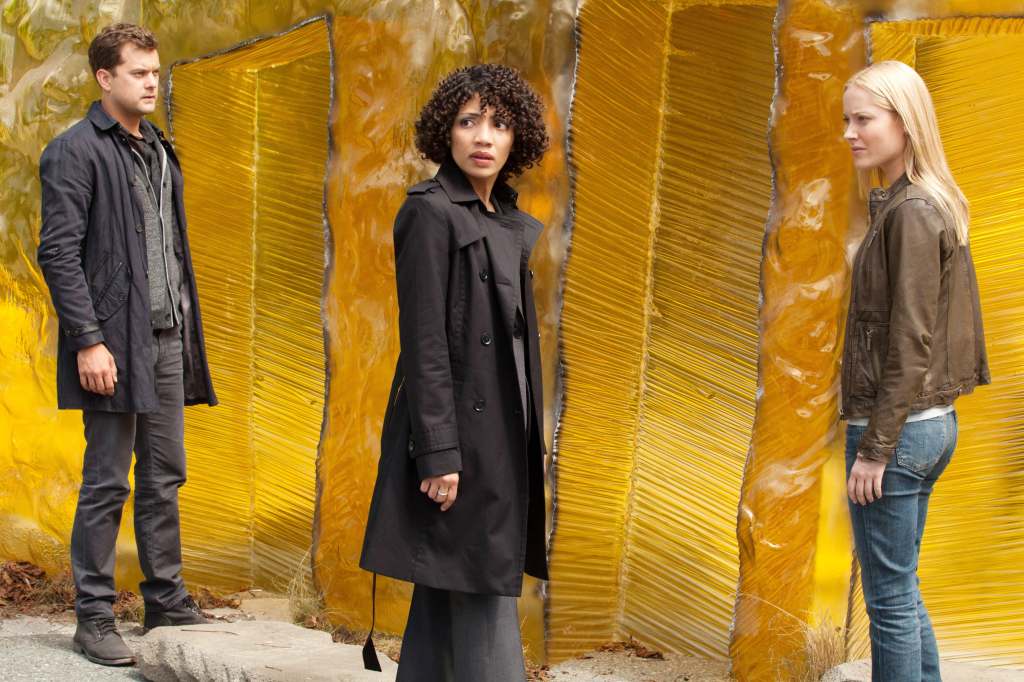
That approach created some of the show’s most memorable storytelling opportunities. “At the beginning of the season, we were doing one show in the alternate universe and one show in our universe,” recalled executive story editor Graham Roland. “It was a lot of fun to write because even though you were writing Walter, it felt like a different character. It felt like writing two different shows.”
For the writers, exploring alternate versions of the characters was one of the most creatively satisfying aspects of the series. “There’s always that part of us that imagines what if we had made different decisions,” muses co-executive producer Monica Owusu-Breen. “It’s kind of fun seeing multiple versions of characters that, but for certain circumstances or traumas, are different. And then there are the ways that the actors play these alternate versions. You just watch Anna walk as that world’s Olivia and you get a sense of who that woman is.”
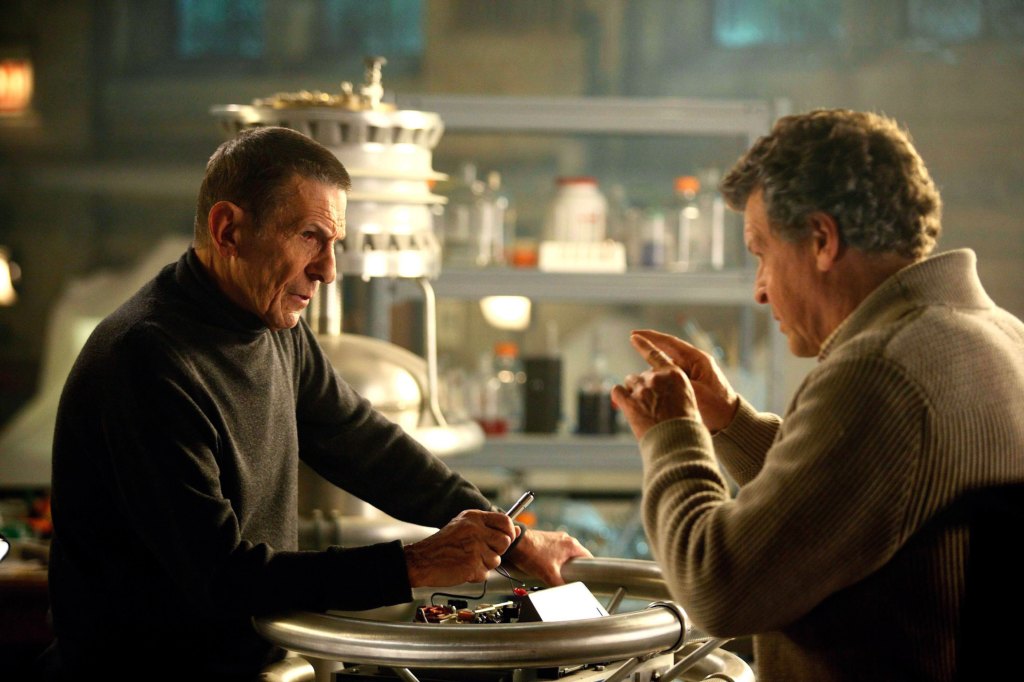
“The way John Noble interprets the differences between the two Walters is amazing to watch,” added co-executive producer Alison Schapker. “There are moments when you feel compassion for Walternate, or you’re surprised by the humanity in him. And then sometimes you’re wrestling with our Walter’s existential questioning over his own actions. It’s beautifully complex and a joy to write.”
Pinkner ultimately described the storytelling approach as a hybrid of several television traditions. “There are some shows that are 100 percent serialized,” he explained. “And then there are shows like ER or Grey’s Anatomy, which are essentially condition shows where there’s a patient of the week, but the real story is about the characters.”
“It’s not the cases that came through the door,” Wyman added. “Those cases illuminated the characters we loved every week.”
For Fringe, the goal was to combine those elements. “What we’re doing,” Pinkner continued, “is both advancing our characters’ journey while telling a case of the week—all set against the backdrop of this fairly insane mythological story about this father and a son, which also involves Olivia.”

Wilcox believed the deeper strength of the series came from the moral questions underlying the science fiction. “At its heart, when it’s at its best, the show is dealing with difficult questions,” he said. “Questions of fate and destiny and faith and loss of faith and love and revenge. These are epic themes, and there needs to be a moral premise so they resonate.”
Ultimately, Pinkner summed up the series in simple terms. “What’s fun for us is that we’re world-building and fleshing out a universe,” he said. “But the mythology is not really that complicated. It’s really about these three characters who are on the fringe of society and have formed this quasi-family unit. As a consequence, they’re charged with investigating cases that threaten our way of living. As we say, it’s a family drama masquerading as a sort of quasi-science fiction procedural show.”
Fringe is streaming on Hulu and—for free—Pluto TV.
Conversation
All comments are subject to our Community Guidelines. Woman's World does not endorse the opinions and views shared by our readers in our comment sections. Our comments section is a place where readers can engage in healthy, productive, lively, and respectful discussions. Offensive language, hate speech, personal attacks, and/or defamatory statements are not permitted. Advertising or spam is also prohibited.