How the Classic TV Western ‘Wanted: Dead or Alive’ Turned Steve McQueen Into a Hollywood Legend
Biographer Marshall Terrill reveals why the CBS Western was McQueen's ultimate 'proving ground'

Key Takeaways
- 'Wanted: Dead or Alive' ran on CBS from 1958 to 1961 for 94 episodes.
- Biographer Marshall Terrill calls the show McQueen's ultimate 'proving ground'.
- McQueen deliberately made himself difficult until CBS canceled the show.
When Steve McQueen died in 1980 at the age of 50, he left behind one of the most remarkable careers in Hollywood history. Audiences remembered him from films like Bullitt, The Great Escape, The Thomas Crown Affair and Papillon. He was the King of Cool, a movie star whose popularity has somehow continued to grow decades after his death.
But before the movies, the fame and prior to his becoming one of the biggest stars in the world, there was a black-and-white television Western called Wanted: Dead or Alive. Running on CBS from 1958 to 1961, the series cast McQueen, at age 28, as bounty hunter Josh Randall, a gun-toting laconic loner carrying a customized Winchester rifle known as the Mare’s Leg. The show lasted just three seasons and 94 episodes, yet many observers believe it was the single most important stepping stone in McQueen’s career.
From Marine to bounty hunter
Few people have studied McQueen’s life more closely than author and biographer Marshall Terrill, who has spent decades researching the actor and writing extensively about him over the course of no less than five books. And according to him, the significance of Wanted: Dead or Alive cannot be overstated.
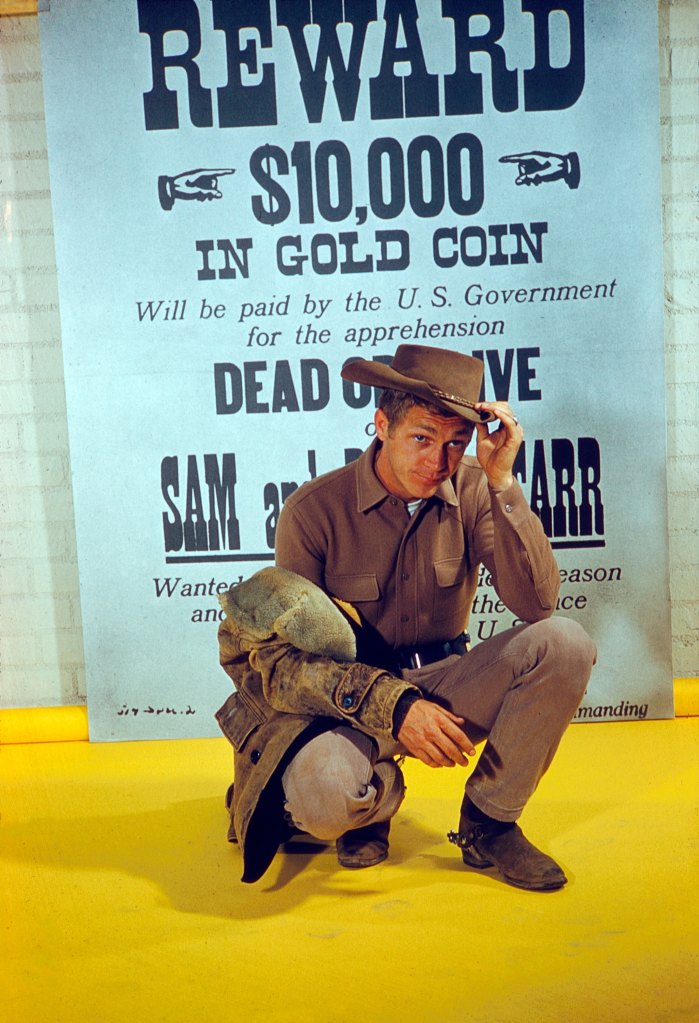
MARSHALL TERRILL: “It really was the key, because it was such a learning experience for him. It’s what I call his proving ground, because for those three years, he wasn’t just acting, he was learning every single trick in the business and everything that he could behind the camera. Those were 12 or 14-hour days, but he was a younger guy at the time and used that situation to build himself up into a movie star.”
It’s an opportunity arriving at precisely the right moment in McQueen’s life. He was born Terence Steven McQueen in 1930 and experienced a childhood marked by instability and hardship. His father abandoned the family, his mother struggled to care for him and he spent portions of his youth living on the streets, joining gangs and getting into trouble. Eventually he found his way to the California Junior Boys Republic, where he began turning his life around, and later served in the United States Marine Corps. And by the early 1950s, acting wasn’t so much a dream as it was a possibility.

MARSHALL TERRILL: “He jumped from job to job, and then when he discovered acting… Well, he had never given acting a thought, but the line that he said was, ‘You know, there’s a lot of women in acting,’ so, therefore, it was a way for him to meet a lot of women. Then, of course, he found out eventually that there was money involved, too. At the same time, this was a street kid who made it big, and then he wanted to know everything that there was about the business so that he could never be taken advantage of.”
“A statement that McQueen was known to say was, ‘There’s nothing in the world I don’t want to know.’ Those words touch me, because they serve as proof of how hungry he was for new information. When he was acting, he constantly asked questions about different aspects of production both in front of and behind the camera.”
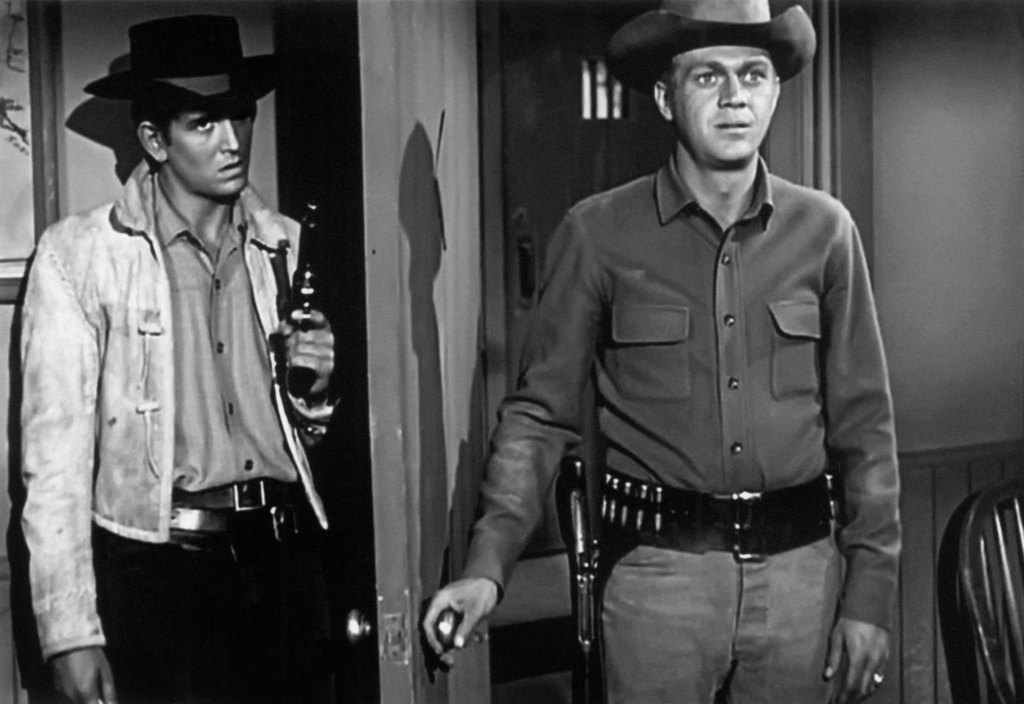
That curiosity found the perfect outlet on Wanted: Dead or Alive, a series that emerged from another CBS Western, Trackdown. McQueen guest-starred as bounty hunter Josh Randall, and the character proved popular enough to earn his own spinoff. The premise was simple: Randall traveled the West tracking wanted fugitives, collecting rewards and often finding himself in morally complicated situations. Unlike many television cowboys of the era, Randall wasn’t a sheriff or a rancher. He worked alone, answering to nobody and following his own code.
A man who knew what he wanted
Looking back, it’s difficult not to see the beginnings of the McQueen persona already taking shape in terms of the independent streak, self-reliance, refusal to conform and the cool confidence that would later make him one of the biggest stars of the 1960s and ‘70s. And Terrill sees a direct connection between the man audiences came to admire and the roles he eventually played.
MARSHALL TERRILL: “Part of Steve McQueen’s appeal was his classic look. His look was timeless, as though he could have just arrived on the scene. Also, he represents ’60s and ’70s cinema, considered something of a golden age, and is looked at as the proverbial ‘man’s man’ who could work on his own car engine, fly his own planes, ride his own motorcycles and handle his own weapons.”
“That’s not something they see in today’s movie stars. They’re watching a guy that lived these things throughout his life, so these movies, in a way, become biographical. They know that when he holds that gun, that he was in the Marines. They know that when he rode that motorcycle in The Great Escape, he could handle himself. They know that there’s the car chase in Bullitt, even though he didn’t do all the stunts, he did some driving—they knew he could handle himself. There’s just a coolness factor that never seems to go away.”
While audiences were embracing Josh Randall each week, McQueen was quietly preparing for something bigger in the form of film opportunities that began to come his way. He appeared in Never So Few and then came The Magnificent Seven. The movie roles increased, and with them came McQueen’s confidence that he was destined for far more than weekly television. Unfortunately, that confidence wasn’t always accompanied by diplomacy in that, as Terrill relates, the actor quickly became difficult for CBS and the show’s producers to manage.
MARSHALL TERRILL: “He learned how to be a colossal pain in the arse to such a degree that CBS canceled the show after three seasons rather than continue it for a fourth. He made it such a painful situation for everybody because, in between those seasons, he did the films Never So Few and The Magnificent Seven. It became very clear he was building a movie career, so he made it very painful on the show for directors, producers and the studio—to the point where they were, like, ‘Yeah, we could renew this, but we’re just not going to.’ Which is exactly what he wanted. He also wanted to make it clear that he was a competitive guy and was determined that when shooting a film, the camera was on him as much as possible. Getting to the top oftentimes resulted in collateral damage, which he was okay with.”
“He was not afraid to climb over bodies to get there. His comment on that was, ‘All the nice guys are standing in the unemployment line.’ And so he just let it be known, ‘I’m going to do whatever I can to get to make it.’ Given where he came from, you can kind of understand that, but he took it extremely far. At the end of his life, I think he realized what a selfish SOB he had become, but in the beginning, in those early days, he was willing to upstage Yul Brynner in The Magnificent Seven. He was definitely competitive with Paul Newman. He did not want anybody to upstage him, because he was the guy that, if anybody was going to upstage anybody, it was going to be him.”
The roots of that behavior, Terrill believes, stretched back to McQueen’s difficult upbringing.
MARSHALL TERRILL: “In one of my books, I had a psychologist talk to me about that, and basically what he said was, ‘The guy who creates the chaos is the guy that’s in control.’ So he would go to all his movie sets and create all this chaos, and, as it turned out, he was the person in control. It was the only way he knew how to do it.”
Yet despite the conflicts, Wanted: Dead or Alive accomplished exactly what McQueen needed it to accomplish. It made him visible, it gave him confidence, it taught him the mechanics of filmmaking and, most importantly, it convinced Hollywood that Steve McQueen could carry a project. As a result, within a few short years, the television bounty hunter would become one of the most recognizable movie stars on the planet.

MARSHALL TERRILL: “It really was the key. It was such a learning experience for him. It was his proving ground.”
Conversation
All comments are subject to our Community Guidelines. Woman's World does not endorse the opinions and views shared by our readers in our comment sections. Our comments section is a place where readers can engage in healthy, productive, lively, and respectful discussions. Offensive language, hate speech, personal attacks, and/or defamatory statements are not permitted. Advertising or spam is also prohibited.