The Lost ‘Star Trek II’ That Cut Khan: Inside the Lost Draft That Almost Changed the Franchise
Before 'Wrath of Khan,' Paramount flirted with new villains and a dead Spock guiding the crew

When Star Trek: The Motion Picture arrived in theaters in December 1979, it was both a triumph and a problem. The film had successfully brought Star Trek back into existence, serving as proof that there was a massive audience eager to see Kirk, Spock and McCoy return to the big screen. At the same time, reactions were mixed. While audiences embraced the reunion of the original cast, many felt the film leaned too heavily into spectacle and cerebral science fiction at the expense of character, pacing and emotional connection.
Producer Harve Bennett understood that if Star Trek was going to survive as a film franchise, the second movie needed to be more intimate, more character-driven and more exciting, reminding audiences why these characters had resonated in the first place. That meant putting greater emphasis on relationships, conflict and emotional stakes rather than visual grandeur alone. But before any of that could happen, Paramount faced a fundamental problem: no one quite knew what the sequel should actually be.
A number of ideas were explored as the story slowly took shape, though fairly early on Bennett locked onto the character of Khan Noonian Singh, the genetic superman portrayed by Ricardo Montalban on the original series episode “Space Seed.” His initial outline featured the character, as did the first few passes on the script by writer Jack Sowards, but somehow it wasn’t coming together.
By July 1981, an attempt to find fresh blood led Bennett to original-series writers David Gerrold, Theodore Sturgeon and Samuel A. Peeples, the latter of whom had written the second Star Trek pilot, “Where No Man Has Gone Before.” Peeples penned an outline and eventually a screenplay that utilized most of the existing elements from the previous drafts—with one major exception: Khan. Instead, he introduced the aliens Sojin and Moray.
HARVE BENNETT (executive producer): “Sam Peeples had done outstanding work in other areas when I was at ABC. He had done two pilots that I had been involved with, and I thought he could write robustly. I brought him in, he read the script, and I said, ‘Sam, you know more about Star Trek than I do. I want you to fix this.’ He said, ‘I know just what to do.'”
‘Worlds That Never Were’
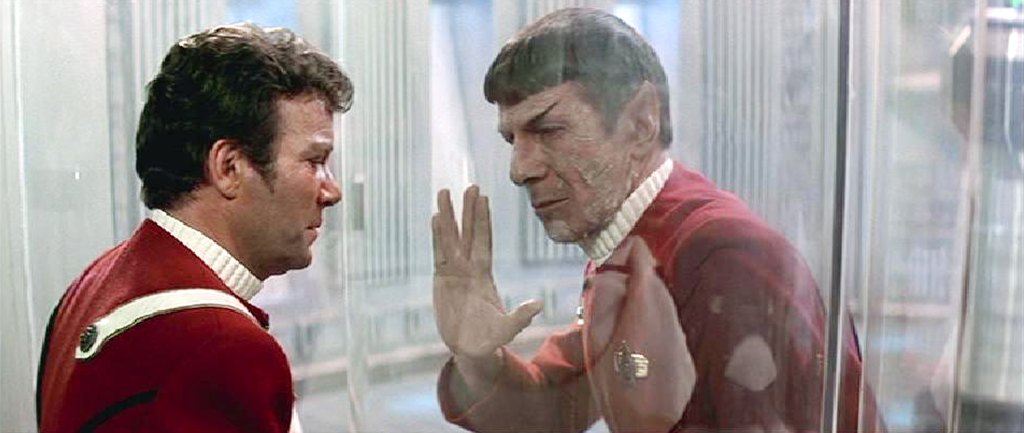
Entitled Worlds That Never Were, Peeples submitted his outline in July 1981, discarding Khan and his wife Marla McGivers (who he fell for in “Space Seed”) in favor of new antagonists. The script also had Spock—somewhat like Obi-Wan Kenobi in Star Wars—reaching out from beyond the grave to communicate with Kirk and McCoy, imparting crucial information that ultimately saves the day.
Shortly thereafter, a script dated August 24, 1981, entitled The New Star Trek, emerged as a pastiche of ideas from the various outlines that preceded it. This version included the first mention of Saavik as female and half-Romulan, as well as a scene in which the crew sings “Happy Birthday” to Spock in Vulcan.
HARVE BENNETT: “Star Trek writers came in with supreme egos. I had worked with many of them before and found them, like most science-fiction writers, very unyielding to comment. Harlan Ellison [writer of “The City On the Edge of Forever”] was in a class by himself. He gave me an outline on The Mod Squad that would have cost $20 million to produce. When I asked him to think reasonably, he responded as if I were questioning Allah. I worked with D. C. Fontana on The Six Million Dollar Man and had a similar experience. I said, ‘Hey, we’re not doing Chekhov here.’”
ROBERT SALLIN (producer): “Neither the Jack Sowards nor Samuel Peeples scripts worked. It felt like television. It felt like a long television episode, and I didn’t believe that the underlying humanity and the relationships between the people were very strong. There was a great deal of intergalactic weirdness in the scripts, which I felt was defeating.”
SAMUEL A. PEEPLES (writer): “I didn’t like the basic premise. My personal objection to the original version was simply that it was cast too much in the mold of the 1967 Star Trek episodes. When Gene Roddenberry and I first discussed his project, long before the first pilot script was written, I was very taken by Gene’s imaginatively pragmatic approach. Extrapolation was the key to the visual reality he sought. But somehow, along the way, pragmatism became dogma and only what had been used before was acceptable. This, I believe, is the major fault of Star Trek: The Motion Picture. It is far too easy to be influenced by the traditions Star Trek has initiated.”


“Tradition and déjà vu and nostalgia cannot be major influences in the new Star Trek. It is common sense to use the basics that have proven so right, but it is also common sense to open our minds to the expansive creativity that brought Star Trek to us in the first place. It’s for this reason I didn’t hesitate to break old barriers, try new themes, ideas, dialogue and characterizations. Star Trek had grown and expanded its horizons. The heavies in this version are a good example. They are not representations of evil or good. They were perhaps the first totally alien concepts used in Star Trek—one more departure from traditional themes—beings from another cosmos. Their universe is not ours. Their motivations are hidden from us. But within the projected limitations of their own environment, they are logical and normal.”
“In the end, though, I was never actually given an assignment and never asked for one. I wasn’t happy with what I wrote and neither was the producer, so it just died.”
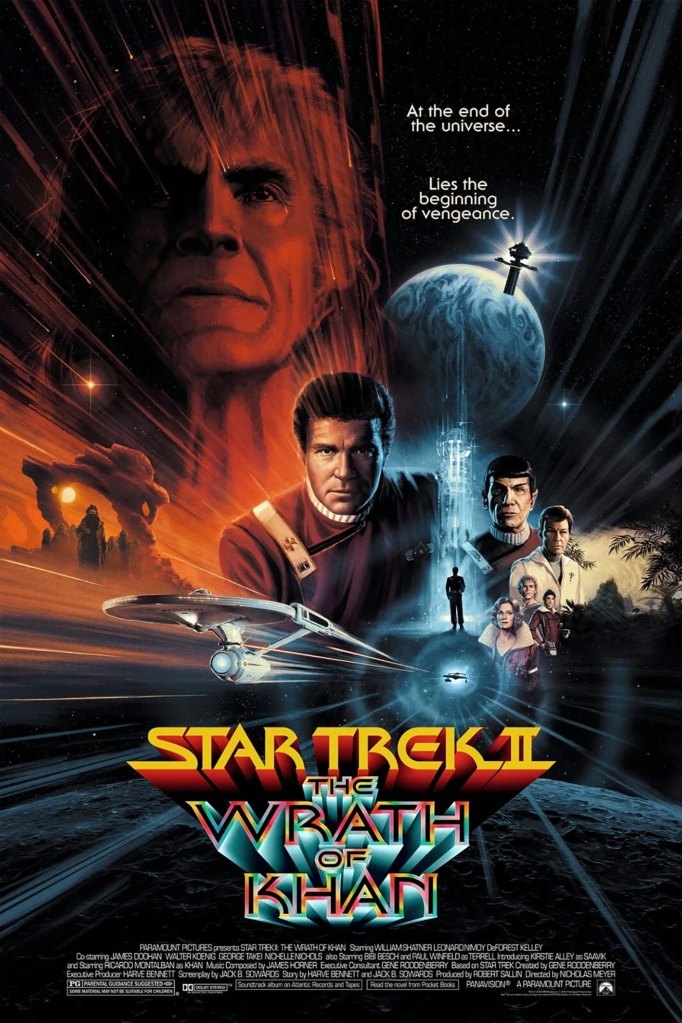
Only to be resurrected to great fanfare as 1982’s Star Trek II: The Wrath of Khan, a film generally credited with saving the franchise and boldly pushing it to everything we’ve had ever since.
Conversation
All comments are subject to our Community Guidelines. Woman's World does not endorse the opinions and views shared by our readers in our comment sections. Our comments section is a place where readers can engage in healthy, productive, lively, and respectful discussions. Offensive language, hate speech, personal attacks, and/or defamatory statements are not permitted. Advertising or spam is also prohibited.