When NBC Rejected the ‘Star Trek’ Pilot, a Do-Over Introducing William Shatner as Captain Kirk Made TV History
After a failed pilot, 'Star Trek' got a rare second chance. Here's an exclusive behind-the-scenes look at 1965's take-two

Key Takeaways
- 'Star Trek' survived rejection of its first pilot 'The Cage' thanks to a rare second chance.
- The casting of William Shatner as Captain Kirk reshaped the series' future.
- 'Where No Man Has Gone Before' sold 'Star Trek' to NBC and then the world.
HERBERT F. SOLOW (Desilu executive in charge of production): “Getting a second pilot was enormously rare. If a pilot didn’t work the first time, the networks said, ‘Oh, forget it; it’s over.’ Television is unlike any other business in that way. But we got the second pilot.”
STEPHEN KANDEL (writer of Season 1, Episode 6: “Mudd’s Women”): “NBC was of two minds: to forget it and to abandon it. So, after much argument and discussion, Gene got the money to write three additional pilot scripts. ‘The Cage’ had been a sample of what the series would be like, and that frightened the network. They thought the audience wouldn’t understand it.”
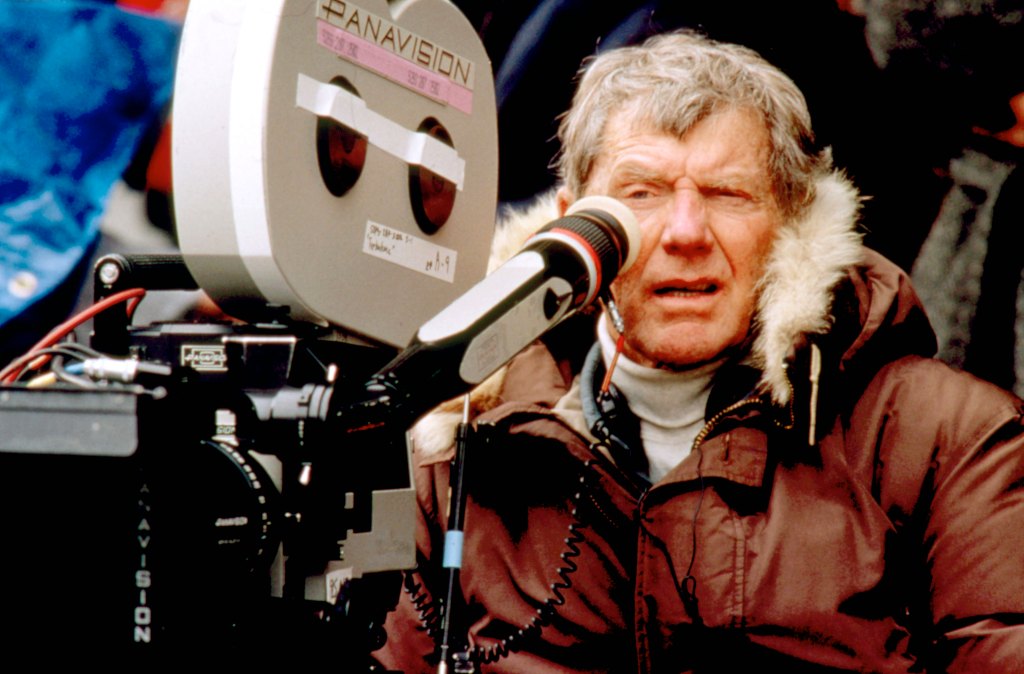
ROBERT BUTLER (director of the first Star Trek pilot, “The Cage”): “Gene asked me to direct the second pilot, but I told him I had been there and done it already, and didn’t wish to repeat myself. Another reason I didn’t wish to do it is that science fiction, directorially, is a bit of a chore, because you have to share the reins with graphics, special visual effects and all the other people who supply the tricks. It’s very much direction by committee, and I was a little impatient with that. I like working on pilots because you’re in on the formulation and you’re handed fewer givens, so, equitably, you direct more. The more control and freedom I have to direct, the more I enjoy it. I will say that we were all praying and doing our best on ‘The Cage.’ The eventual phenomenon was bigger than I expected—not that I really measured it at the time. That wasn’t in the equation. You just roll up your sleeves and decide what the hell it is you’re trying to do. Then you jump in and never look back.”
Jeffrey Hunter said no at any price—and never looked back
GENE RODDENBERRY (creator of Star Trek): “Jeffrey Hunter decided he did not want to come back and play Pike again. I thought highly of him, and he would have made a grand captain, except his family convinced him that science fiction was really beneath him.”
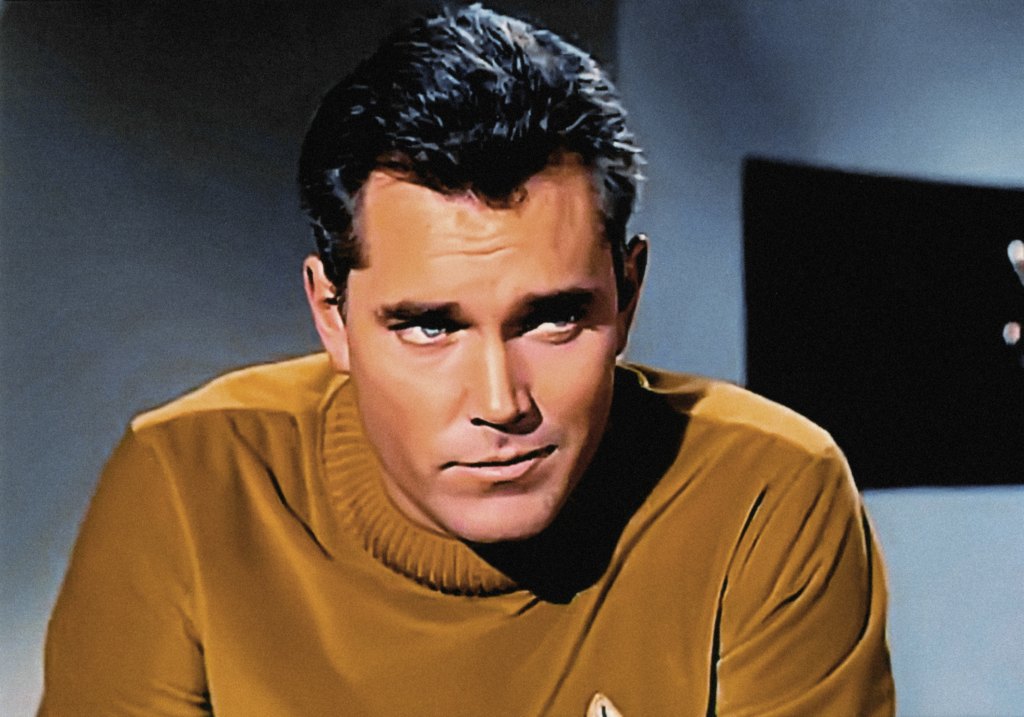
OSCAR KATZ: “When you make a pilot deal with an actor, you can’t tie him up forever. You usually have a hold on him for the following season, so we had no hold on Jeffrey Hunter. And either he or his wife didn’t like ‘The Cage’ and he didn’t want to do the second pilot. I already had the set built—I think it was the largest set in the history of Hollywood, that planet in ‘The Cage’—we had the interior of the spaceship, the miniature of the outside of the spaceship, etc. We had everything and all we had to do was write a new script. But we didn’t have a leading man. Business affairs negotiated with Jeffrey Hunter, and we all thought it was the usual actor-network situation. They don’t want to do it for reason XYZ, and it’s a device for getting the price up. We kept increasing the price and he kept saying no. One day I said, ‘What’s with Jeffrey Hunter?’ and I was told he just won’t do it at any price. Finally, I said, ‘Tell Jeffrey Hunter to get lost. Tell him we’re going to do the pilot without him.’ And that’s how William Shatner got into it, because Hunter wouldn’t do it.”
JEFFREY HUNTER (actor, Captain Christopher Pike): “I was asked to do it, but had I accepted, I would have been tied up much longer than I care to be. I have several things brewing now and they should be coming to a head. I love doing motion pictures and expect to be as busy as I want to be in them.”

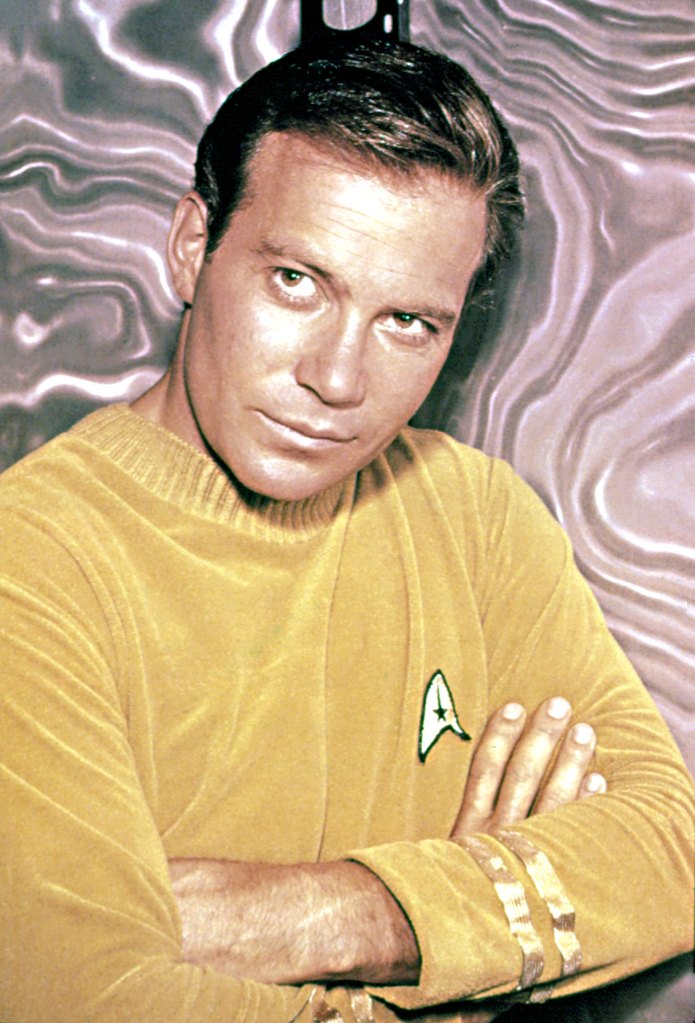
How William Shatner became Captain Kirk
GENE RODDENBERRY: “At that time we were putting Star Trek on, TV was full of antiheroes, and I had a feeling that the public likes heroes—people with goals in mind, people with honesty and dedication—so I decided to go with the straight heroic roles, and it paid off. My model for Kirk was Horatio Hornblower from the C.S. Forester sea story that I always enjoyed. We had a great deal of trouble casting it, many actors turned us down, and later on, of course, wished they hadn’t. But science fiction at that time had a very bad name and many serious actors had made up their minds, because what they had seen on TV was so bad, they didn’t want their name associated with it. Shatner was available, he needed a show, was open-minded about science fiction, and a marvelous choice because he did great things for our show. I was happy to get him. I’d seen some work he did, and I thought he was an excellent choice, no question of it at all.”
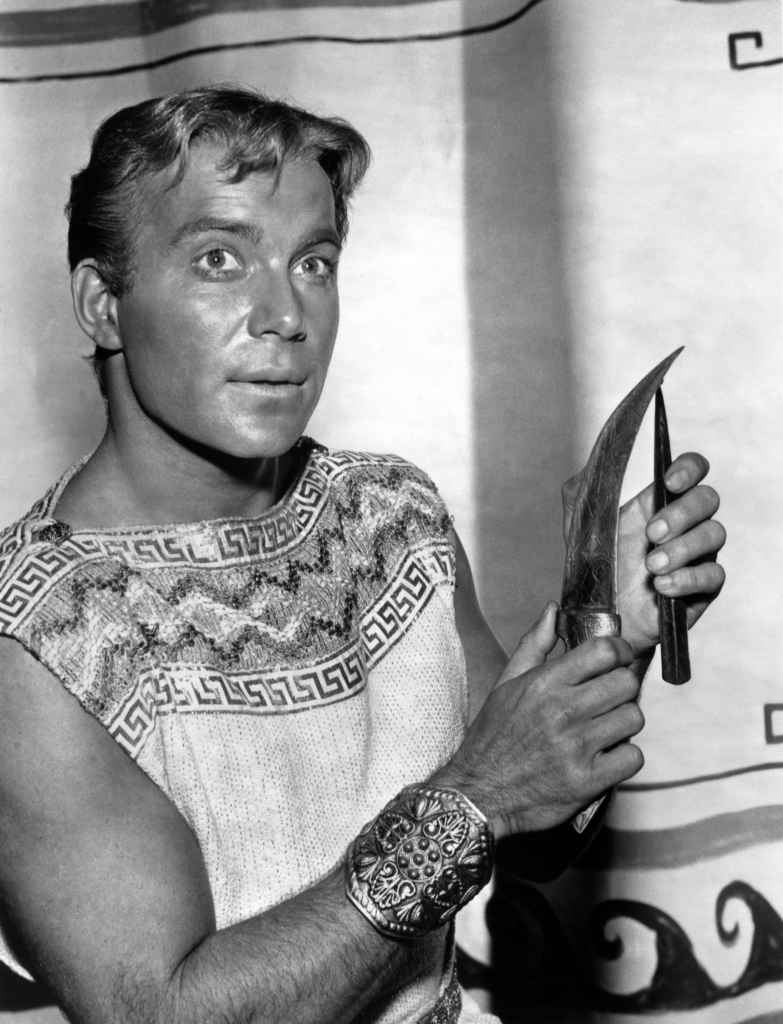
JAMES GOLDSTONE (director of the second pilot, “Where No Man Has Gone Before”): “I think Shatner was the choice partly of the network, partly of Desilu, and partly of Gene. I don’t know whether I had approval within contract, though I was a creative partner as the director. I thought he could play it marvelously. I liked him very much and thought he was a marvelous balance for the Spock character.”
WILLIAM SHATNER (actor, James T. Kirk): “They showed me the first pilot and said, ‘Would you like to play the part? Here are some of the story lines that we plan to go with; you can see the kind of production we have in mind. Would you care to play it?’ And I thought it was an interesting gamble for myself as an actor to take, because I’ve always been fascinated by science fiction. I liked the production; I liked the people involved with the production, and so I decided to do it. But it was under these peculiar circumstances of having a first pilot made that I did it. I then talked to Gene Roddenberry about the objectives we hoped to achieve, and one of those objectives was serious drama as well as science fiction. His reputation and ability, which I knew firsthand, was such that I did not think he would do Lost in Space. And I was too expensive an actor, with what special or particular abilities I have, to warrant being put in something that somebody else could walk through. So I felt confident that Star Trek would keep those serious objectives for the most part—and it did.”
ROBERT H. JUSTMAN (associate producer): “Gene was very happy that he was able to get Bill Shatner, who was highly thought of in the industry. I had worked with Bill on The Outer Limits and he had a good reputation in the television and entertainment industries, even at that time, well before the second pilot of Star Trek. He was someone to be reckoned with, and we certainly understood that he was a more accomplished actor than Jeff Hunter was, and he gave us more dimension.”
Why the producers knew Shatner was the right choice
SCOTT MANTZ (film critic): “When you go back and you watch ‘The Cage,’ Pike and Kirk were so different. Let’s say you’re watching ‘The Cage’ and you’re part of a focus group. Which captain would you follow? You watch the scene where your captain, your hero, is telling his doctor, ‘I don’t want to be the captain. I want to raise a horse or be a slave trader, whatever. I don’t want to be the captain anymore.’ And then you see this captain joking around, charming, and you know he looks like he likes being the captain. I’d follow Kirk in a second.”
ROBERT H. JUSTMAN: “The network seemed to feel that Jeff Hunter was rather wooden. He was a nice person, everyone liked him, but he didn’t run the gamut of emotions that Bill Shatner could do. Shatner was classically trained. He had enormous technical abilities to do different things and he gave the captain a terrific personality. He embodied what Gene had in mind, which was the flawed hero—or the hero who considers himself to be flawed. Captain Horatio Hornblower. That was who he was modeled on.”
LEONARD NIMOY (actor, Mr. Spock): “Bill Shatner’s broader acting style created a new chemistry between the captain and Spock, and now it was quite different from that of the first pilot.”
DAVID GERROLD (writer, Season 2, Episode 15: “The Trouble with Tribbles”): “All of the movies and all of the episodes hold together because Shatner holds it together. Spock is only good when he has someone to play off of. The scenes where Spock doesn’t have Shatner to play off of are not interesting. If you look at Spock with his mom or dad, it’s very ponderous. But Spock working with Kirk has the magic and it plays very well, and people give all of the credit to Nimoy, not to Shatner.”
LEONARD NIMOY: “During the series, we had a failure—I experienced it as a failure—in an episode called ‘The Galileo Seven.’ The Spock character had been so successful that somebody said, ‘Let’s do a show where Spock takes command of a vessel.’ We had this shuttlecraft mission where Spock was in charge. I had a tough time with it. I really appreciated the loss of the Kirk character for me to play against, to comment on. The Bill Shatner Kirk performance was the energetic, driving performance, and Spock could kind of slipstream along and make comments and offer advice, give another point of view. Put into the position of being the driving force, the central character, was very tough for me, and I perceived it as a failure.”
SCOTT MANTZ: “Starting with the first regular episode they shot, ‘The Corbomite Maneuver,’ so much changed; the uniforms, Spock’s makeup, some of the set designs. All except for one thing. Act one, scene one, the second pilot, Shatner had Kirk down. He was Kirk from the beginning. You watch the first half of the first season, you can tell that Nimoy is trying to find Spock. He is kind of a wiseass and loves women. And at the end of ‘The Enemy Within,’ where he is saying, ‘Oh, the imposter had some very interesting qualities. Huh-huh?’ Would mid–first–season Spock do that? I don’t think so. But Kirk was Kirk from that first scene in the briefing room in the rec room playing three-dimensional chess. Until he went off the rails a little bit in the third season because he was trying to make up for the sh***y scripts.”
The magic of Kirk and Spock—built-in conflict that wrote itself
JOHN D. F. BLACK (story editor): “There was such a natural balance between William Shatner and Leonard Nimoy. There was no way to tell, really, whether they got along or not, because they had an easy relationship off camera, and on camera, there was an absolute difference that was writable. You had the advantage in any scene between Shatner and Nimoy where Shatner could take one side and be correct, and Nimoy could take the purely logical side of the situation and also be correct. The scene carried out the conflict, which could spark anything along the lines of what was upcoming. I don’t mean to sound like a professor of a screenplay class discussing a script’s structure, but that’s the reality. We know that conflict is the heart of any scene, and the more conflict you have between the characters, the better it is. And it was just built in.”
How the rest of the crew came together
GEORGE TAKEI (actor, Hikaru Sulu): “The first time I talked to Gene about Star Trek, it was for the second pilot and it was an exhilarating prospect, because almost every other opportunity was either inconsequential or defamatory, and here was something that was not only a positive opportunity but also a breakthrough for a Japanese-American actor. I was really excited about it, but then reality sets in, the whole struggle for survival of the series itself, and then the struggle for your character to find his spot in the limelight. The initial entry into the project and what happened during the course of its life were two different stories.”
JAMES DOOHAN (actor, Montgomery ‘Scotty’ Scott): “Two weeks before they were actually going to shoot the second Star Trek pilot, my agent sent me to read for the part of a Scotland Yard inspector for a show called Burke’s Law with Gene Barry. I did three British accents for them, and they smiled and said, ‘That’s very good, Jimmy, but we think you look a little too much like Gene Barry and it would look like nepotism.’ I said, ‘Well, I’m much better looking than he is,’ but I said it smilingly and walked out the door. Ten days later, the director, Jim Goldstone, called me and said, ‘Jimmy, would you come in and do some of your accents for these Star Trek people?’ I had no idea who they were, but I did that on a Saturday morning. They handed me a piece of paper—there was no part there for an engineer, it was just some lines, but every three lines or so, I changed my accent and ended up doing eight or nine accents for that reading. At the end, Gene Roddenberry said, ‘Which one do you like?’ I said, ‘To me, if you want an engineer, he’d better be a Scotsman,’ because those were the only engineers I had read anything about—all the ships they had built and so forth. Gene said, ‘Well, we rather like that, too.’”
GENE RODDENBERRY: “I had never worked with him, but director James Goldstone brought James Doohan in and asked him if he could do a Scottish accent. He did like an hour and a half of accents and had us falling on the floor laughing, so there was never any doubt that he had the job.”
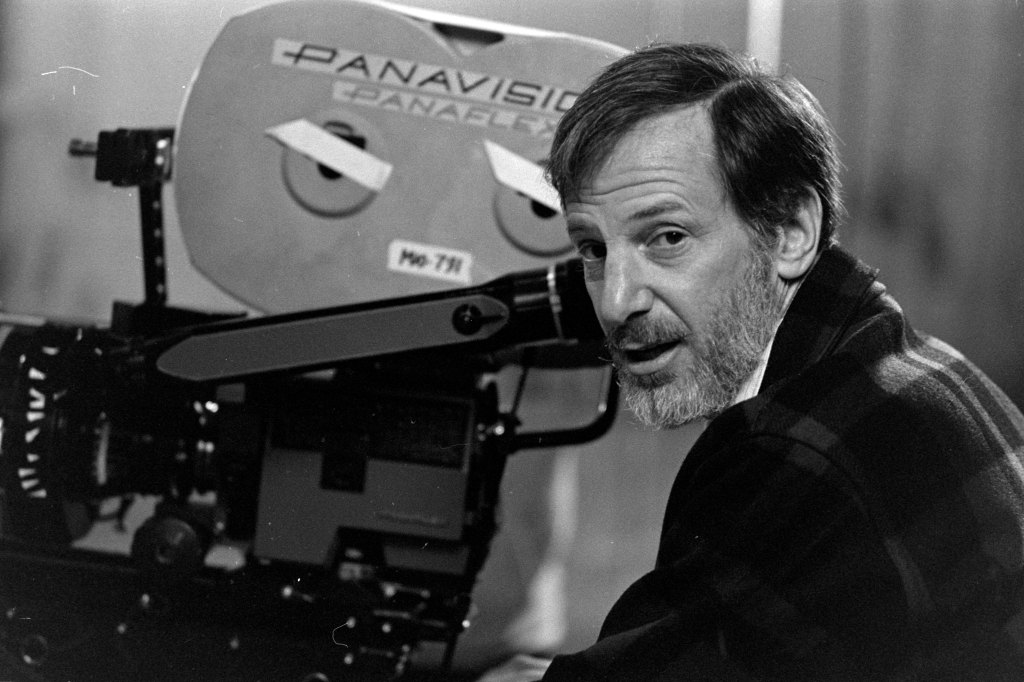
JAMES DOOHAN: “When I did that pilot, to me it was just another job. You have to understand that I had already done 120 stage plays, 4,000 radio shows, 450 live television shows, and I was what you called a working actor. My instructor Sanford Meisner, who I give all the credit in the world to, plus my ability to work hard, told me, ‘Jimmy, in the long run, it’s still going to take you twenty years to be an actor,’ and after nineteen years, I started to feel what he was talking about, because it got to the point where I started looking at myself saying, ‘Wow, there isn’t anything I can’t do.’ Besides that, there was my ability to do different accents and different sounds; my vocal cords can do just about anything I ask them to do. To me, it’s fascinating, and my friend, Leslie Nielsen, said to me while we were coming up, ‘You lucky bastard, you’re just a natural!’ And of course I wasn’t before. I maybe had the talent hidden somewhere, but it took hard work to get it out.”
The pressure to prove it could work as a weekly series
JAMES GOLDSTONE: “My vague memory is that there had been several problems with ‘The Cage.’ One of them was that it cost so much money, and the other was that it took so long to shoot. NBC was skeptical that a series could be manufactured, so to speak, on a weekly basis. One of the requisites put on the second pilot was to shoot it in, as I recall, eight days, which would then prove to them that a weekly series could be done in six or seven days. We needed the extra day because we were doing the prototype. The other requisite, I would guess, it being television, is that NBC very much wanted something that could be ‘commercial’ against the police shows and all the other action things that were then on television. The concept of our show was not so much a pilot as it was an example of how we could go on a weekly level.”
SAMUEL A. PEEPLES (writer, “Where No Man Has Gone Before”): “The first pilot Gene did for NBC, ‘The Cage,’ was more fantasy than science fiction. NBC was apparently unhappy with it, so they told him they would commission a second pilot, and they wanted a story. Gene asked me to do it and I did, guessing it would be more of a challenge to me because it’s easy to open up your mouth and criticize somebody else’s concept. Then if somebody says, ‘Okay, let’s see you do it your way,’ you’ve got to prove that you know what you’re talking about. Gene and I were trying to avoid the space-cadet cliché. We were both very concerned about it being an adult show.”
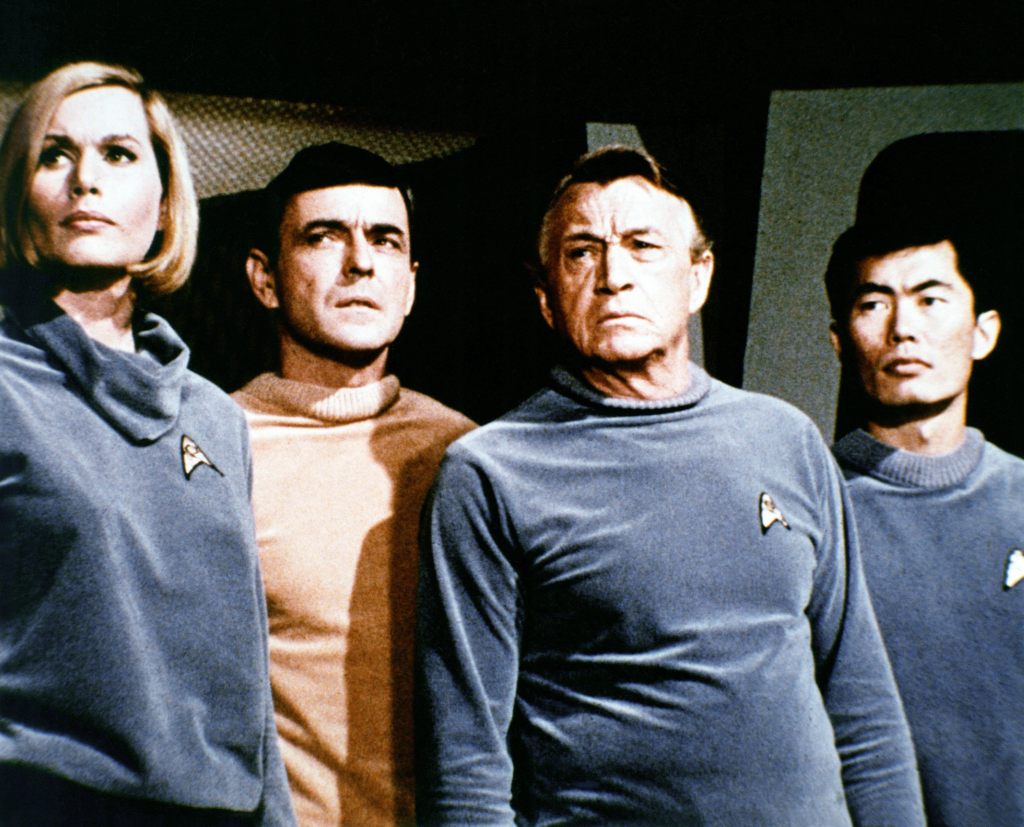
JAMES GOLDSTONE: “Gene’s whole concept was of doing the sort of classic storytelling form in which you can tell the same kind of stories that were told in the Elizabethan theater, told in the nineteenth century, that were told in classic novels. The convention with westerns is if you take it out of today and put it in a western setting, people accept these conventions. We would create conventions which people would accept, and you could therefore tell dramatic stories which people would accept because it was not on the streets they lived on, but were projected forward a little. On the same level, the characters and the dramatic conflicts, albeit space fiction, were really human conflicts.”
SAMUEL A. PEEPLES: “One thing, as later episodes proved, was the problem which never should have existed: the bug-eyed monsters. We both discouraged the idea, believing that we should keep things as realistic as possible. If a person was different physically, then explain the reason for that difference. In a particular atmosphere, he might have a larger lung. If it were a planet with an extraordinarily bright sun, he would have different eyes. We were actually trying to project reality against an unfamiliar background. In other words, we would deal with reality according to the environmental background we encountered.”
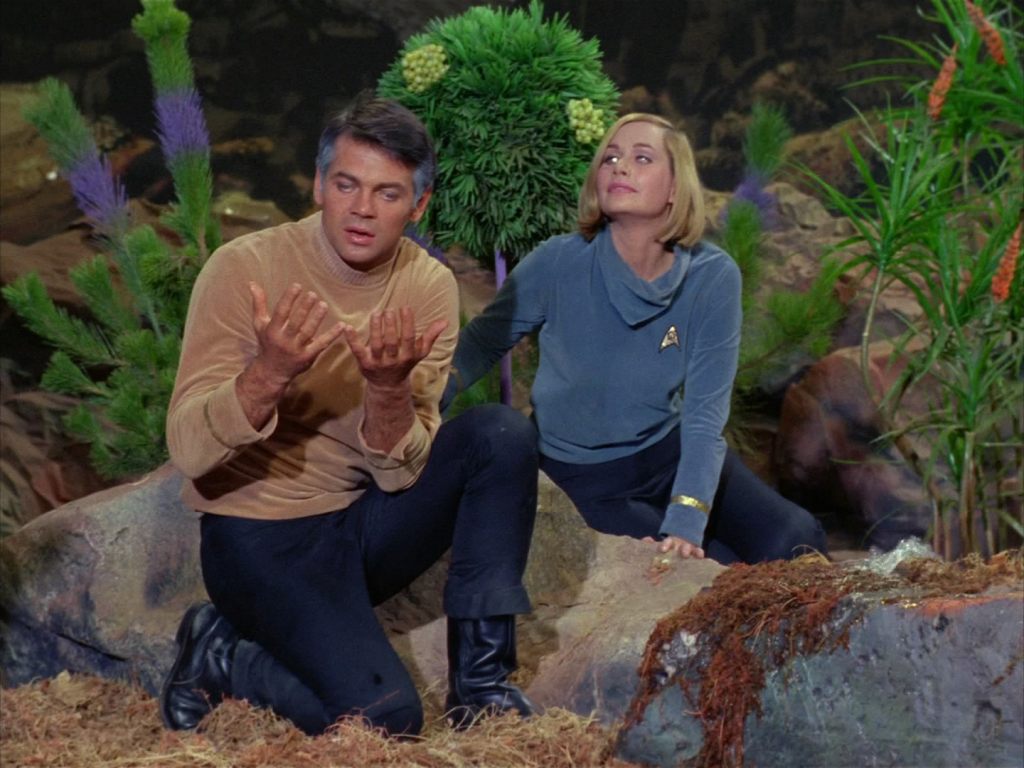
‘Where No Man Has Gone Before’: The story behind the second pilot’s plot
JAMES GOLDSTONE: “Three scripts were written for the second pilot. A combination of NBC, Gene, perhaps other executives at Desilu, and I read all three scripts, discussed them in length, decided on what became ‘Where No Man Has Gone Before,’ and then embarked on a great deal of polishing and rewriting on a conceptual and physical level, so that we could make it in eight days. This one just seemed to have the potential to establish those characters on a human level. The only gimmick is the mutation forward, the silvering of Gary Mitchell’s eyes as he becomes more godlike, and it works because it’s simple, as opposed to the growing of horns or something. Ours was a human science-fiction concept, perhaps cerebral, certainly emotional.”
SAMUEL A. PEEPLES: “We were intrigued with the corruption-of-power theme manifesting over the ordinary individual. That was the basic premise, and we had to put in extrapolations of known scientific principles. At that time, the radiation belt had been discovered around the Earth and my premise was that galaxies themselves might be separated by this type of barrier.”
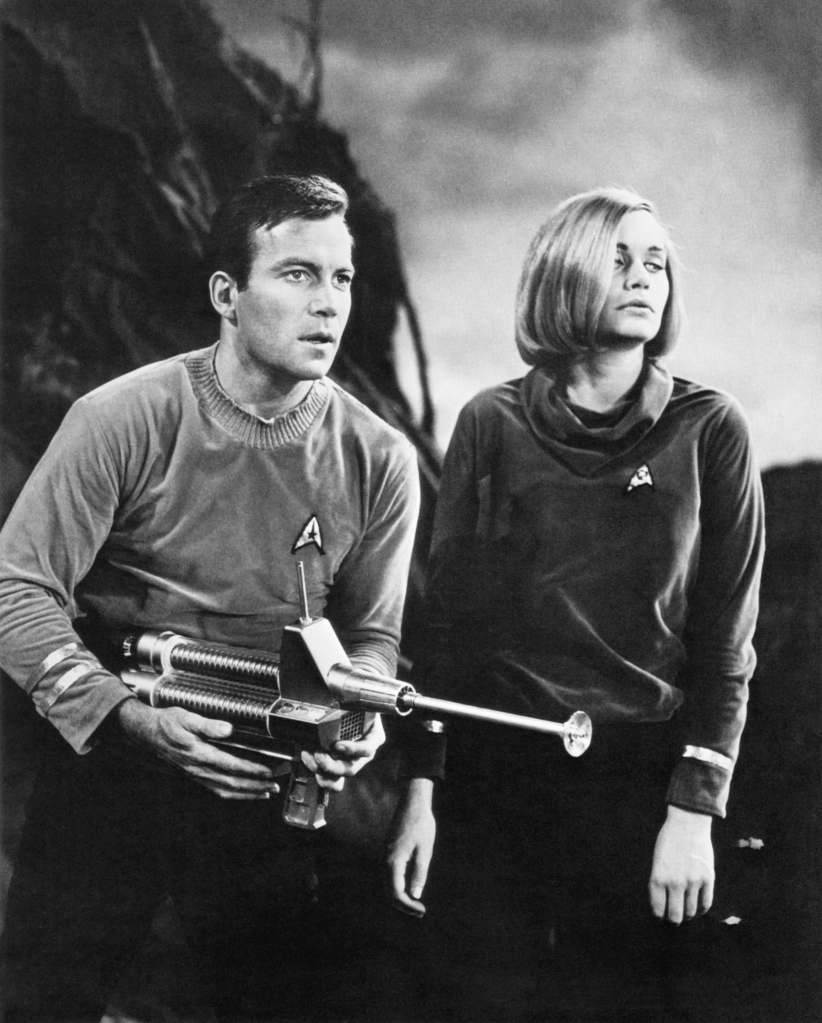
Playing a god: What it was like to star in the second pilot
GARY LOCKWOOD (actor, “Gary Mitchell”): “To tell you the truth, I thought it was a little bizarre and I thought it was kind of embarrassing and I hoped it worked out, because everybody was excited about it. It was a very hard job to do. I’d rehearse and get everything all ready, but I couldn’t see the actors because of the contact lenses that changed my eyes. They didn’t blind me for the first few days, but after a few days, the eyes swelled up and got sore. Then to have them on for just two or three minutes was agonizing. Scenes were rehearsed without them. The other thing about it, people always thought I was kind of egotistical, so when I got to play that part, a lot of people laughed and said, ‘He’s finally found his niche.’ That’s been a joke among my friends.”
JAMES GOLDSTONE: “My proposal was that from the time Gary suffers the first realization—once he begins to give in to it, to enjoy it even—he moves from his human status toward the status of a god within all and any of the criteria we place on such deities in our Christian-Judaic culture. Specifically, I proposed that he become oracular in the sense of Moses or even Cotton Mather. I proposed he do this in his stature, his way of using his hands and arms and eyes, silver or normal, his attitude as it applies to the script, aside from specific stage directions, perhaps physical actions that pertain to the dialogue. I didn’t mean to suggest that it become so stylized as to become a symbol rather than a human being. I suggested it happen on a more symbolic level. This could be done by starting him more on the flip, swinging level of articulation so that we wouldn’t even notice at one moment that this drops, but it does, on its way to becoming more formal, then more laden with import, more self-declarative, and, finally, downright miraculous.”
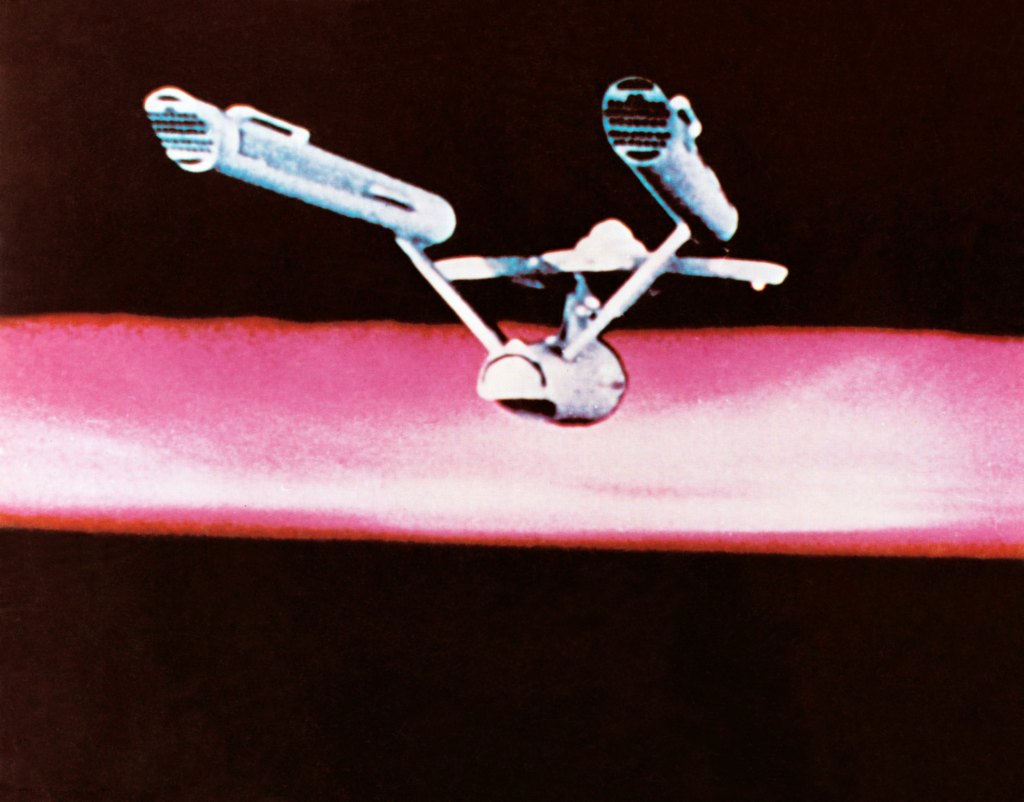
GARY LOCKWOOD: “That character was tough to reach, because there’s no prototype character to look at. So you create a mental image and try to fill that slot. All I tried to do was downplay the mechanics and not be too dramatic. It’s the same thing I did in 2001. Try to play the part very quietly and very realistically, and later on, people don’t think you’re pushing. That’s the way to sustain it. There was a natural progression to the character. In order to do that, you have to think it out. Let me say one thing to you that I can say about American actors I don’t like and who don’t like me. You have to apply a certain amount of intelligence to your role first, and then you can apply the emotion after you’ve made an intellectual decision. With Gary Mitchell, the idea was trying to go to the character and not make the character comfortable to me. I’m not Gary Mitchell.”
SALLY KELLERMAN (actress, Dr. Elizabeth Dehner): “I knew nothing about science fiction. I didn’t read any of the famous science-fiction writers like Ray Bradbury, and I’d been guest-starring on every show in the sixties. I’d just finished Kraft Theatre with Gary Lockwood, and the one time we were shooting our scene and he didn’t know his lines, I thought, ‘Oh, what an amateur.’ Next thing I know, I’m cast in the pilot of Star Trek with Gary Lockwood, The Amateur. When I saw him stage all the fight scenes, I got over that amateur stuff! I was swooning offstage. But, anyway, we had no idea what it was and that awful outfit, with the pants that didn’t quite fit. I was always playing the hard-bitten drunk or beaten up, and now I’m in this outfit and wondering what the heck it was all about. Of course, Bill Shatner has a great sense of humor, so it was a lot of fun around him. Leonard Nimoy had directed me in a play before this, for which I came late, probably more than once, to rehearsal. The last time I came there, he said, ‘Please step outside,’ and so we went outside and he said, ‘Why is it that all you talented people are always the ones who come late?’ Of course, I didn’t hear anything about being late, I just heard the word talented. Last year, someone came up to me and said, ‘You are the reason the pilot sold,’ and I said, ‘I always felt that was true. Of course it was me!’”
Racing the clock: How the crew pulled off the impossible shoot
ROBERT H. JUSTMAN: “As an assistant director in television, you know how long it takes to get a setup shot and the seat of your pants tells you how long it will take. The amount of work you have left to do will just fill up the amount of time you have left to do it in, so we worked as hard as we could on the second pilot, which James Goldstone directed, and on the last day of production, when we were a day over, we did two days’ work in one day. That’s the day that Lucy came on the stage, because we were supposed to have an end-of-picture party and we were still shooting, so in between setups, she helped Herb Solow and me sweep out the stage. I think she just did that for effect, because she wanted to get the party started, but we worked hard, and we wouldn’t have done the second pilot in that short a time if Jimmy Goldstone and I hadn’t worked so well together before on The Outer Limits.”
JAMES GOLDSTONE: “I was very happy with it. From a director’s point of view—or this director’s point of view—you have certain targets and certain problems which have to be overcome in any picture, whether it’s a twenty-million-dollar feature or a television show. A director measures his success in two ways. Obviously, like everybody else, you measure it by whether or not it’s a critical and commercial success, but you also measure it in terms of overcoming obstacles. The obstacles were temporal, budgetary, but they were also conceptual. I was very proud of the work we were able to do. When I say we, I don’t mean it in a generous sense. I mean that it was a very collaborative effort, as are all pilots. We, being Gene, especially; Bobby Justman, and the main actors who later became the main stars. Everything was planned in detail, and Bobby and I knew if we didn’t move from one set to another or one scene to another by a certain hour, we were in trouble.”
ROBERT H. JUSTMAN: “We had a method in our madness. I always knew what setups Jimmy had planned to cover the work we had to do that day, and he’d give me the list of setups and I’d arranged them so that no time would be lost. So if we’d point the camera in one direction and lit in that direction for the most part, we would shoot everything that needed to be shot that day in that direction before we turned around and shot the opposite angle.”
What the cast knew—and didn’t know—about what they were making

GEORGE TAKEI: “That first day of production, and that was at the Desilu Culver studios, not the Desilu Studios in Hollywood, has the same kind of memory of the first day of the first film, Star Trek: The Motion Picture. Shooting the pilot was exciting, participatory and a little scary, because so much hope was vested in it. And as an actor, you have the responsibility for creating this new world and make it seem as though it’s a normal part of that character’s existence. It was really quite different from, say, getting cast in a detective show where all of the settings are familiar and understood and you’re able to move right into the character. In this case, it’s an entire environment that you have to create, so it was both exciting and a little scary. I knew when I got cast as Sulu that it was a breakthrough opportunity for me. I never thought he would become a role model, but it was a pioneering effort in that until then any regular series role for an Asian or an Asian-American character were either servants, buffoons, or villains, so it was a breakthrough.”
GARY LOCKWOOD: “I guess ‘Where No Man Has Gone Before’ is effective because it sold the series. You’ve got to keep in mind that the Star Trek pilot was made in those days on a very tight budget. I think there was a big fight between the network and Roddenberry over making the second pilot, so there was a lot of pressure on him. They came up with this idea of two characters getting ESP, which I liked. I think they made up for not having an opportunity to do a lot of effects by just creating a couple of interesting characters, and that helped sell the show. It was a good creative decision on the part of Roddenberry.”
What the second pilot proved—and what it started
GENE RODDENBERRY: “When you get into science fiction, you’re lucky if 75 percent of your pilot is believable, because you’re creating, in space science fiction, everything new. It was very helpful to be able to do one pilot, take a look at it, and then do a second. The second pilot was really better in many ways because we had a chance to look at the costume work, how the gadgets worked, and all that. And the second pilot seemed to have great concepts; humans turning into gods. But they were nice, safe gods, gods who go, ‘Zap! You’re punished!’ Kind of like the guys you see on those Sunday morning shows. The biggest factor in selling the second pilot was that it ended up in a hell of a fistfight with the villain suffering a painful death. Then, once we got Star Trek on the air, we began infiltrating a few of our ideas, the ideas the fans have all celebrated.”
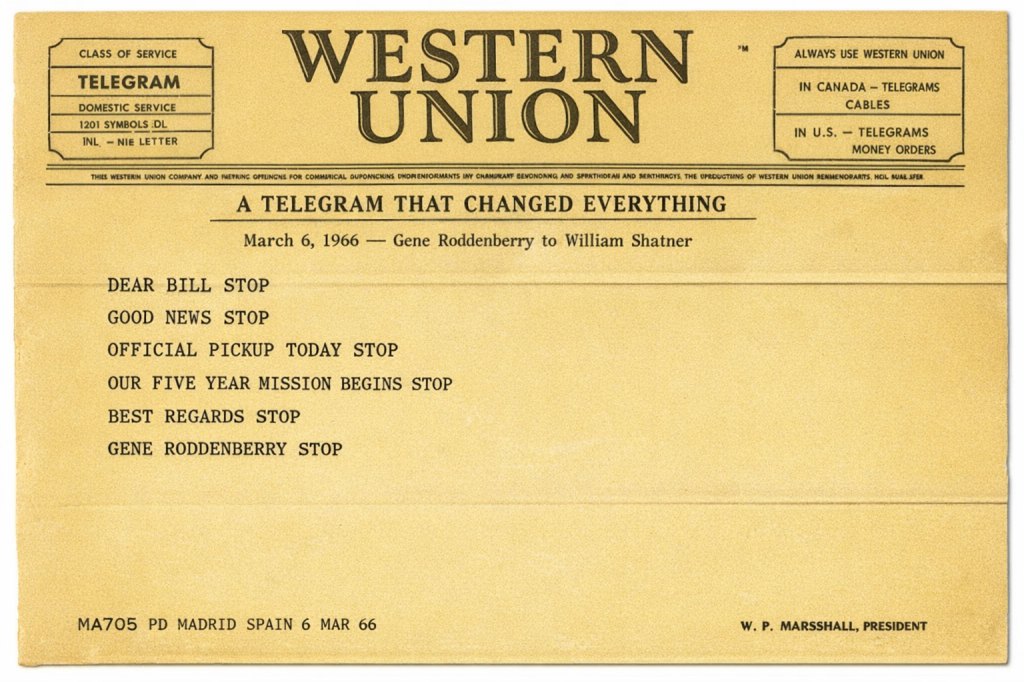
On March 6, 1966, Roddenberry made the news official by reaching out to William Shatner.
Conversation
All comments are subject to our Community Guidelines. Woman's World does not endorse the opinions and views shared by our readers in our comment sections. Our comments section is a place where readers can engage in healthy, productive, lively, and respectful discussions. Offensive language, hate speech, personal attacks, and/or defamatory statements are not permitted. Advertising or spam is also prohibited.